 Preview
 Send
Send Share
Share
 Details

 Download
 Similars
 X-Ray
X-Ray Diaporama
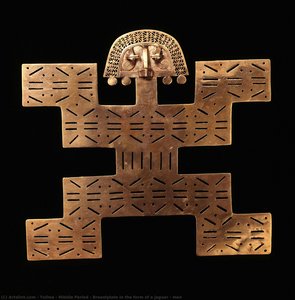
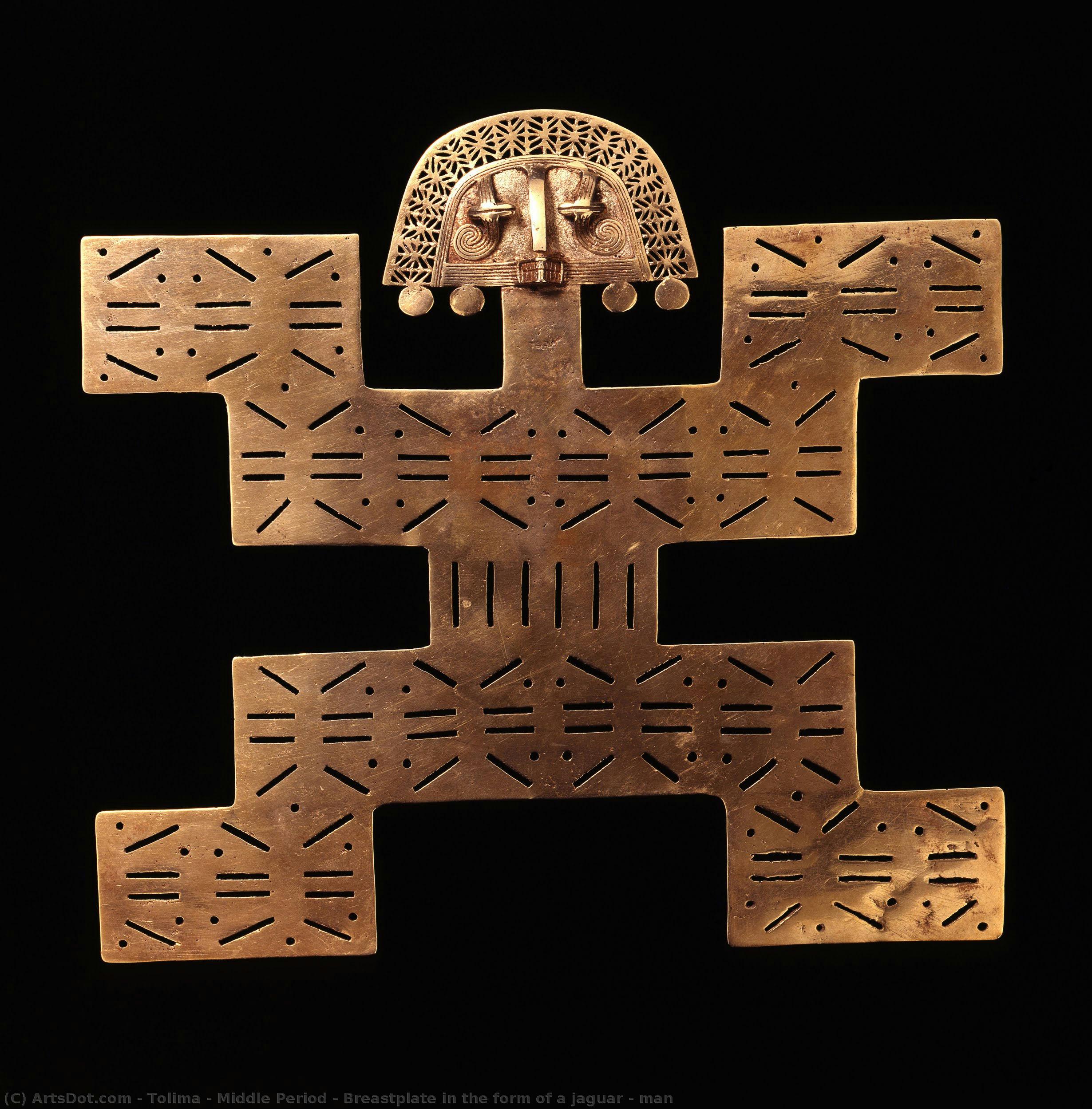
Breastplate in the form of a jaguar - man
 25.0 x 23.0 cm
 Museo del Oro
 Read More
Giclée / Art Print
Museum-quality giclée or canvas print with fast production and flexible finish options. ( Buy Hand Made Painting Buy Image)




































Pick from our preset sizes that match the artwork's original proportions.

You may enter your own dimensions to fit a specific frame or space. If your selected size does not match the original image's proportions, we will either crop the artwork or extend the image with a mirrored or solid-fill edge. A digital mockup will be sent for your approval before production begins.
Please note that the on-screen preview does not reflect the actual cropping or extension. Only the mockup will accurately show the final composition.
While custom sizes are available, we recommend selecting a dimension from the predefined list to preserve the original proportions.
Worldwide Delivery () in 2 weeks instead of standard 4/5 weeks. (27 August)

Free Worldwide Express Shipping

High-Quality Linen Canvas

Full Shipping Insurance

Customs Tax Refund Guarantee

True Color Matching Guarantee

60-Day Return Policy (Defects Only)

100% Money-Back Guarantee

Bulk Discount Offer
 Glass option is only available in size under 110 CM

Breastplate in the form of a jaguar - man
Giclée / Art Print
Reproduction Size
-


Total Price
$ 63
Collectible Description
Related Artworks







Artist Biography
The Golden Legacy of the Middle Magdalena Valley
To speak of the Tolima - Middle Period is to evoke the shimmering, sun-drenched echoes of an ancient Colombian civilization. Unlike the singular biography of a modern master, this era represents a collective artistic soul—a period of profound craftsmanship emerging from the fertile intermontane basin of the Middle Magdalena Valley. This was a time when the skilled goldsmiths and artisans of the Tolima culture transformed raw earth and precious metals into spiritual vessels. Their work, characterized by an extraordinary mastery of tumbaga—a sophisticated alloy of gold and copper—serves as a breathtaking window into a world where the boundaries between the human, the animal, and the divine were beautifully blurred.
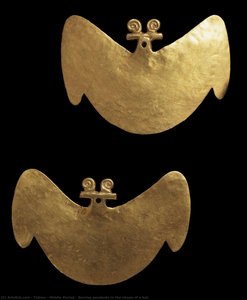
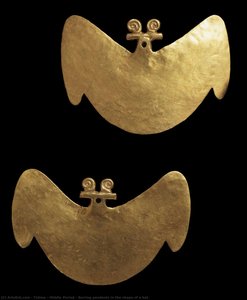
The artistry of this period is defined by its mesmerizing anthropozoomorphic nature. The creators did not merely decorate; they transmuted. Through the intricate technique of lost-wax casting, they breathed life into figures that merged the features of men with those of powerful predators and celestial beings. One might encounter a massive breastplate where the fierce, stylized visage of a jaguar-man emerges from a sea of delicate fretwork, or delicate earring pendants shaped like the wings of a bat. These were not mere ornaments but potent symbols of status and spiritual protection, designed to resonate with the cosmic rhythms of the Andean landscape.
Technique and the Alchemy of Tumbaga
The technical prowess displayed during this middle period remains a marvel of pre-Columbian achievement. The artisans possessed an intimate understanding of metallurgy, utilizing the reddish hue of high-copper alloys to create a sense of warmth and vitality in their sculptures. Their process was one of extreme patience and precision:
- The Lost-Wax Method: A complex ritual of creation where intricate designs were meticulously carved into wax, which was then encased in clay to create a mold for the molten metal.
- Fine Fretwork: The ability to cut delicate, geometric patterns into the metal, allowing light to dance through the ornaments and emphasize the symmetry of the figures.
- Symbolic Proportion: A deliberate use of scale and schematic lines to convey power, where the weight of a chest plate or the balance of a pendant communicated the wearer's connection to the natural world.
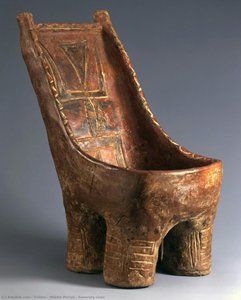
This era of production was not merely about aesthetic beauty but about the preservation of a cultural narrative. Every curve of a funerary chair and every glint of a gold figure told a story of lineage, myth, and the deep connection between the people of the Magdalena Valley and the fauna that inhabited their lush, tropical environment. The historical significance of these works lies in their ability to bridge the gap between the prehistoric past and the modern observer, offering a silent, golden testimony to a civilization that mastered the art of the eternal.
tolima - middle period
Colombia
Quick Facts
- Artistic Movement Or Style: Boterismo
- Artists Or Movements Influenced By This Artist: ['Cubism']
- Artists Who Influenced This Artist: ['Pablo Picasso']
- Date Of Birth: 1932
- Full Name: Fernando Botero
- Nationality: Colombian
- Notable Artworks:
- The Bullfighter
- Woman with Parasol
- Place Of Birth: Bogotá, Colombia