 Preview
 Send
Send Share
Share
 Details

 Download
 Similars
 X-Ray
X-Ray Diaporama
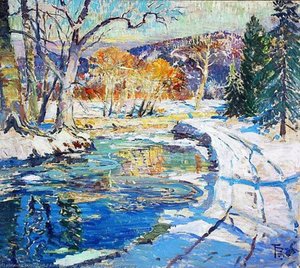
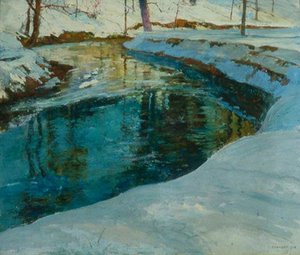
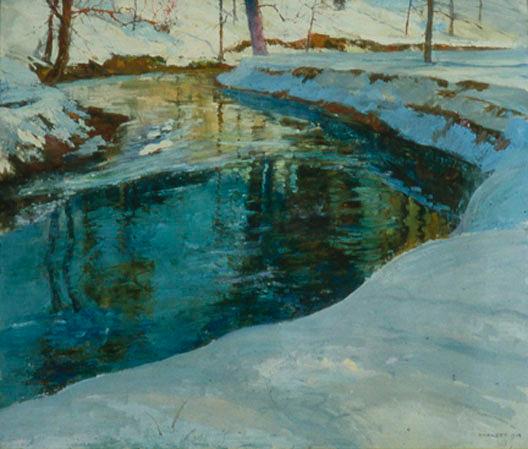
Close of a Winter Day, (painting)

 Read More
Hand Made Oil Reproduction
Hand-painted oil on canvas in your size and frame, made to order by our artists. ( Buy Print Buy Image)




































Pick from our preset sizes that match the artwork's original proportions.

You may enter your own dimensions to fit a specific frame or space. If your selected size does not match the original image's proportions, we will either crop the artwork or extend the painting with additional hand-painted elements. A digital mockup will be sent for your approval before production begins.
Please note that the on-screen preview does not reflect the actual cropping or extension. Only the mockup will accurately show the final composition.
While custom sizes are available, we recommend selecting a dimension from the predefined list to preserve the original proportions.
After order, ArtsDot.com team will email client for instructions and provide a mockup preview
Worldwide Delivery () in 3/4 weeks instead of standard 5 weeks. (28 August). No compromise on quality.

Free Worldwide Express Shipping

High-Quality Linen Canvas

Full Shipping Insurance

Customs Tax Refund Guarantee

True Color Matching Guarantee

60-Day Return Policy (Defects Only)

100% Money-Back Guarantee

Bulk Discount Offer
 Glass option is only available in size under 110 CM

Close of a Winter Day, (painting)
Reproduction Medium
Reproduction Size
-


Total Price
$ 263
Related Artworks










Artist Biography
The Architect of St. Louis’s Soul
Thomas P. Barnett, a name etched into the very stone and mortar of St. Louis, lived a life defined by the harmonious marriage of structure and spirit. Born on February 11, 1870, in the heart of Missouri, Barnett was destined to shape the skyline of his home city. His early years were deeply influenced by the monumental legacy of his father, George I. Barnett, an architect whose hand guided the renovation of the Old Courthouse and the creation of the Missouri Botanical Garden. Growing up in the shadow of such architectural grandeur, young Thomas did not merely learn a trade; he inherited a vision of how space, light, and classical proportion could elevate the human experience.
After honing his skills at Saint Louis University, Barnett transitioned from student to master, eventually forming the renowned firm Barnett, Haynes & Barnett alongside his brother, George Dennis Barnett, and his brother-in-law, John Ignatius Haynes. Together, this triumvirate became the primary architects of St. Louis’s identity. Their work was a deliberate embrace of Classicism, a style that reflected the prestige and stability sought by the city's elite during its era of great expansion. From the breathtaking Gothic Revival majesty of the Cathedral Basilica of St. Louis to the opulent Beaux Arts elegance of the Adolphus Hotel in Dallas, Barnett’s architectural fingerprints are found on some of the most significant religious and commercial landmarks in the American Midwest.
A Canvas of Light and Impression
While his architectural achievements provided a permanent skeleton for the city, Barnett’s later years revealed a more fluid, emotive side of his genius. As he turned his focus toward painting, he moved away from the rigid precision of blueprints and into the soft, dappled light of American Impressionism. Having studied under Paul Cornoyer, Barnett developed a technique characterized by wide, expressive brushstrokes that captured the fleeting essence of a moment rather than just its physical form. This transition from the structural to the atmospheric allowed him to explore themes of nature, industry, and the rugged American landscape with a romantic idealism.
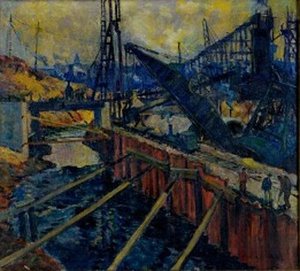
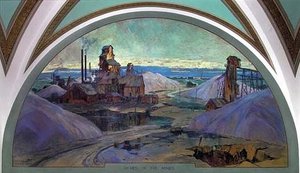
His paintings often serve as windows into a bygone era, capturing the raw beauty of the American West and the industrious spirit of growing towns. In works such as Riches of the Mines, he masterfully depicts the grit and grandeur of industrial life, while other pieces like In the Heart of the Ozarks transport the viewer to the serene, untamed wilderness of the Missouri hills. Whether capturing the quiet stillness of Close of a Winter Day or the bustling activity of urban development in Construction of the River des Peres Channel, Barnett’s art remains deeply rooted in a sense of place and a profound respect for the natural world.
A Lasting Legacy of Craftsmanship
The significance of Thomas P. Barnett lies in his dual mastery of the permanent and the ephemeral. He possessed the rare ability to design structures that would stand for centuries and paint scenes that could evoke an immediate, visceral emotion. His accolades, including a Gold Medal for Architecture at the 1904 Louisiana Purchase Exposition for his design of the Palace of Liberal Arts, underscore a career defined by excellence and international recognition.
Today, we remember Barnett not just as a builder of monuments, but as a chronicler of the American spirit. His life’s work represents a bridge between generations:
- Architectural Heritage: The preservation of Classical and Gothic Revival traditions in major urban landmarks.
- Artistic Innovation: The successful adaptation of Impressionist techniques to capture the American landscape.
- Cultural Impact: A profound contribution to the aesthetic identity of St. Louis and the broader American Midwest.
tom p barnett
1870 - 1929
Quick Facts
- Artistic Movement Or Style: Landscape Painting
- Artists Or Movements Influenced By This Artist: ['Beaux Arts']
- Artists Who Influenced This Artist: ['George I Barnett']
- Date Of Birth: February 11, 1870
- Date Of Death: September 23, 1929
- Full Name: Thomas P Barnett
- Nationality: American
- Notable Artworks:
- Cathedral Basilica of St Louis
- Adolphus Hotel
- Place Of Birth: St Louis