 Preview
 Send
Send Share
Share
 Details

 Download
 Similars
 X-Ray
X-Ray Diaporama
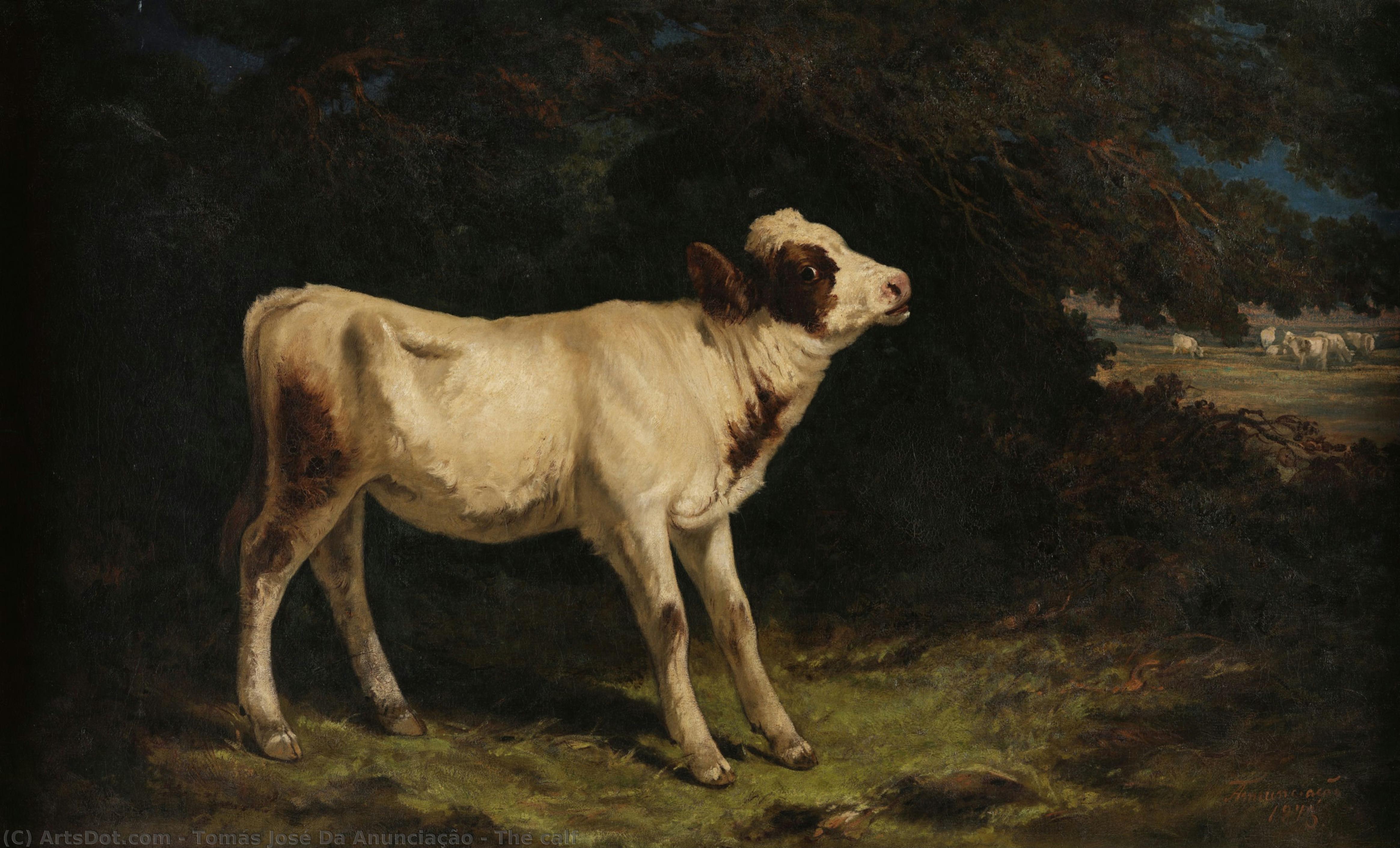
The calf
 1873
1873 75.0 x 125.0 cm
 National Museum of Contemporary Art - Museu do Chiado
 Read More
Hand Made Oil Reproduction
Hand-painted oil on canvas in your size and frame, made to order by our artists. ( Buy Print Buy Image)




































Pick from our preset sizes that match the artwork's original proportions.

You may enter your own dimensions to fit a specific frame or space. If your selected size does not match the original image's proportions, we will either crop the artwork or extend the painting with additional hand-painted elements. A digital mockup will be sent for your approval before production begins.
Please note that the on-screen preview does not reflect the actual cropping or extension. Only the mockup will accurately show the final composition.
While custom sizes are available, we recommend selecting a dimension from the predefined list to preserve the original proportions.
After order, ArtsDot.com team will email client for instructions and provide a mockup preview
Worldwide Delivery () in 3/4 weeks instead of standard 5 weeks. (17 August). No compromise on quality.

Free Worldwide Express Shipping

High-Quality Linen Canvas

Full Shipping Insurance

Customs Tax Refund Guarantee

True Color Matching Guarantee

60-Day Return Policy (Defects Only)

100% Money-Back Guarantee

Bulk Discount Offer
 Glass option is only available in size under 110 CM

The calf
Reproduction Medium
Reproduction Size
-


Total Price
$ 263
Artwork Description
Related Artworks
Artist Biography
Tomás José da Anunciação: A Pioneer of Portuguese Animal and Landscape Painting
Tomás José da Anunciação, born in Lisbon’s Ajuda district in 1818 and tragically passing away in 1879, stands as a pivotal figure in the development of Portuguese art during the Romantic period. More than just a painter, he was a revolutionary who challenged established academic norms and championed a direct engagement with nature – a philosophy that profoundly influenced generations of artists to follow. Initially dismissed by some as an eccentric, da Anunciação’s dedication to meticulous observation and his innovative approach to depicting animals and landscapes cemented his legacy as the foremost artist in this genre within the Iberian Peninsula. Da Anunciação's early artistic education was somewhat unconventional. He enrolled at the Academy of Fine Arts of the University of Lisbon in 1841, but quickly grew disillusioned with its rigid structure and emphasis on idealized forms. Disagreements with his instructor and a general dissatisfaction with the school’s teaching methods led him to leave within just three years, an act that ultimately proved transformative for his career. This departure marked a decisive break from traditional artistic training, setting him on a path of independent exploration and experimentation. Following this initial setback, he found mentorship in João Cristino da Silva, whom he deeply respected and considered his true teacher, recognizing the latter’s commitment to painting “from nature.” This relationship proved crucial, fostering a deep appreciation for direct observation and detailed rendering – principles that would become hallmarks of his distinctive style. From 1847 to 1849, da Anunciação turned his hand to engraving at the arsenal do exército, a period which provided valuable technical skills but ultimately fueled his desire to return to painting. He began exhibiting his work in Paris, Madrid, and Portugal, quickly gaining recognition for his remarkable ability to capture the essence of animals and landscapes with unparalleled realism. His early works were characterized by a meticulous attention to detail, evident in his depictions of livestock – particularly oxen and calves – rendered with astonishing accuracy and sensitivity. Notable amongst these early pieces are “The Calf” (1867), a poignant study of a young animal’s vulnerability, and "Oxen Treading Out Corn at Ribatejo" (circa 1850-52), a powerful depiction of rural life that showcases his mastery of light and shadow. His work in this period was heavily influenced by the Barbizon school of painting, evident in his preference for outdoor settings and his commitment to capturing the immediate impressions of nature. A significant turning point in da Anunciação’s career came with his participation in the Exposition Universelle (1855) in Paris, where he presented “Cinco Artistas em Sintra” (Five Artists in Sintra). This ambitious group painting, a collaborative effort with fellow artists including João Cristino da Silva and José Rodrigues, depicted a gathering of painters amidst the picturesque landscapes of Sintra. The work was an immediate success, lauded for its vibrant colors, dynamic composition, and evocative portrayal of the artistic community. “Cinco Artistas em Sintra” quickly became his most celebrated masterpiece, later purchased by King Ferdinand II – a testament to its artistic merit and da Anunciação’s growing reputation. This painting not only showcased his technical skill but also reflected his broader philosophical commitment to capturing the spirit of Portuguese rural life. Da Anunciação's oeuvre extends beyond animal studies and landscapes; he produced several genre scenes, including “Two Women at a Fountain” (circa 1850) and "The Shepherd’s Rest" (1852), which offer glimpses into the daily lives of ordinary people in Portugal. His works are characterized by a remarkable ability to convey atmosphere and emotion through subtle shifts in color and light. He was particularly adept at capturing the fleeting effects of weather, as seen in his “View of Amora” (circa 1850), which depicts a dramatic storm over the Tagus River. His paintings were housed in various museums, including the National Museum of Ethnology in Lisbon, Portugal, and are readily available for viewing online at https://ArtsDot.com. For more detailed information about his life and work, one can consult the Wikipedia entry: https://en.wikipedia.org/wiki/Tom%C3%a1s_da_anuncia%c3%a7%c3%a3o. Throughout his career, da Anunciação remained committed to painting “from nature,” a practice that was considered radical at the time. He believed that true artistic expression could only be achieved through direct observation and an intimate understanding of the subject matter. This philosophy influenced not only his own work but also the subsequent development of Portuguese art, particularly in the realm of landscape painting. In 1884, the Prémio Anunciação award was established in his honor – a lasting tribute to his contributions to the artistic community and a symbol of his enduring legacy.Da Anunciação’s Enduring Influence
Tomás José da Anunciação's impact on Portuguese art extends far beyond his individual achievements. He fundamentally shifted the way artists approached landscape and animal painting, advocating for direct observation and a rejection of idealized representations. His emphasis on drawing as a preparatory study—a meticulous process of rendering reality with painstaking detail—became a cornerstone of his artistic practice and profoundly influenced generations of Portuguese painters. His work served as an inspiration to artists such as Francisco Metrass, João Cristino da Silva, José Rodrigues, and Victor Bastos, who formed a vibrant group known for their commitment to “painting from nature.” Da Anunciação’s legacy is not merely confined to the realm of art history; it continues to resonate in contemporary Portuguese culture. The Prémio Anunciação award, established in his honor, remains an important recognition of artistic excellence, perpetuating his spirit of innovation and dedication to capturing the beauty of the natural world. His paintings serve as a powerful reminder of Portugal’s rich artistic heritage and the enduring influence of a truly exceptional artist.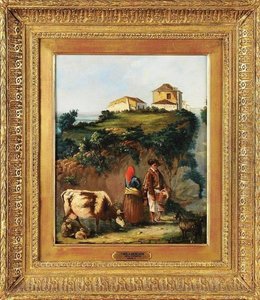
tomás josé da anunciação
1818 - 1879 , Portugal
Quick Facts
- Artistic Movement Or Style: Romanticism
- Artists Or Movements Influenced By This Artist: ['Silva Porto']
- Artists Who Influenced This Artist: ['João Cristino da Silva']
- Date Of Birth: 1818-10-26 (Lisbon)
- Date Of Death: 1879-04-03
- Full Name: Tomás José da Anunciação
- Nationality: Portuguese
- Notable Artworks:
- View of Amora
- Two Women at a Fountain
- View of Penha de França
- Oxen treading out corn
- Cinco Artistas em Sintra
- Place Of Birth: Lisbon, Portugal