 Preview
 Send
Send Share
Share
 Details

 Download
 Similars
 X-Ray
X-Ray Diaporama
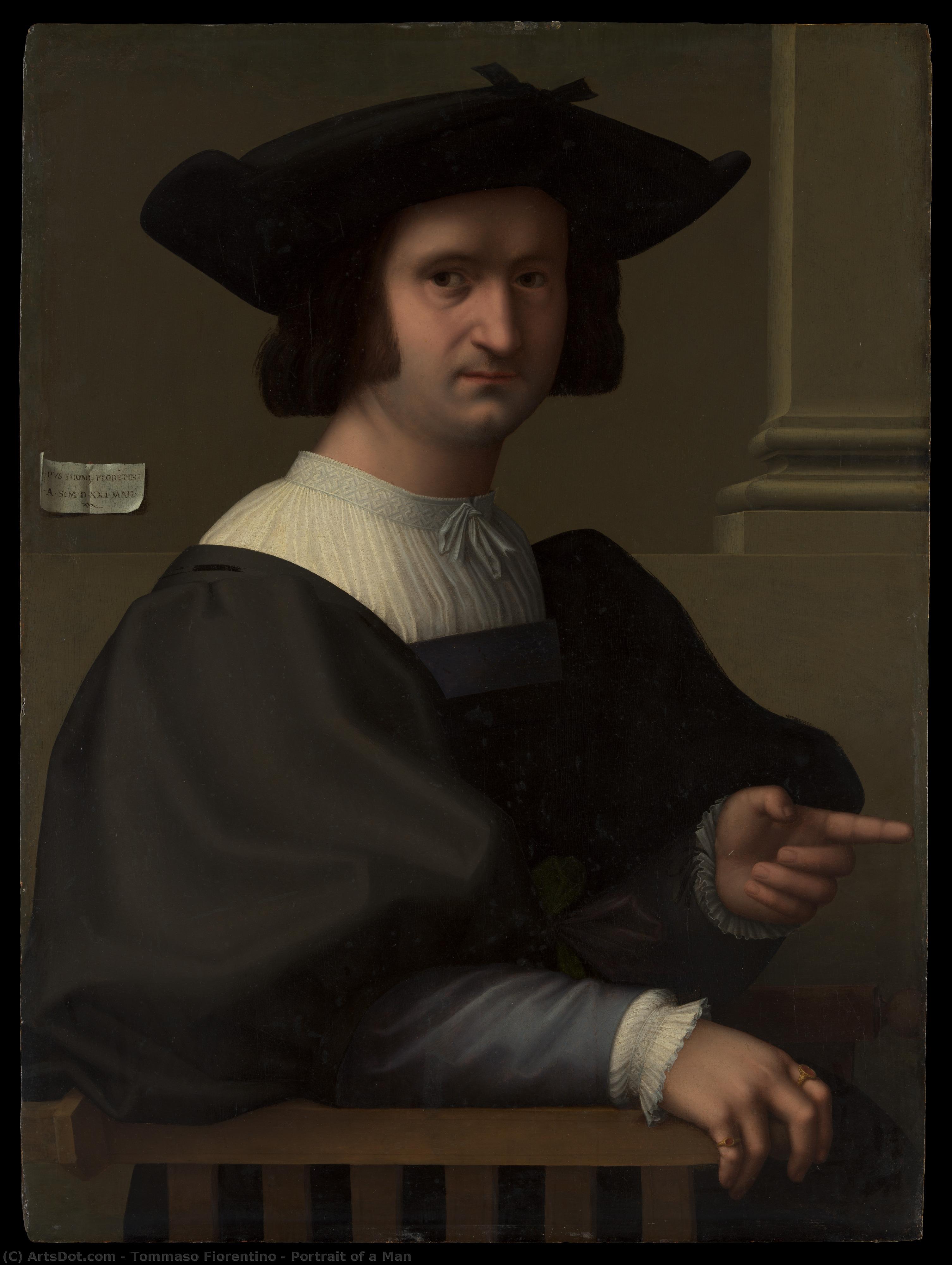
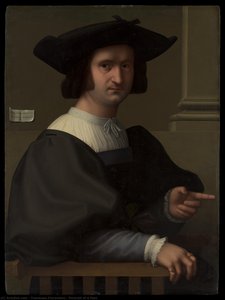
Portrait of a Man
 1521
1521 82.0 x 61.0 cm
 Read More
Hand Made Oil Reproduction
Hand-painted oil on canvas in your size and frame, made to order by our artists. ( Buy Print Buy Image)




































Pick from our preset sizes that match the artwork's original proportions.

You may enter your own dimensions to fit a specific frame or space. If your selected size does not match the original image's proportions, we will either crop the artwork or extend the painting with additional hand-painted elements. A digital mockup will be sent for your approval before production begins.
Please note that the on-screen preview does not reflect the actual cropping or extension. Only the mockup will accurately show the final composition.
While custom sizes are available, we recommend selecting a dimension from the predefined list to preserve the original proportions.
After order, ArtsDot.com team will email client for instructions and provide a mockup preview
Worldwide Delivery () in 3/4 weeks instead of standard 5 weeks. (24 August). No compromise on quality.

Free Worldwide Express Shipping

High-Quality Linen Canvas

Full Shipping Insurance

Customs Tax Refund Guarantee

True Color Matching Guarantee

60-Day Return Policy (Defects Only)

100% Money-Back Guarantee

Bulk Discount Offer
 Glass option is only available in size under 110 CM

Portrait of a Man
Reproduction Medium
Reproduction Size
-


Total Price
$ 263
Artwork Description
Related Artworks


Artist Biography
The Enigmatic Giottino: A Shadow of the Master
Tommaso Fiorentino, more commonly known as Giottino—meaning “little Giotto”—remains a fascinating yet elusive figure in the landscape of 14th-century Florentine painting. Born sometime around 1324 and passing away in 1369, his life is documented primarily through the writings of Giorgio Vasari, whose accounts, while invaluable, are often interwoven with legend and conjecture. Giottino wasn’t merely an imitator; he was a sensitive interpreter of Giotto's revolutionary style, carrying forward the flame of naturalism at a crucial moment in artistic development. His father, Maestro Stefano Fiorentino, already enjoyed renown as “Stefano the Florentine,” lauded for his keen observational skills—an epithet, "Ape of Nature," suggesting an almost scientific fidelity to the real world. It was within this environment of meticulous realism that young Tommaso began his artistic journey, absorbing not only his father’s techniques but also the burgeoning influence of Giotto di Bondone himself.
Formative Years and Artistic Lineage
The very name “Giottino” speaks volumes about the artist's trajectory. He wasn’t simply a student *of* Giotto, but rather an artist who consciously emulated his master’s approach. Maso di Stefano, as he was originally known, dedicated himself to understanding and replicating the innovations that had so profoundly altered the course of Italian painting. Giotto's emphasis on volume, emotional expression, and narrative clarity became the cornerstones of Giottino’s own artistic vocabulary. However, pinpointing the exact nature of his training remains a challenge. While it is certain he studied Giotto’s works extensively, the extent of direct apprenticeship is debated by scholars. What *is* clear is that Giottino absorbed the spirit of Giotto's revolution—a move away from the stylized Byzantine tradition towards a more humanistic and emotionally resonant depiction of religious subjects.
The Chapel of San Silvestro: A Testament to Faith
Giottino’s most significant surviving work, the frescoes within the Chapel of San Silvestro in the Basilica di Santa Croce in Florence, offers a compelling glimpse into his artistic capabilities. These vibrant narratives depict the miracles of Pope Sylvester I, drawn from the *Golden Legend*, a popular collection of hagiographical tales. The scenes are characterized by a delicate grace and a refined sense of color that distinguishes Giottino’s style from the bolder, more monumental approach of his predecessor. The figures possess a gentle expressiveness, their gestures conveying piety and devotion. While clearly indebted to Giotto's compositional principles—the use of architectural settings to create depth and the careful arrangement of figures to guide the viewer’s eye—Giottino introduces a subtle lyricism that is uniquely his own. The frescoes are not merely illustrations of biblical stories; they are imbued with a quiet emotional power, inviting contemplation and reverence.
Beyond Santa Croce: Attributions and Uncertainties
Determining the full scope of Giottino’s oeuvre proves difficult. Beyond the Chapel of San Silvestro, several other works have been tentatively attributed to him, including an *Apparition of the Virgin to St. Bernard* and a marble statue once erected on the Florentine campanile. However, these attributions remain contested, often relying on stylistic comparisons and historical documentation that is open to interpretation. Vasari’s accounts are particularly valuable but must be approached with caution, as he sometimes conflated artists or attributed works based on limited evidence. The *Pietà of San Remigio*, now housed in the Uffizi Gallery, stands out as a compelling example of his mature style—a poignant depiction of grief and compassion rendered with remarkable sensitivity. The delicate modeling of the figures and the subtle interplay of light and shadow demonstrate Giottino’s mastery of technique.
Legacy and Historical Significance
Giottino's place in art history is often defined by his relationship to Giotto. He wasn’t a radical innovator like his master, but rather a skilled interpreter who helped disseminate Giotto’s style throughout Florence and beyond. His work represents a crucial link between the early Renaissance innovations of Giotto and the later developments of the 15th century. He embodied a transition, preserving the naturalism and emotional depth of Giotto while introducing his own refined sensibility. While overshadowed by the towering figure of his predecessor, Giottino’s contributions should not be underestimated. He stands as a testament to the power of artistic emulation—a sensitive artist who absorbed the lessons of the past and transformed them into something uniquely beautiful and moving. His frescoes in Santa Croce continue to captivate viewers today, offering a glimpse into the spiritual world of 14th-century Florence and the enduring legacy of Giotto’s revolution.
Quick Facts
- Artistic Movement Or Style: Early Renaissance painting
- Artists Who Influenced This Artist: ['Giotto di Bondone']
- Date Of Death: 1369
- Full Name: Tommaso Fiorentino
- Nationality: Italian
- Notable Artworks:
- Pietà of San Remigio
- Miracles of Pope Sylvester
- Other Names: Giottino, Maso di Stefano
- Place Of Birth: Florence, Italy