

 Send
Send Share
Share
 Details

 Download
 Similars
 Diaporama
 Stats
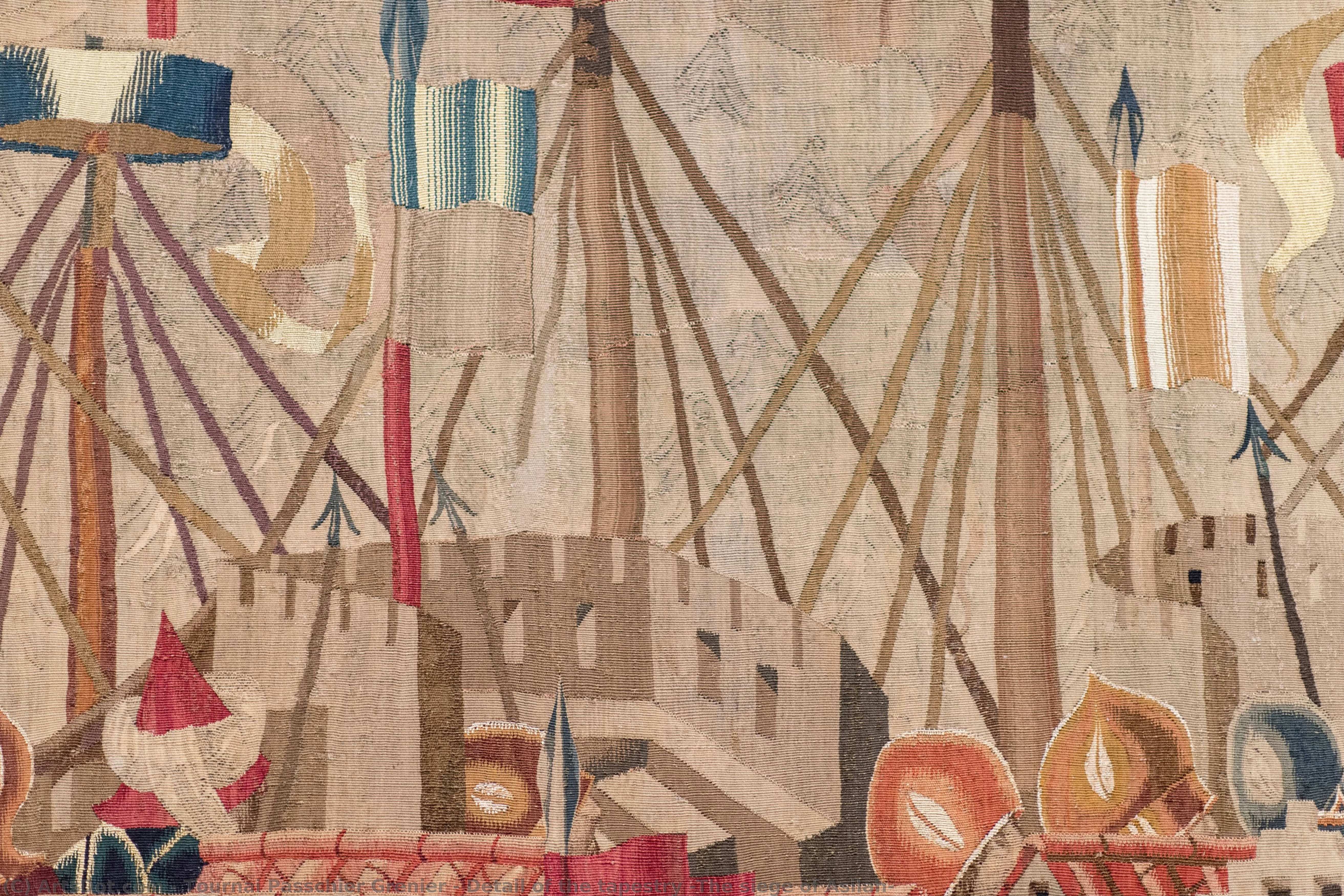
StatsDetail of the tapestry “The siege of Asilah”


 Read More
Purchase a high-resolution, enhanced digital image, far superior to the online preview.
Each file is meticulously prepared by our in-house specialists using advanced tools and expert manual retouching. We ensure every image has exceptional clarity, precise color accuracy, and fine detail.
The final file is delivered via email within 72 hours, optimized for immediate use in professional, editorial, and print environments. This is the same quality trusted by top-tier design studios, publishers, and galleries.
Digital Image
Download a high-resolution file for personal display, printing, and creative projects. ( Switch to Print Buy Hand Made Painting)
Included in Every Digital Image Order
Expert Digital Delivery, Guaranteed
When you choose ArtsDot.com, you're not just getting an image - you're receiving a professionally enhanced digital artwork, crafted with precision and backed by a satisfaction guarantee. Here's everything that comes with your order, automatically:

Fast Email Delivery
Your high-resolution digital image file will be emailed to you within 72 hours of ordering - ready for immediate use.

AI-Enhanced Digital File
Your artwork is professionally optimized using advanced AI tools and manual editing, ensuring maximum detail, clarity, and color accuracy.

Free Lifetime Re-Delivery
Accidentally deleted or lost your file? No worries - we'll resend it to you anytime, free of charge.

No Import Fees - Ever
Enjoy your artwork instantly with zero customs, duties, or delivery fees - digital downloads are always tax-free.

Color Accuracy Guarantee
We ensure your digital image reflects the original colors as closely as possible using professional tools and color management.

100-Day Satisfaction Guarantee
If you're not satisfied with your digital image, we'll revise it or refund 100% within 100 days - no questions asked.

100% Money-Back Guarantee
Not satisfied? Get a full refund within 100 days of receiving your digital file - no questions asked.

Bulk Order Discounts
Buy 3 images, save 10% - Buy 5, save 15% - Buy 10+, save 20%. Great for creative projects, galleries, and agencies.
A Window into Burgundian Warfare
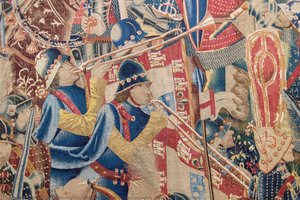
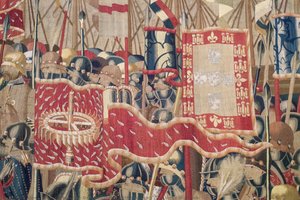
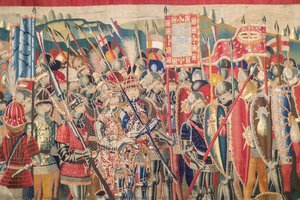
Detail of the tapestry “The siege of Asilah” stands as a breathtaking portal into the late fifteenth century, capturing a moment of profound tension and historical drama. Created in 1475, this intricate textile work offers more than just a visual record; it provides an immersive experience of the Burgundian Renaissance. The scene unfolds with a meticulous eye for detail, presenting a maritime siege where boats drift upon the water, populated by figures caught in the throes of conflict. As one gazes into the weave, the sheer complexity of the composition reveals a world of armored knights, soldiers, and the mechanical presence of early weaponry like cannons. It is a masterpiece of narrative storytelling, where every thread contributes to the atmosphere of an era defined by both chivalric tradition and the evolving brutality of warfare.The Artistry of Flemish Mastery
The technical brilliance of this piece reflects the zenith of Flemish tapestry production during the reign of the Dukes of Burgundy. Under the influential influence of figures like Pasquier Grenier, the workshops of Tournai and Bruges achieved a level of detail that transformed functional textiles into high art. The technique employed here allows for a remarkable depth of field; some vessels appear to float in the immediate foreground, while others recede into a hazy, distant horizon, creating a sense of vast, oceanic scale. The interplay of color and texture within the weave mimics the movement of water and the glint of steel armor, demonstrating the incredible skill required to translate complex historical events into a durable, woven medium. For the discerning collector or interior designer, such a piece offers a rich, tactile dimension that standard paintings cannot replicate.Symbolism and Historical Resonance
Beyond its surface-level depiction of battle, the tapestry serves as a profound meditation on time and the relentless march of history. The inclusion of a clock within the scene acts as a poignant symbol, reminding the viewer of the passage of time during the grueling siege and the ephemeral nature of human conflict. This layer of symbolism elevates the work from a mere historical chronicle to a philosophical reflection on endurance and fate. The presence of armored soldiers and the organized chaos of the naval fleet evoke the political complexities of the 1470s, making it an invaluable piece for those who appreciate art that carries deep intellectual weight.An Elegant Addition to Sophisticated Interiors
For those seeking to infuse a space with character and historical gravity, a high-quality reproduction of this tapestry detail offers unparalleled inspiration. Its intricate patterns and muted, classical tones make it a versatile centerpiece for luxury residential or curated commercial environments. Whether placed in a study, a grand hallway, or a formal dining room, the work commands attention, inviting guests to linger and decipher its many layers of meaning. Owning such a piece is not merely about decoration; it is about preserving a fragment of the Burgundian spirit and bringing the enduring legacy of Flemish craftsmanship into the modern home.Related Artworks
Artist Biography
The Architect of Flemish Grandeur: The Legacy of Pasquier Grenier
In the vibrant, loom-filled corridors of the fifteenth-century Burgundian Renaissance, few names carried as much weight in the realm of luxury and prestige as Pasquier Grenier. While history often reserves its highest honors for the hands that hold the needle or the brush, the true engine of artistic innovation was frequently found in the vision of the merchant-patron. Born in the industrious city of Tournai around 1447, Grenier emerged not merely as a trader of textiles, but as a sophisticated curator of cultural identity. His life’s work bridged the gap between raw craftsmanship and the high-stakes political theater of the Duchy of Burgundy, transforming the medium of tapestry from simple wall coverings into epic narratives of power, conquest, and divine right.
The essence of Grenier’s influence lay in his unparalleled ability to orchestrate the talents of the finest workshops across Flanders. Though long misidentified as a weaver himself, modern scholarship reveals him to be a master of the art trade—a man who understood that a tapestry was both a masterpiece of technique and a potent political tool. By fostering deep connections between the weaving centers of Tourlam, Bruges, and Antwerp, he created a cohesive artistic movement. He did not simply sell cloth; he commissioned stories. Under his guidance, the intricate threads of wool and silk were woven into complex tapestries that captured the zeitgeist of an era defined by chivalry, territorial expansion, and the burgeoning humanism of the North.
Masterpieces of Narrative and Conquest
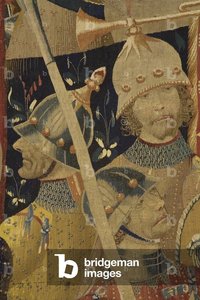
The zenith of Grenier’s career is perhaps best exemplified by his involvement in the monumental series known as the Attack of Asilah. Produced around 1475, these tapestries represent a breathtaking fusion of historical documentation and artistic drama. Through these works, one can witness the meticulous attention to detail that defined the period—the glint of sunlight on polished plate armor, the chaotic movement of cavalry, and the sweeping landscapes of naval warfare. These were not merely decorative items; they were cinematic experiences rendered in thread, designed to evoke awe in the halls of the most powerful figures in Europe.
In specific details such as Landing in Asilah, the artistry reaches a level of breathtaking intensity. The viewer is transported into a world of armored combat and high-stakes military maneuvers, where every stitch serves to heighten the tension of the scene. These works demonstrate how Grenier pushed workshops to experiment with color palettes and compositional depth, ensuring that the Flemish style remained the gold standard for European nobility. His ability to secure commissions from figures such as Philip the Handsome allowed him to shape the visual language of the Burgundian court, embedding themes of bravery and legitimacy into the very fabric of their surroundings.
A Lasting Impression on Art History
The historical significance of Pasquier Grenier extends far beyond the lifespan of his physical inventories. He was a pivotal figure in establishing the economic and artistic infrastructure that allowed Flemish textile art to dominate the European market for generations. His legacy is found in the survival of these magnificent fragments, which continue to offer scholars and art lovers alike a window into the medieval mind. Through his strategic patronage, he ensured that the technical mastery of the Tournai weavers was documented with a grandeur that time could not erode.
To study the works associated with Grenier is to study the heartbeat of the Burgundian Renaissance. His career serves as a profound reminder that art is a collaborative endeavor, requiring both the creative spark of the artisan and the discerning eye of the visionary merchant. As we gaze upon the intricate battle scenes and vibrant landscapes of his era, we are seeing more than just ancient thread; we are witnessing the enduring triumph of a man who knew how to weave history itself.
tournai passchier grenier
1447 - 1493 , Belgium
Quick Facts
- Artistic Movement Or Style: Burgundian tapestry trade
- Date Of Birth: Tournai, Belgium (1447)
- Date Of Death: 1493
- Full Name: Pasquier Grenier
- Nationality: Flemish
- Notable Artworks: ['The Attack of Asilah']
- Place Of Birth: Tournai