 Preview
 Send
Send Share
Share
 Details

 Download
 Similars
 X-Ray
X-Ray Diaporama
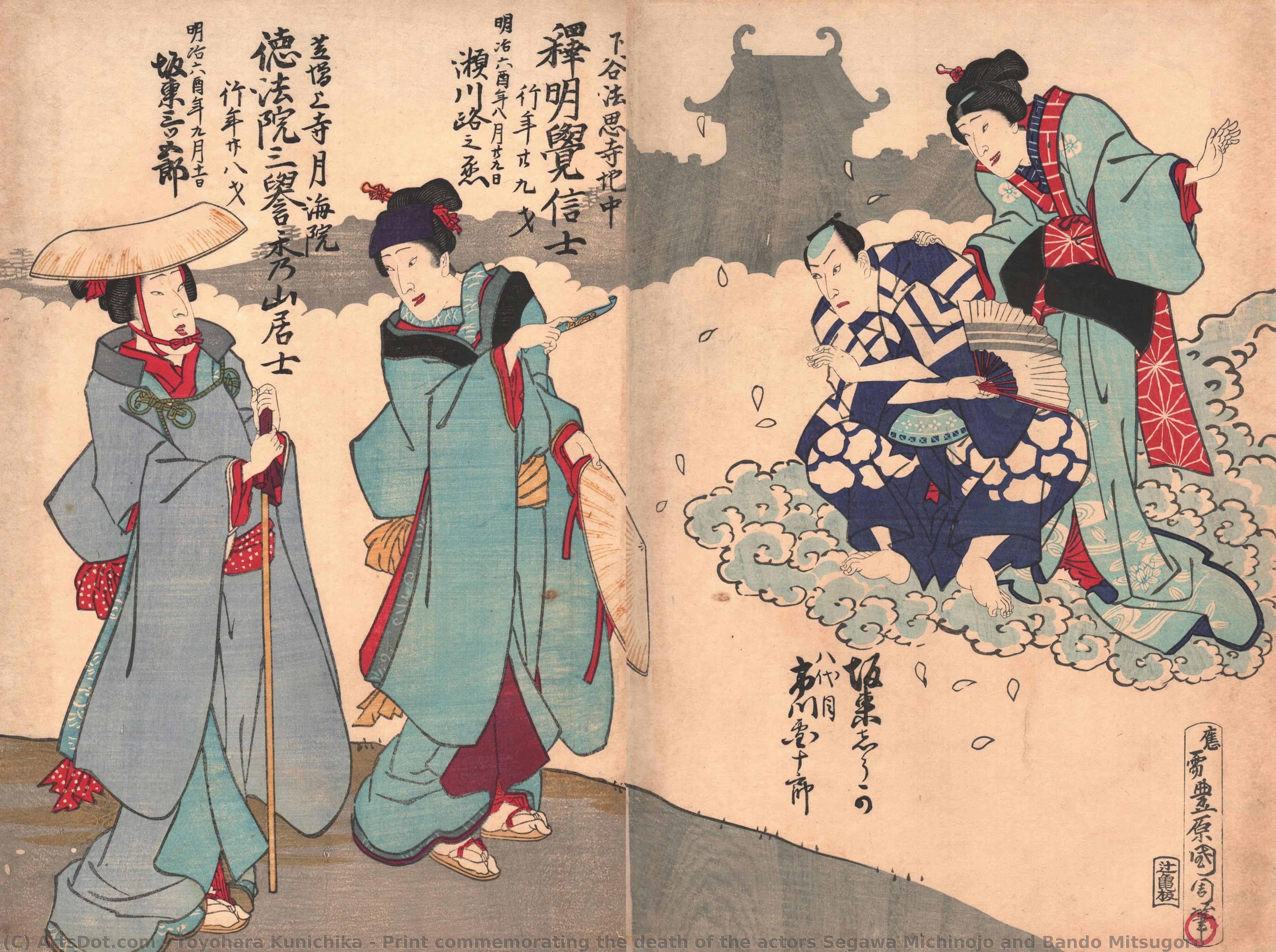
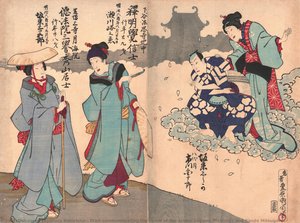
Print commemorating the death of the actors Segawa Michinojo and Bando Mitsugoro
 Woodblock Print
- Ukiyo-e
 1873
1873- 19th Century
 36.0 x 52.0 cm
 Bujalance Collection
 Read More
Hand Made Oil Reproduction
Hand-painted oil on canvas in your size and frame, made to order by our artists. ( Buy Print Buy Image)




P118B $10

P118H $10

P118W $10

P438Z $10

P508JH $12

P508YH $12

P805H $10

P805Z $10

P919BZ $10

P919G $10

P919XJ $10

P959ZH $10

P968JZ $12

W106C $8

W218G $10

W218JH $8

W218Y $10

W307PJ $10

W316G $10

W316PJ $8

W316Y $10

W398PJ $8

W4111J $10

W500HY $15

W500JH $15

W692G $12

W849H $8

W940BG $15

W953PJ $8




Pick from our preset sizes that match the artwork's original proportions.

You may enter your own dimensions to fit a specific frame or space. If your selected size does not match the original image's proportions, we will either crop the artwork or extend the painting with additional hand-painted elements. A digital mockup will be sent for your approval before production begins.
Please note that the on-screen preview does not reflect the actual cropping or extension. Only the mockup will accurately show the final composition.
While custom sizes are available, we recommend selecting a dimension from the predefined list to preserve the original proportions.
After order, ArtsDot.com team will email client for instructions and provide a mockup preview
Worldwide Delivery () in 3/4 weeks instead of standard 5 weeks. (3 September). No compromise on quality.

Free Worldwide Express Shipping

High-Quality Linen Canvas

Full Shipping Insurance

Customs Tax Refund Guarantee

True Color Matching Guarantee

60-Day Return Policy (Defects Only)

100% Money-Back Guarantee

Bulk Discount Offer
 Glass option is only available in size under 110 CM

Print commemorating the death of the actors Segawa Michinojo and Bando Mitsugoro
Reproduction Medium
Reproduction Size
-


Total Price
$ 338
A Poignant Encounter Between Heaven and Earth
In the delicate, ephemeral world of Ukiyo-e, few works capture the intersection of tragedy and theatrical splendor as profoundly as Toyohara Kunichika’s 1873 masterpiece, Print commemorating the death of the actors Segawa Michinojo and Bando Mitsugoro. This evocative woodblock print serves as both a memorial and a dramatic tableau, frozen in time during the transformative Meiji era. The composition presents a hauntingly beautiful vision of the afterlife, where the boundaries between the mortal stage and the celestial realm dissolve. In the upper reaches of the print, the legendary actors Bando Shuka II and Ichikawa Danjuro VIII appear amidst stylized, swirling clouds, gazing down with profound sorrow toward the earthly plane. Below them, the young souls of Segawa Michinojo and Bando Mitsugoro are depicted in their final transition, dressed in the kamishimo—the light blue ceremonial robes used for shrouding the deceased. It is a scene that transcends mere portraiture, offering a window into the deep reverence the Japanese public held for their Kabuki icons.
The technical mastery of Kunichika is on full display through the traditional woodblock printing process, which lends the artwork its characteristic depth and tactile soul. The artist utilizes bold, precise outlines to define the intricate patterns of the actors' costumes, while the use of flat planes of color creates a striking visual rhythm. A cool, contemplative palette of blues, greens, and greys dominates the landscape, evoking a sense of mourning and ethereal stillness. Yet, within this somber atmosphere, there is a vibrant energy—a hallmark of Kunichika’s style—achieved through the skillful layering of pigments on washi paper. The subtle, grainy texture inherent in the printing process adds an organic warmth to the piece, making the distant mountains and atmospheric clouds feel as though they are part of a living, breathing dreamscape.
Symbolism and the Legacy of Kabuki
Every element within this print is steeped in symbolic significance, designed to resonate with the cultural heartbeat of 19-century Japan. The theatrical costumes are not merely decorative; they are signifiers of status, role, and the heavy weight of lineage. For a collector or an enthusiast of Japanese history, the print acts as a historical document, capturing the precise moment when the traditions of the Edo period met the shifting tides of the Meiji era. The stylized clouds do more than suggest height; they represent the liminal space between life and death, a concept central to the emotional impact of the work. This sense of drama is further heightened by the presence of text panels that provide context to the performance and the actors' identities, grounding the supernatural imagery in the very real, very human tragedy of losing two rising stars in less than a month.
For those looking to integrate such a profound piece into a curated interior, this reproduction offers more than just aesthetic beauty; it provides a focal point of storytelling and emotional depth. Whether placed in a contemporary gallery setting or a classic study, the print’s balanced composition and sophisticated color story invite quiet contemplation. It is an ideal acquisition for art lovers who seek works that possess both technical excellence and a narrative soul—a piece that does not merely decorate a wall but breathes life and history into a space.
Related Artworks
Artist Biography
early life and training
toyohara kunichika, a renowned japanese woodblock print artist, was born on june 30, 1835. recognized for his exceptional talent at a young age, he became a student of utagawa kunisada, tokyo's leading print maker, at the age of thirteen.artistic style and themes
kunichika's deep understanding of kabuki drama led to his primary production of yakusha-e, woodblock prints of kabuki actors and scenes from popular plays. additionally, he portrayed women deemed beautiful (bijinga), contemporary social life, and a few landscapes and historical scenes.- notable works:
- the actor's portrait (1880) - a fine example of kunichika's yakusha-e style.
- beautiful woman in a brocade robe (1890) - showcase of his bijinga art.
career and legacy
kunichika successfully worked during the edo period, carrying those traditions into the meiji period. his contemporaries and modern art historians view this as a significant achievement during a transitional period of great social and political change in japan's history.- key contributions:
- preservation of traditional japanese print-making techniques.
- influence on the development of modern japanese art.
resources
for more information on toyohara kunichika and his works, visit:- toyohara kunichika's profile on ArtsDot.com
- the kanō school style art movement - understand the context of japanese art during kunichika's time.
- shūsei's profile - explore another influential japanese artist from a different period.
conclusion
toyohara kunichika remains an important figure in the history of japanese art, particularly in the realm of woodblock prints. his dedication to preserving traditional techniques while adapting to changing social and political landscapes has left a lasting impact on modern japanese art.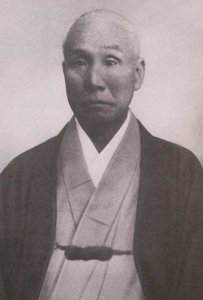
Toyohara Kunichika
1835 - 1900 , Japan
Quick Facts
- Artistic Movement Or Style: Ukiyo-e (Yakusha-e, Bijinga)
- Artists Or Movements Influenced By This Artist: ['Meiji Ukiyo-e']
- Artists Who Influenced This Artist:
- Utagawa Kunisada
- Toyohara Chikanobu
- Date Of Birth: June 30, 1835
- Date Of Death: 1900
- Full Name: Toyohara Kunichika
- Nationality: Japanese
- Notable Artworks:
- The Actor's Portrait
- Beautiful Woman in a Brocade Robe
- Place Of Birth: Tokyo, Japan
Related Articles

Hokusai's Masterpieces: 25 Iconic Prints & Paintings for Art Lovers | ArtsDot
Journey through Katsushika Hokusai’s 25 most iconic artworks, including *The Great Wave*. Explore the ukiyo-e master's history, style & timeless Japanese woodblock prints. Find museum-quality reproductions for your home at ArtsDot.com.
Ukiyo-e: Exploring Japan's Floating World & Enduring Artistic Legacy
Explore the captivating world of Ukiyo-e – Japan's iconic woodblock prints! Discover masters like Hokusai & Hiroshige, learn about Edo period culture, and find expert art collecting guidance at ArtsDot.

The Enduring Legacy of Woodblock Printmaking: Technique, History & Artistic Expression
Explore the rich history of woodblock printmaking – from ancient techniques to Ukiyo-e masterpieces. Discover expert insights on collecting, preserving & appreciating this enduring art form.
Tōshūsai Sharaku: A Fleeting Glimpse into Edo Period Kabuki – Life, Art, and the Enigma of a Ukiyo-e Master
Explore the captivating world of Tōshūsai Sharaku, the enigmatic Edo period ukiyo-e master. Discover his iconic Kabuki actor portraits and unravel the mystery behind this fleeting artistic genius. Learn about his unique style & lasting legacy.
Tsukioka Yoshitoshi: A Master of Ukiyo-e's Final Flourish – Narrative, Innovation, and the Meiji Transition
Explore the life & art of Tsukioka Yoshitoshi, the last great master of ukiyo-e woodblock printing. Discover his dramatic warrior prints, innovative series like 'One Hundred Aspects of the Moon,' and legacy reflecting Japan's Meiji transition.
![[Mitate] Actors in the evening, returning to the dressing room](/media/artworks/images-thumb/e3/f8/e3f80dd3372e57f69ae58e37c73e0518.jpg)
![Scene from Kabuki plays : [Shinobugaoka Koiwa Kusemono]](/media/artworks/images-thumb/e0/e5/e0e59c94a704e46936dcd30033b71dcd.jpg)