 Preview
 Send
Send Share
Share
 Details

 Download
 Similars
 X-Ray
X-Ray Diaporama
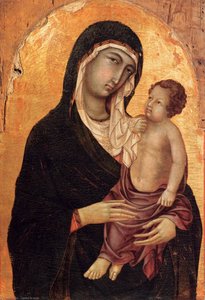
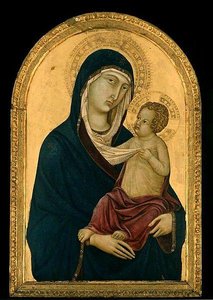
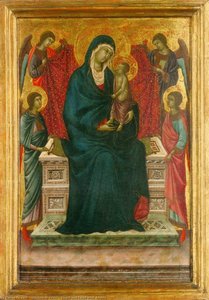
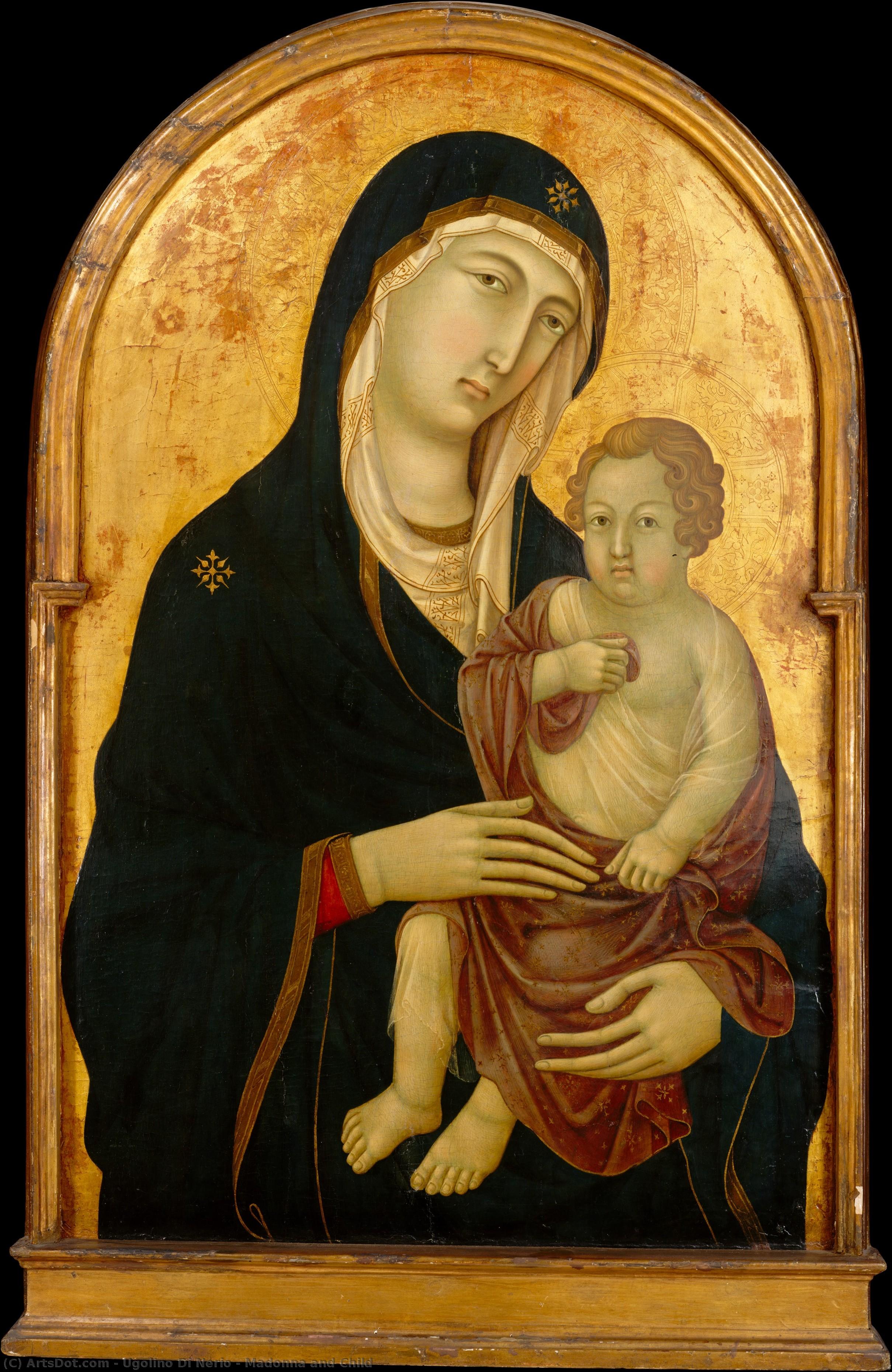
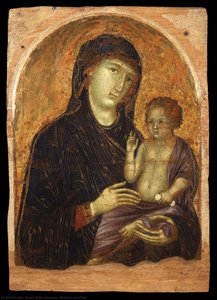
Madonna and Child
 Acrylic On Canvas
- WallArt
- Early Renaissance
 1325
1325 90.0 x 58.0 cm
 Metropolitan Museum of Art
 Read More
Hand Made Oil Reproduction
Hand-painted oil on canvas in your size and frame, made to order by our artists. ( Buy Print Buy Image)




P118B $10

P118H $10

P118W $10

P438Z $10

P508JH $12

P508YH $12

P805H $10

P805Z $10

P919BZ $10

P919G $10

P919XJ $10

P959ZH $10

P968JZ $12

W106C $8

W218G $10

W218JH $8

W218Y $10

W307PJ $10

W316G $10

W316PJ $8

W316Y $10

W398PJ $8

W4111J $10

W500HY $15

W500JH $15

W692G $12

W849H $8

W940BG $15

W953PJ $8




Pick from our preset sizes that match the artwork's original proportions.

You may enter your own dimensions to fit a specific frame or space. If your selected size does not match the original image's proportions, we will either crop the artwork or extend the painting with additional hand-painted elements. A digital mockup will be sent for your approval before production begins.
Please note that the on-screen preview does not reflect the actual cropping or extension. Only the mockup will accurately show the final composition.
While custom sizes are available, we recommend selecting a dimension from the predefined list to preserve the original proportions.
After order, ArtsDot.com team will email client for instructions and provide a mockup preview
Worldwide Delivery () in 3/4 weeks instead of standard 5 weeks. (16 August). No compromise on quality.

Free Worldwide Express Shipping

High-Quality Linen Canvas

Full Shipping Insurance

Customs Tax Refund Guarantee

True Color Matching Guarantee

60-Day Return Policy (Defects Only)

100% Money-Back Guarantee

Bulk Discount Offer
 Glass option is only available in size under 110 CM

Madonna and Child
Reproduction Medium
Reproduction Size
-


Total Price
$ 263
Artwork Description
A Window Into Siena’s Soul: Ugolino di Nerio's Madonna and Child
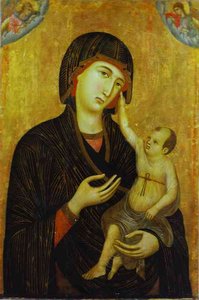
The Madonna and Child by Ugolino di Nerio stands as a testament to the artistic fervor of Siena in the mid-thirteenth century, capturing not merely a biblical narrative but also the spirit of its time – a moment poised between Byzantine grandeur and the burgeoning embrace of naturalism. This painting, measuring 90 x 58 cm, resides within a larger polyptych commissioned for a noble family, offering us a glimpse into the opulent patronage that fueled artistic innovation during this transformative period.- Style & Technique: Ugolino’s approach aligns closely with Duccio di Buoninsegna's groundbreaking “Maestà,” marking Siena as a cradle of Renaissance aesthetics. He skillfully employed tempera paint on wood panel, a technique favored by Sienese artists for its luminosity and durability. The meticulous layering of glaze – applying thin translucent layers of pigment over opaque undercoats – achieved remarkable depth and vibrancy, mirroring the stylistic innovations championed by Duccio himself.
- Historical Context: Siena was experiencing a resurgence of civic pride following papal schism, and artistic endeavors served as powerful expressions of faith and prestige. Ugolino’s work reflects this cultural dynamism, demonstrating an awareness of contemporary artistic trends while retaining the solemn dignity characteristic of Byzantine iconography.
Related Artworks
Artist Biography
Ugolino di Nerio: A Pioneer of Sienese Painting in the Late Thirteenth Century
Ugolino di Nerio, a name largely absent from mainstream art historical narratives, stands as a pivotal figure in the burgeoning artistic landscape of Siena and Florence during the 1320s. Born around 1280 within the family of painters – his father, Guido, and siblings Muccio and Ugolino – he emerged as an independent master, leaving behind a legacy of evocative works that bridged the gap between the rigid formality of Italo-Byzantine tradition and the nascent spirit of naturalism in Sienese painting. While few of his paintings survive intact, their fragments and stylistic echoes offer invaluable insights into the artistic currents of his time and reveal a remarkably sophisticated artist deeply influenced by Duccio di Buoninsegna. Ugolino’s early life remains shrouded in mystery, though it's believed he was born in Siena, the city that would become his primary artistic home. His training likely began within his family workshop, absorbing the established techniques of Sienese painting – a style heavily indebted to Byzantine models, characterized by flattened figures, symbolic colors, and an emphasis on decorative elegance. However, unlike many of his contemporaries, Ugolino didn’t simply replicate these conventions; he subtly adapted them, injecting a personal sensibility that distinguished him from the crowd. His commissions in Florence, particularly for the basilicas of Santa Maria Novella and Santa Croce around 1317-1327, demonstrate this shift – he was actively seeking to establish himself as a recognized artist within the Florentine art market. These works showcase his growing mastery of composition and color, moving beyond purely decorative elements towards a more expressive portrayal of religious subjects.The Influence of Duccio and Byzantine Tradition
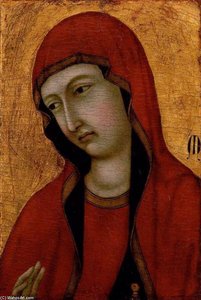
Ugolino’s artistic development is inextricably linked to that of Duccio di Buoninsegna, the towering figure of the Sienese school. Duccio's *Maestà*, completed around 1308-1311, served as a crucial touchstone for Ugolino, providing both inspiration and a framework for his own artistic explorations. The monumental scale, rich colors, and complex iconography of the *Maestà* – particularly its innovative use of space and its subtly humanized figures – profoundly impacted Ugolino’s approach to painting. However, unlike Duccio, who remained firmly rooted in Byzantine conventions, Ugolino gradually introduced elements of naturalism into his work. This is evident in his depictions of Mary Magdalene and Louis of Toulouse (c. 1328), where the figures possess a greater sense of volume and movement than typically seen in contemporary Sienese art. The vibrant reds and golds employed – hallmarks of his style – contribute to an overall atmosphere of intense spirituality and emotional resonance.Key Works and Stylistic Characteristics
Despite the scarcity of surviving paintings, Ugolino’s artistic output is remarkably diverse. His *altarpiece* for Santa Croce, a fragmented masterpiece now dispersed across several museums, offers a compelling glimpse into his evolving style. The panels depict scenes from the life of Christ and the Virgin Mary, showcasing his command of color, composition, and expressive gesture. The *Madonna Contini Bonaccossi*, housed in the Pitti Palace, exemplifies his early style – characterized by elegant figures, delicate drapery, and a serene atmosphere. Later works, such as those found in the Cleveland Museum of Art and the Clark Art Institute, demonstrate a more mature style, marked by increased dynamism, emotional intensity, and a greater attention to detail. A defining characteristic of Ugolino’s work is his masterful use of color – particularly the luminous blues derived from lapis lazuli, which he employed to create a sense of ethereal beauty and spiritual depth.Historical Context and Legacy
Ugolino di Nerio operated within a period of significant artistic transition in Italy. The influence of Byzantine art was still strong, but the seeds of naturalism were beginning to sprout, driven by artists like Cimabue and Giotto. Ugolino’s work represents a crucial bridge between these two traditions, demonstrating a willingness to experiment with new techniques while retaining a deep respect for established conventions. His contributions are particularly significant in the context of Sienese painting, where he played a key role in disseminating the artistic innovations of Duccio throughout Florence and beyond. While his name may not be as widely recognized as those of his contemporaries, Ugolino di Nerio deserves recognition as a pioneering artist who helped shape the course of Italian painting in the late thirteenth century – a testament to the enduring power of individual vision within a rich and evolving artistic tradition. His legacy lies not only in the surviving fragments of his work but also in the influence he exerted on subsequent generations of Sienese painters, paving the way for the development of the distinctive Florentine style that would emerge in the decades to follow.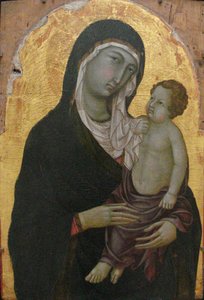
Ugolino di Nerio
1280 - 1330 , Italy
Quick Facts
- Artistic Movement Or Style: Sienese painting
- Artists Or Movements Influenced By This Artist: ['Simone Martini']
- Artists Who Influenced This Artist: ['Duccio di Buoninsegna']
- Date Of Birth: 1280?
- Date Of Death: 1349
- Full Name: Ugolino di Nerio
- Nationality: Italian
- Notable Artworks:
- Madonna Contini Bonaccossi
- Altarpiece Santa Croce
- Madonna (Chiesa della Misericordia)
- Place Of Birth: Siena, Italy
Related Articles

Giotto's Masterpieces: 25 Renaissance Artworks for Your Home | ArtsDot
Explore 25 breathtaking artworks by Giotto di Bondone, a Renaissance master. Discover the stories behind iconic frescoes & paintings like the Scrovegni Chapel cycle. Find museum-quality Giotto reproductions and elevate your home decor with ArtsDot.com.
High Medieval Art: 10 Masterpieces That Shaped an Era | ArtsDot
Journey through High Medieval Art! Explore 10 iconic masterpieces – from Giotto's frescoes to stunning Gothic cathedrals. Discover the stories behind these timeless paintings, sculptures & illuminated manuscripts. Find museum-quality art reproductions at ArtsDot.com.
Late Medieval Masterpieces: 10 Artworks That Defined an Era | ArtsDot
Journey through 10 defining Late Medieval masterpieces – from Giotto's frescoes to Jan van Eyck’s realism. Explore the stories, techniques & vibrant colors of Gothic art. Find museum-quality reproductions and elevate your home decor with ArtsDot.com! Discover all masterpieces on ArtsDot.com
Proto-Renaissance Masters: 10 Artworks That Changed History | ArtsDot
Journey back to the dawn of Renaissance art! Explore 10 iconic Proto-Renaissance masterpieces by Giotto, Cimabue & Duccio. Discover their stories, techniques & lasting impact. Find museum-quality reproductions for your home at ArtsDot.com
Simone Martini: Innovation, Spirituality & Courtly Refinement in Sienese Painting
Explore the captivating world of Simone Martini, a pivotal figure in Sienese painting & the International Gothic style. Discover his innovative techniques, spiritual depth, and lasting influence on early Renaissance art.