

 Preview
 Send
Send Share
Share
 Details

 Download
 Similars
 X-Ray
X-Ray Diaporama
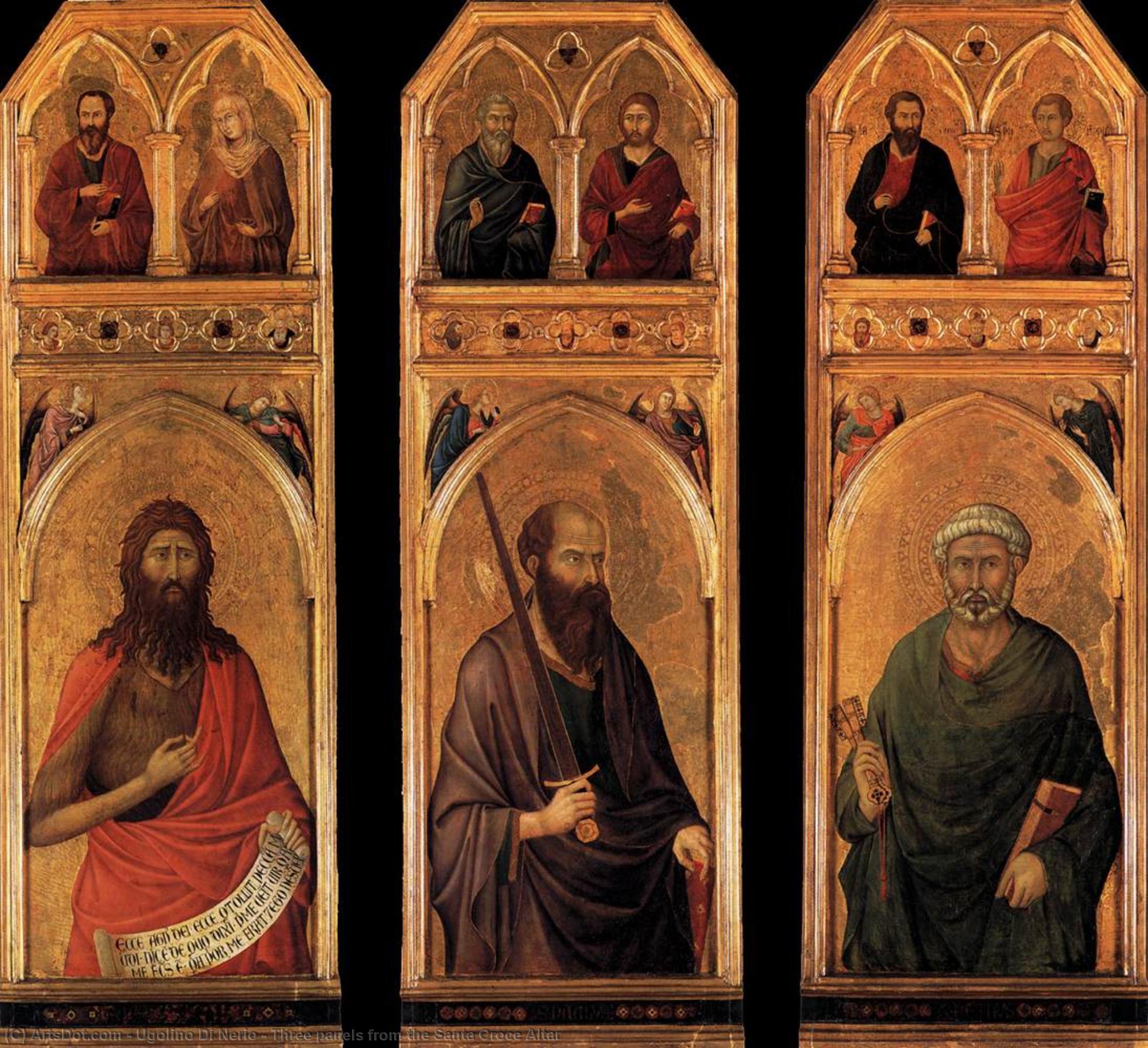
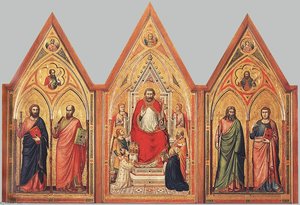
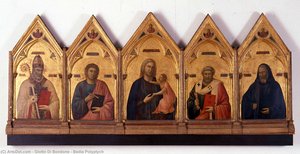
Three panels from the Santa Croce Altar


 Read More
Purchase a high-resolution, enhanced digital image, far superior to the online preview.
Each file is meticulously prepared by our in-house specialists using advanced tools and expert manual retouching. We ensure every image has exceptional clarity, precise color accuracy, and fine detail.
The final file is delivered via email within 72 hours, optimized for immediate use in professional, editorial, and print environments. This is the same quality trusted by top-tier design studios, publishers, and galleries.
Digital Image
Download a high-resolution file for personal display, printing, and creative projects. ( Buy Print Buy Hand Made Painting)
Included in Every Digital Image Order
Expert Digital Delivery, Guaranteed
When you choose ArtsDot.com, you're not just getting an image - you're receiving a professionally enhanced digital artwork, crafted with precision and backed by a satisfaction guarantee. Here's everything that comes with your order, automatically:

Fast Email Delivery
Your high-resolution digital image file will be emailed to you within 72 hours of ordering - ready for immediate use.

AI-Enhanced Digital File
Your artwork is professionally optimized using advanced AI tools and manual editing, ensuring maximum detail, clarity, and color accuracy.

Free Lifetime Re-Delivery
Accidentally deleted or lost your file? No worries - we'll resend it to you anytime, free of charge.

No Import Fees - Ever
Enjoy your artwork instantly with zero customs, duties, or delivery fees - digital downloads are always tax-free.

Color Accuracy Guarantee
We ensure your digital image reflects the original colors as closely as possible using professional tools and color management.

60-Day Satisfaction Guarantee
If you're not satisfied with your digital image, we'll revise it or refund 100% within 60 days - no questions asked.

100% Money-Back Guarantee
Not satisfied? Get a full refund within 60 days of receiving your digital file - no questions asked.

Bulk Order Discounts
Buy 3 images, save 10% - Buy 5, save 15% - Buy 10+, save 20%. Great for creative projects, galleries, and agencies.
Collectible Description
Three Panels from the Santa Croce Altar by Ugolino di Nerio
Ugolino di Nerio stands as an enigmatic figure in the annals of Sienese art history, yet his legacy endures through fragments of surviving paintings and stylistic echoes that illuminate a pivotal moment in artistic evolution. Born around 1280 within a family steeped in painting tradition – his father, Guido, and siblings Muccio and Ugolino – he emerged as an independent master, forging a path distinct from the prevailing Byzantine aesthetic while simultaneously absorbing its foundational principles. While only a handful of Ugolino’s canvases survive intact, their evocative depictions and subtle stylistic innovations offer invaluable insights into the artistic currents of his time, revealing a remarkably sophisticated artist profoundly influenced by Duccio di Buoninsegna – a connection that would shape the trajectory of Sienese painting for decades to come. ### The Byzantine Echoes: Form and Composition Early in his career, Ugolino’s artistic sensibilities were undeniably molded by the dominant Byzantine tradition. Like many artists of his era, he embraced the flattened figures characteristic of Byzantine iconography—a deliberate stylistic choice designed to convey spiritual solemnity rather than realistic representation. This influence is particularly evident in his depictions of saints and biblical scenes, where drapery folds are rendered as stylized planes of color, prioritizing symbolic significance over anatomical accuracy. The meticulous attention to detail—particularly in the depiction of haloes and liturgical garments—underscores Ugolino’s commitment to upholding Byzantine conventions while simultaneously exploring new expressive possibilities. Furthermore, the compositional arrangements favored by Ugolino – often centered around monumental figures bathed in diffused light—mirror those found in Byzantine churches and altarpieces, reinforcing a shared aesthetic vocabulary rooted in religious piety and visual grandeur. ### Embracing Naturalism: A Shift Towards Human Emotion However, Ugolino’s artistic journey wasn't solely defined by Byzantine influence; he actively pursued innovations that would elevate Sienese painting beyond mere imitation. Notably, his commissions for Santa Croce around 1317-1327 represent a decisive step toward naturalism—a burgeoning movement championed by artists like Cimabue and Giotto—that sought to capture human emotion and physicality with unprecedented realism. This shift is palpable in Ugolino’s portrayal of Mary Magdalene and Louis of Toulouse, where the figures possess a discernible volume and movement that deviate from the static postures typical of Byzantine art. The artist skillfully employed color—particularly luminous blues derived from lapis lazuli—to imbue his canvases with an ethereal quality while simultaneously conveying psychological depth. This masterful blend of technique and emotion distinguishes Ugolino’s work from its predecessors, establishing him as a pioneer of Sienese naturalism and securing his place among the most influential painters of his generation. ### Symbolism and Spiritual Resonance: Decoding Visual Language Beyond stylistic innovations, Ugolino’s paintings are imbued with profound symbolic meaning—a hallmark of Byzantine art that persisted throughout the thirteenth century. Each element within his compositions—from drapery folds to haloed figures—served as a conduit for conveying theological concepts and moral precepts. The deliberate use of color—particularly gold—reinforced notions of divine majesty and spiritual illumination, aligning Ugolino’s artistic endeavors with the broader ethos of medieval Christendom. Moreover, the artist's meticulous attention to detail—evident in the rendering of facial expressions and gestures—aimed to elicit contemplation and evoke emotional responses from viewers. By mastering the visual language of symbolism, Ugolino achieved a remarkable feat: he transformed mere pigment onto wood into vehicles for spiritual enlightenment—a testament to his artistic genius and enduring legacy. ### Legacy and Rediscovery: Fragments of Genius Preserved Despite the ravages of time and destruction—resulting in the fragmentation of Ugolino’s *altarpiece*—his paintings continue to captivate scholars and art enthusiasts alike. The surviving panels—primarily housed in museums across Europe—offer invaluable insights into Sienese artistic practice during a transformative period, demonstrating Ugolino's unwavering commitment to both Byzantine tradition and naturalistic innovation. His work stands as an enduring symbol of artistic creativity—a reminder that even fragments can illuminate the brilliance of a singular vision. The meticulous reconstruction efforts undertaken by art historians have painstakingly pieced together the narrative of Ugolino’s life and oeuvre, cementing his place among the titans of medieval Sienese painting and ensuring that his artistic legacy would endure for centuries to come.Related Artworks
Artist Biography
Ugolino di Nerio: A Pioneer of Sienese Painting in the Late Thirteenth Century
Ugolino di Nerio, a name largely absent from mainstream art historical narratives, stands as a pivotal figure in the burgeoning artistic landscape of Siena and Florence during the 1320s. Born around 1280 within the family of painters – his father, Guido, and siblings Muccio and Ugolino – he emerged as an independent master, leaving behind a legacy of evocative works that bridged the gap between the rigid formality of Italo-Byzantine tradition and the nascent spirit of naturalism in Sienese painting. While few of his paintings survive intact, their fragments and stylistic echoes offer invaluable insights into the artistic currents of his time and reveal a remarkably sophisticated artist deeply influenced by Duccio di Buoninsegna. Ugolino’s early life remains shrouded in mystery, though it's believed he was born in Siena, the city that would become his primary artistic home. His training likely began within his family workshop, absorbing the established techniques of Sienese painting – a style heavily indebted to Byzantine models, characterized by flattened figures, symbolic colors, and an emphasis on decorative elegance. However, unlike many of his contemporaries, Ugolino didn’t simply replicate these conventions; he subtly adapted them, injecting a personal sensibility that distinguished him from the crowd. His commissions in Florence, particularly for the basilicas of Santa Maria Novella and Santa Croce around 1317-1327, demonstrate this shift – he was actively seeking to establish himself as a recognized artist within the Florentine art market. These works showcase his growing mastery of composition and color, moving beyond purely decorative elements towards a more expressive portrayal of religious subjects.The Influence of Duccio and Byzantine Tradition
Ugolino’s artistic development is inextricably linked to that of Duccio di Buoninsegna, the towering figure of the Sienese school. Duccio's *Maestà*, completed around 1308-1311, served as a crucial touchstone for Ugolino, providing both inspiration and a framework for his own artistic explorations. The monumental scale, rich colors, and complex iconography of the *Maestà* – particularly its innovative use of space and its subtly humanized figures – profoundly impacted Ugolino’s approach to painting. However, unlike Duccio, who remained firmly rooted in Byzantine conventions, Ugolino gradually introduced elements of naturalism into his work. This is evident in his depictions of Mary Magdalene and Louis of Toulouse (c. 1328), where the figures possess a greater sense of volume and movement than typically seen in contemporary Sienese art. The vibrant reds and golds employed – hallmarks of his style – contribute to an overall atmosphere of intense spirituality and emotional resonance.Key Works and Stylistic Characteristics
Despite the scarcity of surviving paintings, Ugolino’s artistic output is remarkably diverse. His *altarpiece* for Santa Croce, a fragmented masterpiece now dispersed across several museums, offers a compelling glimpse into his evolving style. The panels depict scenes from the life of Christ and the Virgin Mary, showcasing his command of color, composition, and expressive gesture. The *Madonna Contini Bonaccossi*, housed in the Pitti Palace, exemplifies his early style – characterized by elegant figures, delicate drapery, and a serene atmosphere. Later works, such as those found in the Cleveland Museum of Art and the Clark Art Institute, demonstrate a more mature style, marked by increased dynamism, emotional intensity, and a greater attention to detail. A defining characteristic of Ugolino’s work is his masterful use of color – particularly the luminous blues derived from lapis lazuli, which he employed to create a sense of ethereal beauty and spiritual depth.Historical Context and Legacy
Ugolino di Nerio operated within a period of significant artistic transition in Italy. The influence of Byzantine art was still strong, but the seeds of naturalism were beginning to sprout, driven by artists like Cimabue and Giotto. Ugolino’s work represents a crucial bridge between these two traditions, demonstrating a willingness to experiment with new techniques while retaining a deep respect for established conventions. His contributions are particularly significant in the context of Sienese painting, where he played a key role in disseminating the artistic innovations of Duccio throughout Florence and beyond. While his name may not be as widely recognized as those of his contemporaries, Ugolino di Nerio deserves recognition as a pioneering artist who helped shape the course of Italian painting in the late thirteenth century – a testament to the enduring power of individual vision within a rich and evolving artistic tradition. His legacy lies not only in the surviving fragments of his work but also in the influence he exerted on subsequent generations of Sienese painters, paving the way for the development of the distinctive Florentine style that would emerge in the decades to follow.
Ugolino di Nerio
1280 - 1330 , Italy
Quick Facts
- Artistic Movement Or Style: Sienese painting
- Artists Or Movements Influenced By This Artist: ['Simone Martini']
- Artists Who Influenced This Artist: ['Duccio di Buoninsegna']
- Date Of Birth: 1280?
- Date Of Death: 1349
- Full Name: Ugolino di Nerio
- Nationality: Italian
- Notable Artworks:
- Madonna Contini Bonaccossi
- Altarpiece Santa Croce
- Madonna (Chiesa della Misericordia)
- Place Of Birth: Siena, Italy

