Menu
FREE ART CONSULTATION
PreviewPreview AR previewAR preview Buy Hand Made Painting Buy Hand Made PaintingBuy Image Buy Image SendSend
DetailsDetails Add to favorites Add to favorites DownloadDownload SimilarsSimilars X-RayX-Ray DiaporamaDiaporama

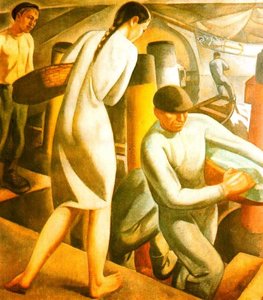
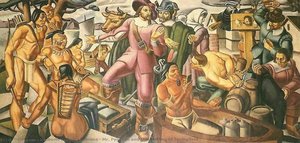
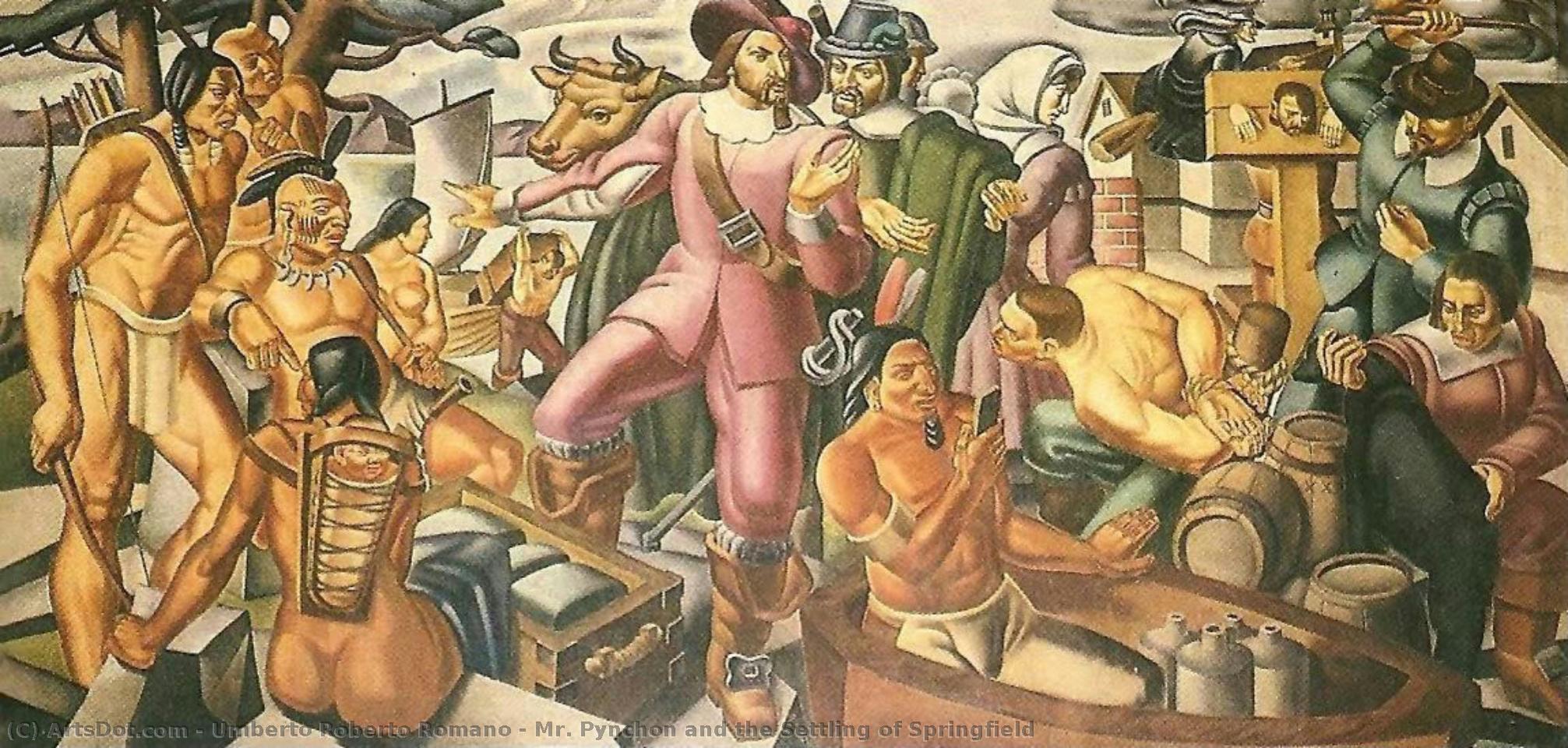
Mr. Pynchon and the Settling of Springfield

Italian-American painter Umberto Romano (1906-1982) blended Classic Modern & Abstract Expressionism, capturing iconic figures like Einstein & Kennedy. Explore his legacy!

Giclée / Art Print

Museum-quality giclée or canvas print with fast production and flexible finish options. (Buy Hand Made Painting Buy Hand Made PaintingBuy Image Buy Image)

Standard
custom
CM
INCH

Pick from our preset sizes that match the artwork's original proportions.

width
height

You may enter your own dimensions to fit a specific frame or space. If your selected size does not match the original image's proportions, we will either crop the artwork or extend the image with a mirrored or solid-fill edge. A digital mockup will be sent for your approval before production begins.
Please note that the on-screen preview does not reflect the actual cropping or extension. Only the mockup will accurately show the final composition.
While custom sizes are available, we recommend selecting a dimension from the predefined list to preserve the original proportions.

Worldwide Delivery () in 2 weeks instead of standard 4/5 weeks. (28 August)

why_choose_icon
Free Worldwide Express Shipping
why_choose_icon
High-Quality Linen Canvas
why_choose_icon
Full Shipping Insurance
why_choose_icon
Customs Tax Refund Guarantee
why_choose_icon
True Color Matching Guarantee
why_choose_icon
60-Day Return Policy (Defects Only)
why_choose_icon
100% Money-Back Guarantee
why_choose_icon
Bulk Discount Offer

Total Price

$ 63

reproduction

Mr. Pynchon and the Settling of Springfield

Giclée / Art Print

Reproduction Size

-

Total Price

$ 63

Born in Italy, muralist Umberto Romano became one of the relatively few muralists whose art graces the post office of his childhood house. Umberto Romano was born in Bracigliano, near Salerno, Italy in 1906 and moved to the United States at the age of 9, where he was raised in Springfield, Massachusetts. After attending both Howard Street School and Central High School, Romano completed some of his earliest art training in Springfield in local schools and museums. Romano then attended the American Academy in Rome, where he would later go on to serve as a member of the board and vice president of the design academy from 1967 to 1974. Romano began by painting portraits in classic modern style, including the mother of President Franklin D. Roosevelt.His later work is described as abstract expressionism, though it retained human expressions and contours, elements that are notable in his murals in the Springfield post office. He went on to paint portraits of such well-known figures as Dr. Martin Luther King, Jr., President John F. Kennedy, and Albert Einstein. Romano also went on to create a mosaic in the New York City Court. In 1934, Romano became the head of the Wooster Art Museum School, a position he held until 1940, when he took up the headship of the Romano Summer School in East Gloucester, Massachusetts, which he ran for 20 years. In 1937 with the help of several students, Romano completed the installation of six mural panels in the Springfield Main Post Office, a project that was underwritten by the Federal Arts Project. The murals depicted the history of Springfield, and remain in the same building, which is now the Commonwealth of Massachusetts State Office Building, and include a panel titled Mr. Pynchon and the Settling of Springfield. Romano then spent ten years teaching at the National Academy of Design beginning in 1968. Umberto Romano died in New York City in 1982 at the age of 77. His work is held in the collections of the Metropolitan Museum of Art, the Whitney Museum of American Art, the Fogg Art Museum in Boston and the Corcoran Gallery and Smithsonian Institution in Washington.The Mr. Pynchon in Umberto Romano’s mural is William Pynchon, known as the founder of the present-day town of Springfield, Massachusetts. Pynchon was born in Essex, England in 1590 and sailed for North America in 1630, where he became a founder and assistant treasurer of the Massachusetts Bay Colony. In 1635, Pynchon led an expedition to the Connecticut River Valley where he encountered the Pocomtuc or Nipmuc village of Agawam. Impressed with the situation of Agawam and the fertility of the land, Pynchon returned to Boston. In 1636 he led a settlement expedition of English settlers and their livestock, and purchased land from tribal leaders. Originally called Agawam Plantation, the settlement was renamed Springfield, after Pynchon’s home village in England, in 1640. The Pocomtuc or Nipmuc who lived at Agawam used controlled burns to clear trees from the land near the river. The land that was sold to Pynchon in 1636 was sold for “18 hoes, 18 fathoms of wampum, 18 coats, 18 hatchets and 18 knives.” The tribe also retained hunting and foraging rights, rights to their existing farmlands, and the right of compensation for corn crops destroyed by English cattle. In 1640, a conflict occurred when Mr. Pynchon refused to buy corn from the Pocomtuc people at what he deemed to be unreasonable prices. Residents of the Connecticut colony were angered by this, as grain had become scarce that year and their cattle were starving. Captain John Mason was sent to insist on the purchase of the corn, and his reportedly aggressive approach led to a deepening distrust of the English by the Pocomtuc. Mason also publicly censured Pynchon for his role in the episode, and as a result, Pynchon and the planters at Agawam voted to remove themselves from the jurisdiction of the Connecticut colony and were then claimed by the Massachusetts Bay colony. Mr. Pynchon was named magistrate of Agawam, and the settlement was renamed Springfield. In 1641, Pynchon became the first commercial meat packer in the new world, exporting salt pork. In 1651, Springfield was the site of the first witch trial in America when husband and wife Hugh and Mary Parsons accused each other of witchcraft. While both were acquitted of witchcraft, Mrs. Parsons was found guilty of murdering her own child and sentenced to death. At that same meeting of the Massachusetts General Court, Mr. Pynchon was charged with heresy over the publication of his book, The Meritorious Price of Our Redemption, which was inspired by his disillusionment with Puritanism. The book had been published in 1650 and subsequently became the first book to be banned in Boston. Faced with the seizure of his considerable land holdings, Mr. Pynchon signed ownership of his lands over to his son, John, and left the colonies. He returned to England in 1652, where he retired as a wealthy man from his trade in beave../..

Artist Biography

Umberto Roberto Romano: A Life Bridging Italy and America

  • Born: Bracigliano, Italy (1906)
  • Died: 1982

Umberto Roberto Romano, also known as Umberto Romano, was an Italian-born American painter whose career spanned several decades and artistic movements. Born in Bracigliano, Italy, in 1906, he immigrated to the United States with his family at the age of nine. His upbringing in Springfield, Massachusetts, shaped his early experiences, while his later studies abroad significantly influenced his artistic development.

Early Life and Artistic Training

  • Education: Attended Howard Street School and Central High School in Springfield, Massachusetts.
  • National Academy of Design: Enrolled in New York City before studying at the American Academy in Rome.

Romano's early artistic style is often described as "classic modern," reflecting a blend of traditional techniques with emerging modernist sensibilities. His time at the American Academy in Rome proved crucial, exposing him to Italian Renaissance art and fostering his appreciation for classical forms. This period laid the groundwork for his later explorations into abstract expressionism.

Artistic Style and Influences

  • Style Evolution: Transitioned from Classic Modern to Abstract Expressionist.
  • Influences: Giotto di Bondone, Michelangelo Buonarroti, Modernism, Abstract Expressionism.

Romano's artistic style was characterized by a remarkable versatility. While his early works demonstrated a strong foundation in classical techniques and realism, he gradually embraced more abstract forms and expressive brushwork. His portraits, particularly those of prominent figures like Albert Einstein, John F. Kennedy, Martin Luther King Jr., and Abraham Lincoln, showcase his ability to capture both likeness and character. Romano drew inspiration from the masters of Italian art, notably Giotto and Michelangelo, whose works he encountered during his studies in Rome. He also absorbed influences from broader modernist and abstract expressionist movements.

Notable Works and Recognition

  • Portrait Subjects: Albert Einstein, Foster Furcolo, Pope John XXIII, John F. Kennedy, Martin Luther King Jr., Abraham Lincoln, Sara Roosevelt.
  • Museum Holdings: Corcoran Gallery of Art, Fogg Art Museum (Boston), Metropolitan Museum of Art, Smithsonian Institution, Whitney Museum.

Romano's career was marked by numerous achievements and accolades. His portraits of influential figures garnered widespread recognition, and his works were acquired by prestigious museums across the United States. The inclusion of his paintings in collections at institutions like the Corcoran Gallery of Art, the Metropolitan Museum of Art, and the Smithsonian Institution solidified his reputation as a significant American artist. His work also includes murals installed in the Springfield Main Post Office.

Legacy and Impact

Umberto Roberto Romano passed away in 1982 at the age of 76, leaving behind a substantial body of work that continues to inspire art lovers and artists alike. His ability to bridge classical traditions with modern experimentation makes him a unique figure in American art history. His legacy is one of versatility, skill, and a deep engagement with both artistic heritage and contemporary social issues.
Umberto Roberto Romano

Umberto Roberto Romano

1906 - 1982 , Italy

Quick Facts

  • Artistic Movement Or Style:
    • Classic Modern
    • Abstract Expressionism
  • Artists Who Influenced This Artist:
    • Giotto di Bondone
    • Michelangelo Buonarroti
  • Date Of Birth: 1906
  • Date Of Death: 1982
  • Full Name: Umberto Roberto Romano
  • Nationality: Italian-American
  • Notable Artworks:
    • Portrait of Albert Einstein
    • Portrait of John F. Kennedy
    • Portrait of Abraham Lincoln
  • Place Of Birth: Bracigliano, Italy
Explore artworks organized by themes, styles, and characteristics.