 Preview
 Send
Send Share
Share
 Details

 Download
 Similars
 X-Ray
X-Ray Diaporama
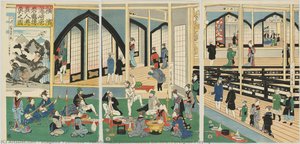
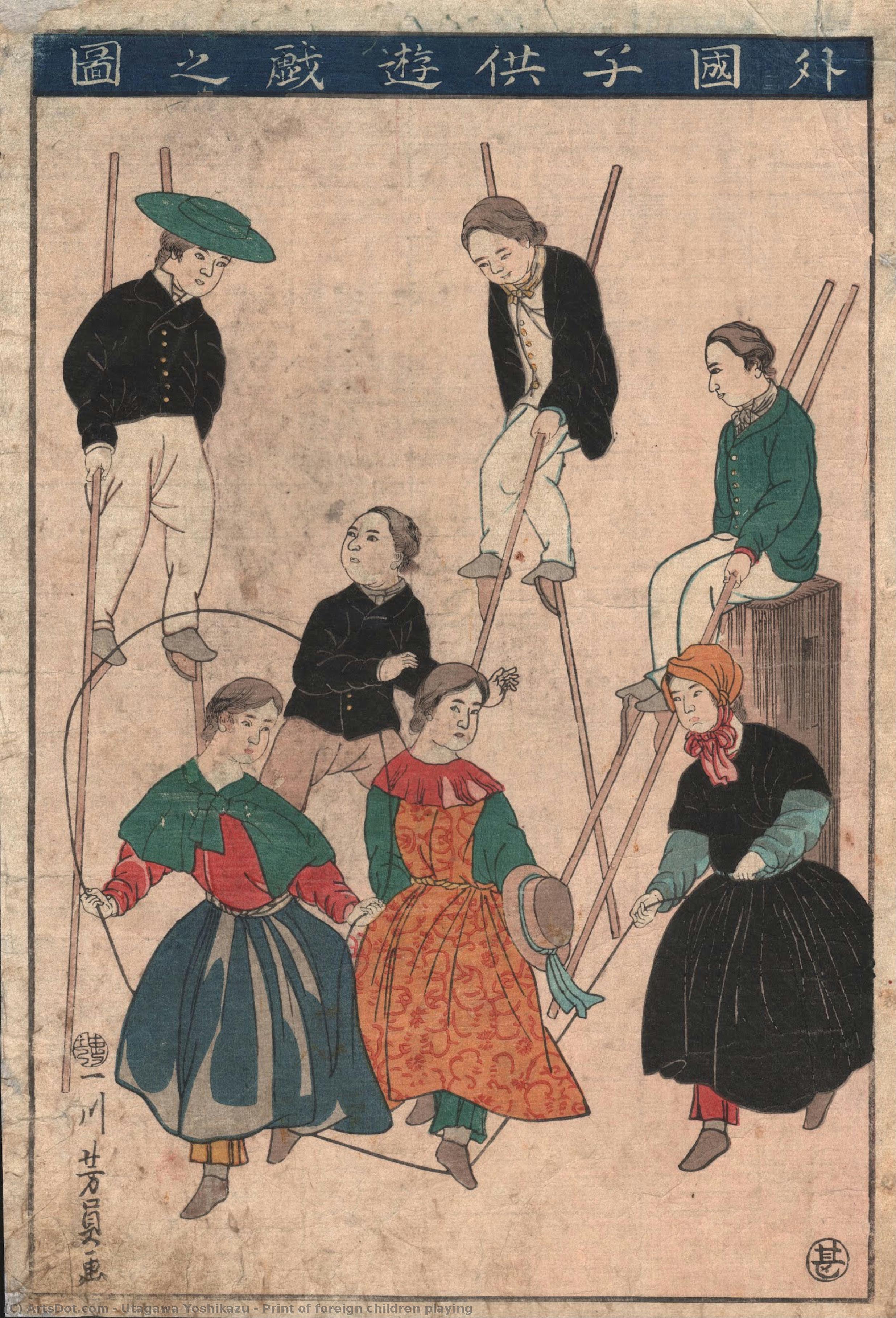
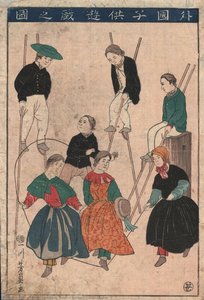
Print of foreign children playing
 Woodblock Print
- Ukiyo-e
 1860
1860- 19th Century
 36.0 x 26.0 cm
 Bujalance Collection
 Read More
Giclée / Art Print
Museum-quality giclée or canvas print with fast production and flexible finish options. ( Buy Hand Made Painting Buy Image)




P118B $10

P118H $10

P118W $10

P438Z $10

P508JH $12

P508YH $12

P805H $10

P805Z $10

P919BZ $10

P919G $10

P919XJ $10

P959ZH $10

P968JZ $12

W106C $8

W218G $10

W218JH $8

W218Y $10

W307PJ $10

W316G $10

W316PJ $8

W316Y $10

W398PJ $8

W4111J $10

W500HY $15

W500JH $15

W692G $12

W849H $8

W940BG $15

W953PJ $8




Pick from our preset sizes that match the artwork's original proportions.

You may enter your own dimensions to fit a specific frame or space. If your selected size does not match the original image's proportions, we will either crop the artwork or extend the image with a mirrored or solid-fill edge. A digital mockup will be sent for your approval before production begins.
Please note that the on-screen preview does not reflect the actual cropping or extension. Only the mockup will accurately show the final composition.
While custom sizes are available, we recommend selecting a dimension from the predefined list to preserve the original proportions.
Worldwide Delivery () in 2 weeks instead of standard 4/5 weeks. (24 August)

Free Worldwide Express Shipping

High-Quality Linen Canvas

Full Shipping Insurance

Customs Tax Refund Guarantee

True Color Matching Guarantee

60-Day Return Policy (Defects Only)

100% Money-Back Guarantee

Bulk Discount Offer
 Glass option is only available in size under 110 CM

Print of foreign children playing
Giclée / Art Print
Reproduction Size
-


Total Price
$ 63
Collectible Description
A Window into a Changing World
In the mid-19th century, the shores of Japan were undergoing a seismic cultural shift, as the isolation of the Edo period began to dissolve under the influence of Western arrival. Within this whirlwind of transformation, Utagawa Yoshikazu emerged as a vital visual chronicler through the genre of Yokohama-e. His captivating print, "Print of foreign children playing," serves as more than just a charming depiction of youth; it is a profound historical document. Created around 1860, this woodblock print captures the innocent curiosity of a generation caught between two worlds. Through his keen eye, we witness the arrival of foreign customs and the spontaneous joy of children navigating new forms of play, offering a rare, intimate glimpse into the dawn of Japan's modernization.
The composition is a lively tapestry of movement and interaction. In this delightful scene, children are seen engaged in various activities that bridge the gap between East and West. Some figures balance precariously on stilts, while others participate in the rhythmic motion of jump rope—a detail that reveals much about the artist's process. Yoshikazu, inspired by black-and-white illustrations from Western newspapers and magazines, attempted to translate these foreign pastimes into the vibrant medium of ukiyo-e. There is a charming, almost endearing imperfection in the way the rope is positioned; it lacks the practiced ease of a local game, reflecting the artist's own fascination and slight struggle to interpret unfamiliar Western mechanics. This subtle tension between observation and interpretation adds a layer of human vulnerability to the artwork.
Mastery of Line and Cultural Synthesis
Technically, this print exemplifies the exquisite precision of the Utagawa school. The delicate linework defines each child's features and clothing with remarkable clarity, while the use of color brings a sense of vitality to the playground setting. One might notice the curious inclusion of formal elements, such as ties worn by some children, which adds an unexpected touch of decorum to their spirited outdoor play. This juxtaposition of formal attire and rugged playground equipment—swings, slides, and ladders—creates a unique visual rhythm that is both whimsical and historically significant. For the collector or interior designer, this piece offers a sophisticated blend of Japanese aesthetic tradition and Western subject matter, making it a versatile centerpiece for any curated collection.
Beyond its technical merits, the emotional resonance of the work lies in its ability to evoke nostalgia and wonder. It captures a fleeting moment of pure, unadulterated childhood joy amidst a period of intense geopolitical tension. The lively atmosphere, characterized by distinct expressions and energetic poses, invites the viewer to step into this historical playground. As an art piece, it functions as a bridge across time, reminding us of the universal nature of play and the enduring human spirit of discovery. Whether displayed in a contemporary gallery or integrated into a classic study, this reproduction serves as a poignant reminder of the beauty found in cultural exchange and the timeless charm of youth.
Related Artworks
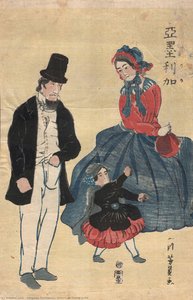
Artist Biography
Utagawa Yoshikazu: Witnessing a Changing Japan Through Woodblock Prints
Utagawa Yoshikazu, born in Tokyo during the late Edo period (approximately 1850-1870), stands as a pivotal figure in the vibrant world of Ukiyo-e art. While not as widely celebrated as some of his contemporaries like Hiroshige or Hokusai, Yoshikazu’s contribution is particularly significant for his extensive and insightful series documenting the arrival of Westerners and Western influences in Japan following the Treaty of Kanagawa with the United States in 1854. His work offers a unique window into a nation grappling with rapid modernization and cultural exchange – a period of profound transformation captured with remarkable detail and keen observation.
Yoshikazu’s artistic journey began under the tutelage of Kuniyoshi Utagawa, another prominent Ukiyo-e master known for his dynamic depictions of historical events and folklore. This formative influence undoubtedly shaped Yoshikazu's approach to composition, storytelling, and the skillful use of woodblock printing techniques. He frequently signed his works as Ichikawa Yoshikazu, a practice common among artists seeking to establish their brand and connect with patrons.
The Yokohama-e Series: A Chronicle of Western Encounters
Yoshikazu’s most enduring legacy lies in his “Yokohama-e” series. These prints, primarily produced between 1860 and 1870, focus almost exclusively on the port city of Yokohama – the primary gateway for foreign trade and immigration during this era. Unlike many Ukiyo-e artists who depicted idealized landscapes or celebrated heroic figures, Yoshikazu meticulously documented the everyday lives of Westerners in Japan: American families strolling through bustling streets, European merchants conducting business, missionaries engaged in their work, and the interactions between Japanese and foreign communities.
These weren’t romanticized portrayals; they were often unflinchingly realistic depictions of a society undergoing rapid change. Yoshikazu captured the unfamiliarity of Western clothing, architecture, and customs alongside the growing excitement and apprehension surrounding this influx of new influences. The prints offer invaluable social and historical insights, providing a visual record of a pivotal moment in Japanese history – the opening up to the West and its subsequent impact on Japanese society.
Technique and Style
As with most Ukiyo-e artists of his time, Yoshikazu employed the traditional collaborative process of woodblock printing. The artist would create the original design (the *nishiki-e*), which was then transferred to a block of cherry wood. Multiple blocks were created for each color in the print, and these blocks were inked and pressed onto Japanese paper to produce the final image. Yoshikazu’s prints are characterized by their meticulous detail, vibrant colors, and skillful use of perspective – particularly evident in his depictions of crowded cityscapes.
He demonstrated a particular mastery of capturing textures and materials, from the sheen of Western fabrics to the rough surfaces of Japanese buildings. His compositions often feature dynamic arrangements of figures, creating a sense of movement and immediacy. The influence of Kuniyoshi is noticeable in his use of dramatic lighting and bold outlines, though Yoshikazu developed a more restrained and observational style.
Notable Works and Historical Significance
Among Yoshikazu’s most celebrated works are prints like “American Family Print” (1861) and “Modern Ups and Downs Contests: Yokohama Merchants Referee (between) Entertainers and Non-workers,” which vividly portray the social dynamics of Yokohama during this period. These images offer glimpses into the burgeoning merchant class, the tensions between traditional Japanese values and Western influences, and the evolving urban landscape.
Utagawa Yoshikazu’s work is not merely aesthetically pleasing; it serves as a crucial historical document, providing invaluable insights into Japan's transition from a largely isolated nation to an increasingly interconnected world. His Yokohama-e series remains a testament to his artistic skill and his ability to capture the complexities of a transformative era – a period when Japan was irrevocably changed by its encounter with the West.
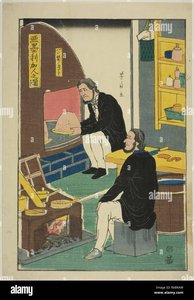
utagawa yoshikazu
Japan
Quick Facts
- Artistic Movement Or Style: Ukiyo-e, Yokohama-e
- Artists Who Influenced This Artist: ['Kuniyoshi Utagawa']
- Date Of Birth: Tokyo, Japan (c. 1850)
- Date Of Death: Living
- Full Name: Utagawa Yoshikazu
- Nationality: Japanese
- Notable Artworks:
- American Family Print
- French Family Print
- Modern Ups & Downs Contests
- Place Of Birth: Tokyo, Japan
Related Articles

Hokusai's Masterpieces: 25 Iconic Prints & Paintings for Art Lovers | ArtsDot
Journey through Katsushika Hokusai’s 25 most iconic artworks, including *The Great Wave*. Explore the ukiyo-e master's history, style & timeless Japanese woodblock prints. Find museum-quality reproductions for your home at ArtsDot.com.
Ukiyo-e: Exploring Japan's Floating World & Enduring Artistic Legacy
Explore the captivating world of Ukiyo-e – Japan's iconic woodblock prints! Discover masters like Hokusai & Hiroshige, learn about Edo period culture, and find expert art collecting guidance at ArtsDot.
Utagawa Kuniyoshi: A Master of Japanese Ukiyo-e – Narrative Innovation & the Fusion of Tradition with Popular Culture
Explore the captivating world of Utagawa Kuniyoshi, a master of Japanese ukiyo-e woodblock prints. Discover his innovative warrior scenes, vibrant landscapes & lasting legacy in 19th-century art history.
The Enduring Legacy of Woodblock Printmaking: Technique, History & Artistic Expression
Explore the rich history of woodblock printmaking – from ancient techniques to Ukiyo-e masterpieces. Discover expert insights on collecting, preserving & appreciating this enduring art form.
Suzuki Harunobu: Pioneering Ukiyo-e & the Refinement of Edo Period Printmaking
Discover the revolutionary world of Suzuki Harunobu, a pioneer of ukiyo-e printmaking. Explore his exquisite nishiki-e techniques, diverse subjects & lasting impact on Japanese art history. Learn more at ArtsDot.
![Seichūgishi uchiiri seimei 誠忠義士討入姓名 [The names of the loyal retainers who attacked]](/media/artworks/images-thumb/d8/86/d8866cfdcf02a2480cea25e4b514d6e8.jpg)