 Preview
 Send
Send Share
Share
 Details

 Download
 Similars
 X-Ray
X-Ray Diaporama
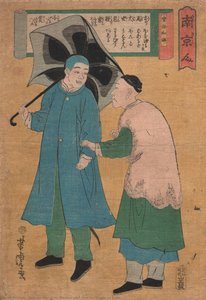
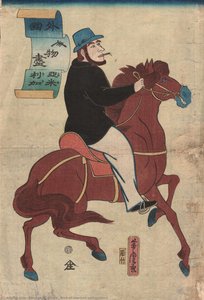
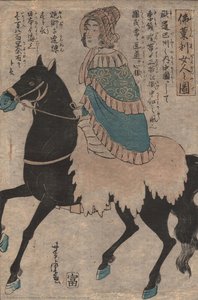
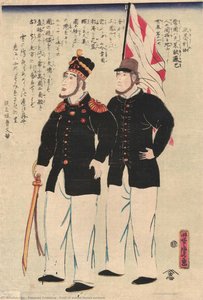
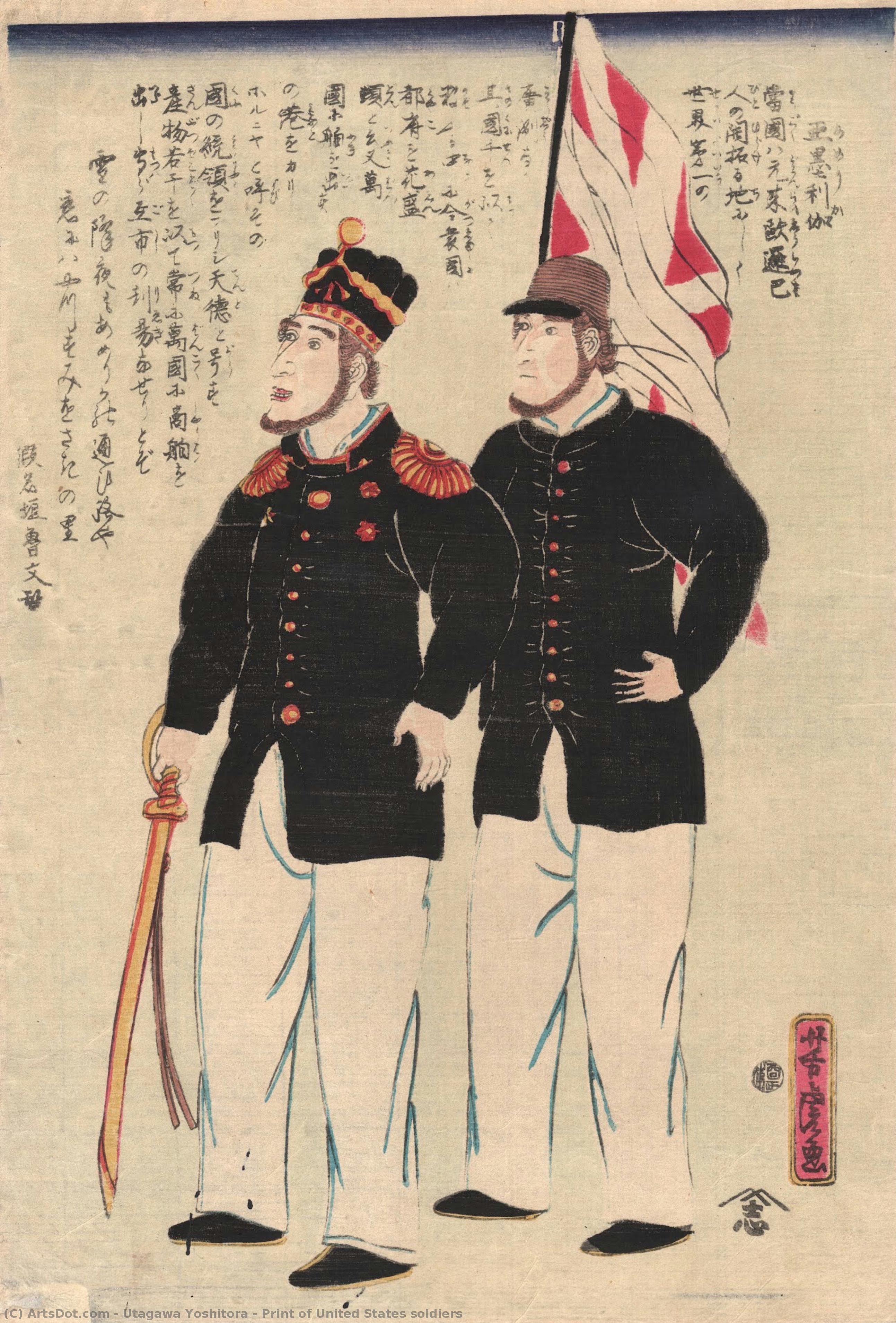
Print of United States soldiers
 Woodblock Print
- Ukiyo-e
 1860
1860- 19th Century
 36.0 x 26.0 cm
 Bujalance Collection
 Read More
Hand Made Oil Reproduction
Hand-painted oil on canvas in your size and frame, made to order by our artists. ( Buy Print Buy Image)




P118B $10

P118H $10

P118W $10

P438Z $10

P508JH $12

P508YH $12

P805H $10

P805Z $10

P919BZ $10

P919G $10

P919XJ $10

P959ZH $10

P968JZ $12

W106C $8

W218G $10

W218JH $8

W218Y $10

W307PJ $10

W316G $10

W316PJ $8

W316Y $10

W398PJ $8

W4111J $10

W500HY $15

W500JH $15

W692G $12

W849H $8

W940BG $15

W953PJ $8




Pick from our preset sizes that match the artwork's original proportions.

You may enter your own dimensions to fit a specific frame or space. If your selected size does not match the original image's proportions, we will either crop the artwork or extend the painting with additional hand-painted elements. A digital mockup will be sent for your approval before production begins.
Please note that the on-screen preview does not reflect the actual cropping or extension. Only the mockup will accurately show the final composition.
While custom sizes are available, we recommend selecting a dimension from the predefined list to preserve the original proportions.
After order, ArtsDot.com team will email client for instructions and provide a mockup preview
Worldwide Delivery () in 3/4 weeks instead of standard 5 weeks. (1 September). No compromise on quality.

Free Worldwide Express Shipping

High-Quality Linen Canvas

Full Shipping Insurance

Customs Tax Refund Guarantee

True Color Matching Guarantee

60-Day Return Policy (Defects Only)

100% Money-Back Guarantee

Bulk Discount Offer
 Glass option is only available in size under 110 CM

Print of United States soldiers
Reproduction Medium
Reproduction Size
-


Total Price
$ 263
A Window into a Changing World
In the mid-19th century, the port of Yokohama became a stage for one of history's most profound cultural encounters. This exquisite ukiyo-e print by Utagawa Yoshitora, titled Print of United States soldiers, captures a fleeting moment of intense curiosity and transition. Created around 1860, this work belongs to the fascinating genre of yokohama-e—prints specifically dedicated to documenting the arrival of foreigners in Japan. As the isolationist policies of the Edo period began to crumble, Japanese artists turned their brushes toward the unexpected sights of Western military presence, blending traditional woodblock techniques with a burgeoning fascination for the global stage.
The composition presents a striking study of two American soldiers, rendered with a meticulous attention to detail that speaks to the artist's observational prowess. Standing side by side, the figures embody the rigid discipline of their era. One soldier rests his hand confidently on his hip, while his companion maintains a poised, watchful stance with hands tucked behind him. The intricate textures of their military uniforms, the sharp lines of their hats, and the glint of swords at their sides are all captured through the masterful application of line and tone. Even in this monochromatic presentation, the depth of the scene is palpable, inviting the viewer to step back into a time when the sight of foreign uniforms was a symbol of an approaching new age.
The Artistry of the Utagawa Legacy
Utagawa Yoshitora, a dynamic force within the renowned Utagawa school, brings a unique energy to this piece that transcends mere documentation. While many ukiyo-e artists focused on the ethereal beauty of kabuki actors or landscapes, Yoshitora possessed a rare ability to infuse his work with historical weight and movement. In this print, we see the hallmark of his style: a sophisticated balance between the delicate precision of Japanese woodblock printing and a burgeoning interest in Western realism. The subtle interplay of light and shadow across the soldiers' attire creates a sense of three-dimensionality that was revolutionary for its time.
For the discerning collector or interior designer, this reproduction offers more than just a historical artifact; it provides a sophisticated focal point for any curated space. The print’s subject matter—the intersection of East and West—makes it an intellectually stimulating addition to a collection of historical art. Its monochromatic palette lends itself beautifully to modern minimalist decor, yet its profound historical narrative ensures it remains a conversation piece in more traditional, classical settings. Owning such a piece is an invitation to contemplate the dawn of globalization through the eyes of a master who witnessed the world changing forever.
Related Artworks
Artist Biography
The Dynamic Brush of Utagawa Yoshitora: A Life Immersed in Action and Innovation
Utagawa Yoshitora, a name resonating within the vibrant world of *ukiyo-e*, stands as a compelling figure whose career bridged traditional Japanese artistry with an increasingly globalized aesthetic. Born into a lineage of printmakers – though precise dates remain elusive – Yoshitora flourished during the late Edo and early Meiji periods (roughly 1830s to 1880s), a time of immense social and artistic upheaval in Japan. He navigated this shifting landscape with remarkable adaptability, leaving behind a body of work characterized by dynamic compositions, bold color palettes, and an intriguing fusion of Japanese and Western influences. While often overshadowed by his more celebrated contemporaries like Kuniyoshi, Yoshitora’s contributions are increasingly recognized for their unique energy and historical significance. His artistic journey unfolded under several names – Ichimōsai Yoshitora, Kinchōrō Yoshitora, and Mosai Yoshitora – a practice not uncommon among *ukiyo-e* artists who adopted different art names throughout their careers to mark stylistic shifts or periods of production.A Canvas of Conflict: Samurai Battles and Historical Narratives
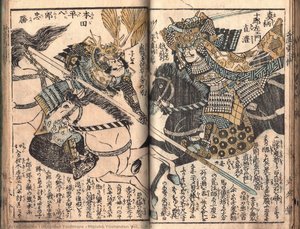
Yoshitora’s artistic reputation rests primarily on his depictions of samurai battles, warriors, and historical scenes. He possessed a keen eye for dramatic storytelling, translating epic conflicts onto woodblock prints with breathtaking detail. Unlike some artists who focused solely on idealized heroism, Yoshitora often imbued his battle scenes with a raw, visceral energy. His compositions are rarely static; instead, they explode with movement – clashing swords, rearing horses, and the determined expressions of combatants locked in fierce struggle. He wasn’t merely illustrating history; he was *recreating* it, capturing the chaos and intensity of warfare. This commitment to dynamic representation extended beyond individual battles, encompassing broader historical narratives and legendary tales of valor. His series depicting famous generals and their exploits became particularly popular, appealing to a public fascinated by both the glory and tragedy of Japan’s warrior past. The influence of earlier masters like Hokusai and Kuniyoshi is evident in his early works, but Yoshitora quickly developed a distinctive style marked by bolder outlines and more expressive use of color.Embracing the West: A Fusion of Styles
The arrival of Western culture in Japan during the late Edo period profoundly impacted *ukiyo-e* artists, and Yoshitora was among those most receptive to these new influences. He didn’t simply copy Western techniques; instead, he selectively integrated them into his existing artistic vocabulary. This is particularly noticeable in his use of perspective – a concept largely absent from traditional Japanese art – which he employed to create a greater sense of depth and realism in his compositions. Furthermore, Yoshitora experimented with shading and modeling techniques borrowed from European prints, adding volume and texture to his figures. His depictions of Western military uniforms and weaponry, often incorporated into scenes alongside traditional samurai armor, are testament to his curiosity and willingness to embrace the unfamiliar. This fusion of Eastern and Western elements wasn’t merely a stylistic quirk; it reflected Japan’s broader engagement with the world and its evolving identity during a period of rapid modernization.Beyond the Battlefield: Bijin-ga and Diverse Subject Matter
While best known for his warrior prints, Yoshitora's artistic range extended beyond the realm of conflict. He also produced *bijin-ga* – portraits of beautiful women – showcasing a delicate sensitivity and refined aesthetic sensibility. These works reveal a different facet of his talent, demonstrating his ability to capture not only action but also grace and elegance. His *bijin-ga* often depict courtesans or fashionable townswomen engaged in everyday activities, offering glimpses into the lives and customs of Edo society. Moreover, Yoshitora ventured into other subject areas, including landscapes, actors, and even Chinese print series, further highlighting his versatility as an artist. This diversity suggests a desire to appeal to a broad audience and explore different facets of Japanese culture.Legacy and Historical Significance
Utagawa Yoshitora’s legacy lies in his ability to synthesize tradition and innovation, creating *ukiyo-e* prints that are both visually striking and historically informative. He wasn't simply a follower of established conventions; he was an active participant in the evolution of Japanese art, pushing boundaries and experimenting with new techniques. His bold compositions, dynamic energy, and willingness to embrace Western influences set him apart from his contemporaries and paved the way for future generations of printmakers. While his work may not be as widely recognized as that of Hokusai or Kuniyoshi, Yoshitora’s contributions are increasingly appreciated by scholars and collectors alike. His prints offer a unique window into a pivotal period in Japanese history – a time of conflict, change, and cultural exchange – and serve as a testament to the enduring power of *ukiyo-e* art.- Key Themes: Samurai battles, historical narratives, warrior culture, fusion of Eastern and Western styles.
- Notable Series: Depictions of famous generals, legendary tales of valor, *bijin-ga* portraits.
- Influences: Hokusai, Kuniyoshi, European printmaking techniques.
Related Articles

Hokusai's Masterpieces: 25 Iconic Prints & Paintings for Art Lovers | ArtsDot
Journey through Katsushika Hokusai’s 25 most iconic artworks, including *The Great Wave*. Explore the ukiyo-e master's history, style & timeless Japanese woodblock prints. Find museum-quality reproductions for your home at ArtsDot.com.
Ukiyo-e: Exploring Japan's Floating World & Enduring Artistic Legacy
Explore the captivating world of Ukiyo-e – Japan's iconic woodblock prints! Discover masters like Hokusai & Hiroshige, learn about Edo period culture, and find expert art collecting guidance at ArtsDot.
Suzuki Harunobu: Pioneering Ukiyo-e & the Refinement of Edo Period Printmaking
Discover the revolutionary world of Suzuki Harunobu, a pioneer of ukiyo-e printmaking. Explore his exquisite nishiki-e techniques, diverse subjects & lasting impact on Japanese art history. Learn more at ArtsDot.
The Enduring Legacy of Woodblock Printmaking: Technique, History & Artistic Expression
Explore the rich history of woodblock printmaking – from ancient techniques to Ukiyo-e masterpieces. Discover expert insights on collecting, preserving & appreciating this enduring art form.
Tsukioka Yoshitoshi: A Master of Ukiyo-e's Final Flourish – Narrative, Innovation, and the Meiji Transition
Explore the life & art of Tsukioka Yoshitoshi, the last great master of ukiyo-e woodblock printing. Discover his dramatic warrior prints, innovative series like 'One Hundred Aspects of the Moon,' and legacy reflecting Japan's Meiji transition.