 Send
Send Share
Share
 Details

 Download
 Similars
 Diaporama
Saint John the Evangelist
 Sculpture
- Sculpture
- Baroque
 1810
1810- 19th Century
 188.0 x 96.0 cm
 Museu Histórico Nacional
 Read More
Giclée / Art Print
Museum-quality giclée or canvas print with fast production and flexible finish options. ( Buy Hand Made Painting Buy Image)




































Pick from our preset sizes that match the artwork's original proportions.

You may enter your own dimensions to fit a specific frame or space. If your selected size does not match the original image's proportions, we will either crop the artwork or extend the image with a mirrored or solid-fill edge. A digital mockup will be sent for your approval before production begins.
Please note that the on-screen preview does not reflect the actual cropping or extension. Only the mockup will accurately show the final composition.
While custom sizes are available, we recommend selecting a dimension from the predefined list to preserve the original proportions.
Worldwide Delivery () in 2 weeks instead of standard 4/5 weeks. (18 August)

Free Worldwide Express Shipping

High-Quality Linen Canvas

Full Shipping Insurance

Customs Tax Refund Guarantee

True Color Matching Guarantee

60-Day Return Policy (Defects Only)

100% Money-Back Guarantee

Bulk Discount Offer
 Glass option is only available in size under 110 CM

Saint John the Evangelist
Giclée / Art Print
Reproduction Size
-


Total Price
$ 63
Collectible Description
A Divine Presence in Stone: The Soul of Saint John
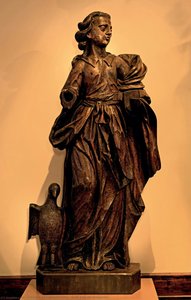
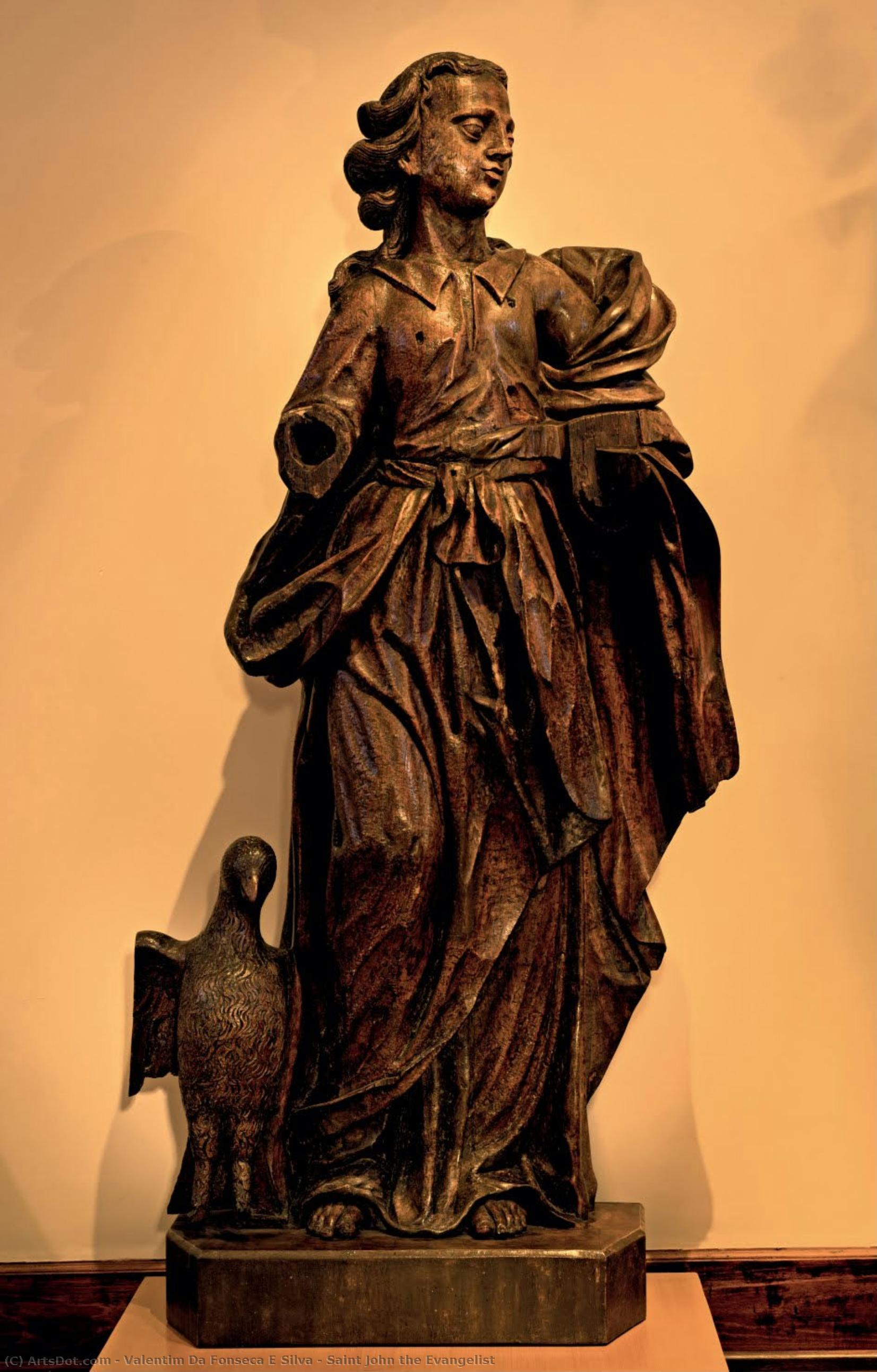
In the presence of this sculpture of Saint John the Evangelist, one is immediately struck by a profound sense of spiritual yearning. Created around 1810 by the master Brazilian sculptor Valentim da Fonseca e Silva, the piece transcends its physical form to offer a window into the divine. The figure emerges with a striking upward gaze, eyes fixed upon a celestial realm unseen by the mortal viewer. This upward tilt of the head, combined with the flowing, striated textures of his hair, creates a dynamic sense of movement, as if the Saint is caught in a moment of sudden, holy revelation. The sculpture captures not just a man, but a profound theological experience, making it an arresting centerpiece for any collection dedicated to sacred art.
The craftsmanship displayed in this work speaks to the unparalleled skill of Mestre Valentim, a pioneer of Brazilian colonial artistry. Though time has weathered the original polychrome, the structural integrity and the rhythmic drapery of the Saint's wide tunic and cloak remain breathtaking. The artist utilizes deep, intentional folds to create a play of light and shadow that gives the stone a lifelike, breathing quality. At the feet of the Evangelist, the inclusion of the eagle—his traditional symbol—is rendered with delicate incised lines that suggest the texture of feathers, grounding the celestial subject in the natural world. This interplay between the heavy, grounded drapery and the ethereal expression of the face creates a masterful tension that is both intellectually stimulating and emotionally resonant.
Symbolism and the Legacy of Mestre Valentim
To behold this work is to understand the rich cultural tapestry of early 19th-century Brazil. As a sculptor of mixed heritage, Valentim da Fonseca e Silva infused his religious subjects with a unique sensitivity that bridged different worlds. The iconography here is classic yet deeply personal; the book held by the Saint serves as a reminder of his role as the author of the Gospel, while the eagle represents the soaring heights of divine inspiration. For the discerning collector or interior designer, this piece offers more than mere decoration; it provides a historical narrative of resilience and artistic triumph during the transition from colonial rule to independence.
Integrating a high-quality reproduction of such a significant work into a contemporary space allows for a sophisticated dialogue between history and modernity. Whether placed in a sunlit gallery, a quiet study, or a grand foyer, the sculpture’s commanding presence—measuring an impressive 188 x 96 cm—commands attention without overwhelming its surroundings. It serves as an anchor of tranquility and contemplation, inviting viewers to pause and reflect on the enduring power of faith and the timeless beauty of classical sculpture. For those seeking to curate an environment of depth, elegance, and historical significance, this depiction of Saint John stands as an incomparable choice.
Related Artworks

Artist Biography
Valentim da Fonseca e Silva: A Pioneer of Brazilian Sculpture
Valentim da Fonseca e Silva, more commonly known as Mestre Valentim, was a pivotal figure in Brazilian art and urban development during the late 18th and early 19th centuries. Born into a racially mixed society, his life and work reflect both the artistic currents of his time and the unique cultural landscape of colonial Brazil.
Early Life and Background
Mestre Valentim was born in Serra do Frio, Brazil, to Manoel da Fonseca e Silva, a white man, and Amatilde da Fonseca, a black woman. This mixed heritage was significant in shaping his perspective and experiences within the stratified society of colonial Brazil. While specific details about his early life remain scarce, it is believed that he may have traveled to Portugal with his family as a child, potentially receiving some initial artistic training there.
Artistic Training and Development
The precise nature of Valentim’s formal artistic education remains a subject of debate among scholars. However, upon returning to Brazil, he established himself in Rio de Janeiro, where he quickly gained recognition for his sculptural talents. His style evolved over time, initially influenced by the Baroque tradition prevalent in Portuguese art but gradually incorporating elements of Neoclassicism as it gained prominence.
Key Characteristics and Influences
Mestre Valentim’s work is distinguished by its simplicity, functionality, and elegance. He skillfully blended European artistic techniques with Brazilian sensibilities. His sculptures often exhibit a sense of naturalism and emotional depth. While influenced by Baroque aesthetics, he also embraced the emerging Neoclassical emphasis on clarity, balance, and proportion.
Notable Works
- Saint John the Evangelist (1810): This sculpture is considered one of Valentim’s masterpieces, showcasing his mastery of form and expression. It exemplifies his ability to capture religious themes with grace and emotional resonance.
- His contributions to urban planning in Rio de Janeiro: Valentim played a crucial role in redesigning several public spaces, including the Passeio Público, a popular promenade for residents.
Urban Planning Contributions
Beyond sculpture, Mestre Valentim made significant contributions as an urban planner. He was commissioned to design and oversee the construction of various public works in Rio de Janeiro, transforming the city’s landscape. His designs emphasized functionality, aesthetics, and accessibility for all citizens.
Legacy and Historical Significance
Mestre Valentim's legacy extends far beyond his individual artworks. He is celebrated as a pioneer of Brazilian sculpture and a key figure in shaping the artistic identity of the nation. His work helped to establish a distinctly Brazilian style that blended European influences with local traditions. He paved the way for future generations of Brazilian artists, leaving an indelible mark on the country’s cultural heritage.
Final Thoughts
Valentim da Fonseca e Silva's life and career represent a fascinating intersection of art, culture, and social change in colonial Brazil. His sculptures and urban planning projects continue to inspire and captivate audiences today, solidifying his place as one of the most important artists in Brazilian history.
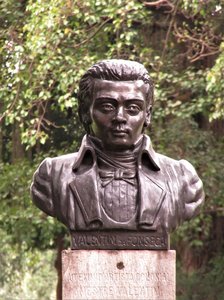
valentim da fonseca e silva
1813 , Brazil
Quick Facts
- Birth Place: Serra do Frio, Brazil
- Death Date: 1813
- Movement: Neoclassical, Baroque influence
- Name: Valentim da Fonseca e Silva
- Nationality: Brazilian
- Notable Works: ['Saint John the Evangelist']
Related Articles

Bronze Sculptures That Defined Art History | ArtsDot
Journey through art history with our Top 10 bronze sculptures! Explore masterpieces by Rodin, Michelangelo & more. Discover stories behind iconic statues and find museum-quality reproductions for your home decor at ArtsDot.com.

John Singer Sargent's 25 Masterpieces: Portraits & Beyond | ArtsDot
Explore 25 iconic John Singer Sargent paintings – from dazzling portraits to Impressionist landscapes. Discover the stories behind Madame X, El Jaleo & more! Find museum-quality art reproductions and elevate your home decor with ArtsDot.com.

John Constable's Masterpieces: Explore 25 Iconic Landscapes for Your Home
Journey through John Constable's 25 most celebrated landscapes. Explore Romanticism, Dedham Vale & his masterful use of light in iconic paintings like 'Hay Wain'. Find museum-quality art reproductions and elevate your home decor on ArtsDot.com.

The Enduring Form: Exploring Themes & Techniques in Sculpture Across Historical Periods
Explore the rich history of sculpture from ancient masterpieces to contemporary innovations. Discover key techniques, influential artists & investment potential for discerning art collectors.

Bronze Age to Modern Masters: 10 Sculptures That Redefined Art | ArtsDot
Journey through art history with 10 legendary bronze sculptures – from Michelangelo's David to Rodin’s Thinker. Explore the stories, techniques & timeless beauty of these masterpieces. Find museum-quality reproductions & elevate your home decor on ArtsDot.com.