

 Preview
 Send
Send Share
Share
 Details

 Download
 Similars
 X-Ray
X-Ray Diaporama
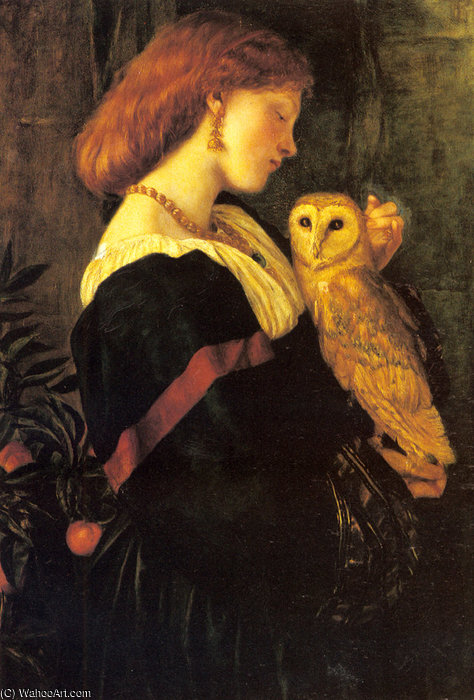
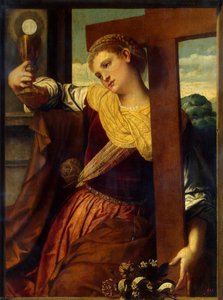
Il barbagianni

 Read More
Purchase a high-resolution, enhanced digital image, far superior to the online preview.
Each file is meticulously prepared by our in-house specialists using advanced tools and expert manual retouching. We ensure every image has exceptional clarity, precise color accuracy, and fine detail.
The final file is delivered via email within 72 hours, optimized for immediate use in professional, editorial, and print environments. This is the same quality trusted by top-tier design studios, publishers, and galleries.
Digital Image
Download a high-resolution file for personal display, printing, and creative projects. ( Buy Print Buy Hand Made Painting)
Included in Every Digital Image Order
Expert Digital Delivery, Guaranteed
When you choose ArtsDot.com, you're not just getting an image - you're receiving a professionally enhanced digital artwork, crafted with precision and backed by a satisfaction guarantee. Here's everything that comes with your order, automatically:

Fast Email Delivery
Your high-resolution digital image file will be emailed to you within 72 hours of ordering - ready for immediate use.

AI-Enhanced Digital File
Your artwork is professionally optimized using advanced AI tools and manual editing, ensuring maximum detail, clarity, and color accuracy.

Free Lifetime Re-Delivery
Accidentally deleted or lost your file? No worries - we'll resend it to you anytime, free of charge.

No Import Fees - Ever
Enjoy your artwork instantly with zero customs, duties, or delivery fees - digital downloads are always tax-free.

Color Accuracy Guarantee
We ensure your digital image reflects the original colors as closely as possible using professional tools and color management.

60-Day Satisfaction Guarantee
If you're not satisfied with your digital image, we'll revise it or refund 100% within 60 days - no questions asked.

100% Money-Back Guarantee
Not satisfied? Get a full refund within 60 days of receiving your digital file - no questions asked.

Bulk Order Discounts
Buy 3 images, save 10% - Buy 5, save 15% - Buy 10+, save 20%. Great for creative projects, galleries, and agencies.
Related Artworks
![[julia Jackson] — Julia Margaret Cameron, Victorian Photography](/media/artworks/images-thumb/38/f1/38f1667da1e9e5ced766b2acd175f4c6.jpg)
![[ellen Terry At Age Sixteen] — Julia Margaret Cameron, Pre-raphaelite Revival](/media/artworks/images-thumb/2c/7b/2c7b1d541f094c02639b9b8340679602.jpg)
Artist Biography
Early Life and Artistic Foundations
Valentine Cameron “Val” Prinsep emerged into the world in 1838, amidst the vibrant landscape of Calcutta, India. Born to Henry Thoby Prinsep, a British civil servant, and Sarah Monckton Pattle, his lineage was deeply interwoven with the fabric of colonial life. However, it was through his mother’s connections that young Valentine found himself subtly drawn into the burgeoning artistic circles of Victorian England. Sarah Prinsep was related to both the pioneering photographer Julia Margaret Cameron, and Maria Jackson, grandmother to literary giants Virginia Woolf and Vanessa Bell—a familial network that would profoundly shape his future trajectory. The family’s return to England in 1843, settling at Little Holland House in 1851, proved pivotal. This residence quickly transformed into a celebrated salon, a haven for artists, writers, and thinkers of the era. It was within these walls that Prinsep's artistic sensibilities began to blossom, nurtured by the constant exchange of ideas and the presence of luminaries like George Frederic Watts, who became his early mentor. A formative experience followed in 1856-57, when Prinsep accompanied Watts on an expedition to Sir Charles Thomas Newton’s excavations at Halicarnassus, a journey that ignited a passion for classical forms and historical narratives. His formal training continued at Charles Gleyre's atelier in Paris, where he found himself alongside future masters such as James Abbott McNeill Whistler, Edward Poynter, and George du Maurier—even serving as the inspiration for the character “Taffy” in Du Maurier’s celebrated novel Trilby.Pre-Raphaelite Affiliations and Artistic Development
Following his Parisian studies, Prinsep embarked on a period of travel through Italy, forging lasting friendships with Edward Burne-Jones and John Everett Millais. These encounters proved instrumental in solidifying his artistic direction, drawing him closer to the ideals of the Pre-Raphaelite Brotherhood. A winter spent in Rome in 1859-60 brought him into contact with Robert Browning, further enriching his intellectual landscape. Prinsep actively participated in the decoration of the Oxford Union Hall alongside Dante Gabriel Rossetti and other members of the movement, demonstrating a commitment to their shared aesthetic principles. His early works, such as A Girl Carrying Grapes (1862), clearly reflect the influence of Rossetti’s romanticism and the Pre-Raphaelite emphasis on detail and symbolism. Prinsep became a regular exhibitor at the Royal Academy from 1862 until his death, showcasing a diverse range of subjects and styles that demonstrated both his versatility and evolving artistic vision. The painting Bianca Capella (1866), depicting General Gordon in Chinese costume, garnered significant attention—a testament to Prinsep’s skill in portraiture and narrative composition. Interestingly, Millais later borrowed the same costume for his own work, Esther, highlighting the collaborative spirit within the artistic community.Major Works and Themes
Prinsep's oeuvre is marked by a compelling blend of historical narratives, romantic themes, and insightful character studies. Miriam Watching the Infant Moses (1867), exhibited at the Royal Academy, stands as a significant example of his ability to imbue biblical scenes with emotional depth and Pre-Raphaelite detail. A Venetian Lover (1868) showcases his fascination with Italian settings and romantic entanglements, while Bacchus and Ariadne (1869) draws upon classical mythology—a recurring motif in his work. News from Abroad (1871) exemplifies his talent for storytelling through painting, capturing a moment of anticipation and emotional connection. He also demonstrated a keen interest in depicting rural life and the working class with paintings like The Linen Gatherers (1876) and The Gleaners. However, it was his large-scale commission, Delhi Durbar (1880), that brought him widespread recognition. This monumental work, commissioned by the Viceroy of India, Robert Bulwer-Lytton, meticulously documented a significant historical event—the proclamation of Queen Victoria as Empress of India. Presented to the Queen herself, it found its permanent home at Buckingham Palace, solidifying Prinsep’s reputation as a painter capable of capturing both grandeur and historical accuracy. Other notable works include À Versailles, The Emperor Theophilus Chooses His Wife, The Broken Idol, and The Goose Girl.Later Life, Literary Pursuits, and Legacy
In 1884, Prinsep’s life took a fortunate turn with his marriage to Florence Leyland, daughter of the wealthy art collector Frederick Richards Leyland. This union provided him with financial security, allowing him to pursue diverse interests beyond painting. He became involved in business as a company director and landowner, demonstrating an entrepreneurial spirit alongside his artistic inclinations. Prinsep also turned his hand to writing, penning two plays—Cousin Dick and Monsieur le Duc—as well as two novels, and the travel journal Imperial India. A dedicated volunteer, he was one of the founders of the Artists Rifles, a testament to his sense of civic duty. Prinsep passed away in 1904 and was laid to rest alongside his wife Florence in Brompton Cemetery, London, marked by a distinctive Roman-style monument. His legacy resides within the Pre-Raphaelite movement as a skilled painter who explored diverse themes while maintaining connections to prominent artists of his time. His work offers valuable insight into Victorian artistic trends and social concerns, particularly regarding depictions of historical events and working-class life. Delhi Durbar, in particular, remains a significant document of British imperial history, offering a glimpse into the splendor—and complexities—of colonial India. As a member of this influential brotherhood, and connected to figures like Julia Margaret Cameron and Virginia Woolf’s grandmother, Prinsep occupies a unique position within Victorian cultural history.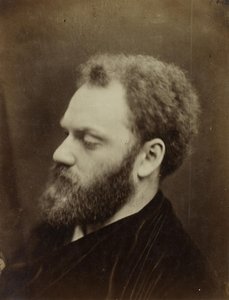
Valentine Cameron Prinsep
1838 - 1904 , India
Quick Facts
- Artistic Movement Or Style: Pre-Raphaelite
- Artists Or Movements Influenced By This Artist: ['Pre-Raphaelite Brotherhood']
- Artists Who Influenced This Artist:
- George Frederic Watts
- Edward Burne-Jones
- John Everett Millais
- Date Of Birth: 1838
- Date Of Death: 1904
- Full Name: Valentine Cameron Prinsep
- Nationality: British
- Notable Artworks:
- Miriam Watching the Infant Moses
- A Venetian Lover
- Bacchus and Ariadne
- Delhi Durbar
- Il barbagianni
- La Festa Di Lido
- Place Of Birth: Kolkata, India

