 Preview
 Send
Send Share
Share
 Details

 Download
 Similars
 X-Ray
X-Ray Diaporama
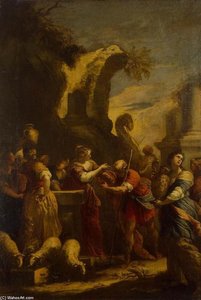
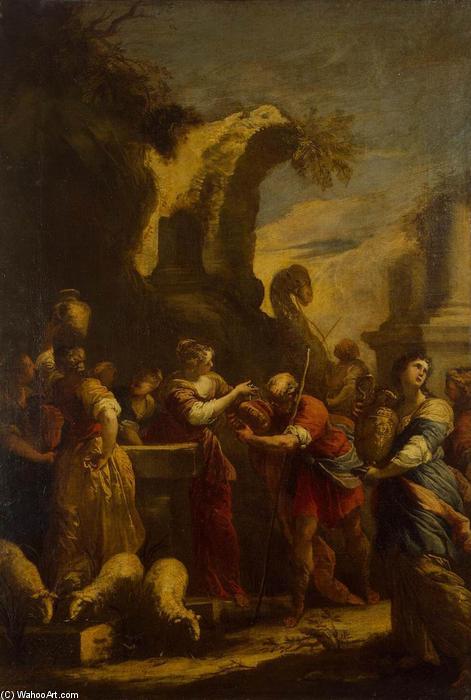
Rebecca at the Well
 Acrylic On Canvas
- WallArt
- Italian Baroque
 1644
1644 80.0 x 56.0 cm
 Hermitage Museum
 Read More
Hand Made Oil Reproduction
Hand-painted oil on canvas in your size and frame, made to order by our artists. ( Buy Print Buy Image)




P118B $10

P118H $10

P118W $10

P438Z $10

P508JH $12

P508YH $12

P805H $10

P805Z $10

P919BZ $10

P919G $10

P919XJ $10

P959ZH $10

P968JZ $12

W106C $8

W218G $10

W218JH $8

W218Y $10

W307PJ $10

W316G $10

W316PJ $8

W316Y $10

W398PJ $8

W4111J $10

W500HY $15

W500JH $15

W692G $12

W849H $8

W940BG $15

W953PJ $8




Pick from our preset sizes that match the artwork's original proportions.

You may enter your own dimensions to fit a specific frame or space. If your selected size does not match the original image's proportions, we will either crop the artwork or extend the painting with additional hand-painted elements. A digital mockup will be sent for your approval before production begins.
Please note that the on-screen preview does not reflect the actual cropping or extension. Only the mockup will accurately show the final composition.
While custom sizes are available, we recommend selecting a dimension from the predefined list to preserve the original proportions.
After order, ArtsDot.com team will email client for instructions and provide a mockup preview
Worldwide Delivery () in 3/4 weeks instead of standard 5 weeks. (17 August). No compromise on quality.

Free Worldwide Express Shipping

High-Quality Linen Canvas

Full Shipping Insurance

Customs Tax Refund Guarantee

True Color Matching Guarantee

60-Day Return Policy (Defects Only)

100% Money-Back Guarantee

Bulk Discount Offer
 Glass option is only available in size under 110 CM

Rebecca at the Well
Reproduction Medium
Reproduction Size
-


Total Price
$ 263
Artwork Description
Valerio Castello’s Rebecca at the Well: A Genoa Baroque Masterpiece
A captivating portrait of Rebecca at the well—a poignant biblical tale recounted in Genesis—stands as testament to Valerio Castello's exceptional talent and artistic vision during Genoa’s illustrious Baroque period. Painted in 1644, this artwork transcends mere representation; it embodies the spirit of its time, reflecting the fervent religious piety and humanist ideals that characterized aristocratic patronage in Liguria.The Artist and His Context
Valerio Castello (1624-1659) emerged from a lineage marked by both privilege and hardship—his father’s untimely demise leaving his family facing considerable financial difficulties. Despite these challenges, Castello relentlessly pursued artistic excellence, securing invaluable apprenticeships with Domenico Fiasella and Giovanni Andrea De Ferrari, experiences that solidified his foundational skills and exposed him to the burgeoning artistic dialogues of Italy. Genoa itself was experiencing a renaissance under the Medici influence, fostering an environment where artists like Castello could flourish, attracting commissions from wealthy families eager to adorn their homes with masterpieces reflecting moral virtue and intellectual sophistication.Style and Technique: Baroque Dynamism
Castello’s Rebecca at the Well exemplifies the hallmarks of Genoese Baroque painting—characterized by dramatic lighting, dynamic composition, and expressive brushwork. The artist skillfully employs rapid, energetic strokes to convey movement and emotion, capturing the palpable tension between Rebecca and her companions as she approaches the wellspring of salvation. Castello's meticulous attention to detail is evident in the rendering of fabrics – particularly Rebecca’s scarlet gown—which commands immediate visual interest and contributes significantly to the painting’s overall impact. The artist utilizes chiaroscuro—the interplay of light and shadow—to sculpt form, creating a palpable sense of depth and realism that draws the viewer into the scene.Symbolism: Faith and Redemption
The biblical narrative itself serves as a rich source of symbolism. Rebecca's journey to the well represents humanity’s quest for spiritual renewal and divine grace – themes central to Baroque art’s preoccupation with moral contemplation. The scarlet gown symbolizes purity and nobility, highlighting Rebecca’s virtue amidst the surrounding figures. Furthermore, the inclusion of sheep underscores the pastoral imagery prevalent in Baroque art, evoking notions of innocence, humility, and communion with God. Castello subtly communicates these profound ideas through visual cues, inviting viewers to engage in a contemplative dialogue about faith and redemption.Emotional Impact: A Moment Frozen in Time
Looking upon Rebecca at the Well is akin to stepping back into a moment imbued with palpable emotion—a testament to Castello’s ability to capture not merely what he saw but also what he felt. The painting's luminous palette, combined with its masterful execution, evokes a sense of serenity and solemn reverence. It speaks to the enduring power of biblical storytelling and its capacity to inspire contemplation on fundamental human values. This artwork remains an unforgettable emblem of Genoa’s Baroque artistic heritage, continuing to captivate audiences centuries later with its beauty and profound spiritual resonance.Related Artworks
Artist Biography
The Genesis of a Genoese Visionary
Valerio Castello emerged from the shadows of a noble Genoese lineage, a life marked by both the prestige of his birth and the sudden sting of financial hardship following his father’s untimely death. While his path might have led toward the quiet halls of scholarly pursuit, an innate, profound connection to the art of drawing redirected his destiny toward the canvas. Under the watchful eyes of masters such as Domenico Fiasella and Giovanni Andrea De Ferrari, the young Castello began to weave his technical prowess with a burgeoning artistic ambition. This formative period was not merely about mastering the brush; it was about absorbing the very essence of the Ligurian spirit, preparing him for a career that would soon illuminate the heights of the Baroque era.A Tapestry of Light and Motion
The trajectory of Castello’s genius was irrevocably altered by his transformative travels through Milan and Parma between 1640 and 1645. These wanderings served as a vital immersion into the vibrant currents of Venetian art, where he encountered the dramatic intensity of Camillo Procaccini. His style began to coalesce into a magnificent synthesis, blending the theatrical dynamism of Tintoretto with the opulent, sun-drenched grandeur of Veronese. This unique alchemy allowed him to master the complexities of composition and perspective, particularly in his celebrated battle scenes, which captured the chaotic energy and heroic scale favored by the European elite. His ability to blend these disparate influences created a visual language that was both muscular and exquisitely graceful.An Enduring Baroque Legacy
Though his life was tragically brief, ending in 1659, the impact of Castello’s hand remains etched into the architectural and spiritual fabric of Genoa. His ability to command both the intimate canvas and the monumental fresco is evident in works such as Moses Striking the Rock, a 1653 masterpiece that embodies divine power through visceral movement, and his breathtaking frescoes within the Basilica della Santissima Annunziata del Vastato. Whether depicting the poignant biblical narratives of Rebecca at the Well or the grand, collaborative triumphs at the Palazzo Balbi, Castello infused every stroke with a sense of spiritual transcendence. His influence rippled through generations, notably shaping the development of Domenico Piola and cementing his status as a pre-eminent figure of the Baroque, leaving behind a legacy of light, drama, and profound human emotion.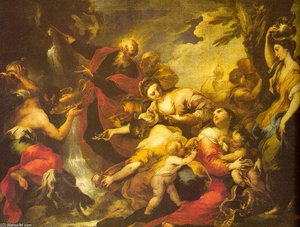
Valerio Castello
1624 - 1659 , Italy
Quick Facts
- Artistic Movement Or Style: Baroque
- Artists Or Movements Influenced By This Artist: ['Domenico Piola']
- Artists Who Influenced This Artist:
- Tintoretto
- Veronese
- Date Of Birth: 1624 Genoa Italy
- Date Of Death: 1659
- Full Name: Valerio Castello
- Nationality: Italian
- Notable Artworks:
- Miracle of Saint Zita
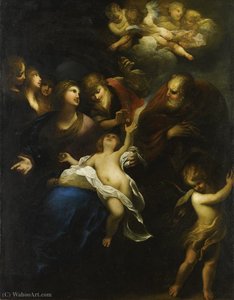
- Sacra famiglia e angeli
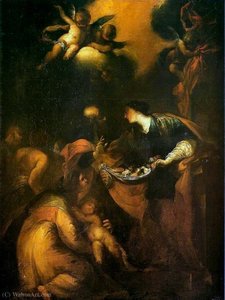
- The Adoration of the Magi
- Place Of Birth: Genoa Italy
Related Articles

Baroque Drama: Bringing Opulence & Emotion into Contemporary Interiors
Explore the opulent world of Baroque interior design! Discover key elements, modern applications & how to bring dramatic elegance into your home with 's authentic reproductions.

The Dramatic Flourish: Exploring the Baroque Movement's Enduring Legacy in Art History
Explore the dramatic world of Baroque art! Discover iconic artists like Caravaggio & Rubens, defining techniques, and its lasting impact on art history. Expert insights for collectors & enthusiasts at ArtsDot.

Baroque Masterpieces: 10 Paintings That Defined an Era |
Journey through the drama & grandeur of Baroque art! Explore 10 masterpieces by Caravaggio, Rembrandt, Rubens & more. Discover stunning oil paintings, rich colors & timeless stories. Find museum-quality reproductions at .

The Visceral Stage: Exploring Dramatic Narratives & Emotional Intensity in Baroque Art
Explore the dramatic world of Baroque art! Discover iconic masters like Caravaggio & Rembrandt, their techniques, and the movement's lasting impact. Expert insights for collectors & enthusiasts at ArtsDot.

Theatricality & Triumph: Baroque Drama in Painting & Sculpture
Explore the dramatic world of Baroque art! Discover its history, defining characteristics, & lasting influence on painting & sculpture. Expert insights into Caravaggio, Zurbarán, and Bernini – plus high-quality reproductions at ArtsDot.