

 Preview
 Send
Send Share
Share
 Details

 Download
 Similars
 X-Ray
X-Ray Diaporama
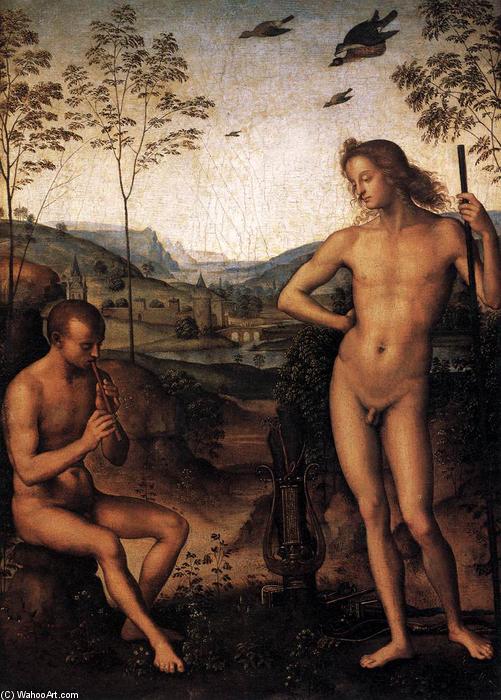
Apollo and Marsyas
 High Renaissance
 1495
1495- Renaissance
 39.0 x 29.0 cm
 The Louvre
 Read More
Purchase a high-resolution, enhanced digital image, far superior to the online preview.
Each file is meticulously prepared by our in-house specialists using advanced tools and expert manual retouching. We ensure every image has exceptional clarity, precise color accuracy, and fine detail.
The final file is delivered via email within 72 hours, optimized for immediate use in professional, editorial, and print environments. This is the same quality trusted by top-tier design studios, publishers, and galleries.
Digital Image
Download a high-resolution file for personal display, printing, and creative projects. ( Buy Print Buy Hand Made Painting)
Included in Every Digital Image Order
Expert Digital Delivery, Guaranteed
When you choose ArtsDot.com, you're not just getting an image - you're receiving a professionally enhanced digital artwork, crafted with precision and backed by a satisfaction guarantee. Here's everything that comes with your order, automatically:

Fast Email Delivery
Your high-resolution digital image file will be emailed to you within 72 hours of ordering - ready for immediate use.

AI-Enhanced Digital File
Your artwork is professionally optimized using advanced AI tools and manual editing, ensuring maximum detail, clarity, and color accuracy.

Free Lifetime Re-Delivery
Accidentally deleted or lost your file? No worries - we'll resend it to you anytime, free of charge.

No Import Fees - Ever
Enjoy your artwork instantly with zero customs, duties, or delivery fees - digital downloads are always tax-free.

Color Accuracy Guarantee
We ensure your digital image reflects the original colors as closely as possible using professional tools and color management.

60-Day Satisfaction Guarantee
If you're not satisfied with your digital image, we'll revise it or refund 100% within 60 days - no questions asked.

100% Money-Back Guarantee
Not satisfied? Get a full refund within 60 days of receiving your digital file - no questions asked.

Bulk Order Discounts
Buy 3 images, save 10% - Buy 5, save 15% - Buy 10+, save 20%. Great for creative projects, galleries, and agencies.
Collectible Description
A Celestial Duel of Melody and Myth
In the delicate dance of light and shadow that defines the High Renaissance, Pietro Perugino’s Apollo and Marsyas emerges as a profound meditation on the tension between divine order and earthly passion. Created in 1495, this exquisite oil on wood masterpiece invites the viewer into a tranquil yet charged mythological encounter. On one side of the composition, we encounter Apollo, the radiant god of music and prophecy, his youthful features bathed in a soft, ethereal glow as he holds his flute to his lips with effortless grace. Opposite him stands Marsyas, the satyr whose very presence introduces a raw, rhythmic energy to the scene. As they engage in their legendary musical contest, the painting captures more than just a performance; it captures a moment of suspended animation where the heavens and the earth seem to hold their breath.
The artistry of Le Perugino is masterfully displayed through his signature Umbrian style, characterized by an unparalleled sense of harmony and atmospheric perspective. The landscape behind the figures is not merely a backdrop but a living, breathing extension of the narrative. Rolling hills, verdant trees, and a clear, luminous sky stretch toward the horizon, creating a sense of infinite depth that draws the eye deep into the Italian countryside. Perugino’s use of color is subtle yet evocative, employing warm earth tones and delicate transitions that lend a realistic weight to the figures while maintaining a dreamlike, idealized quality. This mastery of light and shadow—the sfumato effect—softens the edges of reality, allowing the divine and the mortal to coexist within a single, seamless plane.
Symbolism and the Renaissance Spirit
Beyond its aesthetic splendor, Apollo and Marsyas serves as a complex allegory for the intellectual and cultural shifts of the late 15th century. To the Renaissance mind, this musical duel was far more than a myth; it represented the eternal struggle between ratio (reason) and passio (emotion). Apollo, with his disciplined flute playing, embodies the structured, mathematical perfection of divine intellect, while Marsyas, through the primal sound of the double flute, represents the untamed, instinctive impulses of the human spirit. For collectors and historians alike, the painting acts as a window into the humanist ideals of the era, where the pursuit of beauty was inextricably linked to the pursuit of truth and cosmic order.
For the discerning interior designer or art enthusiast, bringing a high-quality reproduction of this work into a space offers an opportunity to introduce a sense of classical serenity and intellectual depth. The painting’s balanced composition and muted, sophisticated palette make it a versatile centerpiece, capable of anchoring a room with its quiet authority. Whether placed in a sunlit gallery or a private study, the presence of Perugino’s masterpiece evokes a timeless elegance, reminding us of an era when art was the ultimate bridge between the human experience and the divine.
Related Artworks
Artist Biography
Pietro Vannucci (Le Perugino): The Maestro of Florentine Madonna Painting
Pietro Vannucci, commonly known as Le Perugino—a name derived from his birthplace—was a pivotal figure in the Florentine Renaissance, cementing his reputation as one of Italy’s most celebrated painters. Born around 1446 in Perugia, Umbria, he emerged from a family steeped in artistic tradition and quickly established himself as a prolific artist whose serene depictions of Mary and Jesus captivated audiences across Europe. His distinctive style—characterized by luminous colors, graceful compositions, and an unparalleled sensitivity to humanist ideals—influenced generations of artists and continues to inspire admiration today.- Early Life & Artistic Training:
- Formal Education: Vannucci’s artistic journey began with training under Piero della Francesca in Arezzo, absorbing the master's mastery of perspective and idealized realism. This formative experience instilled a profound appreciation for mathematical precision combined with spiritual contemplation—a hallmark of his oeuvre.
- Florence & Patronage:
- Arrival in Florence: Around 1470, Vannucci relocated to Florence under the patronage of Lorenzo de’ Medici, securing commissions that propelled him to international acclaim. His association with Medici fostered an environment conducive to artistic innovation and allowed him to collaborate with luminaries like Michelangelo and Sandro Botticelli.
Style & Technique: The Essence of Florentine Idealism
Le Perugino’s artistic vision revolved around achieving a harmonious blend of observation and imagination. He meticulously studied natural forms—particularly landscapes—to inform his paintings, yet he skillfully manipulated light and color to convey profound emotional depth. His technique involved layering thin glazes of pigment upon toned ground, creating surfaces that shimmered with ethereal beauty. This meticulous approach resulted in canvases imbued with an unparalleled sense of tranquility and grace – a stylistic hallmark that distinguishes him from many of his contemporaries.- Color Palette: Vannucci favored pastel hues—particularly blues, greens, and yellows—to evoke the serenity of Marian scenes. These colors were applied with remarkable subtlety, enhancing the luminous quality of his paintings.
- Composition & Perspective:
- Balanced Arrangements: His compositions prioritized balance and harmony, reflecting humanist ideals that emphasized proportion and order. Vannucci skillfully employed linear perspective to create convincing spatial illusions, grounding his figures within believable environments.
Notable Works & Legacy
Le Perugino’s artistic output spanned decades and encompassed a vast array of commissions—ranging from altarpieces adorning churches to portraits capturing the dignity of noble families. Among his most iconic creations are “The Virgin and Child Surrounded by Two Angels,” “Saint Jerome Soutenant Deux Jeunes Pendus” and "Virgin and Child Enthroned with Angels and Saints"—each demonstrating his unparalleled ability to convey spiritual grace through visual artistry. These paintings stand as enduring symbols of Florentine Renaissance aesthetics, influencing artists for centuries afterward.- "The Virgin and Child Surrounded by Two Angels": Considered one of Le Perugino’s finest achievements, this masterpiece exemplifies his mastery of color and composition, capturing the tenderness of Mary and Jesus with breathtaking sensitivity.
- "Saint Jerome Soutenant Deux Jeunes Pendus": This poignant depiction showcases Vannucci's ability to infuse religious imagery with psychological nuance—a testament to his profound understanding of human emotion.
Influence & Historical Significance
Le Perugino’s influence extended far beyond the confines of Florence, shaping artistic trends across Italy and inspiring artists in Northern Europe. His serene style resonated with humanist sensibilities—promoting a vision of beauty rooted in moral virtue—and solidified his position as one of the foremost painters of his era. Today, Le Perugino's legacy persists—serving as an exemplar of Renaissance idealism and demonstrating the transformative power of art to elevate human consciousness.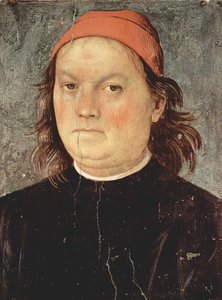
vannucci pietro (le perugin)
1446 - 1523
Quick Facts
- Artistic Movement Or Style: Renaissance
- Artists Or Movements Influenced By This Artist:
- Raphael
- Northern Renaissance
- Artists Who Influenced This Artist:
- Michelangelo Buonarroti
- Leonardo da Vinci
- Date Of Birth: c. 1446
- Date Of Death: 1523
- Full Name: Pietro Vannucci
- Nationality: Italian
- Notable Artworks:
- The Virgin and Child Surrounded by Two Angels, St. Rose, and St. Catherine
- Virgin and Child Enthroned with Angels and Saints
- SAINT JEROME SOUTENANT DEUX JEUNES PENDUS
- Place Of Birth: Umbria, Italy

