 Preview
 Send
Send Share
Share
 Details

 Download
 Similars
 X-Ray
X-Ray Diaporama
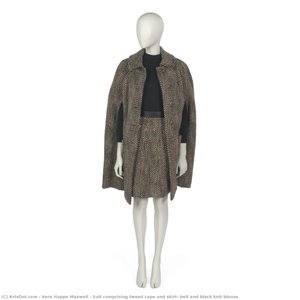
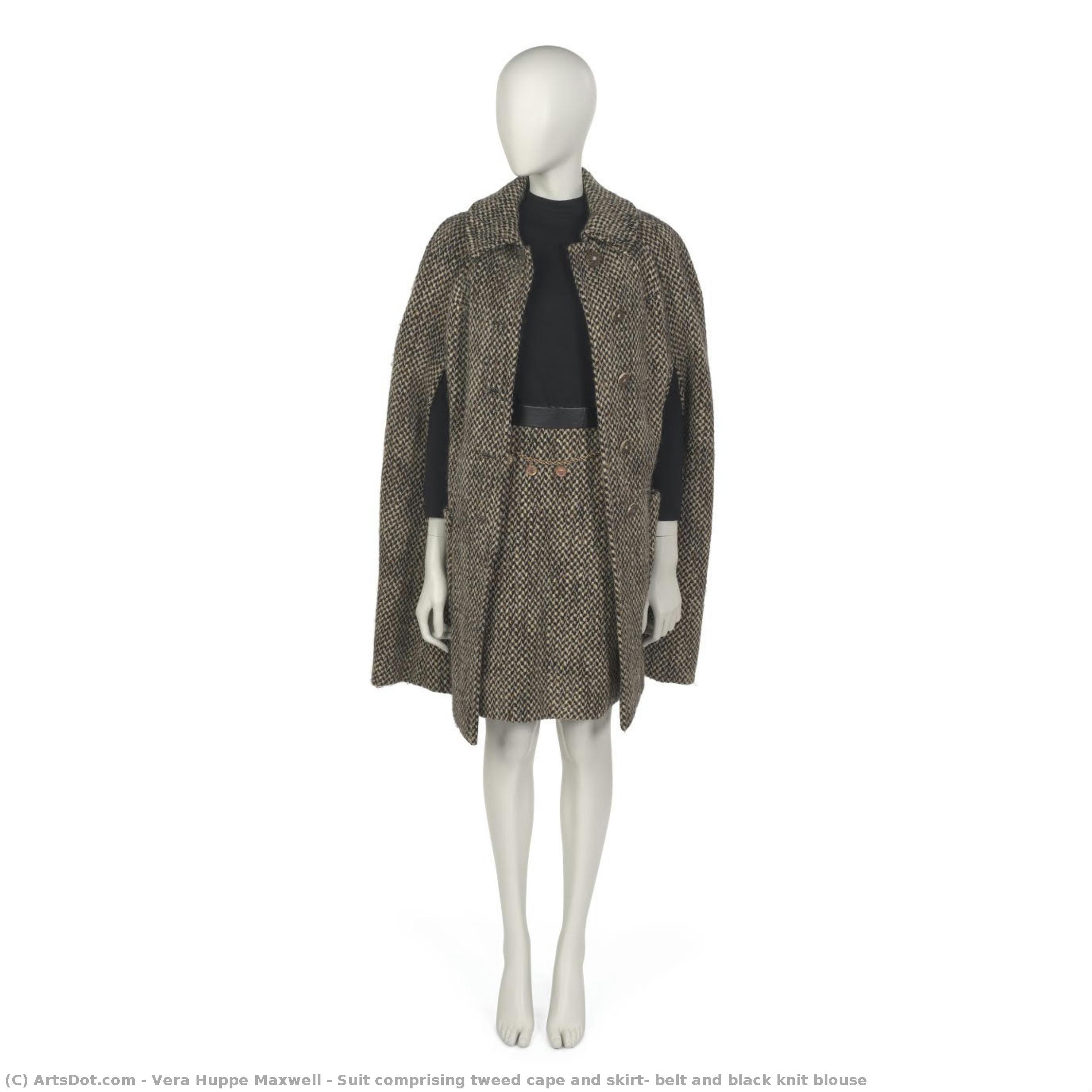
Suit comprising tweed cape and skirt, belt and black knit blouse


 Read More
Giclée / Art Print
Museum-quality giclée or canvas print with fast production and flexible finish options. ( Buy Hand Made Painting Buy Image)




































Pick from our preset sizes that match the artwork's original proportions.

You may enter your own dimensions to fit a specific frame or space. If your selected size does not match the original image's proportions, we will either crop the artwork or extend the image with a mirrored or solid-fill edge. A digital mockup will be sent for your approval before production begins.
Please note that the on-screen preview does not reflect the actual cropping or extension. Only the mockup will accurately show the final composition.
While custom sizes are available, we recommend selecting a dimension from the predefined list to preserve the original proportions.
Worldwide Delivery () in 2 weeks instead of standard 4/5 weeks. (23 August)

Free Worldwide Express Shipping

High-Quality Linen Canvas

Full Shipping Insurance

Customs Tax Refund Guarantee

True Color Matching Guarantee

60-Day Return Policy (Defects Only)

100% Money-Back Guarantee

Bulk Discount Offer
 Glass option is only available in size under 110 CM

Suit comprising tweed cape and skirt, belt and black knit blouse
Giclée / Art Print
Reproduction Size
-


Total Price
$ 63
Collectible Description
Related Artworks

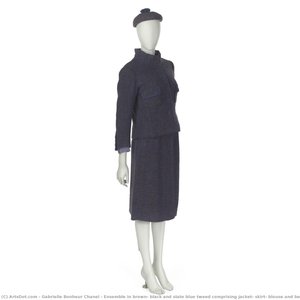
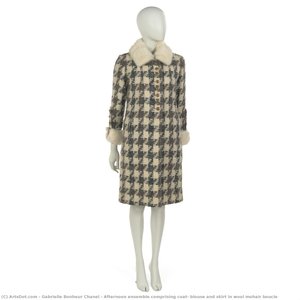
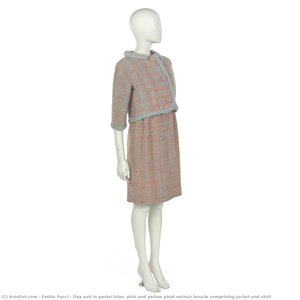
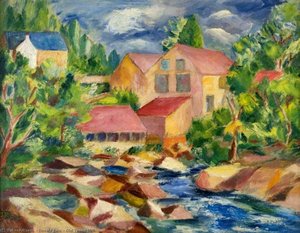
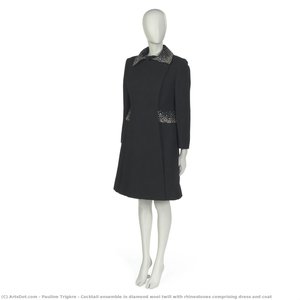
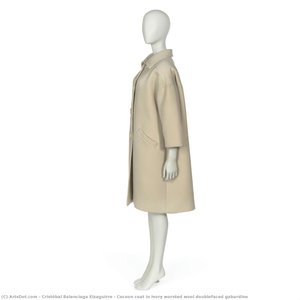
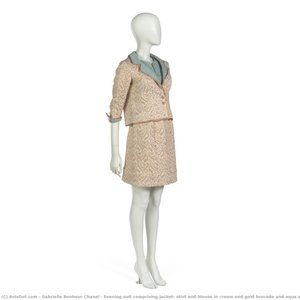
Artist Biography
A Pioneer of Practicality: The Life and Legacy of Vera Huppe Maxwell
Vera Huppe Maxwell, born in New York City on April 22, 1901, wasn’t merely a fashion designer; she was an architect of American sportswear, a woman who understood the evolving needs of a nation shedding restrictive formality for comfort and practicality. Her journey began not in the ateliers of Paris, but amidst the dynamism of early 20th-century New York, with formative years punctuated by time spent in Austria—a cultural blend that would later subtly inform her aesthetic. Initially drawn to the grace of ballet, Maxwell pursued a career as a dancer with the Metropolitan Opera Ballet, a discipline that instilled within her an appreciation for movement and form. However, fate intervened when she married financier Raymond J. Maxwell in 1924, leading to a shift towards the world of fashion through modeling engagements at prominent stores like B. Altman. This wasn’t simply a career detour; it was an immersion into the very fabric—literally—of American style.From Modeling to Mastery: The Birth of Vera Maxwell Originals
Maxwell's keen eye and innate understanding of design soon transcended her role as a mannequin. While modeling, she began sketching ideas for garments, subtly influencing the collections she presented. This creative spark led to contract work designing for various manufacturers, honing her skills and solidifying her vision. In 1947, at the age of forty-six, Maxwell boldly launched “Vera Maxwell Originals,” a company built on the principles of sportswear—clothing designed not just for appearance, but for *living*. Her debut collection was refreshingly pragmatic: after-ski attire, tennis outfits, and riding apparel – pieces that catered to an active lifestyle. This marked a turning point in American fashion, moving away from European haute couture’s rigid structures towards designs that embraced functionality without sacrificing elegance. She wasn't dictating style; she was responding to the needs of women who were increasingly independent and engaged in diverse activities.Defining American Sportswear: A Community of Innovators
Maxwell didn’t operate in isolation. She was a vital member of a pioneering cohort of American designers—Claire McCardell, Clare Potter, Carolyn Schnurer, and Tina Leser among them—who collectively redefined women's clothing after World War II. These innovators shared a commitment to creating comfortable, versatile garments that reflected the spirit of the nation. Maxwell distinguished herself through her clever use of distinctly American names for her designs – “Daniel Boone” for Western wear, for example – imbuing her creations with a sense of playful identity. By the 1950s, she expanded her repertoire to include evening wear, demonstrating that practicality and sophistication weren’t mutually exclusive. Her contemporaries recognized her talent; Maxwell was among the first American designers to experiment with innovative fabrics like Ultrasuede and Arnel, pushing boundaries and challenging conventional notions of textile use.Beyond Aesthetics: Functionality, Inclusivity, and Lasting Impact
Maxwell's designs were more than just visually appealing; they were thoughtfully constructed for real women. She was a pioneer in offering clothes in a wider range of sizes—often up to size 18 or 20—at a time when the industry largely catered to a limited body type. This commitment to inclusivity wasn’t merely a marketing strategy; it reflected her belief that fashion should be accessible and empowering for all. Her signature wrap-and-tie closures and supple fabrics were designed to accommodate fluctuations in weight and provide comfort without compromising style. In 1935, she introduced the “weekend wardrobe”—a collection of interchangeable jackets, skirts, and trousers—that was lauded for its timelessness and versatility. Even decades later, critics noted that these pieces remained remarkably modern. Her designs weren’t about fleeting trends; they were about enduring quality and adaptability. Maxwell received the prestigious Coty Award in 1953, a testament to her influence and artistry. She continued designing until 1985, leaving behind a legacy of practicality, inclusivity, and timeless elegance that continues to inspire designers today. Her work stands as a powerful reminder that true style isn’t about extravagance; it's about confidence, comfort, and the freedom to live fully.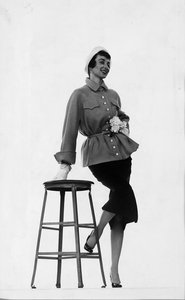
vera huppe maxwell
1901 - 1995 , United States of America
Quick Facts
- Artistic Movement Or Style: Sportswear design
- Artists Or Movements Influenced By This Artist:
- Claire McCardell
- Carolyn Schnurer
- Date Of Birth: April 22, 1901
- Date Of Death: January 15, 1995
- Full Name: Vera Huppe Maxwell
- Nationality: American
- Notable Artworks:
- Suit comprising tweed cape & skirt
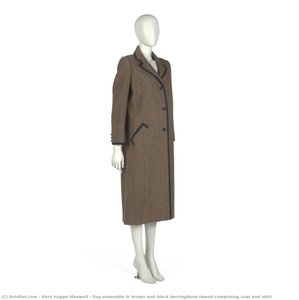
- Day ensemble in brown herringbone
- Evening ensemble (silk)
- Place Of Birth: New York City, USA
Related Articles
George Paul Chalmers: Rediscovering the Angus Rembrandt & Scottish Colourist Roots
Explore the captivating world of George Paul Chalmers (1833-1878), a pivotal Scottish painter. Discover his landscapes, portraits & connection to the Aesthetic Movement and Colourists. Learn about this 'Angus Rembrandt's' legacy with ArtsDot.
Sir John Watson Gordon: A Study in Scottish Landscape Painting & Tonal Impressionism
Explore the captivating portraits of Sir John Watson Gordon, a leading Scottish master. Discover his evolution from neoclassical style to atmospheric Tonalism and influence on 19th-century British art. Learn about his iconic sitters & legacy.
James Giles: Capturing Scottish Life Through the Lens of British Realism
Explore the life & work of James Giles (1801-1870), a master of Scottish landscape painting and favored artist of Queen Victoria. Discover his atmospheric realism & royal commissions.
William Brassey Hole: A Victorian Master of Narrative Watercolour & Scottish Life
Explore the captivating paintings of William Brassey Hole, a Victorian master renowned for his dramatic biblical scenes, Scottish landscapes & industrial life. Discover his technique and lasting legacy.
Henry Raeburn Dobson: A Scottish Colourist Bridging Tradition & Modernity
Explore the life & work of Henry Raeburn Dobson, a key figure bridging Scottish tradition & modern art. Discover his neoclassical portraits, landscapes, and connection to the Colourists. Learn about collecting his works.