

 Preview
 Send
Send Share
Share
 Details

 Download
 Similars
 X-Ray
X-Ray Diaporama
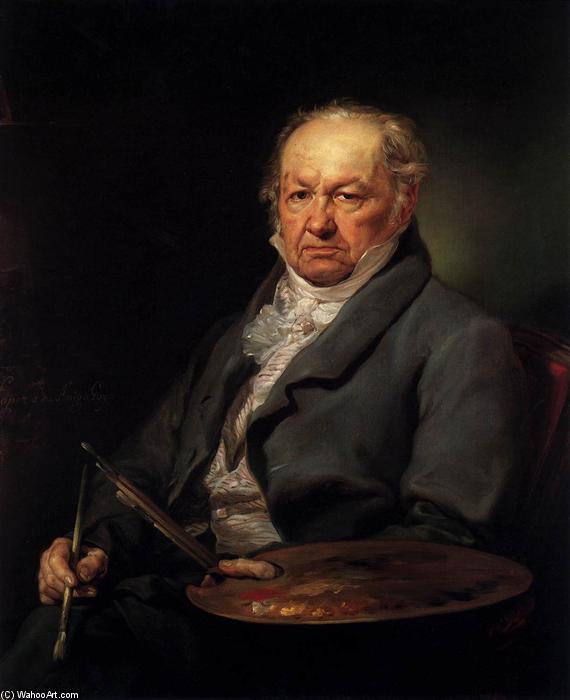
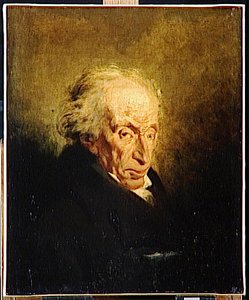
The Painter Francisco de Goya
 Acrylic On Canvas
- WallArt
- Neoclassical Portraiture
 1826
1826 93.0 x 75.0 cm
 Museo del Prado
 Read More
Purchase a high-resolution, enhanced digital image, far superior to the online preview.
Each file is meticulously prepared by our in-house specialists using advanced tools and expert manual retouching. We ensure every image has exceptional clarity, precise color accuracy, and fine detail.
The final file is delivered via email within 72 hours, optimized for immediate use in professional, editorial, and print environments. This is the same quality trusted by top-tier design studios, publishers, and galleries.
Digital Image
Download a high-resolution file for personal display, printing, and creative projects. ( Buy Print Buy Hand Made Painting)
Included in Every Digital Image Order
Expert Digital Delivery, Guaranteed
When you choose ArtsDot.com, you're not just getting an image - you're receiving a professionally enhanced digital artwork, crafted with precision and backed by a satisfaction guarantee. Here's everything that comes with your order, automatically:

Fast Email Delivery
Your high-resolution digital image file will be emailed to you within 72 hours of ordering - ready for immediate use.

AI-Enhanced Digital File
Your artwork is professionally optimized using advanced AI tools and manual editing, ensuring maximum detail, clarity, and color accuracy.

Free Lifetime Re-Delivery
Accidentally deleted or lost your file? No worries - we'll resend it to you anytime, free of charge.

No Import Fees - Ever
Enjoy your artwork instantly with zero customs, duties, or delivery fees - digital downloads are always tax-free.

Color Accuracy Guarantee
We ensure your digital image reflects the original colors as closely as possible using professional tools and color management.

60-Day Satisfaction Guarantee
If you're not satisfied with your digital image, we'll revise it or refund 100% within 60 days - no questions asked.

100% Money-Back Guarantee
Not satisfied? Get a full refund within 60 days of receiving your digital file - no questions asked.

Bulk Order Discounts
Buy 3 images, save 10% - Buy 5, save 15% - Buy 10+, save 20%. Great for creative projects, galleries, and agencies.
Collectible Description
A Masterful Study: Vicente López y Portaña’s “The Painter Francisco de Goya”
Vicente López y Portaña's 1826 portrait of Francisco de Goya is more than just a likeness; it’s a profound meditation on the artist’s life, his evolving artistic vision, and the complex realities of his time. Painted during a period of immense personal and political upheaval in Spain – a nation grappling with war, revolution, and the waning influence of the monarchy – the portrait captures Goya not as the celebrated court painter he once was, but as a man wrestling with his legacy, his deafness, and the shadows that increasingly dominated his work. López y Portaña skillfully avoids romanticizing the artist; instead, he presents a figure of quiet dignity, yet subtly imbued with an air of melancholy and introspection.
The composition itself is remarkably restrained. Goya sits in a simple chair, clad in a dark suit – a deliberate choice that emphasizes his age and the weight of experience. His hands, resting on the table before him, are not gesturing dramatically, but rather holding a brush with a quiet intensity. This gesture speaks volumes about his continued dedication to art, even as his hearing diminished and his world darkened. The background is deliberately dark, drawing attention to Goya’s face – a face etched with lines of wisdom, weariness, and perhaps a hint of defiance. López y Portaña's masterful use of light and shadow creates a sense of intimacy, inviting the viewer into a private moment of contemplation.
The Context of a Changing Spain
To fully appreciate this portrait, it’s crucial to understand the historical context in which it was created. Goya had served as court painter for decades, producing grand portraits and elaborate decorations for the Spanish monarchy. However, by 1826, he was largely estranged from the royal court and increasingly disillusioned with the political landscape. The Peninsular War against Napoleon had left Spain devastated, and the subsequent restoration of Ferdinand VII’s absolutist rule ushered in a period of repression and instability. Goya himself suffered greatly during this time, losing his hearing and experiencing profound personal loss.
López y Portaña, a contemporary of Goya's, was acutely aware of these turbulent times. His portrait reflects the anxieties and uncertainties of the era, capturing not only Goya’s physical appearance but also the emotional state of a nation struggling to rebuild itself. The somber palette – dominated by dark browns, grays, and blacks – mirrors the prevailing mood of pessimism and disillusionment.
Technique and Artistic Influence
López y Portaña's technique is characterized by its realism and meticulous attention to detail. He skillfully renders Goya’s features with remarkable accuracy, capturing the nuances of his expression and the texture of his skin. The brushstrokes are smooth and controlled, creating a sense of solidity and permanence. However, López y Portaña doesn’t simply aim for photographic likeness; he imbues the portrait with a subtle emotional depth through his use of light and shadow.
The influence of Velázquez is undeniable in this work. Goya's pose, reminiscent of Velázquez’s self-portrait, suggests a deliberate homage to the great master. López y Portaña also draws upon the conventions of Spanish portraiture, but he departs from traditional formulas by presenting Goya not as an idealized hero, but as a complex and flawed human being. The subtle suggestion of weariness in Goya's eyes hints at the burdens he carries – both personal and national.
Symbolism and Enduring Resonance
Beyond its technical merits, “The Painter Francisco de Goya” is rich in symbolism. The brush in Goya’s hand represents his enduring passion for art, even as his physical and mental faculties declined. The dark background suggests the shadows that have enveloped his life – the loss of his hearing, the horrors of war, and the disillusionment with political power. Yet, despite these challenges, Goya retains a sense of dignity and resilience.
This portrait remains a powerful testament to the enduring legacy of Francisco de Goya. It’s not merely a depiction of an artist; it's a window into the soul of a nation grappling with profound change. Reproductions of this iconic work continue to captivate viewers, offering a glimpse into the mind and heart of one of history’s most influential artists.
Related Artworks
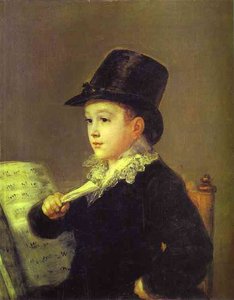
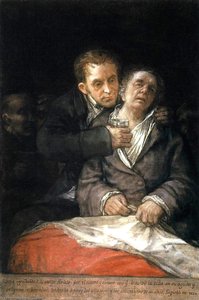
Artist Biography
A Life Etched in Portraiture: The World of Vicente López y Portaña
Born into the vibrant artistic landscape of Valencia, Spain, in 1772, Vicente López y Portaña emerged as a pivotal figure bridging the Neoclassical and Romantic eras. His parents, Cristóbal López Sanchordi and Manuela Portaña Miró, nurtured his early inclinations toward art, initiating his formal training at the tender age of thirteen under the guidance of Father Antonio de Villanueva, a Franciscan friar who instilled in him not only technical skill but also a deep appreciation for artistic discipline. This foundation led him to the prestigious Academy of San Carlos in Valencia, where he honed his abilities before earning a coveted scholarship to the Academia Real de Bellas Artes de San Fernando in Madrid at just seventeen years old—a testament to his burgeoning talent. There, a three-year apprenticeship under the esteemed Valencian painter Mariano Salvador Maella further refined his technique and exposed him to the intricacies of courtly artistry.Royal Commissions and Artistic Ascendancy
López y Portaña’s return to Valencia in 1794 marked not an end to his education, but a new beginning as vice-director of painting at the Academy. His personal life blossomed alongside his professional one; marriage to Maria Piquer in 1795 brought two sons into the world, Bernardo and Luis, both of whom followed their father’s artistic path, though with limited success. However, it was a royal visit in 1802 that truly propelled López y Portaña onto the national stage. King Charles IV, captivated by his work, appointed him an honorary court painter—a distinction that opened doors to commissions from Spain's elite. Following the tumultuous Peninsular War and the restoration of Ferdinand VII’s reign in 1814, López y Portaña ascended further, becoming the official court painter and drawing teacher to the queens Maria Isabella of Portugal and later Maria Josepha Amalia of Saxony. This position solidified his status as a leading artist of the time, culminating in his appointment as President of the Real Academia de Bellas Artes de San Fernando in 1817—a role he held with distinction. He became renowned for capturing the likenesses of prominent figures, documenting a significant period in Spanish history through his masterful portraits.A Style Defined by Precision and Grace
López y Portaña’s artistic style was deeply rooted in Neoclassicism, emphasizing meticulous draftsmanship and a refined aesthetic sensibility. While embracing the clarity and order of this movement, he retained subtle traces of Rococo elegance—a delicate balance that characterized his work. He drew significant inspiration from Anton Raphael Mengs and the principles of Academicism, prioritizing technical skill and adherence to established artistic conventions. Notably, however, López y Portaña remained largely unaffected by the burgeoning Romantic movement that swept through Europe during his later career, choosing instead to refine and perfect his existing style. His drawings and small-scale paintings are particularly celebrated for their exquisite detail and skillful execution of brushwork—though he never quite reached the revolutionary genius of his contemporary, Francisco Goya. Nevertheless, his portraits stand as remarkable achievements in capturing not only physical resemblance but also the character and social standing of his subjects.Legacy and Historical Significance
Vicente López y Portaña’s prolific output during the first half of the 19th century cemented his place as one of Spain's most important artists. He painted nearly every notable person in Spanish society, creating a visual record of an era marked by political upheaval and social change. His 1826 portrait of Francisco Goya—a poignant depiction of the aging master—offers a unique glimpse into the personality of a legendary figure. Serving as court painter to Queen Isabella II further solidified his position within the artistic hierarchy. While often overshadowed by Goya’s dramatic innovations, López y Portaña was widely considered the best Spanish painter of his time, admired for his technical mastery and ability to capture the essence of his subjects. His work continues to be studied and appreciated today, offering valuable insights into the art, society, and politics of 19th-century Spain. He died in Madrid on July 22, 1850, leaving behind a legacy of refined artistry and historical documentation that endures to this day.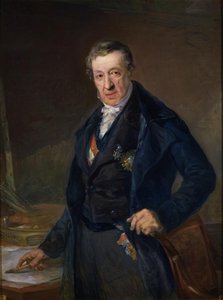
Vicente López y Portaña
1772 - 1850 , Spain
Quick Facts
- Artistic Movement Or Style: Neoclassical
- Artists Or Movements Influenced By This Artist: ['Manuel Aguirre y Monsalbe']
- Artists Who Influenced This Artist:
- Anton Raphael Mengs
- Mariano Salvador Maella
- Date Of Birth: September 19, 1772
- Date Of Death: July 22, 1850
- Full Name: Vicente López y Portaña
- Nationality: Spanish
- Notable Artworks:
- Equestrian Portrait of Ferdinand VII
- Adoration of the Trinity
- Portrait of Goya
- Place Of Birth: Valencia, Spain

