 Preview
 Send
Send Share
Share
 Details

 Download
 Similars
 X-Ray
X-Ray Diaporama
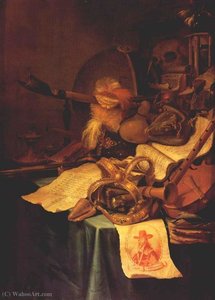
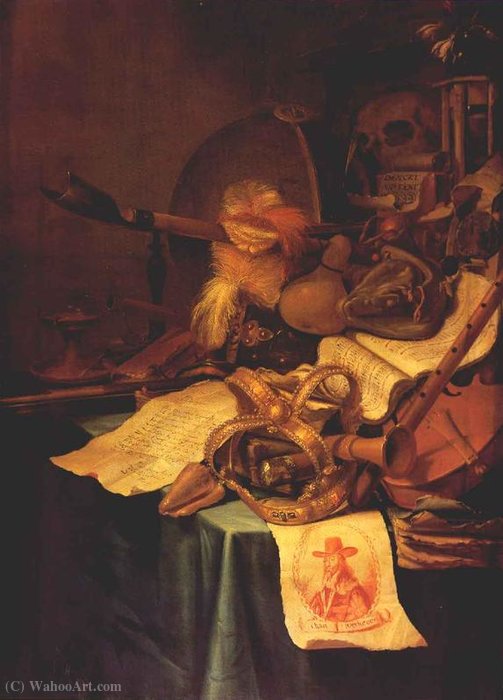
itas with a Royal Crown
 Read More
Hand Made Oil Reproduction
Hand-painted oil on canvas in your size and frame, made to order by our artists. ( Buy Print Buy Image)




































Pick from our preset sizes that match the artwork's original proportions.

You may enter your own dimensions to fit a specific frame or space. If your selected size does not match the original image's proportions, we will either crop the artwork or extend the painting with additional hand-painted elements. A digital mockup will be sent for your approval before production begins.
Please note that the on-screen preview does not reflect the actual cropping or extension. Only the mockup will accurately show the final composition.
While custom sizes are available, we recommend selecting a dimension from the predefined list to preserve the original proportions.
After order, ArtsDot.com team will email client for instructions and provide a mockup preview
Worldwide Delivery () in 3/4 weeks instead of standard 5 weeks. (24 August). No compromise on quality.

Free Worldwide Express Shipping

High-Quality Linen Canvas

Full Shipping Insurance

Customs Tax Refund Guarantee

True Color Matching Guarantee

60-Day Return Policy (Defects Only)

100% Money-Back Guarantee

Bulk Discount Offer
 Glass option is only available in size under 110 CM

itas with a Royal Crown
Reproduction Medium
Reproduction Size
-


Total Price
$ 263
Related Artworks









Artist Biography
Vincent Laurensz van der Vinne: A Haarlem Chronicler of the 17th Century
Vincent Laurensz van der Vinne (1628-1702) stands as a remarkably unique figure in the history of Dutch art – a painter, linen weaver, and, crucially, an extraordinarily detailed chronicler of his time. Born and raised in Haarlem, a city renowned for its artistic vibrancy during the Golden Age, van der Vinne’s life was shaped by a confluence of seemingly disparate passions: a keen eye for visual representation, a practical skill in textile production, and a profound desire to document the world around him with meticulous accuracy. He wasn't merely an artist; he was a recorder, a witness, and ultimately, a window into a pivotal era of Dutch history.
Van der Vinne’s early life reveals a grounding in both artistic tradition and craft. His father, Laurens Gilles van der Vinne, was a respected painter, and Vincent initially apprenticed himself to Frans Hals, one of Haarlem's most celebrated masters, gaining invaluable experience in the techniques of portraiture and composition. This formative period instilled in him a deep appreciation for Hals’ dynamic brushwork and his ability to capture the essence of his subjects. However, van der Vinne’s artistic trajectory soon diverged from that of his teacher. While Hals focused primarily on capturing fleeting moments of life, van der Vinne developed an obsessive need to record details – not just of people, but of landscapes, buildings, customs, and even the minutiae of daily life. This drive led him on a remarkable, if somewhat circuitous, journey across Europe.
The Grand Tour and its Unconventional Record
In 1652, at the age of twenty-four, van der Vinne embarked on what was considered the quintessential rite of passage for young Dutch artists: a ‘Grand Tour’ through Germany, Switzerland, and France. This journey, mirroring the ambitions of many of his contemporaries, was intended to expose him to the artistic treasures of Italy – the heart of the Renaissance. However, van der Vinne's experience deviated dramatically from the typical itinerary. Instead of reaching Rome, he found himself increasingly drawn to the Rhineland region, particularly Germany and Switzerland. This shift is largely documented through his extraordinarily detailed diaries, which are considered a vital primary source for understanding life in these areas during the mid-17th century.
The diaries reveal a man deeply affected by the political and social upheavals of the time. He witnessed firsthand the Swiss peasant war of 1653, becoming embroiled in the conflict and even briefly imprisoned alongside fellow travelers. The experience profoundly impacted his perspective, leading him to abandon sketching the picturesque countryside – fearing he might be mistaken for a military surveyor – and instead focusing on documenting the realities of everyday life, including the hardships faced by ordinary people. His journey was not one of idyllic artistic discovery, but a gritty exploration of a continent grappling with conflict and social unrest. Notably, he meticulously avoided crossing the Alps, despite multiple attempts, seemingly overwhelmed by the daunting terrain and perhaps haunted by his earlier experiences.
A Painter of Vanitas and Landscapes
Returning to Haarlem in 1655, van der Vinne continued to work as a painter, producing a diverse range of works. He is best known for his ‘vanitas’ still lifes – compositions laden with symbolic objects representing the transience of life, mortality, and the futility of earthly pursuits. These paintings, often featuring skulls, decaying fruit, hourglasses, and extinguished candles, reflect the prevailing philosophical currents of the time, influenced by the writings of Erasmus and other humanists. Alongside these introspective works, van der Vinne created a significant body of landscape paintings, characterized by their meticulous detail and atmospheric perspective. He also produced cityscapes, portraits, and decorative panels, demonstrating versatility in his artistic practice.
A particularly striking aspect of van der Vinne’s oeuvre is the inclusion of self-portraits within his still lifes – often reflected in a mirror or other reflective surface. This technique, reminiscent of works by Clara Peeters and Jan Davidsz de Heem, serves as a poignant reminder of the artist's own presence within the composition, emphasizing the theme of mortality and the fleeting nature of existence. His work is notable for its realism and attention to detail, reflecting his meticulous approach to observation and documentation.
Legacy and Historical Significance
Vincent Laurensz van der Vinne’s legacy lies not solely in his artistic output but also in his diaries – a remarkably comprehensive record of 17th-century life. These writings provide invaluable insights into the social, political, and economic conditions of Germany and Switzerland during a period of significant upheaval. His meticulous observations offer a rare glimpse into the daily lives of ordinary people, their customs, beliefs, and struggles. Furthermore, his artistic style—characterized by its realism, attention to detail, and symbolic imagery—contributes significantly to our understanding of Dutch Baroque painting. He is remembered as an artist who transcended the traditional role of the painter, becoming a chronicler of his time, preserving a rich tapestry of experiences for future generations.
His work continues to be studied by historians and art scholars alike, offering a unique perspective on a pivotal period in European history.
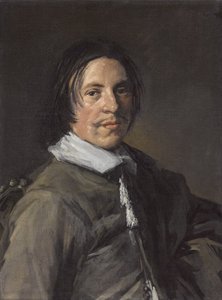
Vincent Laurensz van der Vinne
1736 - 1811
Quick Facts
- Artistic Movement Or Style: Baroque
- Artists Or Movements Influenced By This Artist: ['Laurens van der Vinne']
- Artists Who Influenced This Artist: ['Frans Hals']
- Date Of Birth: 1628, Haarlem
- Date Of Death: 1702, Haarlem
- Full Name: Vincent Laurensz van der Vinne
- Nationality: Dutch
- Notable Artworks:
- Vanitas Still-life
- Townscapes
- Landscapes
- Place Of Birth: Haarlem, Netherlands