 Preview
 Send
Send Share
Share
 Details

 Download
 Similars
 X-Ray
X-Ray Diaporama
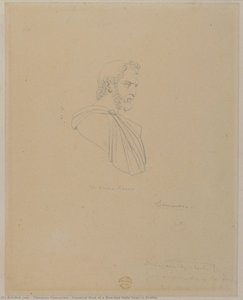
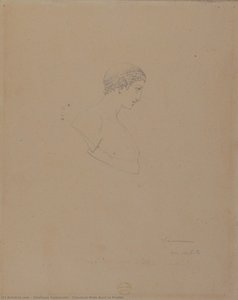
Classical Bust of a Bearded Male Seen in Profile
 Acrylic On Canvas
- WallArt
- Neoclassicism
 25.0 x 20.0 cm
 Metropolitan Museum of Art
 Read More
Hand Made Oil Reproduction
Hand-painted oil on canvas in your size and frame, made to order by our artists. ( Buy Print Buy Image)




P118B $10

P118H $10

P118W $10

P438Z $10

P508JH $12

P508YH $12

P805H $10

P805Z $10

P919BZ $10

P919G $10

P919XJ $10

P959ZH $10

P968JZ $12

W106C $8

W218G $10

W218JH $8

W218Y $10

W307PJ $10

W316G $10

W316PJ $8

W316Y $10

W398PJ $8

W4111J $10

W500HY $15

W500JH $15

W692G $12

W849H $8

W940BG $15

W953PJ $8




Pick from our preset sizes that match the artwork's original proportions.

You may enter your own dimensions to fit a specific frame or space. If your selected size does not match the original image's proportions, we will either crop the artwork or extend the painting with additional hand-painted elements. A digital mockup will be sent for your approval before production begins.
Please note that the on-screen preview does not reflect the actual cropping or extension. Only the mockup will accurately show the final composition.
While custom sizes are available, we recommend selecting a dimension from the predefined list to preserve the original proportions.
After order, ArtsDot.com team will email client for instructions and provide a mockup preview
Worldwide Delivery () in 3/4 weeks instead of standard 5 weeks. (16 August). No compromise on quality.

Free Worldwide Express Shipping

High-Quality Linen Canvas

Full Shipping Insurance

Customs Tax Refund Guarantee

True Color Matching Guarantee

60-Day Return Policy (Defects Only)

100% Money-Back Guarantee

Bulk Discount Offer
 Glass option is only available in size under 110 CM

Classical Bust of a Bearded Male Seen in Profile
Reproduction Medium
Reproduction Size
-


Total Price
$ 263
Artwork Description
Classical Bust of a Bearded Male Seen in Profile by Vincenzo Camuccini
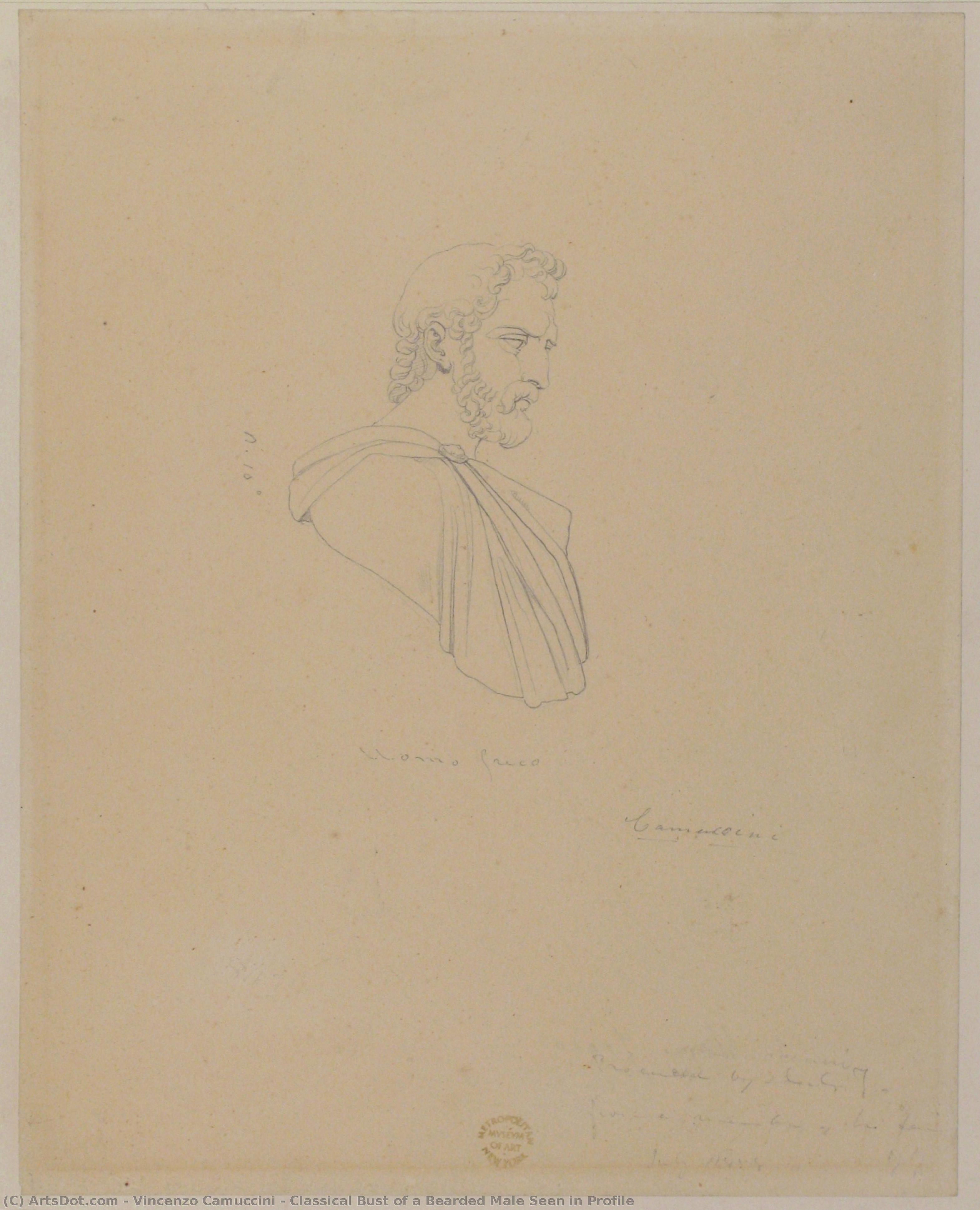
Vincenzo Camuccini’s “Classical Bust of a Bearded Male Seen in Profile” is more than just a meticulously rendered pencil sketch; it's a window into the artistic sensibilities of Neoclassicism and a testament to the enduring fascination with idealized beauty rooted in Greco-Roman tradition. Completed around 1795–1844, this artwork embodies the spirit of its era—a deliberate return to classical forms after the exuberant experimentation of Romanticism—reflecting a profound admiration for antiquity’s sculptural achievements.- Subject Matter: The portrait depicts a male figure in profile, capturing an expression of serene dignity and contemplation. Camuccini skillfully portrays the face and beard with remarkable detail, prioritizing anatomical accuracy and conveying a sense of timelessness.
- Style & Technique: Camuccini’s approach aligns perfectly with Neoclassical ideals—a rejection of emotional excess in favor of rational clarity and formal restraint. He employs hatching and cross-hatching techniques to build up tonal values, creating subtle shading that enhances the sculpture's illusion of depth and texture. The artist’s masterful use of line drawing establishes a striking contrast between light and shadow, emphasizing contours and defining form with precision.
- Historical Context: Camuccini flourished during a period marked by intellectual revival and artistic renewal in Rome—a city that served as the epicenter of Neoclassical art. Influenced by figures like Jacques-Louis David, he adopted David’s stylistic principles, mirroring the movement's preoccupation with heroic narratives and idealized representations of human form.
- Symbolism: The bust embodies classical ideals of beauty and virtue—characteristics prized in ancient Greece and Rome. It speaks to notions of reason, order, and moral fortitude, reflecting a broader cultural aspiration for elevated artistic expression. Camuccini’s choice of subject matter underscores the importance of intellectual contemplation alongside physical appearance.
- Emotional Impact: Despite its understated aesthetic, “Classical Bust of a Bearded Male Seen in Profile” possesses an undeniable emotional resonance. The serene countenance and dignified posture convey a sense of composure and inner peace—a deliberate antidote to the turbulent passions of the Romantic period. It invites viewers to contemplate the enduring legacy of classical art and its capacity to inspire admiration for human excellence.
Displayed prominently at The Metropolitan Museum of Art (Object Number: 87.12.173), this artwork exemplifies Camuccini’s dedication to capturing the essence of classical sculpture through meticulous observation and skillful execution. Its pale beige background serves as a neutral canvas, allowing the sketch's tonal nuances—particularly the subtle interplay of light and shadow—to command attention.
Further research into Vincenzo Camuccini reveals him as Rome’s foremost academic painter during his time, shaping artistic trends with his masterful depictions of historical events and religious themes. His influence extends beyond individual artworks, contributing to a broader cultural appreciation for Greco-Roman aesthetics and intellectual pursuits.
Related Artworks
Artist Biography
The Zenith of Neoclassicism in Rome
Vincenzo Camuccini, a master chronicler of classical grandeur and religious devotion, stands as one of the most significant figures in the artistic landscape of early 19th-century Rome. Born into an environment steeped in art—his initial tutelage came from his brother Pietro, a restorer, and the engraver Pietro Leone Bombelli—Camuccini’s early years were marked by diligent study. He spent much of his formative time immersed in the techniques of the old masters, absorbing centuries of artistic tradition. This rigorous foundation proved crucial, allowing him to later establish himself as the premier academic painter of his era within the vibrant, yet demanding, atmosphere of Roman art.
Embracing Greco-Roman Themes and Academic Rigor
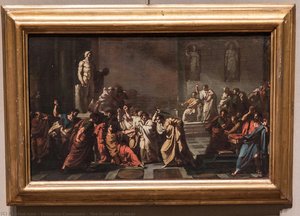
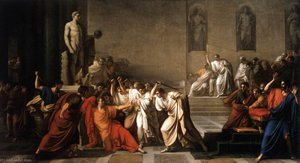
As an original artist, Camuccini became a key proponent of the Neoclassical school that flourished in Rome, a movement deeply invested in the ideals and aesthetics derived from Greek and Roman antiquity. His early breakthrough as an independent painter arrived around 1798 with a monumental canvas depicting the Death of Caesar. This work immediately drew comparisons to the classicizing themes favored by Jacques-Louis David, though art historians suggest that both artists were rather emerging from a shared current: the powerful resurgence of interest in Greco-Roman narratives and styles. His commitment to these grand historical subjects defined much of his mature style.
Major Commissions and Artistic Flourishing
Camuccini’s reputation grew through increasingly important commissions that showcased both his skill and the prevailing tastes of the Church and aristocracy. A notable early undertaking was his work on an incredulity of St. Thomas, commissioned by the Vatican in 1800, which involved replicating a mosaic's grandeur. His talents were further displayed when he contributed to large-scale decorative cycles; for instance, alongside Gaspare Landi, he painted a presentation within the temple for the chapel of the Madonna of the Rosary in Piacenza in 1806. These collaborative and independent efforts cemented his status among Rome's leading artistic minds.
A Life of Travel and Enduring Influence
The call of art led Camuccini beyond the Eternal City’s walls. He was invited to Munich and, significantly, to Paris. In Paris, he found himself in the orbit of towering figures such as Napoleon, David, Perodet, and Gérard, absorbing the currents of contemporary European art. While his travels broadened his scope, his core strength remained rooted in history painting—the depiction of moments from classical or religious narratives. Whether through grand historical scenes or more intimate works like a betrothal of Psyche, Camuccini’s hand consistently conveyed a sense of noble drama and academic polish. His career stands as a testament to the enduring power of Neoclassicism, leaving behind a legacy that continues to inspire those who appreciate the meticulous detail and sweeping narratives found in his masterful reproductions.
vincenzo camuccini
1771 - 1844
Quick Facts
- Artistic Movement Or Style: Neoclassicism
- Artists Who Influenced This Artist: ['Jacques-Louis David']
- Date Of Birth: 1771
- Date Of Death: 1844
- Full Name: Vincenzo Camuccini
- Nationality: Italian
- Notable Artworks:
- Death of Caesar
- Presentation in the Temple
- Place Of Birth: Rome, Italy
Related Articles

The Subtleties of Shade: Exploring Black, White & Gray Abstraction in Modern Interior Design
Explore the power of black, white & gray abstraction in modern interior design. Discover how minimalist art impacts spatial perception & creates sophisticated hotel spaces. Expert insights for designers.

From Initial Sketch to Enduring Legacy: A Comprehensive Exploration of the Oil Painting Reproduction Process
Discover the art of museum-quality oil painting reproduction. Explore our expert process, skilled artists & authentic replicas. Elevate your home with timeless beauty – handcrafted and customized to your vision.

The Nuances of Graphite: Exploring Emotional Depth & Technical Mastery in Pencil Drawing
Explore the captivating world of graphite drawing! Discover its rich history, master essential techniques like chiaroscuro, and learn how artists evoke emotion through this timeless medium. Expert insights for art enthusiasts.

Ivory Black Masters: 10 Paintings That Define Dramatic Art |
Delve into the power of 'Ivory Black' with 10 iconic paintings by masters like Rembrandt & Caravaggio. Explore dramatic chiaroscuro, gothic moods & timeless art history. Find museum-quality reproductions and elevate your home decor at
Lamp Black & Masterpieces: 10 Paintings That Define Shadow & Light |
Delve into the captivating world of 'Lamp Black' tones with 10 iconic paintings by masters like Rembrandt & Caravaggio. Explore Baroque chiaroscuro, dramatic lighting & shadow in art history. Find museum-quality reproductions at