 Preview
 Send
Send Share
Share
 Details

 Download
 Similars
 X-Ray
X-Ray Diaporama
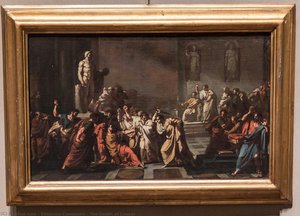
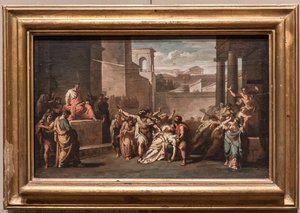
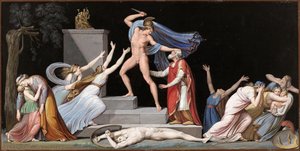
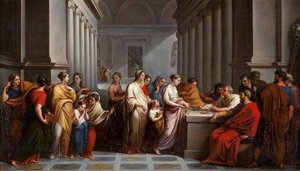
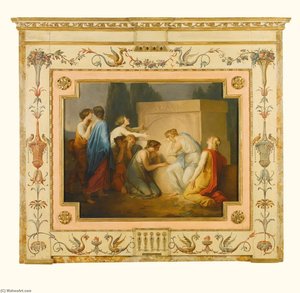
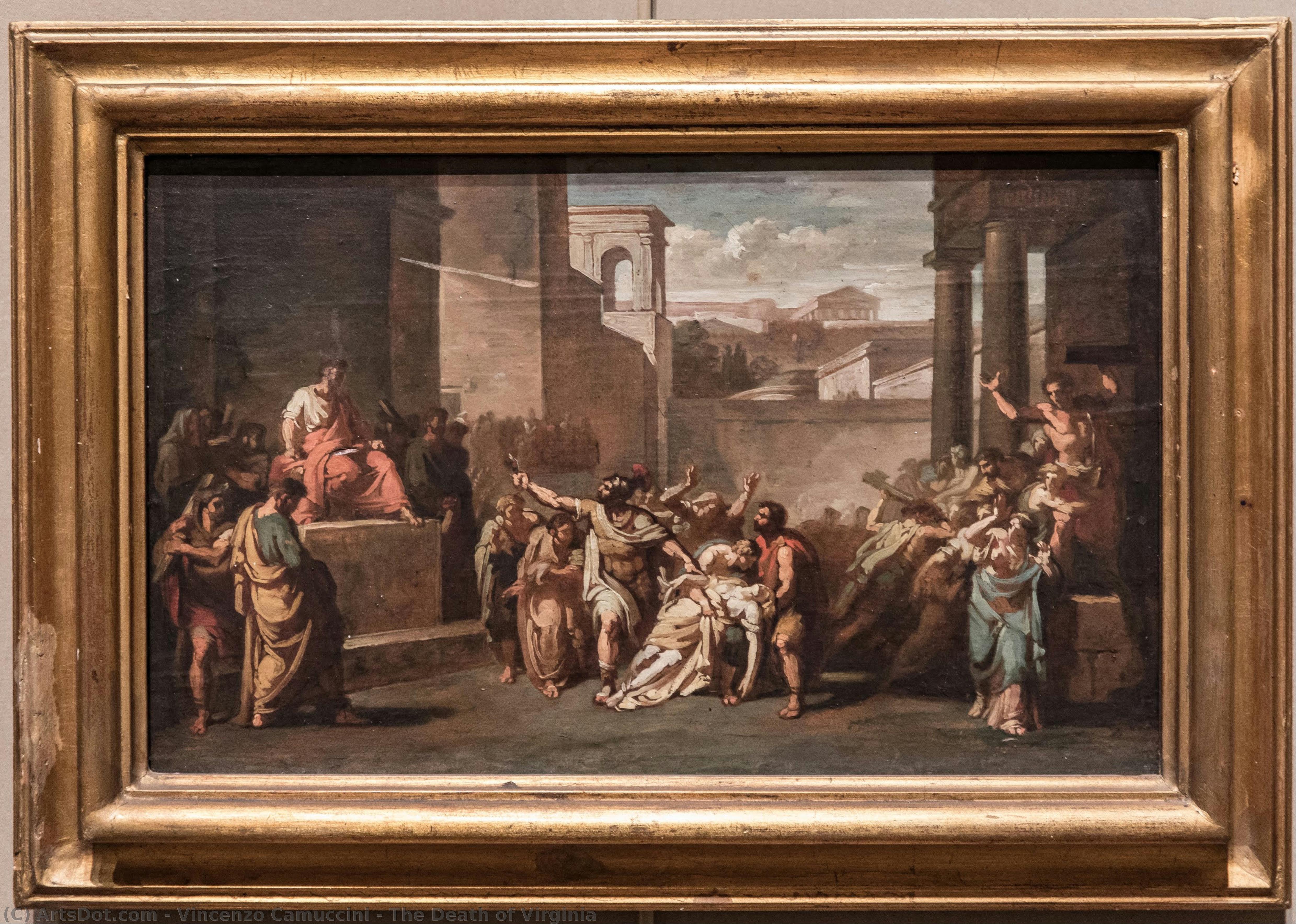
The Death of Virginia


 Read More
Hand Made Oil Reproduction
Hand-painted oil on canvas in your size and frame, made to order by our artists. ( Buy Print Buy Image)




P118B $10

P118H $10

P118W $10

P438Z $10

P508JH $12

P508YH $12

P805H $10

P805Z $10

P919BZ $10

P919G $10

P919XJ $10

P959ZH $10

P968JZ $12

W106C $8

W218G $10

W218JH $8

W218Y $10

W307PJ $10

W316G $10

W316PJ $8

W316Y $10

W398PJ $8

W4111J $10

W500HY $15

W500JH $15

W692G $12

W849H $8

W940BG $15

W953PJ $8




Pick from our preset sizes that match the artwork's original proportions.

You may enter your own dimensions to fit a specific frame or space. If your selected size does not match the original image's proportions, we will either crop the artwork or extend the painting with additional hand-painted elements. A digital mockup will be sent for your approval before production begins.
Please note that the on-screen preview does not reflect the actual cropping or extension. Only the mockup will accurately show the final composition.
While custom sizes are available, we recommend selecting a dimension from the predefined list to preserve the original proportions.
After order, ArtsDot.com team will email client for instructions and provide a mockup preview
Worldwide Delivery () in 3/4 weeks instead of standard 5 weeks. (24 August). No compromise on quality.

Free Worldwide Express Shipping

High-Quality Linen Canvas

Full Shipping Insurance

Customs Tax Refund Guarantee

True Color Matching Guarantee

60-Day Return Policy (Defects Only)

100% Money-Back Guarantee

Bulk Discount Offer
 Glass option is only available in size under 110 CM

The Death of Virginia
Reproduction Medium
Reproduction Size
-


Total Price
$ 263
Artwork Description
A Tragedy Etched in Neoclassical Grandeur
In the heart of the Roman Republic's most harrowing moments, Vincenzo Camuccini captures a scene of profound sacrifice and visceral emotion in The Death of Virginia. This masterful oil on panel serves as more than just a historical record; it is a theatrical window into an era where virtue and tragedy were inextricably linked. The painting depicts the fateful moment when Virginia, a symbol of purity and Roman liberty, meets her end at the hands of Appio Claudio. Through Camuccini’s lens, we are not merely observers of a historical event, but witnesses to a high-stakes drama where the architecture of power meets the fragility of human life.
The composition is anchored by a striking architectural system that reflects the disciplined rigor of the Neoclassical movement. As one gazes upon the imposing columns and the grandeur of the background structure—perhaps a temple or a palace—there is a palpable sense of weight and permanence. This stoic, stone-cold environment stands in stark, heartbreaking contrast to the fluid, frantic energy of the human figures. The deliberate placement of characters creates a rhythmic movement across the canvas, guiding the eye from the architectural stability of the setting to the chaotic, emotional upheaval of the central tragedy.
The Mastery of Brush and Emotion
Camuccini, recognized as one of Italy’s preeminent proponents of Neoclassicism, employs a technique characterized by swift, immediate brushstrokes that breathe life into the frozen moment. While the overall design is studied and meticulously planned, there is an underlying vitality in his execution that prevents the scene from feeling static. The artist utilizes light and shadow to sculpt the figures, lending them a sculptural quality reminiscent of classical antiquity. This interplay of light does more than define form; it illuminates the raw expressions of grief, terror, and resolve etched upon the faces of those present.
The emotional impact of the piece is found in its subtle details—the man kneeling in profound distress, his head held in hands that tremble with loss, and the solemn, theatrical gestures that define the Neoclassical style. Every element, from the heavy drapery to the intense gazes of the onlookers, contributes to a narrative of moral gravity. For the discerning collector or interior designer, this painting offers a profound sense of drama and intellectual depth. It is a piece that commands attention, inviting contemplation on themes of sacrifice, justice, and the enduring struggle between individual liberty and tyrannical oppression.
An Elegant Addition to Sophisticated Interiors
Integrating a high-quality reproduction of The Death of Virginia into a curated space provides an instant infusion of historical prestige and artistic sophistication. The painting’s rich palette and dramatic composition make it an ideal focal point for grand halls, libraries, or formal sitting rooms where one wishes to evoke an atmosphere of cultured reflection. Because the work balances intense emotional storytelling with a structured, harmonious design, it complements both classical and contemporary decor, acting as a bridge between the ancient world and modern aesthetic sensibilities.
Owning such a piece is an invitation to engage with the zenith of Roman Neoclassicism. It serves as a conversation starter that transcends mere decoration, offering a window into the soul of 19th-century academic art. Whether placed in a setting of traditional opulence or used to add a layer of historical weight to a minimalist gallery-style room, Camuccini’s work remains a timeless testament to the power of art to immortalize the most poignant chapters of human history.
Related Artworks
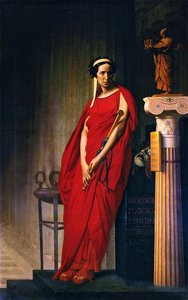
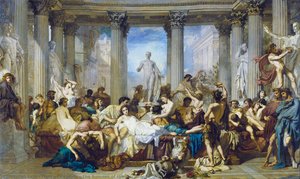
Artist Biography
The Zenith of Neoclassicism in Rome
Vincenzo Camuccini, a master chronicler of classical grandeur and religious devotion, stands as one of the most significant figures in the artistic landscape of early 19th-century Rome. Born into an environment steeped in art—his initial tutelage came from his brother Pietro, a restorer, and the engraver Pietro Leone Bombelli—Camuccini’s early years were marked by diligent study. He spent much of his formative time immersed in the techniques of the old masters, absorbing centuries of artistic tradition. This rigorous foundation proved crucial, allowing him to later establish himself as the premier academic painter of his era within the vibrant, yet demanding, atmosphere of Roman art.
Embracing Greco-Roman Themes and Academic Rigor
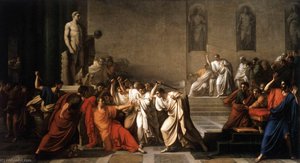
As an original artist, Camuccini became a key proponent of the Neoclassical school that flourished in Rome, a movement deeply invested in the ideals and aesthetics derived from Greek and Roman antiquity. His early breakthrough as an independent painter arrived around 1798 with a monumental canvas depicting the Death of Caesar. This work immediately drew comparisons to the classicizing themes favored by Jacques-Louis David, though art historians suggest that both artists were rather emerging from a shared current: the powerful resurgence of interest in Greco-Roman narratives and styles. His commitment to these grand historical subjects defined much of his mature style.
Major Commissions and Artistic Flourishing
Camuccini’s reputation grew through increasingly important commissions that showcased both his skill and the prevailing tastes of the Church and aristocracy. A notable early undertaking was his work on an incredulity of St. Thomas, commissioned by the Vatican in 1800, which involved replicating a mosaic's grandeur. His talents were further displayed when he contributed to large-scale decorative cycles; for instance, alongside Gaspare Landi, he painted a presentation within the temple for the chapel of the Madonna of the Rosary in Piacenza in 1806. These collaborative and independent efforts cemented his status among Rome's leading artistic minds.
A Life of Travel and Enduring Influence
The call of art led Camuccini beyond the Eternal City’s walls. He was invited to Munich and, significantly, to Paris. In Paris, he found himself in the orbit of towering figures such as Napoleon, David, Perodet, and Gérard, absorbing the currents of contemporary European art. While his travels broadened his scope, his core strength remained rooted in history painting—the depiction of moments from classical or religious narratives. Whether through grand historical scenes or more intimate works like a betrothal of Psyche, Camuccini’s hand consistently conveyed a sense of noble drama and academic polish. His career stands as a testament to the enduring power of Neoclassicism, leaving behind a legacy that continues to inspire those who appreciate the meticulous detail and sweeping narratives found in his masterful reproductions.
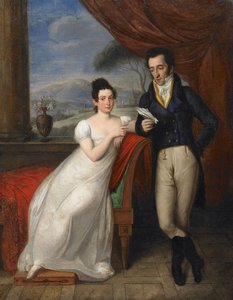
vincenzo camuccini
1771 - 1844
Quick Facts
- Artistic Movement Or Style: Neoclassicism
- Artists Who Influenced This Artist: ['Jacques-Louis David']
- Date Of Birth: 1771
- Date Of Death: 1844
- Full Name: Vincenzo Camuccini
- Nationality: Italian
- Notable Artworks:
- Death of Caesar
- Presentation in the Temple
- Place Of Birth: Rome, Italy
Related Articles
Bartolomeo Pinelli: Neoclassical Linearity & Roman Topography of Memory
Explore the captivating world of Bartolomeo Pinelli, a master Italian engraver renowned for his evocative Roman scenes & historical narratives. Discover his art and legacy with ArtsDot.

Dramatic Masterpieces: 10 Artworks for a Powerful Home Decor Statement |
Explore 10 dramatic artworks by masters like Caravaggio, Van Gogh & Munch. Uncover the stories behind these powerful paintings and find museum-quality reproductions to transform your home decor. Discover all masterpieces on .
Neoclassical Art: 10 Masterpieces That Shaped History |
Explore 10 defining Neoclassical masterpieces by David, Ingres & Canova. Discover the history, symbolism & artistry behind these iconic paintings and sculptures. Find museum-quality art reproductions at – elevate your home with timeless beauty.

Dramatic Art: 10 Masterpieces That Stir the Soul |
Explore 10 dramatic artworks by masters like Rembrandt & Munch that stir deep emotion. Discover art history, techniques & find museum-quality reproductions for your home at . Explore the full collection online.

The Revival of Antiquity: Exploring Neoclassical Art's Ideals & Enduring Legacy
Explore the revival of classical ideals in Neoclassical art! Discover Jacques-Louis David & the movement's impact on painting, sculpture & architecture. Expert insights & high-quality reproductions at ArtsDot.