 Preview
 Send
Send Share
Share
 Details

 Download
 Similars
 X-Ray
X-Ray Diaporama
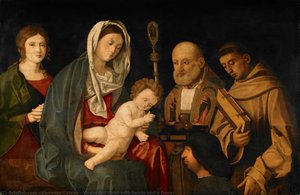
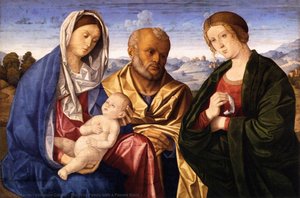
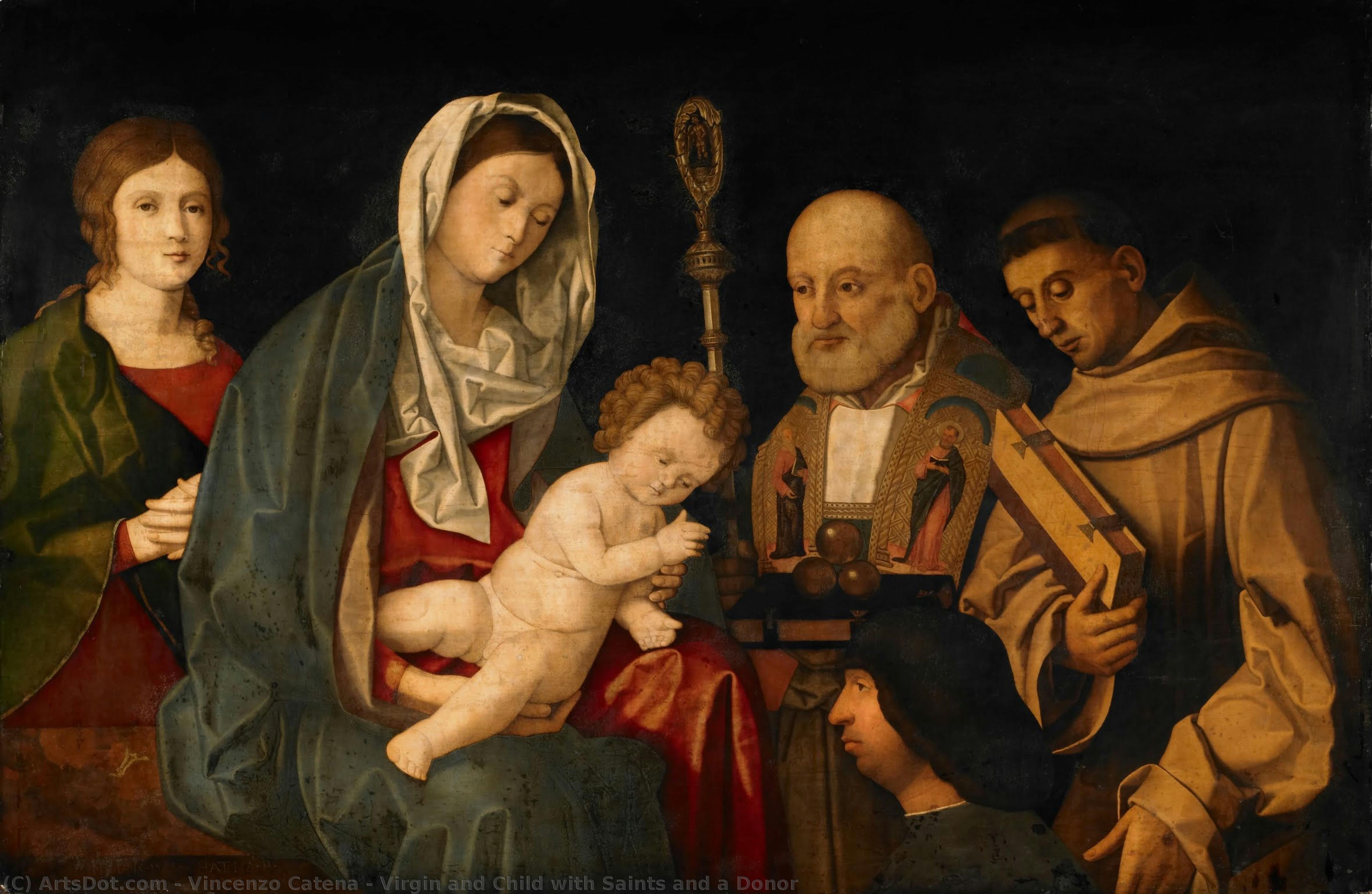
Virgin and Child with Saints and a Donor
 Oil
Oil- WallArt
- Venetian Renaissance
 1505
1505- Renaissance
 100.0 x 720.0 cm
 Walker Art Gallery
 Read More
Hand Made Oil Reproduction
Hand-painted oil on canvas in your size and frame, made to order by our artists. ( Buy Print Buy Image)




P118B $10

P118H $10

P118W $10

P438Z $10

P508JH $12

P508YH $12

P805H $10

P805Z $10

P919BZ $10

P919G $10

P919XJ $10

P959ZH $10

P968JZ $12

W106C $8

W218G $10

W218JH $8

W218Y $10

W307PJ $10

W316G $10

W316PJ $8

W316Y $10

W398PJ $8

W4111J $10

W500HY $15

W500JH $15

W692G $12

W849H $8

W940BG $15

W953PJ $8




Pick from our preset sizes that match the artwork's original proportions.

You may enter your own dimensions to fit a specific frame or space. If your selected size does not match the original image's proportions, we will either crop the artwork or extend the painting with additional hand-painted elements. A digital mockup will be sent for your approval before production begins.
Please note that the on-screen preview does not reflect the actual cropping or extension. Only the mockup will accurately show the final composition.
While custom sizes are available, we recommend selecting a dimension from the predefined list to preserve the original proportions.
After order, ArtsDot.com team will email client for instructions and provide a mockup preview
Worldwide Delivery () in 3/4 weeks instead of standard 5 weeks. (24 August). No compromise on quality.

Free Worldwide Express Shipping

High-Quality Linen Canvas

Full Shipping Insurance

Customs Tax Refund Guarantee

True Color Matching Guarantee

60-Day Return Policy (Defects Only)

100% Money-Back Guarantee

Bulk Discount Offer
 Glass option is only available in size under 110 CM

Virgin and Child with Saints and a Donor
Reproduction Medium
Reproduction Size
-


Total Price
$ 263
Artwork Description
A Divine Encounter: The Intimacy of Catena’s Devotion
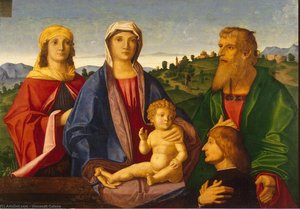
In the quiet, sacred space of Vincenzo Catena’s Virgin and Child with Saints and a Donor, the boundaries between the earthly and the divine begin to dissolve. Painted in 1505, this masterpiece serves as a profound window into the spiritual landscape of the Venetian Renaissance. At first glance, the viewer is struck by the tender, almost startlingly human connection within the composition. Unlike the rigid, hierarchical altarpieces of previous centuries, Catena introduces an asymmetrical grace that breathes life into the scene. The Christ Child does not merely sit enthroned; he leans forward with a gentle, instinctive movement to bless the kneeling donor, creating a moment of profound emotional intimacy that bridges the gap between the mortal observer and the heavenly host.
The painting is anchored by the presence of the Virgin Mary, whose serene countenance reflects the influence of her contemporary, the great Giovanni Bellini. Surrounding her is a celestial assembly: the saintly figures of Catherine of Siena, St. Nicholas, and St. Francis of Assisi stand as eternal intercessors. The donor, likely a man of legal standing or a notary from the Venetian-controlled town of Porec, is captured in a state of humble adoration. His sober, dignified attire contrasts with the luminous, ethereal glow of the holy figures, grounding the spiritual vision in the tangible reality of 16-century Venetian life. This interplay between the worldly and the divine creates a narrative tension that invites the viewer to contemplate their own place within the cosmic order.
Mastery of Light and Venetian Color
Catena’s technique is a testament to the rich traditions of the Venetian school, characterized by a sophisticated use of color and light to sculpt form and evoke atmosphere. The artist employs a subtle, layered approach to pigment, allowing light to seem as though it emanates from within the figures themselves. Notice how the soft shadows play across the folds of the drapery and the delicate skin of the Christ Child, lending a palpable sense of weight and volume to the composition. The inclusion of symbolic objects—a book resting near the center, a humble cup, and a bowl at the base—adds layers of liturgical meaning, suggesting themes of wisdom, sacrifice, and the sustenance of faith.
For the discerning collector or interior designer, this work offers more than just historical significance; it provides a focal point of unparalleled elegance. The painting’s expansive scale and rich, warm palette make it an extraordinary choice for creating a sense of grandeur and contemplative calm in a sophisticated living space or a private gallery. A high-quality reproduction of this piece allows the timeless beauty of Catena’s brushwork to transform a room, bringing with it the quiet dignity of the Renaissance. It is an investment in atmosphere, offering a piece of history that continues to inspire awe through its masterful balance of technical brilliance and soulful expression.
Related Artworks
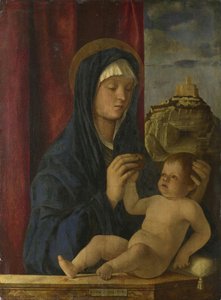
Artist Biography
Vincenzo Catena: A Venetian Renaissance Painter
Life and Background
- Born in Venice, Italy around 1470, Vincenzo Catena was a painter of the Venetian Renaissance.
- Little is known about his early life or formal training. Records are scarce regarding his upbringing and initial artistic development.
- He was also sometimes referred to as Vincenzo de Biagio.
- Catena passed away in 1531, leaving behind a modest but significant body of work.
Artistic Development and Influences
- Initially, Catena’s style closely resembled that of Giovanni Bellini, a leading Venetian painter known for his serene Madonnas and refined technique.
- The earliest documented mention of Catena is an inscription on the back of La Laura by Giorgione, where he’s described as Giorgione's *colego* (colleague).
- However, it wasn’t until after Giorgione’s death in 1510 that his innovative influence began to manifest itself in Catena’s paintings.
- He also shows some influences from Titian, another prominent figure of the Venetian School, particularly in his use of color and composition.
Major Works and Style
- Approximately a dozen paintings are confidently attributed to Catena based on signatures.
- The Martyrdom of St. Christina (1520), located in the church of Santa Maria Mater Domini in Venice, is his most securely dated work thanks to an inscription on its marble surround.
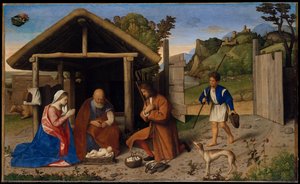
- Other notable works include The Adoration of the Shepherds, and several depictions of the Madonna and Child with Saints and Donors.
- Catena’s paintings often feature religious scenes and portraits, characterized by a blend of Bellini's precision and Giorgione’s atmospheric qualities.
- His style is marked by detailed realism, warm color palettes, and rich symbolism, typical of Venetian Renaissance art.
Historical Significance and Legacy
- While not as widely celebrated as some of his contemporaries like Titian or Giorgione, Catena played a role in the development of Venetian painting during a crucial period.
- His work demonstrates the transition between the High Renaissance and the emerging Mannerist styles.
- Wills left by Catena reveal he was a man of considerable wealth and had connections within Venetian humanist circles, suggesting his artistic success extended beyond purely aesthetic recognition.
- Today, Vincenzo Catena’s paintings are valued for their historical importance and offer insights into the artistic landscape of 16th-century Venice.
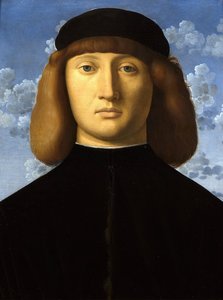
Vincenzo Catena
1470 - 1531 , Italy
Quick Facts
- Birth Date: 1470
- Birth Place: Venice, Italy
- Death Date: 1531
- Influenced By:
- Giovanni Bellini
- Giorgione
- Movement: Renaissance, Venetian School
- Name: Vincenzo Catena
- Nationality: Italian
- Notable Works:
- Santa Cristina Altarpiece
- The Adoration of the Shepherds
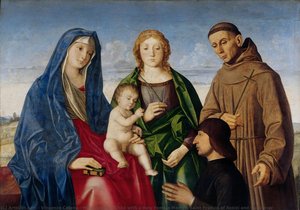
- Madonna and Child with a Holy Female Martyr, Saint Francis of Assisi and the Donor
Related Articles

Jacopo Tintoretto's Masterpieces: 25 Paintings That Define Venetian Drama | ArtsDot
Explore 25 breathtaking masterpieces by Jacopo Tintoretto, the Venetian master of drama and light. Discover the stories behind iconic Renaissance paintings & find museum-quality art reproductions to elevate your home decor on ArtsDot.com.
Jacopo Palma il Giovane: A Venetian Master's Poetic Evolution
Explore the captivating world of Jacopo Palma il Giovane, a pivotal Venetian Renaissance master. Discover his unique style, influenced by Titian & Tintoretto, and learn about key works perfect for discerning collectors.
The Golden Light of Innovation: Exploring the Venetian Renaissance Art Movement (1430–1580)
Explore the Golden Age of Venetian art (1430–1580). Discover Giorgione, Titian & Tintoretto's techniques, the 'colorito' revolution, and lasting influence. Expert insights for collectors & enthusiasts.
Pietro Longhi's Venetian Scenes: A Study of Rococo Society & Domestic Life
Explore the captivating world of Pietro Longhi's Venetian scenes! Discover insightful analysis of his Rococo masterpieces & social commentary on 18th-century life. Learn about this 'Venetian Hogarth' and his lasting artistic legacy.
Vittore Carpaccio: Venetian Renaissance Narrative & the Poetics of Detail
Explore the captivating world of Vittore Carpaccio, a master storyteller of the Venetian Renaissance. Discover his intricate details, narrative cycles like 'The Legend of St. Ursula,' and unique artistic style.