

 Preview
 Send
Send Share
Share
 Details

 Download
 Similars
 X-Ray
X-Ray Diaporama
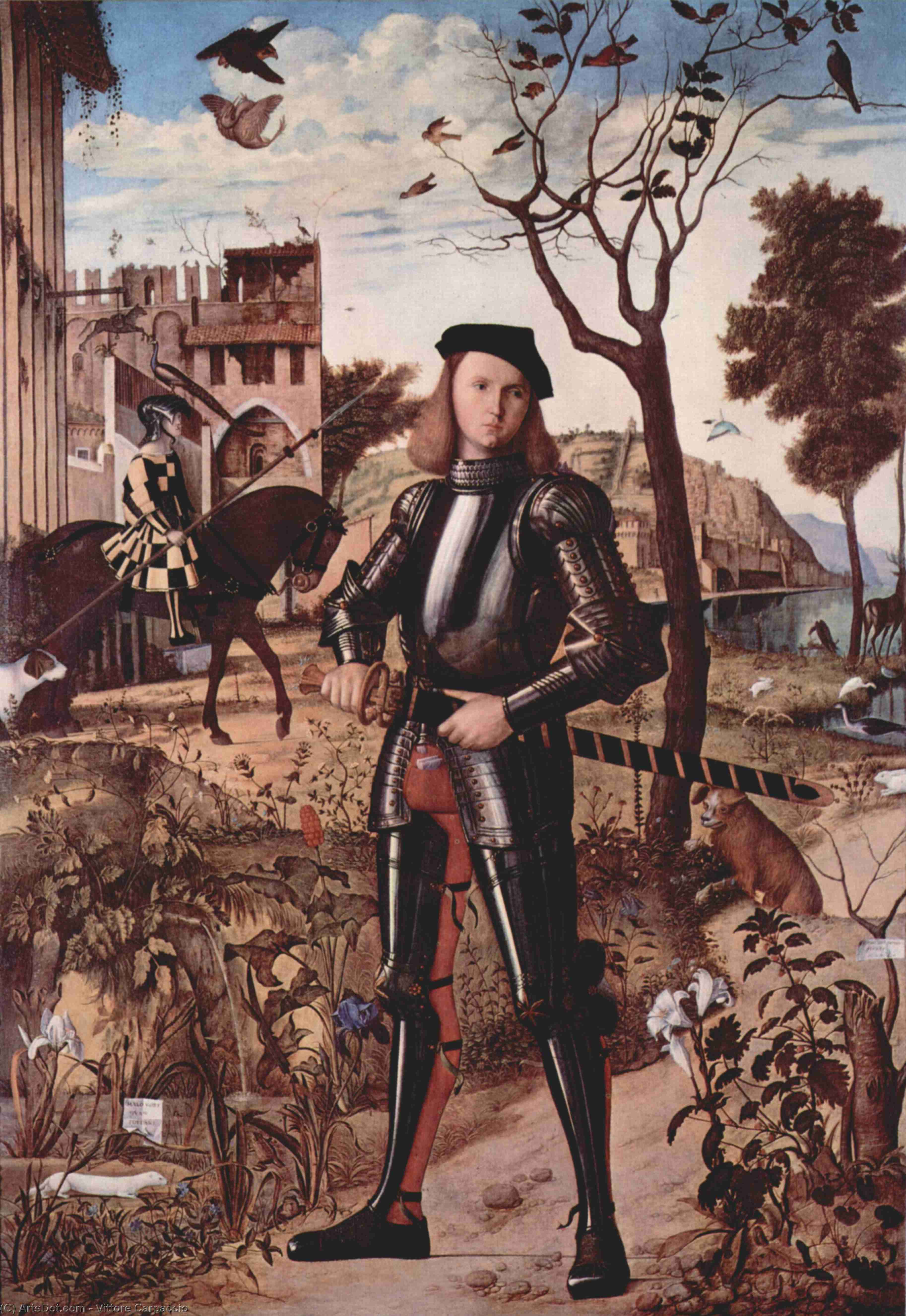
Portrait of a Knight
 Acrylic On Canvas
- WallArt
- Early Renaissance
 1510
1510 218.0 x 152.0 cm
 Museo Thyssen-Bornemisza
 Read More
Purchase a high-resolution, enhanced digital image, far superior to the online preview.
Each file is meticulously prepared by our in-house specialists using advanced tools and expert manual retouching. We ensure every image has exceptional clarity, precise color accuracy, and fine detail.
The final file is delivered via email within 72 hours, optimized for immediate use in professional, editorial, and print environments. This is the same quality trusted by top-tier design studios, publishers, and galleries.
Digital Image
Download a high-resolution file for personal display, printing, and creative projects. ( Buy Print Buy Hand Made Painting)
Included in Every Digital Image Order
Expert Digital Delivery, Guaranteed
When you choose ArtsDot.com, you're not just getting an image - you're receiving a professionally enhanced digital artwork, crafted with precision and backed by a satisfaction guarantee. Here's everything that comes with your order, automatically:

Fast Email Delivery
Your high-resolution digital image file will be emailed to you within 72 hours of ordering - ready for immediate use.

AI-Enhanced Digital File
Your artwork is professionally optimized using advanced AI tools and manual editing, ensuring maximum detail, clarity, and color accuracy.

Free Lifetime Re-Delivery
Accidentally deleted or lost your file? No worries - we'll resend it to you anytime, free of charge.

No Import Fees - Ever
Enjoy your artwork instantly with zero customs, duties, or delivery fees - digital downloads are always tax-free.

Color Accuracy Guarantee
We ensure your digital image reflects the original colors as closely as possible using professional tools and color management.

60-Day Satisfaction Guarantee
If you're not satisfied with your digital image, we'll revise it or refund 100% within 60 days - no questions asked.

100% Money-Back Guarantee
Not satisfied? Get a full refund within 60 days of receiving your digital file - no questions asked.

Bulk Order Discounts
Buy 3 images, save 10% - Buy 5, save 15% - Buy 10+, save 20%. Great for creative projects, galleries, and agencies.
Collectible Description
A Silent Sentinel: Unveiling the Mysteries of Carpaccio’s “Young Knight”
Vittore Carpaccio's "Portrait of a Knight," painted around 1510, isn’t merely a depiction of armor and landscape; it’s a carefully constructed tableau brimming with symbolic weight and an enduring sense of quiet contemplation. This canvas, now residing within the hallowed halls of the Thyssen-Bornemisza Museum in Madrid, immediately draws the eye with its striking composition – a young knight, poised on a dirt road beneath a brooding sky, his gaze fixed towards an unseen horizon. Yet, it’s not simply a portrait; it's a layered narrative rendered in Carpaccio’s distinctive style, a blend of Northern European realism and Venetian artistic traditions that speaks volumes about the era and the man depicted.
Carpaccio, born in Venice around 1465, was a pivotal figure in the city’s vibrant art scene. He largely eschewed the flamboyant humanism sweeping through Italy at the time, instead favoring a more restrained approach, influenced heavily by Antonello da Messina and the early Netherlandish masters. This conservatism is evident here – the knight's face is rendered with meticulous detail, his armor gleaming under the diffused light, yet there’s an absence of dramatic gesture or emotional intensity often found in contemporary portraits. Instead, a profound stillness pervades the scene, inviting viewers to linger and decipher its hidden meanings.
Decoding the Symbols: A Landscape of Mortality
The painting's power lies not just in its technical skill but also in its rich tapestry of symbolism. The landscape itself is far from idyllic; a dark, foreboding forest presses close to the road, hinting at the dangers and uncertainties that lie ahead – a potent metaphor for life’s journey. A solitary heron, caught in the talons of a hawk, immediately suggests mortality and the inevitability of death, a theme frequently explored by Carpaccio. The presence of a short-tailed weasel nestled amongst the foliage further reinforces this idea, adding a touch of unsettling realism to the scene.
Adding another layer of intrigue is the inscription beside the weasel: “Malo mori quam foedari” – "Better to die than be defiled." This motto, associated with the Order of the Ermine, speaks to a knight’s unwavering honor and willingness to face death rather than compromise his integrity. The inclusion of this phrase elevates the portrait beyond a simple likeness, transforming it into a meditation on virtue, duty, and sacrifice.
A Knight Unidentified: The Enigmatic Subject
For centuries, the identity of the knight has remained one of art history’s most enduring mysteries. Initial attributions to Albrecht Dürer, fueled by a forged monogram, obscured Carpaccio's authorship for decades. Recent scholarship, however, increasingly points towards Francesco Maria I della Rovere, the Duke of Urbino, as the subject. The evidence rests on a confluence of factors: the knight’s age – aligning with the period when della Rovere was at the height of his power – and the symbolic resonance of certain elements within the landscape, particularly the presence of the Ermine Order.
The painting's composition—the solitary figure against a vast backdrop—suggests a man contemplating his legacy, perhaps even anticipating his own demise. It’s a poignant image, capturing not just a portrait but also a moment of quiet introspection within a world defined by conflict and ambition. The subtle details – the meticulously rendered armor, the watchful gaze, the ominous landscape – all contribute to this profound sense of melancholy and timelessness.
A Legacy in Color: Carpaccio’s Venetian Vision
Carpaccio's distinctive style is immediately recognizable through his masterful use of color. He employs a restrained palette—primarily muted browns, grays, and ochres—creating a somber yet captivating atmosphere. However, within this subdued range, he skillfully utilizes highlights to draw attention to key elements, such as the knight’s armor and the folds of his garments. This careful manipulation of light and shadow is characteristic of Carpaccio's approach, reflecting both his Venetian heritage and his admiration for the techniques of the Early Netherlandish masters.
Related Artworks
Artist Biography
early life and training
vittore carpaccio, a prominent italian painter, was born in venice around 1465. he studied under the tutelage of gentile bellini, a renowned artist of the venetian school. this apprenticeship laid the foundation for carpaccio's future success.artistic style and influences
carpaccio's style was characterized by its conservative nature, showing minimal influence from the humanist trends that transformed italian renaissance painting during his lifetime. his work was influenced by antonello da messina's style and early netherlandish art. this unique blend of styles resulted in a distinctive approach to venetian painting.notable works
- the legend of saint ursula, a cycle of nine paintings, is carpaccio's most famous work. this series, now housed in the gallerie dell'accademia, showcases his mastery of narrative painting.
- glory of st. ursula altarpiece (1491) demonstrates carpaccio's skill in capturing light and color, reminiscent of giovanni bellini's style.
- miracle of the relic of the cross at the ponte di rialto (1494) highlights carpaccio's ability to balance composition and narrative.
career highlights and legacy
- carpaccio's principal works were executed between 1490 and 1519, ranking him among the early masters of the venetian renaissance.
- his orientalist style, as seen in st. george baptizing the selenites, reflects a new fascination with the levant.
- carpaccio's work has been somewhat overlooked in comparison to his contemporaries, such as giovanni bellini or giorgione.
references and further reading
discover more about vittore carpaccio and the venetian school on ArtsDot.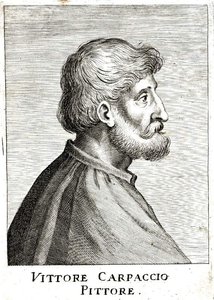
Vittore Carpaccio
1465 - 1526 , Italy
Quick Facts
- Artistic Movement Or Style: Early Venetian Renaissance
- Artists Or Movements Influenced By This Artist: ['Early Netherlandish Painting']
- Artists Who Influenced This Artist:
- Antonello da Messina
- Gentile Bellini
- Date Of Birth: Venice, Italy (c. 1465)
- Date Of Death: 1526
- Full Name: Vittore Carpaccio
- Nationality: Italian
- Notable Artworks:
- The Legend of Saint Ursula
- Glory of St. Ursula Altarpiece
- Miracle of the Relic of the Cross at the Ponte di Rialto
- Place Of Birth: Venice

