

 Preview
 Send
Send Share
Share
 Details

 Download
 Similars
 X-Ray
X-Ray Diaporama

The Meditation on the Passion
 Oil On Panel
- Early Renaissance
 1510
1510- Renaissance
 70.0 x 86.0 cm
 Metropolitan Museum of Art
 Read More
Purchase a high-resolution, enhanced digital image, far superior to the online preview.
Each file is meticulously prepared by our in-house specialists using advanced tools and expert manual retouching. We ensure every image has exceptional clarity, precise color accuracy, and fine detail.
The final file is delivered via email within 72 hours, optimized for immediate use in professional, editorial, and print environments. This is the same quality trusted by top-tier design studios, publishers, and galleries.
Digital Image
Download a high-resolution file for personal display, printing, and creative projects. ( Buy Print Buy Hand Made Painting)
Included in Every Digital Image Order
Expert Digital Delivery, Guaranteed
When you choose ArtsDot.com, you're not just getting an image - you're receiving a professionally enhanced digital artwork, crafted with precision and backed by a satisfaction guarantee. Here's everything that comes with your order, automatically:

Fast Email Delivery
Your high-resolution digital image file will be emailed to you within 72 hours of ordering - ready for immediate use.

AI-Enhanced Digital File
Your artwork is professionally optimized using advanced AI tools and manual editing, ensuring maximum detail, clarity, and color accuracy.

Free Lifetime Re-Delivery
Accidentally deleted or lost your file? No worries - we'll resend it to you anytime, free of charge.

No Import Fees - Ever
Enjoy your artwork instantly with zero customs, duties, or delivery fees - digital downloads are always tax-free.

Color Accuracy Guarantee
We ensure your digital image reflects the original colors as closely as possible using professional tools and color management.

60-Day Satisfaction Guarantee
If you're not satisfied with your digital image, we'll revise it or refund 100% within 60 days - no questions asked.

100% Money-Back Guarantee
Not satisfied? Get a full refund within 60 days of receiving your digital file - no questions asked.

Bulk Order Discounts
Buy 3 images, save 10% - Buy 5, save 15% - Buy 10+, save 20%. Great for creative projects, galleries, and agencies.
Collectible Description
A Vision of Devotion: The Soul of Venetian Renaissance
In the quiet, luminous depths of Vittore Carpaccio’s "The Meditation on the Passion," one finds more than just a relic of the sixteenth century; one encounters a profound spiritual dialogue captured in pigment and wood. Created around 1510, this masterpiece serves as a window into the Venetian Renaissance, a period where the boundaries between the earthly and the divine were often blurred through meticulous artistry. The painting invites the viewer into a solemn tableau, a moment of stillness amidst the weight of religious contemplation. As we gaze upon the figures gathered before the broken throne, we are not merely spectators but participants in a shared act of mourning and hope, making this piece an extraordinary centerpiece for any collection that values narrative depth and historical gravity.
The composition is a masterclass in narrative complexity. Carpaccio orchestrates a scene where every figure contributes to a larger theological discourse. At the heart of the work lies the dead body of Christ, displayed upon a throne inscribed with pseudo-Hebrew, a detail that anchors the piece in the scholarly and religious traditions of the era. Surrounding this central tragedy are figures that embody different facets of faith: a man in white robes clutching a book, representing the intellectual pursuit of scripture; a figure in crimson, signifying authority and the blood of sacrifice; and a presence in azure, evoking humility. This careful arrangement of characters creates a rhythmic movement across the panel, guiding the eye from the intimate details of the foreground to the sweeping, atmospheric landscapes that lie beyond.
Technique and the Luminous Venetian Light
To appreciate this work is to admire the technical virtuosity of the Venetian school. Carpaccio, heavily influenced by the precision of Antonello da Messina and the rich textures of Netherlandish masters like Jan van Eyck, employed a technique of layering thin, translucent glazes upon a prepared wooden panel. This method allows light to penetrate the surface and reflect back, creating an inner glow that gives the skin tones a lifelike warmth and the drapery a heavy, tactile presence. The interplay of chiaroscuro—the dramatic contrast between light and shadow—adds a sculptural dimension to the figures, making them emerge from the darkness with startling clarity.
The artist’s attention to detail is nothing short of breathtaking. From the subtle textures of the rocky outcropping to the distant, rolling hills and the tranquil waters of the background, every element is rendered with painstaking accuracy. This precision does not merely serve realism; it serves symbolism. A bird flying upward toward the clouds acts as a poignant metaphor for the ascending soul, while the contrast between the barren landscapes and lush greenery alludes to the eternal cycle of death and resurrection. For the discerning collector or interior designer, these intricate details offer endless layers of discovery, ensuring that the artwork remains a captivating focal point in any sophisticated setting.
An Eternal Legacy for the Modern Collector
Beyond its historical significance, "The Meditation on the Passion" possesses an emotional resonance that transcends time. It is a painting of profound stillness, offering a sense of sanctuary and reflection in an increasingly chaotic world. The somber tones are balanced by the brilliance of the light, creating an atmosphere that is both melancholic and deeply comforting. This duality makes it an ideal selection for spaces designed for contemplation, such as private libraries, study halls, or elegant living areas where art is intended to provoke thought and inspire peace.
Owning a high-quality reproduction of this Carpaccio masterpiece allows one to bring the prestige of the Metropolitan Museum of Art into the home. It is an opportunity to surround oneself with the grandeur of the Italian Renaissance, celebrating a period where art was the ultimate expression of human devotion and technical mastery. Whether used to anchor a room's design or to serve as a conversation piece regarding the evolution of Western iconography, this painting remains a timeless testament to the enduring power of the human spirit.
Related Artworks
![The Passion [detail] — Hans Holbein The Younger, Northern Renaissance](/media/artworks/images/thumbnails/05/7f/057f8051c622487fae8ae052bf714363.jpg)
Artist Biography
early life and training
vittore carpaccio, a prominent italian painter, was born in venice around 1465. he studied under the tutelage of gentile bellini, a renowned artist of the venetian school. this apprenticeship laid the foundation for carpaccio's future success.artistic style and influences
carpaccio's style was characterized by its conservative nature, showing minimal influence from the humanist trends that transformed italian renaissance painting during his lifetime. his work was influenced by antonello da messina's style and early netherlandish art. this unique blend of styles resulted in a distinctive approach to venetian painting.notable works
- the legend of saint ursula, a cycle of nine paintings, is carpaccio's most famous work. this series, now housed in the gallerie dell'accademia, showcases his mastery of narrative painting.
- glory of st. ursula altarpiece (1491) demonstrates carpaccio's skill in capturing light and color, reminiscent of giovanni bellini's style.
- miracle of the relic of the cross at the ponte di rialto (1494) highlights carpaccio's ability to balance composition and narrative.
career highlights and legacy
- carpaccio's principal works were executed between 1490 and 1519, ranking him among the early masters of the venetian renaissance.
- his orientalist style, as seen in st. george baptizing the selenites, reflects a new fascination with the levant.
- carpaccio's work has been somewhat overlooked in comparison to his contemporaries, such as giovanni bellini or giorgione.
references and further reading
discover more about vittore carpaccio and the venetian school on ArtsDot.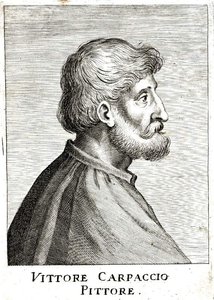
Vittore Carpaccio
1465 - 1526 , Italy
Quick Facts
- Artistic Movement Or Style: Early Venetian Renaissance
- Artists Or Movements Influenced By This Artist: ['Early Netherlandish Painting']
- Artists Who Influenced This Artist:
- Antonello da Messina
- Gentile Bellini
- Date Of Birth: Venice, Italy (c. 1465)
- Date Of Death: 1526
- Full Name: Vittore Carpaccio
- Nationality: Italian
- Notable Artworks:
- The Legend of Saint Ursula
- Glory of St. Ursula Altarpiece
- Miracle of the Relic of the Cross at the Ponte di Rialto
- Place Of Birth: Venice

