 Preview
 Send
Send Share
Share
 Details

 Download
 Similars
 X-Ray
X-Ray Diaporama
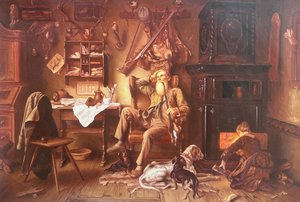
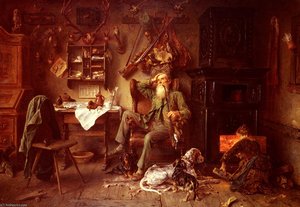
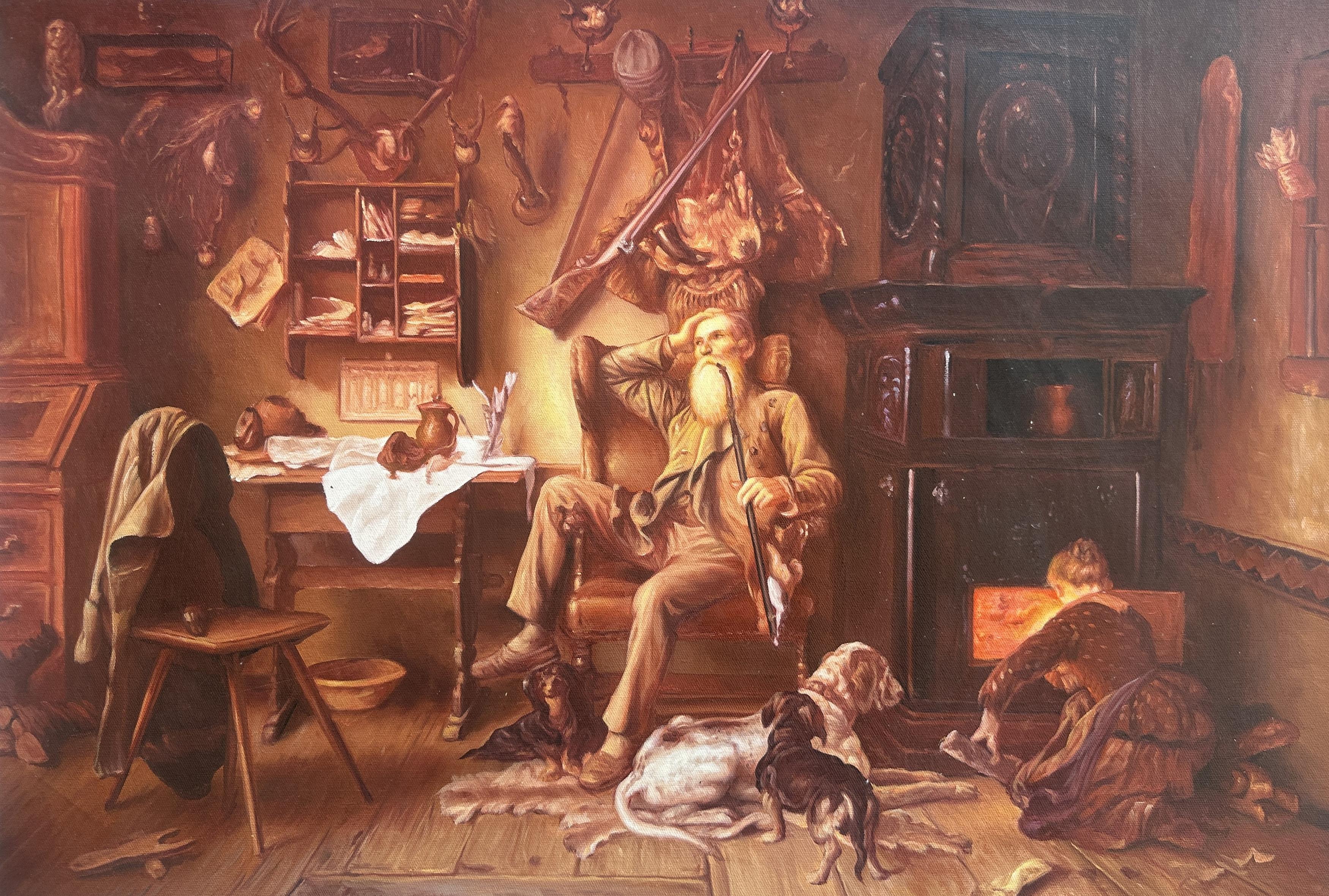
Ein Försterheim - Ludwig Knaus


 Read More
Stock Discount Oil Painting Available
In-stock hand-painted oil work ready to ship; add framing when you check out. ()






































 Glass option is only available in size under 110 CM

Ein Försterheim - Ludwig Knaus
Stock Discount Oil Painting Available
Reproduction Size
-


Express Shipping
Express Worldwide Shipping. One week. (27 July).
Included
Total Price
$ 150
Artwork Description
A Glimpse into Hearth and Hunt
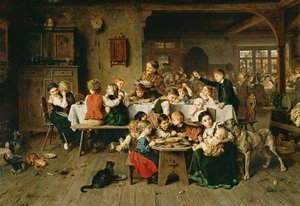
Ludwig Knaus’s “Ein Försterheim” – meaning ‘a forester's home’ – offers more than just a depiction of rustic life; it’s an intimate portal into the soul of 19th-century Germany. Painted with a masterful hand, this acrylic reproduction captures the essence of Victorian Realism, a style deeply concerned with portraying everyday scenes and characters with unwavering accuracy and emotional depth. The painting invites us into the cozy interior of a huntsman's dwelling, where a relaxed man finds companionship in the quiet presence of his loyal dogs.
The subject matter itself speaks volumes about the values of the era: a connection to nature, the dignity of labor, and the warmth of domesticity. Taxidermied animals adorning the walls aren’t merely trophies but symbols of respect for the natural world, while the rustic furniture suggests a life lived in harmony with its surroundings. Knaus doesn't simply *show* us this scene; he evokes it. The warm color palette – rich browns, ochres, and reds – envelops the viewer, creating an atmosphere of inviting comfort and quiet contemplation.
The technical skill on display is remarkable. Each brushstroke, meticulously rendered by ArtsDot’s studio artists, contributes to the painting's lifelike quality. The play of light and shadow across the room adds depth and dimension, drawing the eye towards the central figure while simultaneously encouraging exploration of the numerous details that populate the space. This isn’t a sterile reproduction; it’s a vibrant recreation imbued with the spirit of the original.
For collectors, “Ein Försterheim” represents an opportunity to own a piece of art history – a tangible connection to a bygone era and a testament to Knaus's skill as a genre painter. It is a work that resonates on multiple levels, offering both aesthetic pleasure and a glimpse into the cultural values of 19th-century Germany. The painting’s narrative quality makes it a captivating focal point for any room, sparking conversation and inviting viewers to lose themselves in its tranquil beauty.
At ArtsDot.com, we believe art should be accessible to everyone. That's why we offer museum-quality reproductions like this one, meticulously crafted by our talented artists. Don’t just admire the masters – bring their vision into your home! Browse our collection today and discover a world of timeless beauty. And remember, each painting can be custom framed to perfectly complement your décor. Click ‘Add to Cart’ now and experience the joy of owning a piece of art history!
Related Artworks


Artist Biography
Sir John Everett Millais: A Pre-Raphaelite Pioneer of Light and Life
Born in Southampton in 1829, Sir John Everett Millais was a figure of remarkable early promise, destined to become one of the most celebrated artists of his generation. His childhood was marked by an unusual education—he entered the Royal Academy Schools at just eleven years old, a testament to his prodigious talent and the unwavering support of his family. This early immersion in artistic training laid the foundation for a career that would profoundly influence the Pre-Raphaelite Brotherhood and reshape perceptions of landscape and narrative painting.
Millais’s formative years were deeply intertwined with the burgeoning artistic circles of London. He initially found kinship with William Holman Hunt and Dante Gabriel Rossetti, forging a close bond that culminated in the founding of the Pre-Raphaelite Brotherhood in 1848. This revolutionary group sought to reject the academic conventions of the Royal Academy and return to the perceived purity and sincerity of art before Raphael. Rejecting idealized forms and artificial colors, the Pre-Raphaelites embraced vibrant palettes, meticulous detail, and a fascination with medieval legends, folklore, and contemporary life.
Early works like *Pizarro Seizing the Inca of Peru* (1849) showcased Millais’s technical skill and his commitment to the Brotherhood's aesthetic principles. However, it was *Ophelia* (1850-51), arguably his most iconic painting, that truly cemented his reputation—and sparked considerable controversy. This depiction of Shakespeare’s tragic heroine floating in a river, rendered with astonishing realism and luminous detail, challenged conventional notions of beauty and mortality. The painting's unsettling portrayal of Ophelia’s death, coupled with its unconventional use of color and light, provoked outrage from critics who deemed it morbid and vulgar. Despite the initial backlash, *Ophelia* became an instant sensation, establishing Millais as a leading figure within the Pre-Raphaelite movement.
The Christ in the House of His Parents: A Masterpiece of Naturalism
Following the controversy surrounding *Ophelia*, Millais embarked on a period of intense experimentation and artistic development. His 1851-52 painting, *Christ in the House of His Parents* (also known as *The Carpenter’s Shop*), represents a pivotal moment in his career. This monumental work, commissioned by Dean Stanley for St Mary's Church, Warwick, demonstrated Millais’s mastery of naturalism and his ability to capture the essence of everyday life with unparalleled accuracy. The painting depicts Christ as a young boy assisting his carpenter father, bathed in the warm light of a winter afternoon. Unlike the idealized depictions prevalent at the time, *Christ in the House of His Parents* presented a humble, relatable image of the divine—a testament to Millais’s commitment to portraying reality with honesty and immediacy.
Transitioning Beyond Pre-Raphaelitism: A Shift Towards Realism
As the 1850s progressed, Millais began to move away from the strict tenets of the Pre-Raphaelite Brotherhood. While retaining a fascination with nature and narrative, he increasingly sought to capture the fleeting effects of light and atmosphere—a technique influenced by the burgeoning Impressionist movement. His paintings of children, such as *Bubbles* (1886) and *Stella* (1868), exemplify this shift towards realism, capturing the innocence and vitality of youth with remarkable sensitivity. These works, often commissioned for magazines like *Once a Week*, brought him widespread popularity and commercial success.
Later Years and Legacy
Millais’s later years were marked by continued artistic productivity and recognition. He became an Associate of the Royal Academy in 1853 and a full member in 1863, solidifying his position as one of Britain's most respected artists. In 1885, he was created a baronet, further elevating his status. Millais’s influence extended beyond his own paintings; he served as President of the Royal Academy from 1896 until his death in London in 1896. His legacy endures through his stunning landscapes, evocative portraits, and his pioneering role in shaping the course of British art. He remains a key figure in understanding the transition between Romanticism and Modernism, and his work continues to captivate audiences with its beauty, detail, and profound emotional resonance.
Millais’s personal life also played a significant role in his artistic development. His marriage to Effie Chalmers, formerly married to critic John Ruskin, was a complex and often turbulent affair. The annulment of their union fueled speculation about its impact on Millais's artistic style, though the extent of this influence remains debated by art historians.
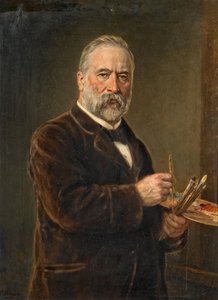
ludwig knaus
1829 - 1910 , Germany
Quick Facts
- Artistic Movement Or Style: Pre-Raphaelite Brotherhood
- Artists Or Movements Influenced By This Artist:
- William Morris
- Modernism
- Artists Who Influenced This Artist:
- William Holman Hunt
- Dante Gabriel Rossetti
- Date Of Birth: June 8, 1829
- Date Of Death: August 13, 1896
- Full Name: Sir John Everett Millais, Bt
- Nationality: English
- Notable Artworks:
- Ophelia
- Christ in the House of His Parents
- Bubbles
- Place Of Birth: Southampton, England
Related Articles
Dante Gabriel Rossetti's 25 Masterpieces: A Journey Through Victorian Art & Symbolism | ArtsDot
Explore 25 iconic artworks by Dante Gabriel Rossetti, a leading Pre-Raphaelite artist. Discover the stories behind masterpieces like 'Proserpine' & 'Beata Beatrix'. Find museum-quality art reproductions and elevate your home decor with ArtsDot.com.
Marianne North's Masterpieces: 25 Botanical Paintings That Bloom With Adventure | ArtsDot
Journey through the vibrant world of Marianne North’s botanical paintings! Explore 25 iconic artworks from this Victorian artist, celebrating exotic flora & travel. Find museum-quality reproductions and curated decor ideas at ArtsDot.com.
Romantic Realism's Finest: 10 Masterpieces for Your Home | ArtsDot
Explore 10 defining masterpieces of Romantic Realism! Discover Courbet, Millet & Daumier's powerful paintings—capturing emotion and social realities. Find museum-quality reproductions for your home at ArtsDot.com.

Acrylic Revolution: 10 Masterpieces That Redefined Modern Art | ArtsDot
Explore 10 legendary acrylic paintings that revolutionized modern art! From Helen Frankenthaler's color fields to Richter’s abstract power, discover the stories behind these iconic masterpieces. Find museum-quality reproductions & elevate your home decor on ArtsDot.com.

Transforming Spaces: A Comprehensive Exploration of Wall Decor Through Art History & Contemporary Practice
Explore the art of transforming spaces with our comprehensive guide to wall decor. From historical movements to contemporary trends, discover how to curate impactful interiors and commission bespoke artwork for a truly personalized aesthetic.