 Preview
 Send
Send Share
Share
 Details

 Download
 Similars
 X-Ray
X-Ray Diaporama
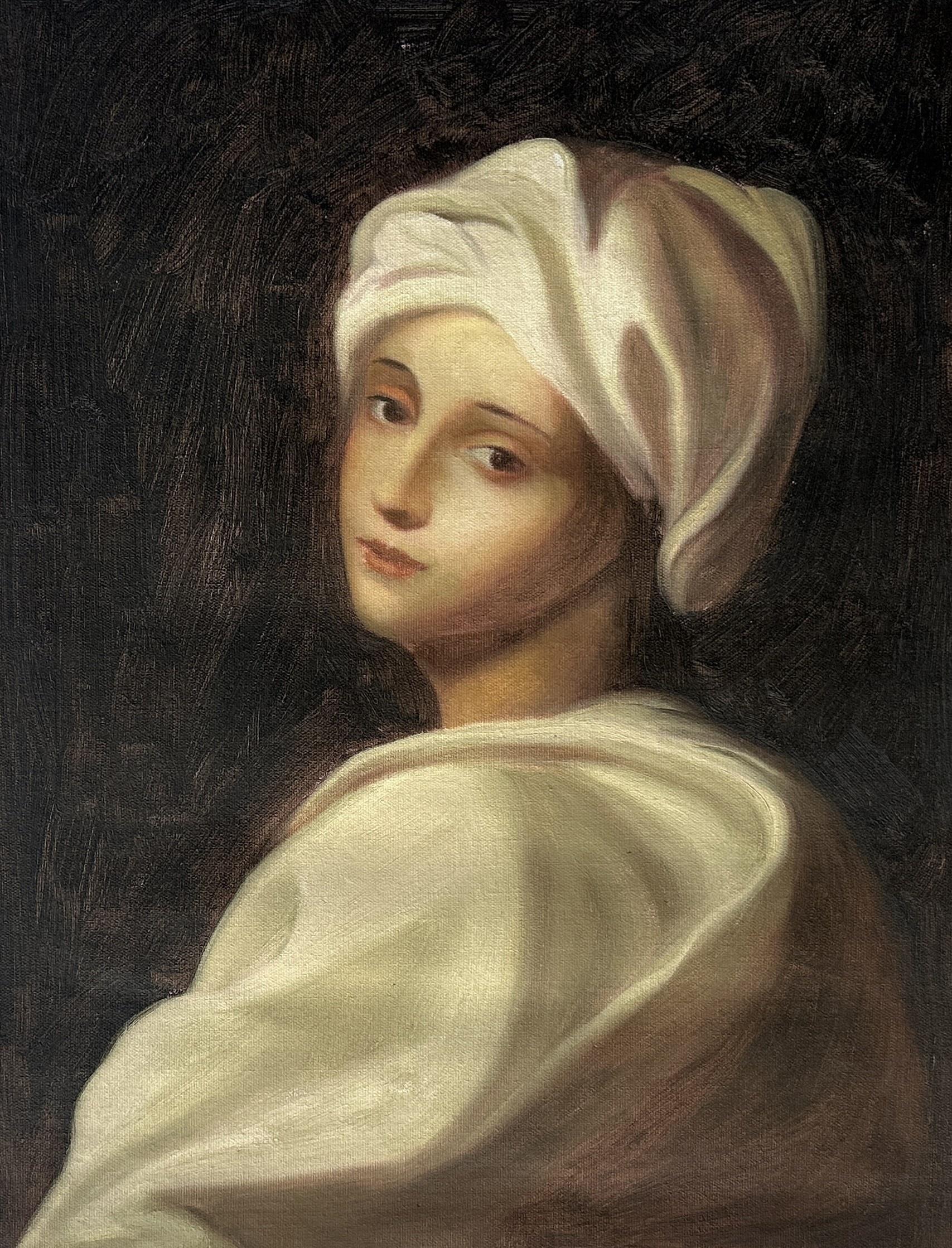
Portrait of Beatrice Cenci - Guido Reni


 Read More
Stock Discount Oil Painting Available
In-stock hand-painted oil work ready to ship; add framing when you check out. ()






































 Glass option is only available in size under 110 CM

Portrait of Beatrice Cenci - Guido Reni
Stock Discount Oil Painting Available
Reproduction Size
-


Express Shipping
Express Worldwide Shipping. One week. (26 July).
Included
Total Price
$ 99
Artwork Description
A Vision of Virtue: Exploring Guido Reni’s Portrait of Beatrice Cenci
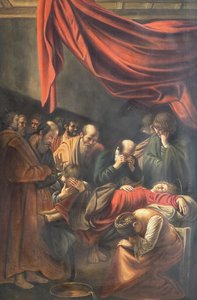
Guido Reni's "Portrait of Beatrice Cenci" stands as a testament to the grandeur and psychological depth characteristic of Baroque art—a movement that dominated European painting from roughly 1600 to 1750. More than just a depiction of a young woman, this canvas embodies the ideals of Renaissance Italy’s artistic zenith, skillfully blending religious symbolism with humanist observation. The artist meticulously captures Beatrice Cenci's gaze, directing it subtly off-axis—a technique designed not merely for visual balance but to invite contemplation and convey an inner serenity that transcends her tumultuous life story. The painting’s muted palette—primarily creamy whites and pale yellows—contrasts dramatically against the enveloping darkness of the background. This masterful chiaroscuro illuminates Beatrice's face, highlighting delicate features and emphasizing her noble bearing. Reni’s brushstrokes are loose yet controlled, creating a palpable sense of texture that lends physicality to the portrait. They subtly convey emotion without resorting to overt sentimentality, reflecting the Baroque preoccupation with portraying idealized virtue and dignity—themes prevalent throughout Christian iconography of the period. Collectors appreciate this artwork for its masterful execution and its profound exploration of human psychology. The artist’s ability to distill complex emotions into a single image speaks to the enduring power of art as a vehicle for conveying spiritual and moral truths. Don't miss out on owning a piece of history! Explore stunning reproductions and personalized framing options at ArtsDot – Order yours today!Related Artworks

Artist Biography
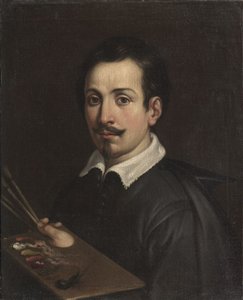
Guido Reni (Le Guide): Life and Legacy
Early Life and Training
Guido Reni, also known as Le Guide, was born in Bologna, Italy, in 1575. He was the only child of Daniele Reni, a musician, and Ginevra Pozzi, also from a musical family. This upbringing instilled in him an appreciation for harmony and form that would later influence his artistic style. At the young age of nine, Guido began his apprenticeship under Denis Calvaert, a Flemish painter working in Bologna. He studied alongside fellow aspiring artists Albani and Domenichino, forming a strong foundation in classical principles.
Artistic Career and Development
Reni’s artistic career spanned several Italian cities, including Rome, Naples, and his native Bologna. His early work showed the influence of Calvaert and the Carracci brothers, emphasizing anatomical accuracy and dramatic composition. However, Reni quickly developed a distinctive style characterized by its elegant classicism, refined technique, and emotional intensity. He became a dominant figure in the Bolognese School, known for its emphasis on academic training and idealized forms.
Key Influences
- Denis Calvaert: Reni’s initial teacher provided him with a strong foundation in Flemish painting techniques.
- The Carracci Family (Annibale, Agostino, Ludovico): Their emphasis on classical art and anatomical study profoundly impacted his artistic development.
- Raphael: Reni greatly admired Raphael’s gracefulness and harmonious compositions, which are evident in many of his works.
Major Works and Artistic Style
Reni's oeuvre encompasses a wide range of subjects, including religious scenes, mythological narratives, and allegorical representations. Some of his most celebrated works include:
- Apollo on the Sun Chariot (Albertina, Vienna): A dynamic drawing showcasing Reni’s mastery of Baroque style.
- Saint James the Greater: Demonstrates his skill in capturing religious fervor and human emotion.
- Atalanta and Hippomenes (Palace of Capodimonte, Naples): An example of his mythological paintings, characterized by graceful figures and dramatic storytelling.
- Saint Jerome: A testament to Reni’s ability to balance composition with emotional depth.
- Tarantella (Palace of Capodimonte, Naples): Illustrates his influence on Italian folk dance culture.
Reni's style is often described as eclectic classicism. He blended the precision of classical art with the dynamism and emotion of the Baroque period. His figures are typically idealized, possessing a serene beauty and graceful movement.
Historical Significance and Legacy
Guido Reni played a crucial role in shaping the development of High Baroque style in Italy. He influenced generations of artists with his refined technique, elegant compositions, and emotional depth. His work can be found in prominent museums worldwide, including the Palace of Capodimonte in Naples. Reni’s legacy extends beyond painting; he was also a poet and a respected intellectual figure in his time.
His art continues to inspire artists and art enthusiasts today, solidifying his place as one of the most important painters of the 17th century. His influence can be seen in subsequent Baroque artists who sought to emulate his gracefulness and emotional power.
Death
Guido Reni died in Bologna in 1642, leaving behind a rich artistic legacy that continues to captivate audiences centuries later.
reni guido (le guide)
1575 - 1642 , Italy
Quick Facts
- Birth Date: 1575
- Birth Place: Bologna, Italy
- Death Date: 1642
- Influenced By: Denis Calvaert
- Movement: High Baroque, Bolognese School
- Name: Guido Reni (Le Guide)
- Nationality: Italian
- Notable Works:
- Apollo on the Sun Chariot
- Saint James the Greater
- Atalanta and Hippomenes
- Saint Jerome
- Tarantella
Related Articles
Guido Reni: A Study in Baroque Classicism & Artistic Perfection
Explore the life & work of Guido Reni, a master of Baroque classicism. Discover his iconic religious & mythological paintings, and understand his enduring influence on art history. Expert analysis for collectors.
Acrylic Painting: A Comprehensive Exploration of Technique, History & Contemporary Applications
Explore the world of acrylic painting! Discover its rich history, essential techniques, contemporary applications & renowned artists. Expert guide for beginners to professionals.
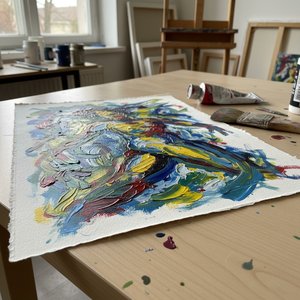
Acrylic on Paper: A Modern Canvas for Contemporary Expression
Explore the versatility of acrylic painting on paper! Discover expert techniques, artist insights & archival practices for creating stunning contemporary art. Learn more at ArtsDot.

Baroque Drama: Bringing Opulence & Emotion into Contemporary Interiors
Explore the opulent world of Baroque interior design! Discover key elements, modern applications & how to bring dramatic elegance into your home with 's authentic reproductions.

Baroque Masterpieces: 10 Paintings That Defined an Era |
Journey through the drama & grandeur of Baroque art! Explore 10 masterpieces by Caravaggio, Rembrandt, Rubens & more. Discover stunning oil paintings, rich colors & timeless stories. Find museum-quality reproductions at .