 Preview
 Send
Send Share
Share
 Details

 Download
 Similars
 X-Ray
X-Ray Diaporama
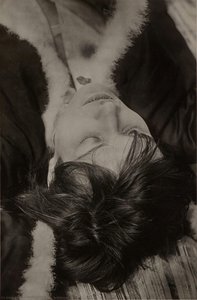
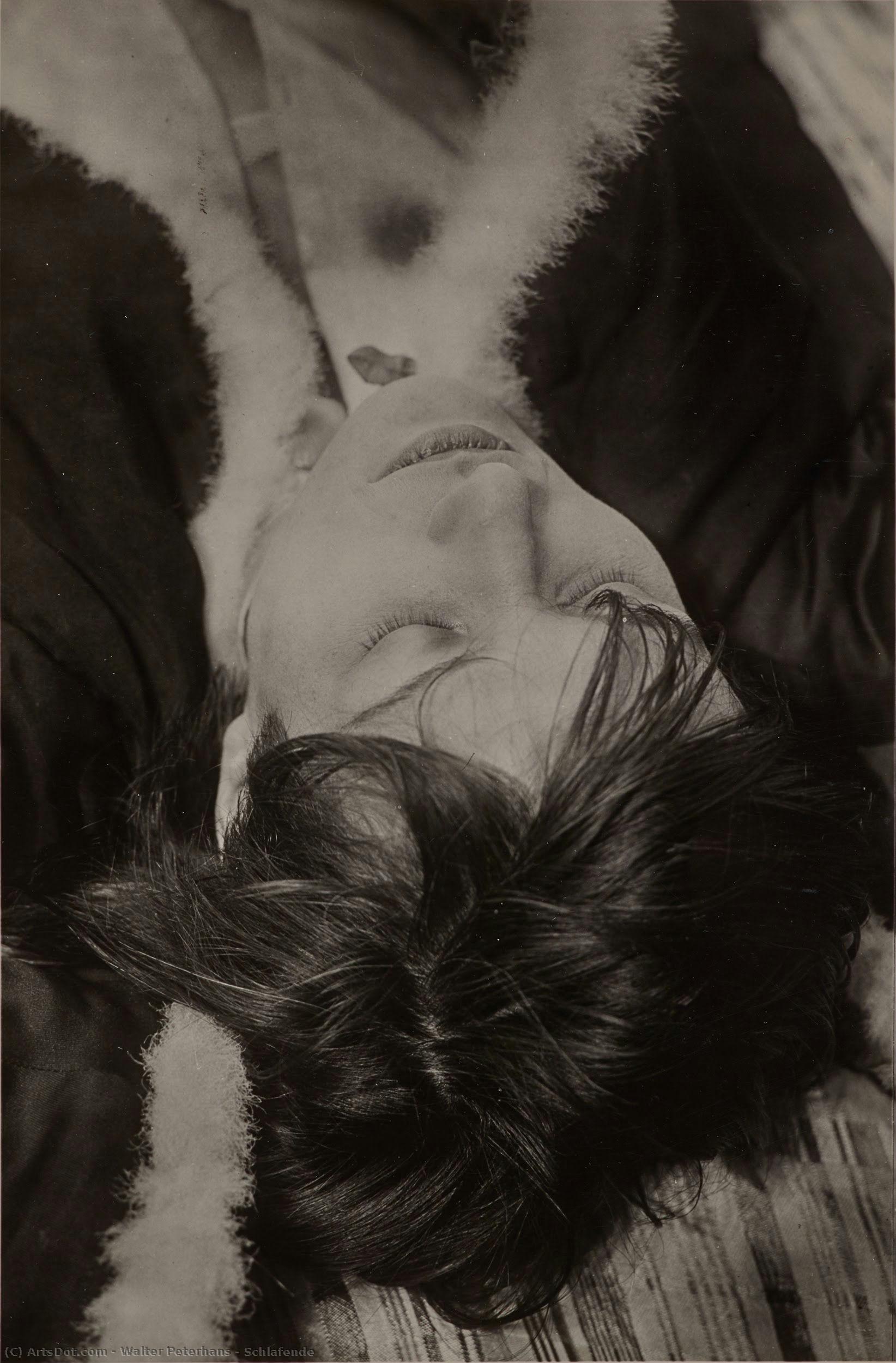
Schlafende


 Read More
Hand Made Oil Reproduction
Hand-painted oil on canvas in your size and frame, made to order by our artists. ( Buy Print Buy Image)




P118B $10

P118H $10

P118W $10

P438Z $10

P508JH $12

P508YH $12

P805H $10

P805Z $10

P919BZ $10

P919G $10

P919XJ $10

P959ZH $10

P968JZ $12

W106C $8

W218G $10

W218JH $8

W218Y $10

W307PJ $10

W316G $10

W316PJ $8

W316Y $10

W398PJ $8

W4111J $10

W500HY $15

W500JH $15

W692G $12

W849H $8

W940BG $15

W953PJ $8




Pick from our preset sizes that match the artwork's original proportions.

You may enter your own dimensions to fit a specific frame or space. If your selected size does not match the original image's proportions, we will either crop the artwork or extend the painting with additional hand-painted elements. A digital mockup will be sent for your approval before production begins.
Please note that the on-screen preview does not reflect the actual cropping or extension. Only the mockup will accurately show the final composition.
While custom sizes are available, we recommend selecting a dimension from the predefined list to preserve the original proportions.
After order, ArtsDot.com team will email client for instructions and provide a mockup preview
Worldwide Delivery () in 3/4 weeks instead of standard 5 weeks. (18 August). No compromise on quality.

Free Worldwide Express Shipping

High-Quality Linen Canvas

Full Shipping Insurance

Customs Tax Refund Guarantee

True Color Matching Guarantee

60-Day Return Policy (Defects Only)

100% Money-Back Guarantee

Bulk Discount Offer
 Glass option is only available in size under 110 CM

Schlafende
Reproduction Medium
Reproduction Size
-


Total Price
$ 263
Related Artworks
Artist Biography
Walter Peterhans: A Pioneer of New Vision Photography
Walter Peterhans (June 12, 1897 – April 12, 1960) was a German photographer and influential educator, best remembered for his contributions to the Neues Sehen (New Vision) movement and his pivotal role in shaping photography education at institutions like the Bauhaus and the Ulm School of Design.
Early Life and Education
Born in Elsheim, Germany, Peterhans’ early life remains relatively undocumented. However, his subsequent career demonstrates a keen intellectual curiosity and a dedication to exploring the potential of visual media beyond mere representation.
The Bauhaus Years (1929-1933)
Peterhans' most significant period began in 1929 when he assumed the position of photography teacher and course leader at the renowned Bauhaus school. This appointment marked a turning point, allowing him to develop his pedagogical approach and champion the principles of Neues Sehen. He didn’t simply teach photographic technique; instead, he integrated philosophical concepts – drawing from thinkers like Kant, Plato, and Pythagoras – to demonstrate how beauty is constructed in perception and can be deliberately created within artistic works. His teaching aimed to cultivate a deeper understanding of visual principles rather than just technical skills.
Neues Sehen and Artistic Style
As a proponent of Neues Sehen, Peterhans moved away from traditional pictorialism, embracing experimentation with close-up perspectives, unconventional angles, dramatic lighting, and the depiction of everyday objects. His photographs often featured stark contrasts, fragmented compositions, and an emphasis on texture and form. This style reflected a broader modernist aesthetic that sought to capture the dynamism and complexities of the modern world.
Emigration to the United States & IIT
With the rise of Nazism and the closure of the Bauhaus in 1933, Peterhans faced increasing political pressure. He eventually emigrated to Chicago in 1938, accepting a position at the Illinois Institute of Technology (IIT) under the direction of Mies van der Rohe. At IIT, he developed a highly successful ‘visual training’ course for architecture students – a ten-unit program spanning four semesters that continued to be influential long after his departure.
Ulm School of Design and Later Life
In 1953, Peterhans returned to Germany as part of the founding faculty of the Ulm School of Design (Hochschule für Gestaltung), a highly influential design school that prioritized functionalism and systematic problem-solving. He continued to teach and refine his pedagogical methods until his untimely death in 1960 from a heart attack at his in-laws’ home in Stetten im Remstal, near Stuttgart.
Personal Life
Peterhans was briefly married to American architect Gertrude Lempp Kerbis before marrying Brigitte Schlaich, also an architect, in 1957.
Legacy and Historical Significance
- Pioneering Photography Education: Peterhans’ innovative teaching methods profoundly impacted photography education, emphasizing conceptual understanding alongside technical proficiency.
- Influence on Design Thinking: His ‘visual training’ course at IIT became a model for integrating visual principles into architectural design curricula.
- Champion of Modernism: As a key figure in the Neues Sehen movement, he helped shape the development of modern photography and its exploration of new aesthetic possibilities.
The copyright for Walter Peterhans’ work is currently held by Museum Folkwang in Essen, Germany, ensuring his legacy continues to be preserved and appreciated.
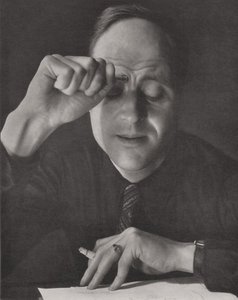
Walter Peterhans
1897 - 1960 , Germany
Quick Facts
- Birth Date: 1897-06-12
- Birth Place: Elsheim, Germany
- Death Date: 1960-04-12
- Influenced By: Kant, Plato, Pythagoras
- Movement: Neues Sehen, Bauhaus
- Name: Walter Peterhans
- Nationality: German
- Notable Works: Schlafende (Sleeping)
Related Articles
Beyond the Lens: Photography's Enduring Influence on Modern & Contemporary Art
Explore photography's pivotal role in shaping modern & contemporary art. Discover key movements, influential artists like Stieglitz, and expert collecting advice from ArtsDot.

Monochrome Visions: Exploring the Aesthetic & Historical Significance of Black & White Photography
Explore the rich history & artistic power of black and white photography. From early techniques to iconic masters like Ansel Adams, discover why monochrome continues to captivate art lovers today. Expert insights for collectors.

Pictorialism: A Search for Artistic Photography's Soul – Aesthetics, Techniques & Legacy
Explore the captivating world of Pictorialism – a pivotal movement that transformed photography into fine art. Discover key artists like Stieglitz & Käsebier, techniques, and collecting tips from experts.
Neue Sachlichkeit: Objectivity, Realism & Social Commentary in Interwar German Art
Explore Neue Sachlichkeit – the pivotal German art movement critiquing Weimar society with unflinching realism. Discover key artists like Dix & Grosz, its historical context, and collecting insights for discerning investors.
Witnessing History Through Lens & Light: Documentary Photography's Enduring Legacy
Explore the powerful history of documentary photography – from its origins to contemporary masters like Gordon Parks & W. Eugene Smith. Discover how this art form shapes our understanding of society and witness pivotal moments in time.