

 Preview
 Send
Send Share
Share
 Details

 Download
 Similars
 X-Ray
X-Ray Diaporama
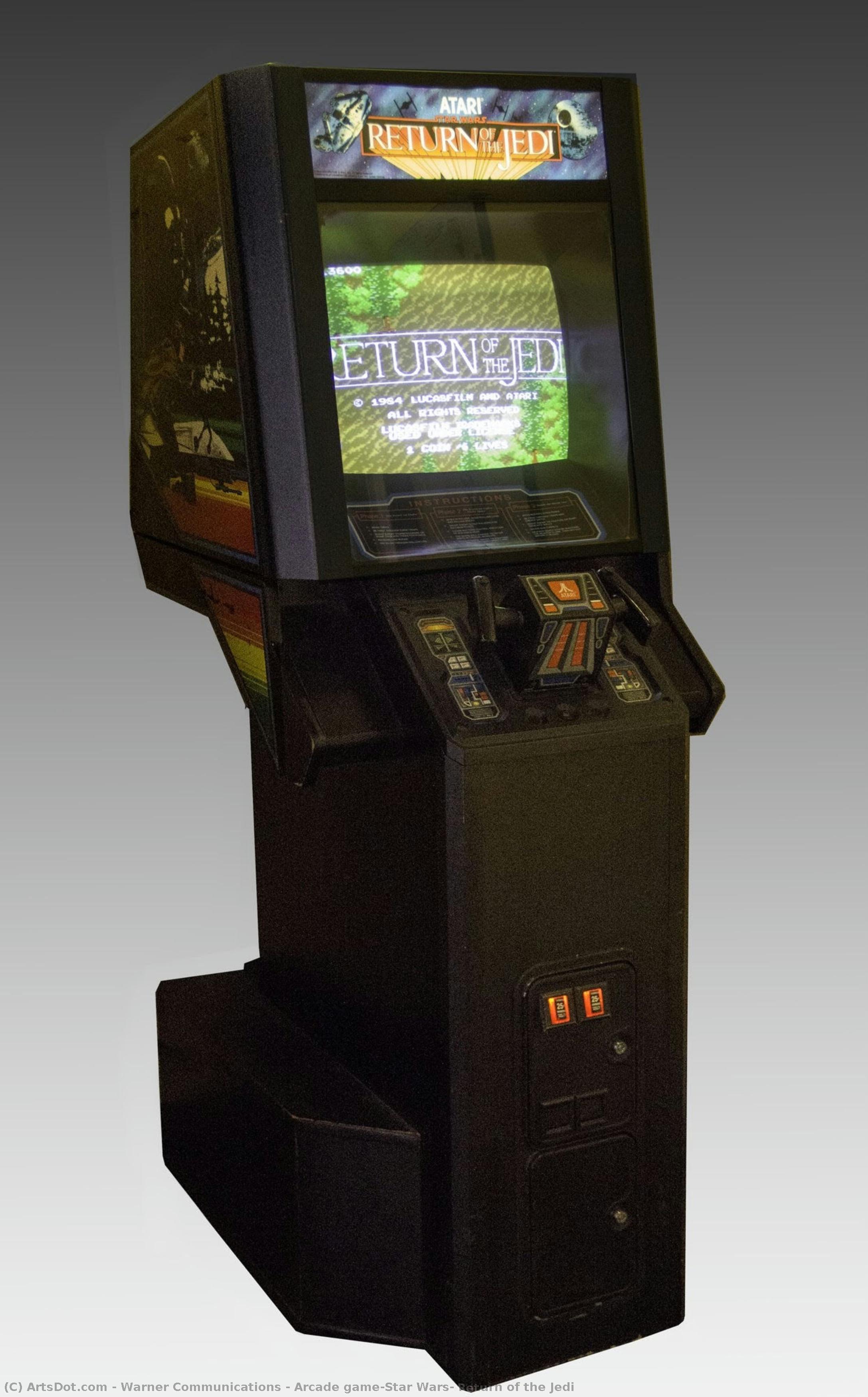
Arcade game:Star Wars: Return of the Jedi


 Read More
Hand Made Oil Reproduction
Hand-painted oil on canvas in your size and frame, made to order by our artists. ( Buy Print Buy Image)




































Pick from our preset sizes that match the artwork's original proportions.

You may enter your own dimensions to fit a specific frame or space. If your selected size does not match the original image's proportions, we will either crop the artwork or extend the painting with additional hand-painted elements. A digital mockup will be sent for your approval before production begins.
Please note that the on-screen preview does not reflect the actual cropping or extension. Only the mockup will accurately show the final composition.
While custom sizes are available, we recommend selecting a dimension from the predefined list to preserve the original proportions.
After order, ArtsDot.com team will email client for instructions and provide a mockup preview
Worldwide Delivery () in 3/4 weeks instead of standard 5 weeks. (28 August). No compromise on quality.

Free Worldwide Express Shipping

High-Quality Linen Canvas

Full Shipping Insurance

Customs Tax Refund Guarantee

True Color Matching Guarantee

60-Day Return Policy (Defects Only)

100% Money-Back Guarantee

Bulk Discount Offer
 Glass option is only available in size under 110 CM

Arcade game:Star Wars: Return of the Jedi
Reproduction Medium
Reproduction Size
-


Total Price
$ 263
Related Artworks










Artist Biography
The Evolving Identity of Warner Communications
Warner Communications, a name that resonates through the annals of entertainment history, represents far more than just a corporate entity; it embodies a dynamic evolution in media and visual culture. Its story isn’t simply one of mergers and acquisitions, but a fascinating journey from humble beginnings as a family-run movie business to a sprawling conglomerate shaping global storytelling. The roots trace back to the Warner brothers – Jack, Albert (Abe), Harry, and Sam – Polish immigrants who dared to dream beyond their circumstances in the late 19th century United States. Their initial foray into entertainment involved traveling shows and small theaters, fueled by an entrepreneurial spirit and a keen understanding of public desire. This early experience instilled a pragmatic approach that would define Warner Bros.’s ascent.
The pivotal moment arrived with the establishment of Warner Bros. Records in 1958. Initially conceived as a strategic move to retain control over artists’ recordings, it quickly blossomed into a significant force within the music industry. This expansion wasn't merely about diversification; it was a recognition of the symbiotic relationship between film and music, a synergy that would become central to Warner’s identity. The 1960s saw further growth through acquisitions like Atlantic Records in 1967, bringing iconic artists such as Aretha Franklin and Led Zeppelin into the fold. However, the company's trajectory took an unexpected turn with its acquisition by Kinney National Company in 1969. This period was marked by financial instability and a need for rebranding.
A New Visual Language: The Saul Bass Redesign
The early 1970s proved to be a turning point. A scandal involving Kinney National prompted the separation of its non-media businesses, leading to the reincorporation as Warner Communications in February 1972. This wasn’t just a name change; it signaled a desire for a fresh identity, one that transcended the limitations of being perceived solely as a film studio. Enter Saul Bass, the legendary graphic designer renowned for his iconic movie posters and corporate logos. Commissioned to create a new visual system, Bass embarked on a project aimed at unifying Warner’s diverse operations – music, publishing, cable television, and more – under a single coherent banner.
Bass, collaborating with Herb Yager & Associates, developed a logo centered around the letter “W.” The final design, described as “somewhat electronic in character,” featured a twisting, cable-like form symbolizing interconnectedness and communication. This abstraction was deliberately chosen for its versatility, allowing it to adapt across various platforms – from television screens to printed materials. Alongside the logo, Bass introduced a custom typeface based on Handel Gothic, further solidifying Warner’s new visual presence. The result wasn't merely a logo; it was a complete corporate identity system that projected an image of stability, innovation, and broad reach.
Expansion, Mergers, and Transformations
The decades following the Bass redesign witnessed continued expansion for Warner Communications. Investments in sports through Global Soccer Inc., joint ventures like Warner-Amex Satellite Entertainment (which birthed MTV, Nickelodeon, and VH1), and strategic acquisitions shaped its growing portfolio. The company’s influence extended into publishing with Time Inc., culminating in the landmark merger of 1990 to form Time Warner Inc.. This union created one of the world's largest media conglomerates, a powerhouse dominating film, television, music, and print. However, this period wasn’t without its challenges. The ill-fated AOL merger in 2001, widely regarded as “the worst merger in history,” proved to be a costly misstep.
Despite setbacks, Time Warner continued to evolve, streamlining its operations and focusing on core assets like Warner Bros., Turner Broadcasting, and HBO. By 2018, the company was acquired by AT&T for $108.7 billion, rebranding as WarnerMedia. This acquisition signaled a shift towards a vertically integrated media model, combining content creation with distribution networks. The launch of the streaming service HBO Max in 2020 further underscored this strategy.
A Legacy Redefined: From WarnerMedia to Warner Bros. Discovery
The story doesn’t end there. In May 2021, AT&T announced its intention to spin off WarnerMedia and merge it with Discovery, Inc., creating a new entity – Warner Bros. Discovery. This latest transformation marked the culmination of decades of evolution, consolidation, and adaptation. While the name “WarnerMedia” ceased to exist as an independent company in April 2022, its legacy endures through the combined assets and creative power of Warner Bros. Discovery.
The journey of Warner Communications – from a small family business to a global media giant and ultimately part of a new conglomerate – is a testament to the enduring power of innovation, strategic vision, and the ability to adapt to a constantly changing landscape. It’s a story not just about entertainment, but about the evolution of how we consume stories, connect with culture, and perceive the world around us. The iconic “W” logo, born from Saul Bass's creative genius, remains a potent symbol of this remarkable transformation.

Quick Facts
- Date Of Death: Living
- Full Name: Warner Communications
- Notable Artworks: ['Star Wars: Return of the Jedi']


