 Preview
 Send
Send Share
Share
 Details

 Download
 Similars
 X-Ray
X-Ray Diaporama
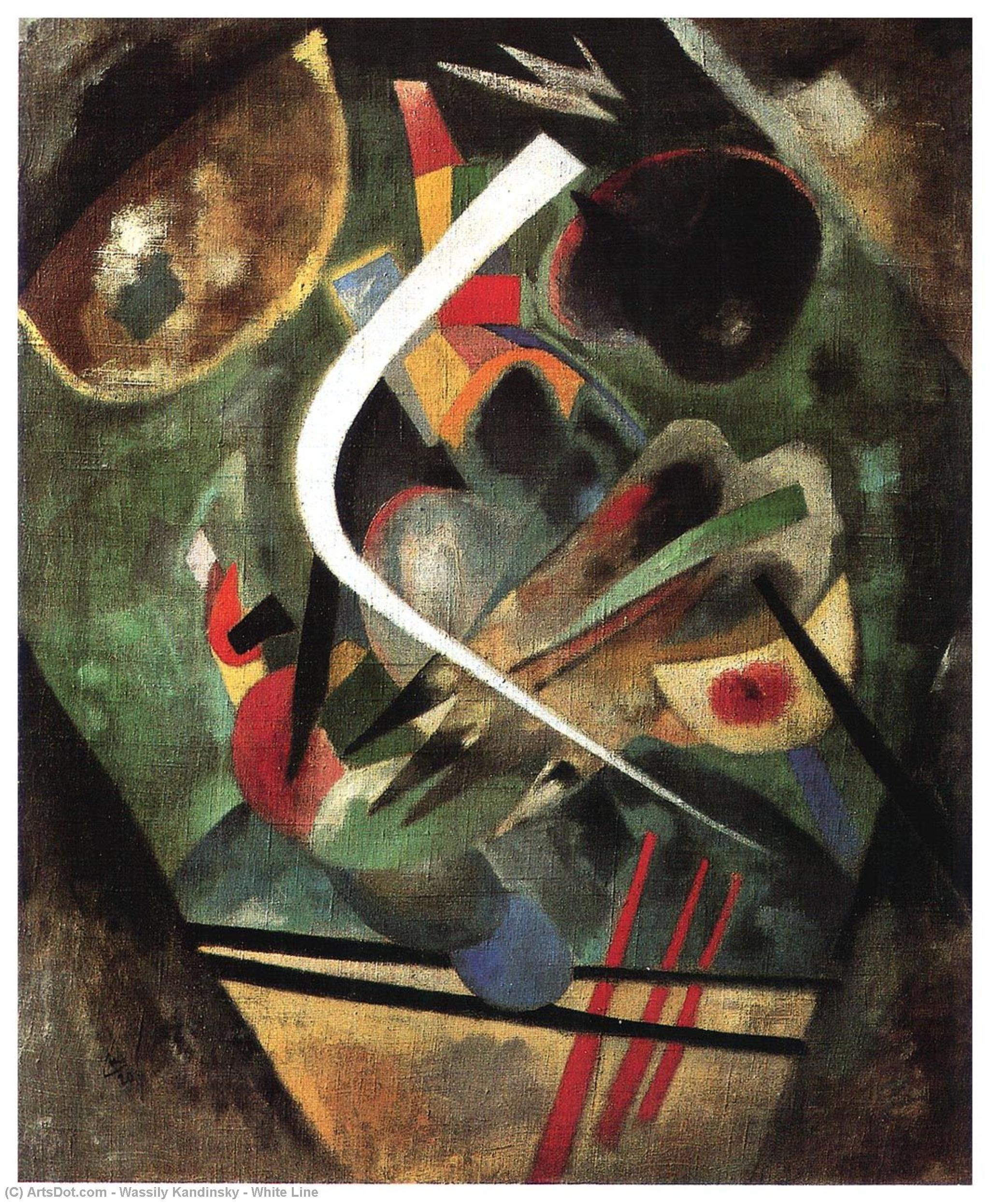
White Line
 Acrylic On Canvas
- WallArt
- Abstract Expressionism
 1920
1920- Modern
 90.0 x 80.0 cm
 Read More
Hand Made Oil Reproduction
Hand-painted oil on canvas in your size and frame, made to order by our artists. ( Buy Print Buy Image)




P118B $10

P118H $10

P118W $10

P438Z $10

P508JH $12

P508YH $12

P805H $10

P805Z $10

P919BZ $10

P919G $10

P919XJ $10

P959ZH $10

P968JZ $12

W106C $8

W218G $10

W218JH $8

W218Y $10

W307PJ $10

W316G $10

W316PJ $8

W316Y $10

W398PJ $8

W4111J $10

W500HY $15

W500JH $15

W692G $12

W849H $8

W940BG $15

W953PJ $8




Pick from our preset sizes that match the artwork's original proportions.

You may enter your own dimensions to fit a specific frame or space. If your selected size does not match the original image's proportions, we will either crop the artwork or extend the painting with additional hand-painted elements. A digital mockup will be sent for your approval before production begins.
Please note that the on-screen preview does not reflect the actual cropping or extension. Only the mockup will accurately show the final composition.
While custom sizes are available, we recommend selecting a dimension from the predefined list to preserve the original proportions.
After order, ArtsDot.com team will email client for instructions and provide a mockup preview
Worldwide Delivery () in 3/4 weeks instead of standard 5 weeks. (16 August). No compromise on quality.

Free Worldwide Express Shipping

High-Quality Linen Canvas

Full Shipping Insurance

Customs Tax Refund Guarantee

True Color Matching Guarantee

60-Day Return Policy (Defects Only)

100% Money-Back Guarantee

Bulk Discount Offer
 Glass option is only available in size under 110 CM

White Line
Reproduction Medium
Reproduction Size
-


Total Price
$ 263
Artwork Description
The Artistic Journey of Wassily Kandinsky
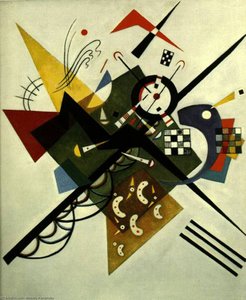
Born on December 4, 1866, in Moscow, Russia, Wassily Wassilyevich Kandinsky began his artistic journey at the age of 30. He studied painting in Munich and later became a key figure in the formation of Der Blaue Reiter, an influential art movement that emphasized emotional expression and subjective interpretation. His association with Expressionism and Abstract Art led to the creation of unique pieces like White Line. This monumental canvas, measuring 90 x 80 cm, embodies Kandinsky’s groundbreaking vision of art as a conduit for spiritual experience—a radical departure from representational painting that would profoundly impact the trajectory of modern art.Key Features of “White Line”
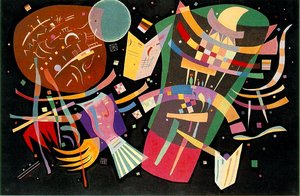
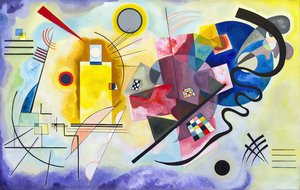
- Color Palette: The painting bursts with vibrant hues – reds pulsating with energy, blues evoking tranquility and depth, yellows radiating warmth and optimism, and greens symbolizing growth and harmony. These colors aren’t merely decorative; they are deliberately juxtaposed to create a dynamic visual dialogue that aims to stimulate the viewer's emotions. Black lines weave through the composition, acting as counterweights to the chromatic richness, generating tension and highlighting the interplay between form and color. They serve as structural elements, guiding the eye across the canvas and reinforcing Kandinsky’s belief in the importance of geometric abstraction. - Abstract Composition: True to Kandinsky's style, White Line eschews any recognizable objects or scenes. Instead, it presents a complex tapestry of shapes—circles, squares, triangles—arranged in an organic yet purposeful manner. These forms aren’t intended to depict anything specific but rather to convey feelings and ideas directly through visual language. Kandinsky meticulously considered the placement and proportion of each element, striving for balance and harmony while simultaneously exploring the expressive potential of non-figurative art. - Size and Medium: The painting is substantial in scale—90 x 80 cm—demonstrating Kandinsky’s ambition to engage the viewer on a visceral level. Executed in oil on canvas, White Line showcases the artist's mastery of technique and his ability to capture subtle nuances of color and texture. The thick impasto brushstrokes contribute to the painting’s tactile quality, inviting contemplation and encouraging viewers to immerse themselves in its visual world.Artistic Movements Influenced by Kandinsky
Kandinsky’s pioneering work in abstract art profoundly impacted subsequent movements, including Expressionism and Abstract Expressionism. His insistence on prioritizing emotion over representation paved the way for artists like Arshile Gorky, Jackson Pollock, and Mark Rothko—who similarly sought to express inner states through non-objective imagery. Kandinsky's influence extended beyond painting; he championed the integration of art and music, believing that both disciplines could communicate spiritual truths.Relevance of “White Line” Today
White Line remains a cornerstone of modern art history—a testament to Kandinsky’s unwavering commitment to artistic innovation and his belief in the transformative power of abstraction. Its bold color palette, dynamic composition, and masterful execution continue to inspire artists today, reminding us that art can transcend literal depiction and communicate profound emotional resonance. For those eager to delve deeper into Kandinsky's oeuvre or explore the broader landscape of abstract expressionism, consider visiting List of paintings by Wassily Kandinsky and Wassily Kandinsky on Wikipedia—resources offering invaluable insight into the artist’s life, work, and enduring legacy.Related Artworks
Artist Biography
A Life Immersed in Color and Spirit
Wassily Wassilyevich Kandinsky, born in Moscow in 1866, was a revolutionary figure who irrevocably altered the course of modern art. His journey wasn’t one of immediate artistic calling; initially destined for a career in law and economics at the University of Moscow, it was a profound encounter with Impressionist painting – specifically Claude Monet's “Haystacks” – and a deeply moving experience witnessing Wagner’s opera "Lohengrin" that ignited within him an irrepressible desire to pursue art. This pivotal moment, occurring around age thirty, marked not merely a career change but a complete transformation of perspective, setting him on a path toward pioneering abstraction. He soon relocated to Munich, enrolling at the prestigious Academy of Fine Arts and studying under Franz von Stuck, though even within formal training, Kandinsky’s spirit yearned for exploration beyond conventional boundaries.
Early influences included Russian folk art, gleaned from an ethnographic expedition to the Vologda region in 1889, which instilled a fascination with vibrant color palettes and symbolic imagery. This foundation would prove crucial as he began to develop his unique artistic language. These early explorations weren’t simply about aesthetic preference; they were rooted in a deep cultural connection and a burgeoning understanding of how art could communicate beyond the literal.
The Dawn of Abstraction: From Expressionism to Inner Necessity
Kandinsky’s early works reveal a strong expressionistic bent, characterized by bold colors and emotional intensity – pieces like “Papeln (Poplars)” from 1902 exemplify this period. However, he wasn't content with merely representing the external world; he sought to express inner realities, spiritual truths that transcended mere visual depiction. This quest led him gradually away from representational art and toward a revolutionary exploration of color, form, and their emotional resonance.
He began to believe that colors possessed inherent psychological effects, capable of evoking specific feelings and sensations in the viewer. This conviction was deeply intertwined with his burgeoning interest in Theosophy, a spiritual movement emphasizing esoteric knowledge and universal brotherhood. As he delved deeper into these ideas, Kandinsky’s paintings became increasingly non-objective, shedding recognizable forms in favor of abstract compositions driven by an “inner necessity.” This wasn't simply about abandoning representation; it was about discovering a new visual language capable of expressing the intangible realms of emotion and spirituality. He sought to create a visual equivalent of music, where color and form harmonized to evoke profound emotional responses.
Geometric Harmony and Spiritual Resonance
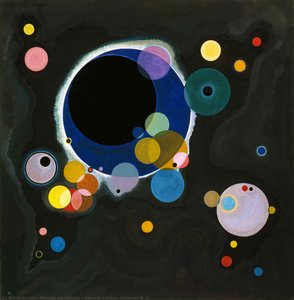
The period following his involvement with the influential artist group Der Blaue Reiter (The Blue Rider), which he co-founded in Munich in 1911, saw a further evolution in Kandinsky’s style. While earlier works often featured fluid, organic shapes, he began to explore geometric abstraction, focusing on the interplay of circles, triangles, and squares. “Several Circles” (140 x 140 cm) stands as a prime example of this phase – a dynamic composition where color and form interact in a harmonious yet energetic dance.
This wasn't cold or sterile geometry; rather, it was imbued with spiritual significance. Kandinsky believed that geometric shapes possessed inherent symbolic meaning, and their arrangement within the canvas could evoke specific emotional responses. His theoretical writings, most notably “Concerning the Spiritual in Art” (1911), articulated these beliefs, laying the groundwork for a new understanding of abstract art as a vehicle for expressing profound spiritual truths. He argued that art should not aim to imitate nature but rather to reveal the artist’s inner world and connect with the viewer on a deeper, more intuitive level.
Bauhaus Influence and Lasting Legacy
The outbreak of World War I forced Kandinsky's return to Russia in 1914, but following the Russian Revolution, he found himself increasingly at odds with the prevailing artistic climate. In 1920, he accepted a teaching position at the Bauhaus school in Germany, where he profoundly influenced generations of artists with his theories on color, form, and abstraction. The Bauhaus provided an ideal environment for Kandinsky to further develop his ideas and explore new creative avenues.
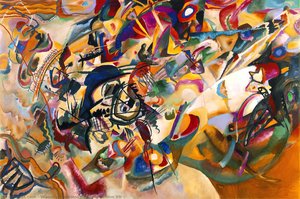
He continued to experiment with geometric forms and vibrant colors, often incorporating layered impasto techniques to create textured surfaces that added depth and complexity to his compositions – as seen in later works like “An Intimate Party” (1942). After the closure of the Bauhaus by the Nazi regime in 1933, Kandinsky moved to France, where he remained for the rest of his life. His impact on modern art is immeasurable; he is widely recognized as a pioneer of abstract expressionism and a key figure in the development of non-representational painting. His works are held in major museums worldwide, including the Tretyakov Gallery in Moscow, which houses his monumental “Composition VII,” a testament to his artistic vision and enduring legacy.
Kandinsky’s exploration of color, form, and spirituality continues to inspire artists today, solidifying his place as one of the most important figures in 20th-century art history. He didn't just paint pictures; he painted emotions, ideas, and the very essence of the human spirit.
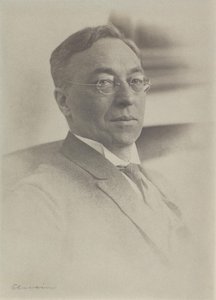
Wassily Wassilyevich Kandinsky
1866 - 1944 , Russia
Quick Facts
- Artistic Movement Or Style: Abstract art, Expressionism
- Artists Or Movements Influenced By This Artist: ['Abstract Expressionism']
- Artists Who Influenced This Artist:
- Claude Monet
- Richard Wagner
- Date Of Birth: 1866
- Date Of Death: 1944
- Full Name: Wassily Wassilyevich Kandinsky
- Nationality: Russian, French
- Notable Artworks:
- Murnau with Rainbow
- Tempered Elan
- An Intimate Party
- Several Circles
- Place Of Birth: Moscow, Russia
Related Articles

Kandinsky's Masterpieces: 25 Paintings That Define Abstract Art | ArtsDot
Journey through Wassily Kandinsky's 25 most iconic abstract paintings. Explore his revolutionary use of color, form & spiritual expressionism. Find museum-quality Kandinsky reproductions and elevate your home decor with ArtsDot.com. Discover all masterpieces on ArtsDot.com!

Geometric Abstraction's 10 Defining Masterpieces | Art for Your Home - ArtsDot
Explore 10 defining masterpieces of Geometric Abstraction! Discover Kandinsky, Mondrian & Malevich’s iconic works. Find museum-quality art reproductions and curated decor ideas to elevate your home at ArtsDot.com.

White on Canvas: 10 Masterpieces & Timeless Elegance for Your Home Decor
Explore 10 iconic white paintings by Monet, Whistler & Rothko! Discover the stories behind these serene masterpieces and their impact on art history. Find museum-quality reproductions for your home decor at .
Abstract Expressionism's 10 Defining Masterpieces |
Explore 10 defining Abstract Expressionism masterpieces by Pollock, Rothko & de Kooning. Discover the stories behind these iconic paintings and find museum-quality art reproductions to elevate your home decor on .
Beyond Form & Color: Geometric Abstraction's Evolution in 20th/21st Century Art
Explore the evolution of geometric abstraction from Cubism to contemporary art. Discover key artists like Malevich & Mondrian, investment insights, and expert collecting advice at ArtsDot.