 Preview
 Send
Send Share
Share
 Details

 Download
 Similars
 X-Ray
X-Ray Diaporama
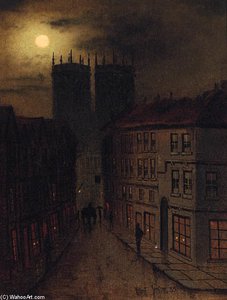
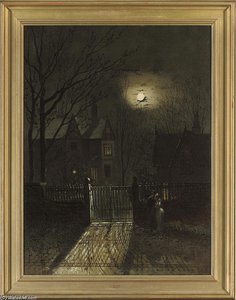
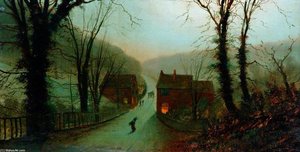
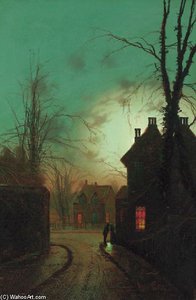
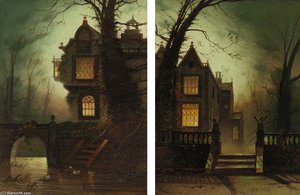
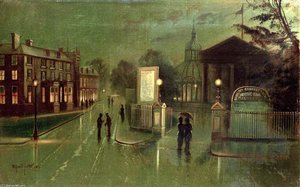
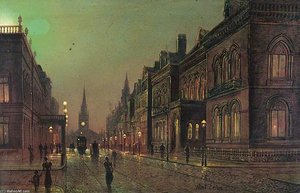
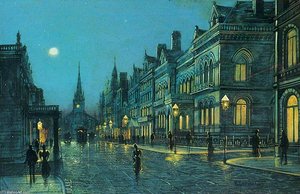
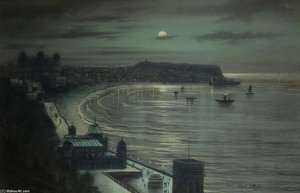
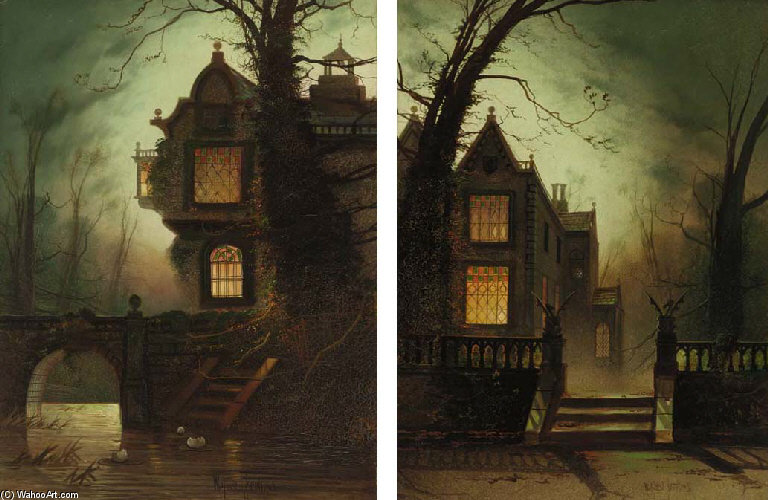
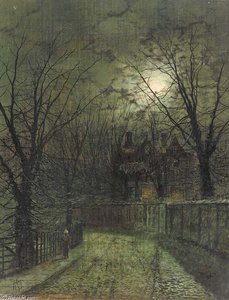
A Moonlit House On A River; And A Moonlit House In A Wooded Landscape

 Read More
Giclée / Art Print
Museum-quality giclée or canvas print with fast production and flexible finish options. ( Buy Hand Made Painting Buy Image)




































Pick from our preset sizes that match the artwork's original proportions.

You may enter your own dimensions to fit a specific frame or space. If your selected size does not match the original image's proportions, we will either crop the artwork or extend the image with a mirrored or solid-fill edge. A digital mockup will be sent for your approval before production begins.
Please note that the on-screen preview does not reflect the actual cropping or extension. Only the mockup will accurately show the final composition.
While custom sizes are available, we recommend selecting a dimension from the predefined list to preserve the original proportions.
Worldwide Delivery () in 2 weeks instead of standard 4/5 weeks. (26 August)

Free Worldwide Express Shipping

High-Quality Linen Canvas

Full Shipping Insurance

Customs Tax Refund Guarantee

True Color Matching Guarantee

60-Day Return Policy (Defects Only)

100% Money-Back Guarantee

Bulk Discount Offer
 Glass option is only available in size under 110 CM

A Moonlit House On A River; And A Moonlit House In A Wooded Landscape
Giclée / Art Print
Reproduction Size
-


Total Price
$ 63
Related Artworks

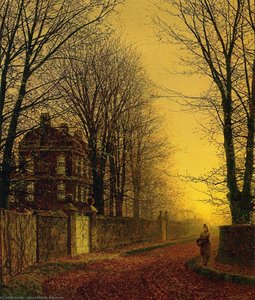
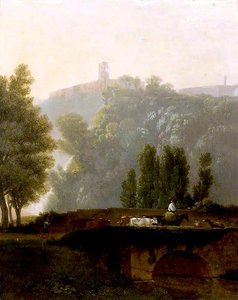
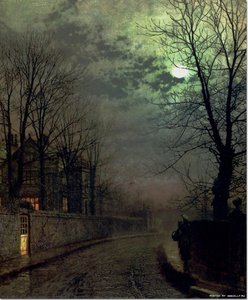
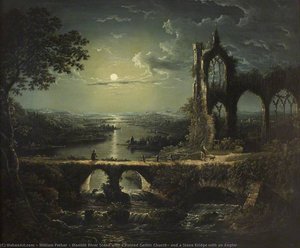
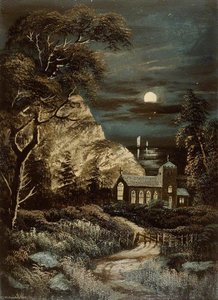
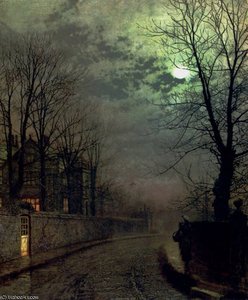
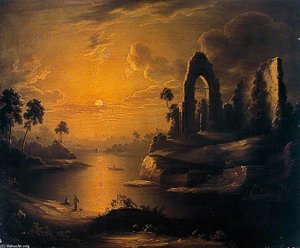
Artist Biography
The Nocturnal Vision of Wilfred Jenkins
Wilfred Jenkins (1857 – 1936) was a painter who possessed the rare ability to capture the very soul of London after dark. While he may not have achieved the household fame of some of his contemporaries during his lifetime, his work occupies a profound and evocative space within the landscape of Victorian and Edwardian art. Born in Stoke Newington, London, Jenkins developed an innate fascination with the urban environment, specifically the way moonlight and artificial gaslight transformed familiar streets into realms of mystery and shadow. His canvases serve as more than mere records of architecture; they are emotional landscapes that invite the viewer to wander through a quiet, breathing city, caught in the delicate transition between day and night.
His artistic journey was shaped by the rigorous academic traditions of his era. As a student at the prestigious Slade School of Art, Jenkins studied under influential figures such as Hubert Walter Bembridge and Henry Wallis. This formal training provided him with a foundation in meticulous detail and a sophisticated understanding of tonal painting. He drew deep inspiration from the works of masters like Walter Sickert and Frederic Leighton, absorbing their ability to balance classical precision with the emerging sensibilities of Impressionism. This synthesis allowed Jenkins to move beyond simple representation, using light not just to illuminate subjects, but to sculpt atmosphere and evoke a sense of profound solitude.
Mastery of the Nocturne and Urban Atmosphere
The true hallmark of Jenkins’ oeuvre is his mastery of the nocturne. During the late 19th century, the nocturne emerged as a powerful genre capable of conveying deep psychological moods through the subtle interplay of light and darkness. Jenkins embraced this challenge with remarkable virtuosity, focusing his gaze on the iconic landmarks of London. Whether it was the majestic silhouette of St. Paul’s Cathedral rising above the Thames or the bustling yet shadowed corners of Trafalgar Square, he sought to capture the ephemeral quality of moonlight as it danced across stone and water.
His technique was characterized by a delicate balance of Victorian precision and Impressionistic fluidity. He had an extraordinary eye for how light dissolves edges and softens textures, creating a sense of depth that feels almost tactile. In his depictions of London’s streets, one can sense the dampness of the night air and the quietude of the late hours. His work often features:
- Atmospheric Lighting: The use of soft, diffused moonlight to create dramatic highlights against deep, velvety shadows.
- Architectural Reverence: A meticulous approach to rendering the grand structures of London, lending a sense of permanence to his fleeting night scenes.
- Urban Solitude: A recurring theme of quietude, where even populated streets feel imbued with a peaceful, contemplative stillness.
Legacy and Historical Significance
As the decades progressed, Jenkins’ work remained a testament to a specific era of British urban identity. His paintings act as historical windows, preserving the aesthetic character of a London that was transitioning from the gaslit Victorian age into the modern era. While his style leaned toward a more traditional, tonal realism, his ability to evoke the "mood" of a location aligns him with the broader movement of artists seeking to capture the ephemeral essence of modern life.
Today, the significance of Wilfred Jenkins lies in his role as a chronicler of the nocturnal spirit. His works are highly regarded by collectors of British landscape and cityscape art for their ability to transport the viewer across time. Through his disciplined brushwork and poetic vision, he ensured that the quiet, moonlit beauty of London’s historic streets would never be forgotten, leaving behind a legacy of art that continues to resonate with anyone moved by the magic of the night.
wilfred jenkins
1857 - 1936
Quick Facts
- Artistic Movement Or Style: Romanticism
- Artists Or Movements Influenced By This Artist: ['Hudson Lowe']
- Artists Who Influenced This Artist: ['Turner']
- Date Of Birth: 1857
- Date Of Death: 1936
- Full Name: Wilfred Jenkins
- Nationality: British
- Notable Artworks: ['The Moonlit Thames']
- Place Of Birth: London, England
Related Articles

John Constable's Masterpieces: Explore 25 Iconic Landscapes for Your Home
Journey through John Constable's 25 most celebrated landscapes. Explore Romanticism, Dedham Vale & his masterful use of light in iconic paintings like 'Hay Wain'. Find museum-quality art reproductions and elevate your home decor on ArtsDot.com.

Romantic Landscapes: 10 Masterpieces for Your Home | ArtsDot
Journey through 10 Romantic landscape masterpieces by Friedrich, Turner & Cole. Explore emotional art, sublime nature scenes & iconic 19th-century paintings. Find museum-quality reproductions for your home at ArtsDot.com – discover the full collection online!

Evocations of Place: A Historical Journey Through Landscape Art
Explore the rich history of landscape art with ArtsDot. Discover renowned artists, movements like Impressionism & Romanticism, and expert guidance for collecting timeless pieces. Find your perfect serene escape today!
Evocations of Place: A Historical Journey Through Landscape Art
Explore the rich history of landscape art with ArtsDot. Discover renowned artists, movements like Impressionism & tonalism, and expert guidance for collecting timeless pieces. Find your perfect serene escape today!
Evoking Nature's Sublime: A Comprehensive Exploration of 19th-Century Landscape Painting
Explore the captivating world of 19th-century landscape painting! Discover renowned artists like Friedrich & Monet, key movements, and find the perfect artwork to bring nature's serenity into your home. Expert insights at ArtsDot.