 Preview
 Send
Send Share
Share
 Details

 Download
 Similars
 X-Ray
X-Ray Diaporama
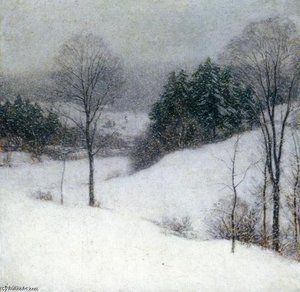
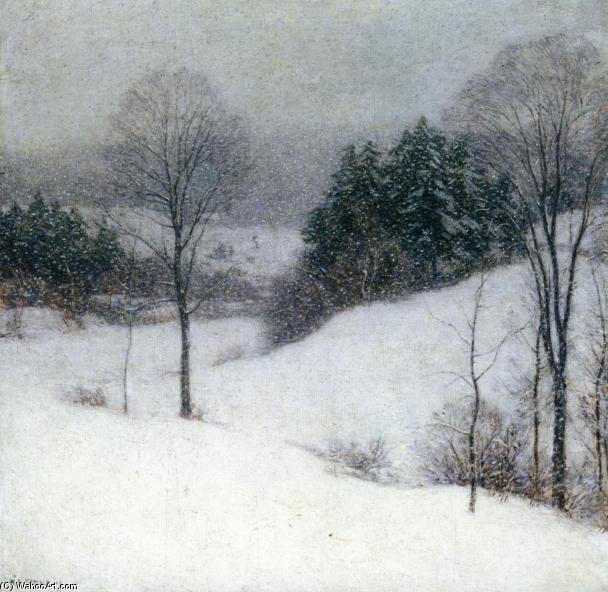
The White Veil


 Read More
Hand Made Oil Reproduction
Hand-painted oil on canvas in your size and frame, made to order by our artists. ( Buy Print Buy Image)




P118B $10

P118H $10

P118W $10

P438Z $10

P508JH $12

P508YH $12

P805H $10

P805Z $10

P919BZ $10

P919G $10

P919XJ $10

P959ZH $10

P968JZ $12

W106C $8

W218G $10

W218JH $8

W218Y $10

W307PJ $10

W316G $10

W316PJ $8

W316Y $10

W398PJ $8

W4111J $10

W500HY $15

W500JH $15

W692G $12

W849H $8

W940BG $15

W953PJ $8




Pick from our preset sizes that match the artwork's original proportions.

You may enter your own dimensions to fit a specific frame or space. If your selected size does not match the original image's proportions, we will either crop the artwork or extend the painting with additional hand-painted elements. A digital mockup will be sent for your approval before production begins.
Please note that the on-screen preview does not reflect the actual cropping or extension. Only the mockup will accurately show the final composition.
While custom sizes are available, we recommend selecting a dimension from the predefined list to preserve the original proportions.
After order, ArtsDot.com team will email client for instructions and provide a mockup preview
Worldwide Delivery () in 3/4 weeks instead of standard 5 weeks. (16 August). No compromise on quality.

Free Worldwide Express Shipping

High-Quality Linen Canvas

Full Shipping Insurance

Customs Tax Refund Guarantee

True Color Matching Guarantee

60-Day Return Policy (Defects Only)

100% Money-Back Guarantee

Bulk Discount Offer
 Glass option is only available in size under 110 CM

The White Veil
Reproduction Medium
Reproduction Size
-


Total Price
$ 263
Artwork Description
The White Veil: A Winter’s Whisper by Willard Leroy Metcalf
Willard Leroy Metcalf's "The White Veil," painted in 1909, isn’t merely a landscape; it’s an immersion into the quietude of a New England winter. This evocative piece, now available as a meticulously hand-painted reproduction from ArtsDot.com, captures a moment suspended in time – a snow-laden forest bathed in the diffused light of an overcast day. Metcalf, a key figure in the American Impressionist movement, possessed a remarkable ability to translate the ephemeral qualities of light and atmosphere onto canvas, and “The White Veil” stands as a testament to this skill.
Metcalf’s artistic journey began with formal training at the Boston School of Fine Arts, but it was his travels and dedication to capturing intimate natural scenes that truly defined his style. He sought not grand vistas, but rather the subtle poetry found in fleeting moments – the way light filters through snow, the delicate tracery of branches against a muted sky. “The White Veil” exemplifies this approach, prioritizing mood and atmosphere over precise detail.
A Symphony of Cool Tones and Atmospheric Depth
The painting’s color palette is immediately arresting: a restrained symphony of whites, grays, and subtle blues dominates the scene. This cool foundation isn't stark; instead, it creates a sense of profound tranquility. Hints of green peek through in the evergreen trees, providing delicate counterpoints against the monochromatic backdrop – a reminder of life persisting beneath the winter’s blanket. Metcalf masterfully employs atmospheric perspective, a technique borrowed from Renaissance masters but adapted to his Impressionistic sensibilities. Distant hills fade into a hazy background, their colors becoming paler and less distinct, simulating the way light scatters through the atmosphere and creating an illusion of immense depth.
The composition itself is layered, drawing the viewer’s eye into the scene. A gentle slope leads towards the mid-ground, populated by more trees and indistinct forms partially obscured by falling snow or mist. The foreground is anchored by prominent pine trees and bare branches, their rough textures subtly suggested through Metcalf's loose brushstrokes. These lines aren’t sharply defined; they blend seamlessly into one another, contributing to the overall sense of softness and ambiguity.
Impressionistic Technique and a Poet’s Touch
Metcalf’s technique is distinctly Impressionistic – characterized by short, broken brushstrokes that capture the fleeting effects of light. The paint application appears relatively smooth, yet visible brushwork remains, lending texture and vitality to the scene. There's minimal blending; instead, Metcalf allows each stroke to speak for itself, creating a dynamic surface that shifts with the viewer’s perspective. This deliberate lack of blending contributes significantly to the painting’s atmospheric quality, evoking the feeling of a winter’s day – crisp, cold, and subtly luminous.
The use of horizontal lines dominates the landscape, emphasizing its flatness and vastness. These lines create a sense of scale, drawing attention to the sheer expanse of the snowy terrain. The shapes are organic and irregular, mirroring the natural forms of trees and snowdrifts – rounded and flowing rather than rigid or geometric.
Symbolism and Emotional Resonance
“The White Veil” is more than just a pretty winter scene; it’s imbued with symbolic resonance. The bare trees, standing resilient against the cold, can be interpreted as symbols of endurance and dormancy – a quiet acceptance of winter's embrace. The veil of snow itself suggests concealment, mystery, and perhaps even a sense of solitude. Yet, despite its somber palette, the painting evokes feelings of peace, tranquility, and contemplative beauty. It’s a reminder to find solace in the stillness of nature, particularly during times of introspection.
As a hand-painted reproduction from ArtsDot.com, “The White Veil” offers an unparalleled opportunity to experience Metcalf's artistry firsthand. Each brushstroke is meticulously recreated, capturing the nuances of color and texture that define this iconic American Impressionist masterpiece. Bring the quiet beauty of winter into your home or office – a timeless reminder of nature’s enduring grace.
Related Artworks
Artist Biography
A Life Immersed in Light and Landscape
Willard Leroy Metcalf, a pivotal figure in the blossoming of American Impressionism, dedicated his life to capturing the ephemeral beauty of the natural world. Born in Lowell, Massachusetts, in 1858, he wasn’t merely a painter of landscapes; he was a poet of light and atmosphere, translating the quietude of New England scenes and beyond onto canvas with a delicate touch and vibrant palette. His journey as an artist was one of rigorous training, extensive travel, and a profound commitment to portraying intimate moments in nature – fleeting glimpses of beauty often overlooked. Metcalf’s story is not simply about artistic development, but also about finding his voice amidst the evolving currents of late 19th and early 20th-century art, and ultimately, leaving an indelible mark on American Impressionism.From Academic Foundations to European Influences
Metcalf’s formal artistic education began at the School of the Museum of Fine Arts in Boston, where he honed his foundational skills until 1878. This was followed by a crucial period of study at the Académie Julian in Paris, a renowned center for American artists seeking classical training. Initially, Metcalf focused on figure painting and illustration – skills that would later inform his compositions – but it was during his extended sojourn in Europe, beginning in 1883, that his artistic trajectory began to shift decisively towards landscape art. He studied with Gustave Boulanger and Jules-Joseph Lefebvre, absorbing the technical expertise of French academic tradition. However, it wasn’t just formal instruction that shaped his vision; it was immersion in the European landscape itself. Travels through England and Brittany exposed him to diverse light conditions and artistic communities. A particularly significant moment arrived in 1886 when Metcalf became the first American artist to visit Claude Monet's garden at Giverny, a watershed experience that profoundly impacted his approach to capturing light, color, and atmosphere. This encounter wasn’t about imitation, but rather an awakening to the possibilities of portraying the subjective experience of seeing – a cornerstone of Impressionist philosophy.The Rise of an American Impressionist
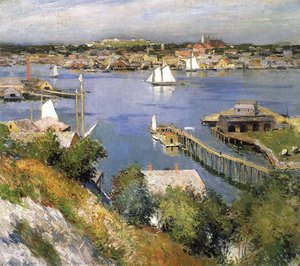
Upon returning to the United States in 1889, Metcalf began to forge his own distinct style, blending academic training with the lessons learned from European masters and his growing sensitivity to the American landscape. He worked as an illustrator and teacher while continuing to paint, gradually moving away from traditional techniques towards a more expressive and atmospheric approach. His paintings of this period often depict serene scenes of New England life – coastal harbors, quiet villages, and sun-dappled meadows. Critics frequently drew parallels between his work and the poetry of Robert Frost and Walt Whitman, recognizing a shared sensibility for capturing the essence of American experience. In 1897, Metcalf played a pivotal role in the formation of “The Ten American Painters,” a group that seceded from the Society of American Artists to pursue greater artistic independence and experimentation. This act signified a turning point in American art, marking a shift towards a more modern and individualistic aesthetic. Notable works like *Gloucester Harbor* (1895) exemplify his mastery of light and color, while pieces such as *The River Epte, Giverny*, clearly demonstrate the enduring influence of Monet’s garden on his artistic vision.Legacy and Enduring Influence
Willard Leroy Metcalf's contribution to American art extends beyond his captivating paintings. He was a dedicated educator, sharing his knowledge and passion for art by teaching at institutions like Cooper Union School of Art for Women in New York City and the Art Students League of New York. His influence on subsequent generations of artists is undeniable. Metcalf’s ability to capture fleeting moments of beauty and tranquility, combined with his technical skill and poetic sensibility, cemented his place as a significant figure in American art history. He wasn't interested in grand narratives or dramatic compositions; instead, he found inspiration in the everyday – the gentle play of light on water, the subtle hues of a twilight sky, the quiet dignity of rural life. His paintings are not merely representations of landscapes; they are evocations of mood and atmosphere, inviting viewers to share in his intimate connection with nature.A Lasting Impression
Today, Metcalf’s work continues to resonate with audiences worldwide. His paintings can be found in major museum collections across the United States, including the Art Institute of Chicago, the Metropolitan Museum of Art, and the Smithsonian American Art Museum. He remains a celebrated figure in the history of American Impressionism, admired for his technical brilliance, poetic vision, and enduring commitment to capturing the beauty of the natural world.- His paintings often evoke a sense of quiet contemplation.
- He was a founding member of The Ten American Painters.
- Metcalf’s work is characterized by intimate and modest landscapes.
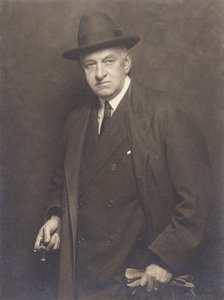
Willard Leroy Metcalf
1858 - 1925 , United States of America
Quick Facts
- Artistic Movement Or Style: American Impressionism
- Artists Or Movements Influenced By This Artist: ['Ten American Painters']
- Artists Who Influenced This Artist: ['Claude Monet']
- Date Of Birth: 1858
- Date Of Death: 1925
- Full Name: Willard Leroy Metcalf
- Nationality: American
- Notable Artworks:
- Gloucester Harbor
- The Golden Carnival
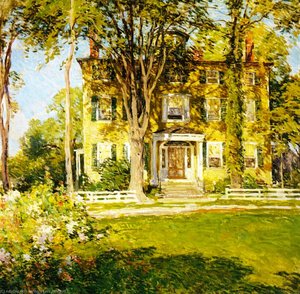
- Captain Lord House
- The River Epte
- The Lily Pond
- Place Of Birth: Lowell, USA
Related Articles
Willard Leroy Metcalf: Capturing the Intimacy of American Rural Life
Explore the serene landscapes of Willard Leroy Metcalf, a key figure in American Impressionism. Discover his tranquil New England scenes & vibrant art reproductions at ArtsDot.

Cézanne's Masterpieces: 25 Iconic Artworks to Transform Your Space
Journey through 25 iconic artworks by Paul Cézanne – a master of Impressionism and Post-Impressionism. Explore his landscapes, still lifes, and the stories behind these timeless masterpieces. Discover museum-quality reproductions & curated decor at ArtsDot.com.
Snowy Masterpieces: 10 Famous Paintings & Art for a Winter Aesthetic
Explore 10 famous snow paintings by Monet, Degas & more! Discover the stories behind these serene winter landscapes and iconic artworks. Find museum-quality art reproductions for your home at ArtsDot.com.

Beyond the Horizon: 10 Landscape Masterpieces for Your Home Decor
Journey through 10 breathtaking landscape paintings by Monet, Van Gogh & more! Explore iconic artworks, artistic techniques & find inspiration for your home decor. Museum-quality reproductions at ArtsDot.com. Discover all masterpieces on ArtsDot.com

Evocations of Place: A Historical Journey Through Landscape Art
Explore the rich history of landscape art with ArtsDot. Discover renowned artists, movements like Impressionism & Romanticism, and expert guidance for collecting timeless pieces. Find your perfect serene escape today!