

 Preview
 Send
Send Share
Share
 Details

 Download
 Similars
 X-Ray
X-Ray Diaporama
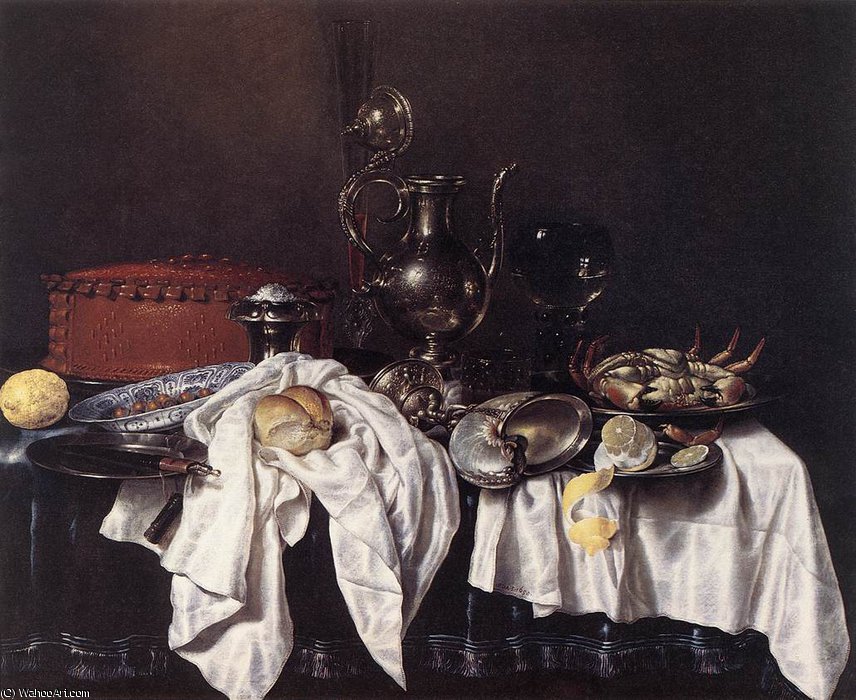
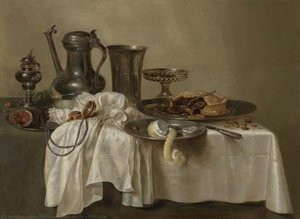
Still-Life with Pie, Silver Ewer and Crab

 Read More
Purchase a high-resolution, enhanced digital image, far superior to the online preview.
Each file is meticulously prepared by our in-house specialists using advanced tools and expert manual retouching. We ensure every image has exceptional clarity, precise color accuracy, and fine detail.
The final file is delivered via email within 72 hours, optimized for immediate use in professional, editorial, and print environments. This is the same quality trusted by top-tier design studios, publishers, and galleries.
Digital Image
Download a high-resolution file for personal display, printing, and creative projects. ( Buy Print Buy Hand Made Painting)
Included in Every Digital Image Order
Expert Digital Delivery, Guaranteed
When you choose ArtsDot.com, you're not just getting an image - you're receiving a professionally enhanced digital artwork, crafted with precision and backed by a satisfaction guarantee. Here's everything that comes with your order, automatically:

Fast Email Delivery
Your high-resolution digital image file will be emailed to you within 72 hours of ordering - ready for immediate use.

AI-Enhanced Digital File
Your artwork is professionally optimized using advanced AI tools and manual editing, ensuring maximum detail, clarity, and color accuracy.

Free Lifetime Re-Delivery
Accidentally deleted or lost your file? No worries - we'll resend it to you anytime, free of charge.

No Import Fees - Ever
Enjoy your artwork instantly with zero customs, duties, or delivery fees - digital downloads are always tax-free.

Color Accuracy Guarantee
We ensure your digital image reflects the original colors as closely as possible using professional tools and color management.

60-Day Satisfaction Guarantee
If you're not satisfied with your digital image, we'll revise it or refund 100% within 60 days - no questions asked.

100% Money-Back Guarantee
Not satisfied? Get a full refund within 60 days of receiving your digital file - no questions asked.

Bulk Order Discounts
Buy 3 images, save 10% - Buy 5, save 15% - Buy 10+, save 20%. Great for creative projects, galleries, and agencies.
Related Artworks
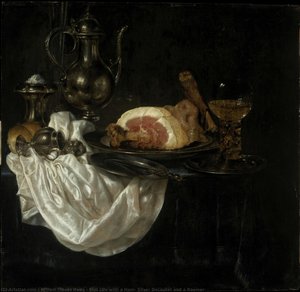
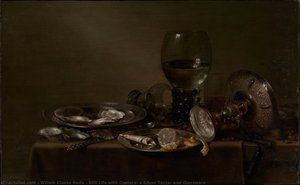
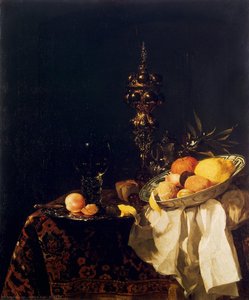
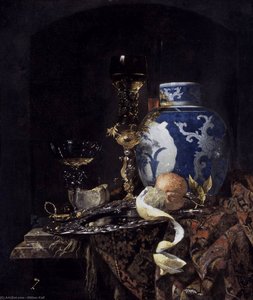
Artist Biography
A Master of Quiet Moments: The Life and Art of Willem Claesz. Heda
Willem Claeszzoon Heda, born in Haarlem, Netherlands in 1594, stands as a pivotal figure within the Dutch Golden Age—not for grand historical narratives or dramatic allegories, but for the profound beauty he discovered in the commonplace. He dedicated his artistic life almost entirely to still life painting, and within this seemingly limited genre, Heda achieved an extraordinary level of innovation, particularly with what became known as the ‘breakfast piece’. His work isn’t about lavish display; it's a subtle meditation on transience, wealth, and the delicate interplay of light and texture. Born into a family connected to Haarlem’s artistic community—his father was a city architect, and his uncle Cornelis Claesz Heda was also a painter—the young Willem’s path toward artistry seems natural, though details of his early training remain elusive. No surviving works definitively date from his formative years, but scholars estimate he began painting around 1615.The Dawn of the Breakfast Piece and Tonal Realism
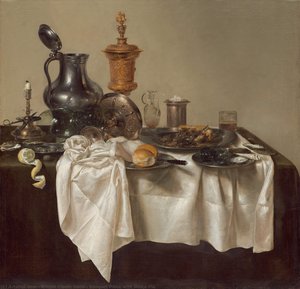
Heda's earliest known paintings, including a *vanitas* still life, already hint at the remarkable skill that would define his career. These early works demonstrate a meticulous attention to detail and a monochromatic palette—a departure from the more vibrant compositions typical of earlier Dutch still lifes. However, it was with his breakfast pieces of the 1620s that Heda truly began to forge his unique artistic identity. Unlike their predecessors, which often featured an abundance of objects arranged in a somewhat haphazard manner, Heda’s compositions were characterized by a striking sense of balance and spatial effect. He didn't simply *depict* objects; he rendered them with such realism—the glint of pewter, the delicate curve of a lemon peel, the subtle sheen of a glass roemer—that they seemed to exist independently of the canvas. This commitment to verisimilitude wasn’t merely technical prowess; it was integral to the philosophical undercurrents present in his work. The objects chosen – half-peeled lemons, bread crumbs, overturned glasses – subtly allude to the fleeting nature of earthly pleasures and the inevitability of decay.Recognition and Guild Membership
Heda’s talent did not go unnoticed within the thriving artistic milieu of Haarlem. He garnered early recognition from prominent figures like Samuel Ampzing, a Dutch minister and poet who celebrated the city in verse. In his 1628 *Beschryvinge ende Lof der Stad Haerlem in Holland*, Ampzing enthusiastically praised Heda alongside Salomon de Bray and Pieter Claesz, acknowledging their exceptional skill in banquet pieces. This public endorsement undoubtedly contributed to Heda’s growing reputation and facilitated his acceptance into the Haarlem Guild of St. Luke in 1631. His active participation within the guild—evidenced by his signing a new charter to regulate its affairs—underscores his established position as a respected artist in the community.A Legacy of Subtlety and Influence
Throughout his career, Heda remained largely devoted to still life painting, refining his technique and exploring variations on the breakfast piece theme. He masterfully manipulated light and shadow to create an atmosphere of quiet contemplation, drawing viewers into intimate encounters with everyday objects. While he occasionally ventured beyond breakfast scenes—painting more elaborate banquet settings or *vanitas* compositions—his most enduring legacy lies in his ability to elevate the mundane to the level of art. His influence on subsequent generations of still life painters was profound. Artists like Pieter de Ring and Jan Davidsz. de Heem, though developing their own distinct styles, clearly demonstrate the impact of Heda’s tonal realism and compositional balance. Willem Claesz. Heda didn't simply paint what he saw; he captured a feeling—a sense of stillness, fragility, and the quiet beauty inherent in the passage of time. His work continues to resonate today, offering viewers a glimpse into the heart of Dutch Golden Age life and a timeless reflection on the nature of existence itself.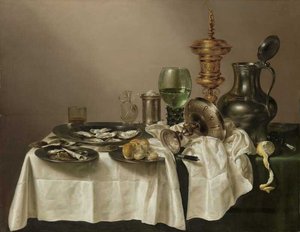
Willem Claesz Heda
1594 - 1680 , Netherlands
Quick Facts
- Artistic Movement Or Style: Golden Age painting
- Artists Or Movements Influenced By This Artist: ['Salomon de Bray']
- Artists Who Influenced This Artist:
- Gerret Willemsz Heda
- Jan de Bray
- Date Of Birth: December 14, 1594
- Date Of Death: c. 1680
- Full Name: Willem Claesz Heda
- Nationality: Dutch
- Notable Artworks:
- Still Life with a Lobster
- Still Life with a Silver Tazza
- Still Life with a Broken Glass
- Place Of Birth: Haarlem, Netherlands

