 Preview
 Send
Send Share
Share
 Details

 Download
 Similars
 X-Ray
X-Ray Diaporama
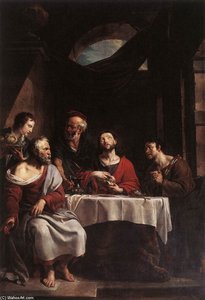
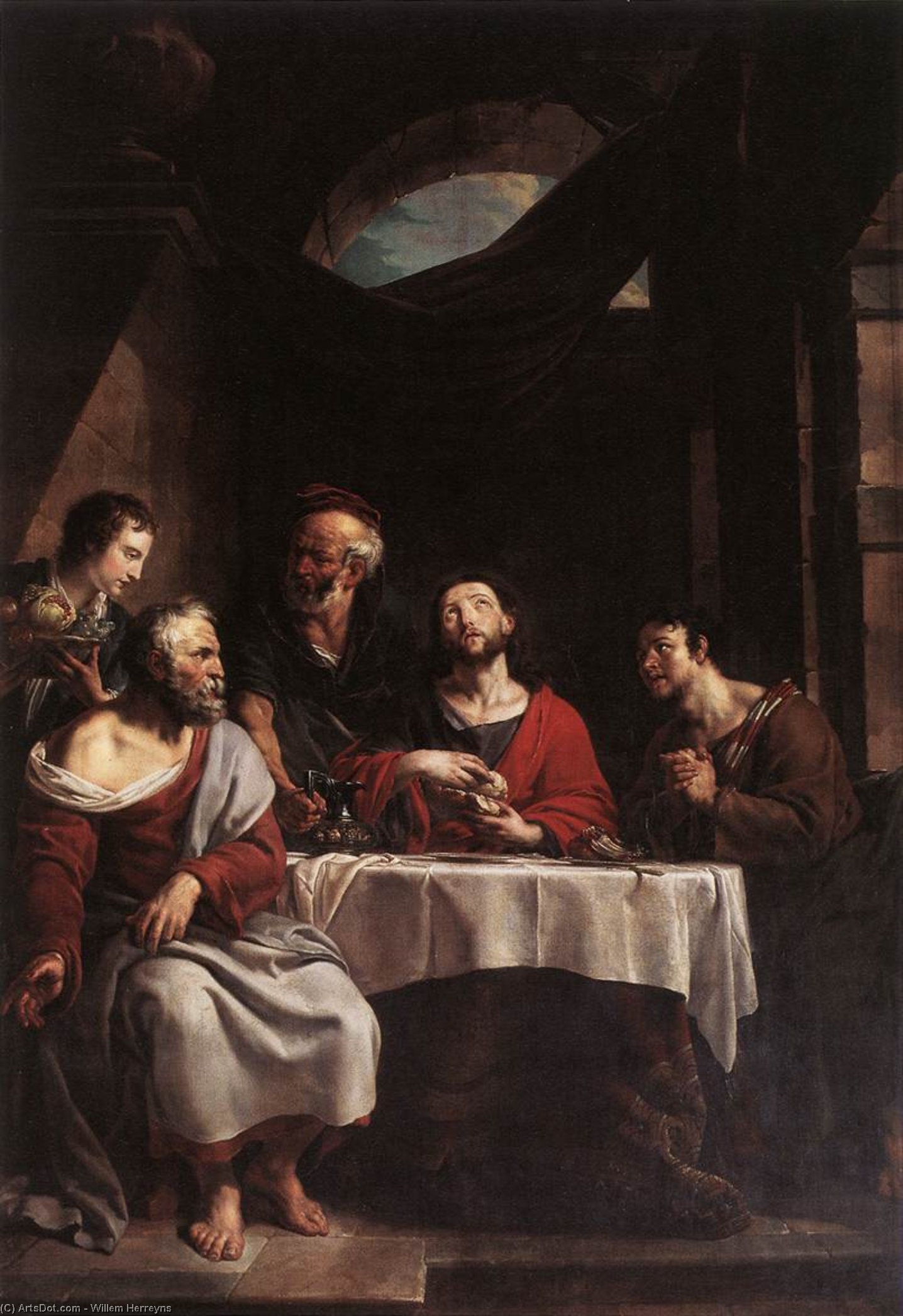
Supper at Emmaus
 Oil On Canvas
- WallArt
- Baroque
 1808
1808 310.0 x 240.0 cm
 Onze-Lieve Vrouwekathedraal
 Read More
Hand Made Oil Reproduction
Hand-painted oil on canvas in your size and frame, made to order by our artists. ( Buy Print Buy Image)




P118B $10

P118H $10

P118W $10

P438Z $10

P508JH $12

P508YH $12

P805H $10

P805Z $10

P919BZ $10

P919G $10

P919XJ $10

P959ZH $10

P968JZ $12

W106C $8

W218G $10

W218JH $8

W218Y $10

W307PJ $10

W316G $10

W316PJ $8

W316Y $10

W398PJ $8

W4111J $10

W500HY $15

W500JH $15

W692G $12

W849H $8

W940BG $15

W953PJ $8




Pick from our preset sizes that match the artwork's original proportions.

You may enter your own dimensions to fit a specific frame or space. If your selected size does not match the original image's proportions, we will either crop the artwork or extend the painting with additional hand-painted elements. A digital mockup will be sent for your approval before production begins.
Please note that the on-screen preview does not reflect the actual cropping or extension. Only the mockup will accurately show the final composition.
While custom sizes are available, we recommend selecting a dimension from the predefined list to preserve the original proportions.
After order, ArtsDot.com team will email client for instructions and provide a mockup preview
Worldwide Delivery () in 3/4 weeks instead of standard 5 weeks. (17 August). No compromise on quality.

Free Worldwide Express Shipping

High-Quality Linen Canvas

Full Shipping Insurance

Customs Tax Refund Guarantee

True Color Matching Guarantee

60-Day Return Policy (Defects Only)

100% Money-Back Guarantee

Bulk Discount Offer
 Glass option is only available in size under 110 CM

Supper at Emmaus
Reproduction Medium
Reproduction Size
-


Total Price
$ 263
Artwork Description
The Supper at Emmaus: A Moment of Revelation
- Artist: Willem Herreyns (1743 – 1827)
- Date: 1808
- Medium: Oil on Canvas
- Size: 310 x 240 cm
- Location: Onze-Lieve Vrouwekathedraal, Antwerp, Belgium
A Classical Composition Steeped in Chiaroscuro
Herreyns masterfully employs the principles of classical painting, particularly the dramatic technique of *chiaroscuro*. This masterful manipulation of light and shadow creates a powerful sense of depth and three-dimensionality, drawing the viewer’s eye directly to the central figures. The subdued color palette – dominated by earthy tones – contributes significantly to the somber yet hopeful atmosphere, reflecting the gravity of the moment while simultaneously hinting at the divine miracle unfolding before us. The architectural details in the background, suggestive of an interior space perhaps a tavern or a private home, further enhance the narrative and immerse the viewer within the scene’s historical context. The careful rendering of textures – the rough linen of the tablecloth, the yielding softness of the bread – adds to the painting's realism and tactile quality, inviting us to almost reach out and touch the figures themselves.Symbolism and Historical Context
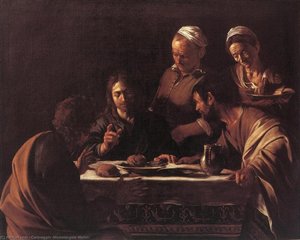
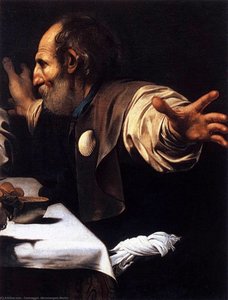
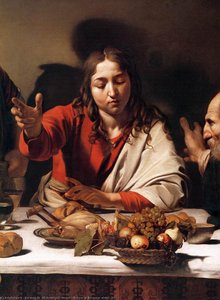
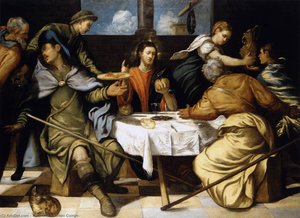
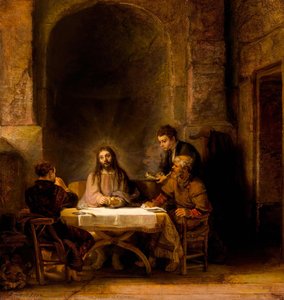
The *Supper at Emmaus* is a cornerstone of Christian iconography, representing the moment when Jesus revealed himself to his disciples after their initial disbelief. This scene, recounted in the Gospel of Luke, symbolizes not only the resurrection but also the transformative power of faith and understanding. Painted during a period of significant religious fervor, Herreyns’ work reflects the deep piety prevalent within Antwerp society at the time. The clothing worn by the figures – consistent with 1st-century AD attire – further anchors the scene in its historical context, allowing us to imagine this momentous encounter as if it were unfolding before our very eyes. Comparisons can be drawn to other works depicting this same narrative, such as those by Peter Paul Rubens and Herri Met De Bles, demonstrating a shared artistic tradition and thematic concern.Owning a Piece of Art History
Handmade oil paintings reproductions of *Supper at Emmaus* by Willem Herreyns are now available on https://ArtsDot.com, offering art lovers the opportunity to possess a tangible connection to this remarkable work of art. This meticulously crafted reproduction captures not only the visual elements but also the emotional depth and spiritual significance of the original painting. Whether adorning a grand salon or a more intimate space, *Supper at Emmaus* serves as a powerful reminder of faith, recognition, and the enduring power of human connection – a timeless masterpiece brought to life through skilled artistry and meticulous reproduction.Related Artworks
Artist Biography
Willem Herreyns: Antwerp’s Silent Maestro of Faith and Portraiture
Willem Jacob Herreyns (1743 – 1827) remains a figure shrouded in relative obscurity compared to his contemporaries, yet his contribution to the artistic landscape of Antwerp and beyond is undeniable. Born into a family steeped in artistic tradition—his father was also a painter—Herreyns honed his craft amidst the burgeoning Enlightenment, absorbing influences from artists like Rembrandt and Rubens while simultaneously upholding deeply rooted Catholic piety. This duality – intellectual curiosity tempered by spiritual conviction – defines not only his personal ethos but also permeates his oeuvre, resulting in paintings that resonate with both psychological depth and sublime beauty.- Early Life & Training: Herreyns’ formative years were spent studying under Johann Baptist Huysmans, a respected Antwerp artist who instilled in him the principles of classical painting. This grounding in tradition ensured that Herreyns would adhere to meticulous observation and anatomical accuracy – hallmarks of Baroque art – as he embarked on his artistic journey.
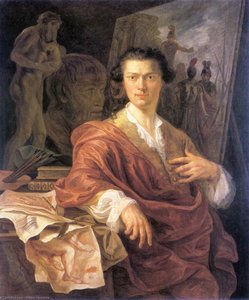
- A Painter’s Palette: Herreyns excelled primarily in portraiture, capturing the likenesses of prominent figures from Antwerp society with remarkable sensitivity. However, he wasn't solely devoted to depicting faces; he produced a substantial body of religious paintings, notably “Supper at Emmaus” and “Portrait of Artist A. C. Lens,” demonstrating his profound engagement with theological themes.
- Notable Works & Museums: Herreyns’ canvases grace the collections of museums in The Hague and Antwerp, offering invaluable insights into the artistic tastes and intellectual currents of his era. His meticulous attention to detail—evident in the expressive brushstrokes and luminous color palettes—continues to captivate viewers today.
- Influence & Legacy: While Herreyns’ name may not dominate art historical narratives, he nonetheless exerted considerable influence on subsequent generations of Antwerp painters. His unwavering commitment to classical ideals served as a beacon for artists striving to elevate their craft and imbue it with moral significance.
The Baroque Spirit & Anatomical Precision
Herreyns’ artistic style is firmly rooted in the Baroque tradition, characterized by dramatic chiaroscuro—the interplay of light and shadow—and an emphasis on emotional intensity. Like Rembrandt before him, he skillfully manipulated tonal values to convey psychological states, capturing nuances of expression that transcend mere visual representation. This technique wasn't merely stylistic; it reflected a broader philosophical preoccupation with exploring the human condition – confronting darkness alongside illumination.- Rembrandt’s Shadow Play: Herreyns consciously modeled his approach to painting after Rembrandt’s groundbreaking explorations of light and emotion. He meticulously studied Rembrandt's compositions, analyzing how he utilized chiaroscuro to create a sense of drama and psychological realism.
- Rubensian Grandeur & Color Harmony: Rubens’ influence is equally palpable in Herreyns’ paintings, particularly his monumental religious scenes. Rubens championed opulent color palettes and dynamic movement—principles that Herreyns embraced wholeheartedly, striving to achieve visual grandeur commensurate with the spiritual aspirations conveyed.
Religious Painting: A Reflection of Faith
Herreyns' devotion to Catholicism profoundly shaped his artistic vision. He viewed painting as a vehicle for conveying theological truths – illuminating scripture and inspiring contemplation—rather than merely documenting historical events. “Supper at Emmaus” exemplifies this conviction, depicting the transformative encounter between Jesus and His disciples with breathtaking realism and spiritual resonance.- Symbolism & Narrative: Herreyns’ religious paintings are replete with symbolic imagery – referencing biblical narratives and conveying moral lessons. He skillfully employed compositional devices—such as pyramidal structures—to guide the viewer's gaze and reinforce the narrative arc of each scene.
- Emotional Depth & Spiritual Intensity: Beyond visual splendor, Herreyns’ religious paintings aspire to evoke profound emotional responses – stirring feelings of compassion, humility, and reverence. He achieved this goal through masterful rendering of facial expressions and body postures—capturing the palpable drama of sacred moments.
Portraiture: Capturing Essence
Herreyns' portraits stand apart from many of his contemporaries due to their remarkable psychological insight. Unlike mere likenesses, he endeavored to capture not just physical appearance but also inner character – revealing glimpses of personality through subtle gestures and expressions.- Observation & Anatomical Accuracy: Herreyns’ portraiture demanded meticulous observation—analyzing every detail of his subjects' anatomy and demeanor. He painstakingly reconstructed facial muscles and skeletal structure, striving to achieve anatomical precision that surpassed conventional standards.
- Psychological Portraiture: More than mere visual representation, Herreyns sought to convey psychological states – capturing moods and emotions with nuanced brushstrokes and color harmonies. His portraits are imbued with a palpable sense of immediacy—suggesting that he was attempting to freeze time and preserve the essence of his subjects’ souls.
Historical Significance & Enduring Appeal
Willem Herreyns' legacy extends beyond his artistic achievements; he embodies the spirit of Antwerp during its Golden Age – a period marked by intellectual ferment, artistic innovation, and unwavering faith. His paintings continue to inspire admiration for their technical mastery and emotional depth—serving as enduring reminders of the transformative power of art.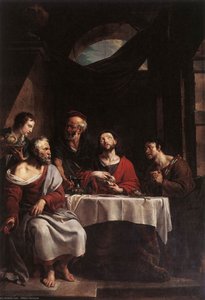
willem herreyns
1743 - 1827 , Netherlands
Quick Facts
- Artistic Movement Or Style: Portrait Painting
- Artists Or Movements Influenced By This Artist: ['Dutch Golden Age']
- Artists Who Influenced This Artist: ['Hendrik Willem Mesdag']
- Date Of Birth: 1743 Antwerp Netherlands
- Date Of Death: 1827
- Full Name: Willem Jacob Herreyns
- Nationality: Dutch
- Notable Artworks:
- Supper at Emmaus
- Portrait of Artist A. C. Lens
- Place Of Birth: Antwerp Netherlands
Related Articles

Baroque Drama: Bringing Opulence & Emotion into Contemporary Interiors
Explore the opulent world of Baroque interior design! Discover key elements, modern applications & how to bring dramatic elegance into your home with 's authentic reproductions.

The Enduring Power of Painting: A Historical & Contemporary Exploration of Form and Emotion
Explore the rich history & enduring techniques of oil painting with ArtsDot. Discover masterpieces, learn about art collecting, and find authentic handmade reproductions crafted by skilled artists.

The Enduring Legacy of Oil on Canvas: Technique, History & Aesthetic Impact
Explore the rich history & techniques of oil painting – from Renaissance masters to Impressionism. Discover pigments, layering methods, and why this timeless medium endures. Expert insights for artists & art enthusiasts.

The Dramatic Flourish: Exploring the Baroque Movement's Enduring Legacy in Art History
Explore the dramatic world of Baroque art! Discover iconic artists like Caravaggio & Rubens, defining techniques, and its lasting impact on art history. Expert insights for collectors & enthusiasts at ArtsDot.

Baroque Masterpieces: 10 Paintings That Defined an Era |
Journey through the drama & grandeur of Baroque art! Explore 10 masterpieces by Caravaggio, Rembrandt, Rubens & more. Discover stunning oil paintings, rich colors & timeless stories. Find museum-quality reproductions at .