

 Preview
 Send
Send Share
Share
 Details

 Download
 Similars
 X-Ray
X-Ray Diaporama
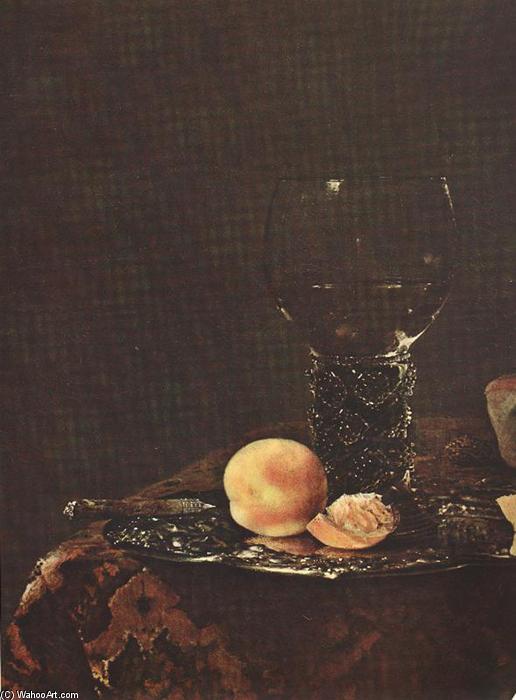
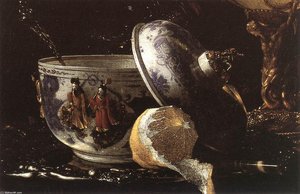
Still-life (detail)


 Read More
Purchase a high-resolution, enhanced digital image, far superior to the online preview.
Each file is meticulously prepared by our in-house specialists using advanced tools and expert manual retouching. We ensure every image has exceptional clarity, precise color accuracy, and fine detail.
The final file is delivered via email within 72 hours, optimized for immediate use in professional, editorial, and print environments. This is the same quality trusted by top-tier design studios, publishers, and galleries.
Digital Image
Download a high-resolution file for personal display, printing, and creative projects. ( Buy Print Buy Hand Made Painting)
Included in Every Digital Image Order
Expert Digital Delivery, Guaranteed
When you choose ArtsDot.com, you're not just getting an image - you're receiving a professionally enhanced digital artwork, crafted with precision and backed by a satisfaction guarantee. Here's everything that comes with your order, automatically:

Fast Email Delivery
Your high-resolution digital image file will be emailed to you within 72 hours of ordering - ready for immediate use.

AI-Enhanced Digital File
Your artwork is professionally optimized using advanced AI tools and manual editing, ensuring maximum detail, clarity, and color accuracy.

Free Lifetime Re-Delivery
Accidentally deleted or lost your file? No worries - we'll resend it to you anytime, free of charge.

No Import Fees - Ever
Enjoy your artwork instantly with zero customs, duties, or delivery fees - digital downloads are always tax-free.

Color Accuracy Guarantee
We ensure your digital image reflects the original colors as closely as possible using professional tools and color management.

60-Day Satisfaction Guarantee
If you're not satisfied with your digital image, we'll revise it or refund 100% within 60 days - no questions asked.

100% Money-Back Guarantee
Not satisfied? Get a full refund within 60 days of receiving your digital file - no questions asked.

Bulk Order Discounts
Buy 3 images, save 10% - Buy 5, save 15% - Buy 10+, save 20%. Great for creative projects, galleries, and agencies.
Collectible Description
A Glimpse of Opulence: Willem Kalf’s Still Life
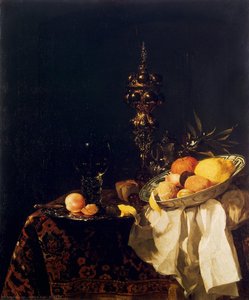
Willem Kalf's “Still Life,” painted around 1650 and now residing within the hallowed halls of The Hermitage Museum in St. Petersburg, is more than just a depiction of fruit and glass; it’s a meticulously crafted window into the burgeoning wealth and extravagant tastes of 17th-century Holland. Kalf, a master of the “pronkstilleven” – literally “showy still lifes” – elevated the genre to an art form, transforming everyday objects into symbols of status, luxury, and the pursuit of pleasure. This particular piece isn’t merely a snapshot; it's a carefully orchestrated composition designed to dazzle the eye and evoke a sense of opulent abundance.
The painting immediately draws the viewer in with its vibrant palette – the deep crimson of the oranges, the luminous yellow of the lemons, and the clear transparency of the water all contribute to an intense visual experience. Kalf’s mastery of light is particularly noteworthy; he employs a dramatic chiaroscuro effect, using strong contrasts between light and shadow to highlight individual objects and create a sense of depth. The dark background serves not as mere backdrop but as a crucial element in emphasizing the brilliance of the foreground – it's a theatrical device designed to draw attention to the carefully arranged treasures on display.
The Language of Luxury
Pronkstilleven, Kalf’s signature style, wasn’t simply about arranging pretty objects. It was a deliberate statement about wealth and social standing. The inclusion of exotic fruits – oranges and lemons were particularly prized imports at the time – signified access to global trade routes and reflected the prosperity enjoyed by the Dutch merchant class. The silver tray itself is a symbol of status, its gleaming surface mirroring the light and adding another layer of visual richness. Even the knife resting beside the fruit suggests a recent purchase, reinforcing the idea that this scene represents a moment of indulgence and consumption.
The glass of water, almost brimming to the point of overflowing, is equally significant. Its transparency invites the viewer into the painting, blurring the boundaries between reality and representation. It’s not just a vessel; it's an invitation to contemplate the beauty and abundance within the scene. The careful placement of the glass on the dark surface creates a striking contrast, further enhancing its visual impact.
A Window into a Golden Age
Kalf’s work is deeply rooted in the artistic traditions of his time, yet he possessed a unique vision that set him apart from his contemporaries. Influenced by the Parisian art scene during his early career, Kalf developed a distinctive style characterized by meticulous detail, dramatic lighting, and an almost obsessive attention to surface textures. His paintings are not simply representations of objects; they’re explorations of light, color, and form – miniature worlds brimming with visual delight.
Considering the historical context, “Still Life” offers a fascinating glimpse into the lives of wealthy Dutch citizens during the Golden Age. It's a testament to their prosperity, their appreciation for beauty, and their desire to surround themselves with luxurious objects. Reproductions of this piece allow us to appreciate Kalf’s skill and vision while offering a tangible connection to a remarkable period in art history.
Collecting the Essence
Willem Kalf's "Still Life" is more than just an artwork; it's a portal into a world of wealth, artistry, and refined taste. At ArtsDot.com, we are proud to offer meticulously crafted hand-painted reproductions that capture the essence of this iconic masterpiece. Each reproduction faithfully recreates Kalf’s masterful use of light, color, and detail, allowing you to bring this stunning still life into your home or office. Explore our range of sizes and framing options to find the perfect way to experience the opulence of Willem Kalf's vision.
Related Artworks
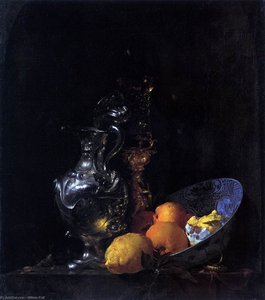
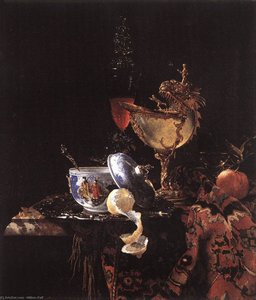
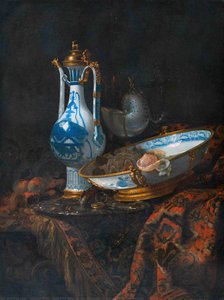
Artist Biography
A Life Immersed in Opulence: The World of Willem Kalf
Willem Kalf, a name synonymous with the lavish still lifes of the Dutch Golden Age, was born in Rotterdam in 1619 into a family of comfortable means. His father, Jan Jansz Calff, held positions within the municipal government, providing young Willem with an upbringing that fostered both security and exposure to the burgeoning mercantile world that would later so profoundly influence his art. Though details surrounding Kalf’s early training remain somewhat elusive, it is known he experienced a period of artistic development in Paris during the 1630s, immersing himself within the vibrant community of Flemish artists working in Saint-Germain-des-Prés. This formative experience initially steered him towards smaller-scale rustic interiors and still lifes—modest beginnings that would eventually blossom into the grand pronkstilleven for which he is celebrated today. The loss of both parents by 1638 prompted a return to the Netherlands, setting the stage for his mature artistic period.From Humble Beginnings to Masterful Display
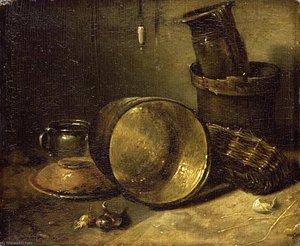
Kalf’s early Parisian works reveal an artist finding his footing. These paintings often depicted simple arrangements—vegetables, commonplace kitchen utensils like buckets and pans—set against dimly lit backgrounds where figures were suggested rather than fully realized. This style echoed the pictorial traditions prevalent in Flanders during the early 17th century, particularly the work of artists such as David Teniers the Younger. However, Kalf’s ambition soon outgrew these modest compositions. Upon his return to the Netherlands, he began a remarkable evolution towards what would become his signature style: the pronkstilleven, or “ostentatious still life.” These were not merely depictions of objects; they were carefully constructed displays of wealth and sophistication, showcasing luxurious items like silver vessels, delicate porcelain, exotic fruits, and shimmering glassware.The Art of Illusion and Symbolic Resonance
What truly distinguished Kalf’s pronkstilleven was his unparalleled mastery of light and texture. He possessed an extraordinary ability to render the reflective qualities of silver, the translucence of glass, and the velvety surfaces of fruit with breathtaking realism. His compositions weren't haphazard arrangements; they were meticulously planned orchestrations designed to capture the interplay of light and shadow, creating a sense of depth and drama. While the basic structure of his paintings—the arrangement of objects—remained relatively consistent, each work was a testament to Kalf’s skill in varying textures and capturing nuanced lighting effects. Beyond mere technical brilliance, however, lay a subtle symbolic dimension. The opulent objects he depicted weren't simply beautiful; they alluded to themes of transience, wealth, and the fleeting nature of earthly pleasures—a nod to the vanitas tradition prevalent in Dutch painting.Legacy and Influence
Willem Kalf’s impact extended beyond his own prolific output. His semi-monochrome still lifes exerted a notable influence on French art, particularly within the circle of the Le Nain brothers, who admired his sophisticated use of light and shadow. Though individual works may not be as widely recognized as those of some of his contemporaries, Kalf's contribution to the genre is undeniable. He helped define the pronkstilleven, capturing the spirit of 17th-century Dutch society—a period marked by unprecedented economic prosperity and a burgeoning merchant class eager to display their wealth and refinement. Today, his paintings grace prestigious museum collections worldwide, including the Museum Boijmans Van Beuningen in Rotterdam, the National Gallery of Art in Washington D.C., and the Getty Museum, ensuring that his legacy as a master of Dutch still life continues to inspire awe and admiration. His meticulous attention to detail and masterful use of light remain hallmarks of artistic excellence.Exploring Further
- Wikipedia: https://en.wikipedia.org/wiki/Willem_Kalf
- National Gallery of Art: https://www.nga.gov/artists/1430-willem-kalf
- Getty Museum: https://www.getty.edu/art/collection/person/103JR3
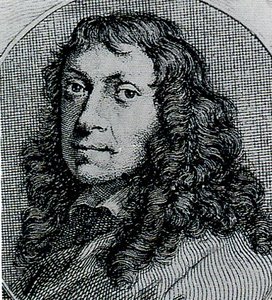
Willem Kalf
1619 - 1693 , Netherlands
Quick Facts
- Artistic Movement Or Style: Dutch Golden Age, Still Life
- Artists Or Movements Influenced By This Artist:
- French art
- Le Nain brothers
- Artists Who Influenced This Artist:
- Simon Luttichuys
- Pieter Claesz
- Willem Claeszoon Heda
- Date Of Birth: 1619
- Date Of Death: 1693
- Full Name: Willem Kalf
- Nationality: Dutch
- Notable Artworks:
- Still-Life with a Nautilus Cup
- Le vieux puits
- Silver Jug & Porcelain Bowl
- Place Of Birth: Rotterdam, Netherlands

