

 Preview
 Send
Send Share
Share
 Details

 Download
 Similars
 X-Ray
X-Ray Diaporama
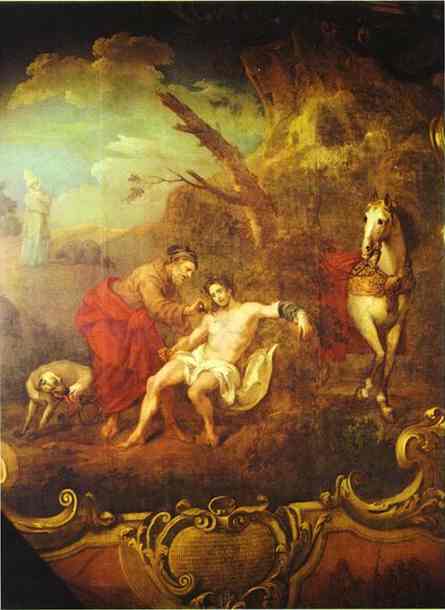
The Good Samaritan

 Read More
Purchase a high-resolution, enhanced digital image, far superior to the online preview.
Each file is meticulously prepared by our in-house specialists using advanced tools and expert manual retouching. We ensure every image has exceptional clarity, precise color accuracy, and fine detail.
The final file is delivered via email within 72 hours, optimized for immediate use in professional, editorial, and print environments. This is the same quality trusted by top-tier design studios, publishers, and galleries.
Digital Image
Download a high-resolution file for personal display, printing, and creative projects. ( Buy Print Buy Hand Made Painting)
Included in Every Digital Image Order
Expert Digital Delivery, Guaranteed
When you choose ArtsDot.com, you're not just getting an image - you're receiving a professionally enhanced digital artwork, crafted with precision and backed by a satisfaction guarantee. Here's everything that comes with your order, automatically:

Fast Email Delivery
Your high-resolution digital image file will be emailed to you within 72 hours of ordering - ready for immediate use.

AI-Enhanced Digital File
Your artwork is professionally optimized using advanced AI tools and manual editing, ensuring maximum detail, clarity, and color accuracy.

Free Lifetime Re-Delivery
Accidentally deleted or lost your file? No worries - we'll resend it to you anytime, free of charge.

No Import Fees - Ever
Enjoy your artwork instantly with zero customs, duties, or delivery fees - digital downloads are always tax-free.

Color Accuracy Guarantee
We ensure your digital image reflects the original colors as closely as possible using professional tools and color management.

60-Day Satisfaction Guarantee
If you're not satisfied with your digital image, we'll revise it or refund 100% within 60 days - no questions asked.

100% Money-Back Guarantee
Not satisfied? Get a full refund within 60 days of receiving your digital file - no questions asked.

Bulk Order Discounts
Buy 3 images, save 10% - Buy 5, save 15% - Buy 10+, save 20%. Great for creative projects, galleries, and agencies.
Collectible Description
The Good Samaritan: A Rococo Reflection on Compassion
William Hogarth’s “The Good Samaritan,” completed in 1730, stands as a remarkable testament to the artist's ability to distill complex social commentary into a visually arresting tableau. More than just a depiction of biblical narrative—the parable recounted by Jesus Christ concerning selfless aid—it embodies the spirit of the Rococo period, prioritizing opulent ornamentation and meticulous detail to convey profound moral truths.
The painting captures a scene of extraordinary vibrancy. At its center lies Jesus Christ, wounded and prone upon the ground, attended by two men. One man diligently pours water from a cup into Jesus’s mouth—a gesture symbolizing care and healing—while the other offers him wine, representing solace and divine grace. Surrounding these figures are elements that elevate the scene beyond mere piety; two horses dominate the upper portion of the canvas, their majestic presence signifying nobility and power. Beneath them roam three dogs, meticulously rendered with expressive musculature and fur textures, serving as a deliberate allusion to social hierarchy and the pervasive influence of animal imagery in Rococo art.
Hogarth’s technique is characterized by its masterful use of chiaroscuro—the dramatic interplay between light and shadow—which sculpts the figures and imbues the composition with palpable emotion. The artist employs a rich palette dominated by warm hues—gold, crimson, and ochre—to illuminate the central scene and create an atmosphere of grandeur. Furthermore, Hogarth’s meticulous attention to surface texture—evident in the smooth sheen of the horses’ coats and the textured fur of the dogs—demonstrates his unwavering commitment to realism within a stylized framework.
Historically, “The Good Samaritan” emerged during a period marked by Enlightenment ideals – specifically, a burgeoning interest in moral philosophy and social reform. Hogarth skillfully utilizes symbolism to critique prevailing societal attitudes toward poverty and compassion. The horses represent the aristocracy’s detachment from earthly concerns, while the dogs embody the vulgarity and corruption of lower classes. By juxtaposing these contrasting elements, Hogarth compels viewers to confront uncomfortable truths about human behavior and moral responsibility.
Ultimately, “The Good Samaritan” transcends its biblical origins to resonate with audiences across centuries. Its enduring appeal lies in its ability to evoke empathy and inspire contemplation on the importance of altruism—a timeless message conveyed through Hogarth’s unparalleled artistic vision. It remains a captivating exemplar of Rococo art's capacity for conveying moral instruction within an exquisitely ornamented visual experience.
Related Artworks
Artist Biography
A London Life in Ink and Paint: The World of William Hogarth
William Hogarth, born into the bustling heart of 18th-century London in 1697, was more than just an artist; he was a visual historian, a keen observer of human nature, and a satirical commentator on the societal currents of his age. His life story is inextricably linked to the very fabric of England during a period of significant transformation – its burgeoning ambitions, underlying anxieties, and pervasive hypocrisies all finding potent expression in his remarkably detailed and often biting works. The son of a struggling Latin schoolmaster, Hogarth’s early experiences instilled within him both a love for learning and a sharp awareness of social inequalities, a foundation that would prove crucial to shaping his artistic vision. Initially apprenticed to an engraver, he quickly demonstrated a talent extending beyond mere technical skill; he possessed an innate ability to observe the nuances of human behavior and translate them into compelling visual narratives. However, he chafed against the constraints of traditional engraving, seeking a more expressive outlet for his burgeoning creativity. This led him to studies at both St Martin’s Lane Academy and under Sir James Thornhill, where he honed his skills in painting and composition, absorbing influences that would later inform his unique style.The Birth of Modern Moral Subjects
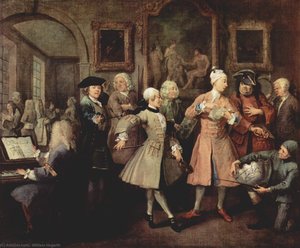
Hogarth's true innovation lay not simply *what* he painted, but *how*. He pioneered what he termed “modern moral subjects” – series of pictures designed to tell a story, often imbued with a strong satirical edge. These weren’t isolated portraits or landscapes; they were visual novels unfolding before the viewer’s eyes, offering pointed commentary on contemporary society. A Harlot's Progress, created in 1742, stands as perhaps his most famous example. This series of six paintings meticulously follows the tragic downfall of Mary, a young woman arriving in London full of hope but quickly succumbing to the temptations and dangers of city life. Each scene is rendered with painstaking detail, filled with symbolic elements that reveal the moral decay surrounding her. Similarly, A Rake's Progress, begun in 1733, charts the reckless decline of Tom Rakewell, a man who squanders his inheritance on gambling, debauchery, and ultimately, madness. These weren’t merely cautionary tales; they were unflinching portraits of a society grappling with issues of class, morality, and social mobility. Hogarth's genius resided in his ability to elevate everyday scenes – the bustling streets of London, the opulent interiors of the wealthy, the squalid lives of the poor – into works of art that resonated deeply with his audience. He didn’t shy away from depicting the harsh realities of life, presenting them with a blend of humor and pathos that forced viewers to confront uncomfortable truths about themselves and their society.Technique and Influences: A Synthesis of Styles
Hogarth's artistic style was a unique amalgamation of diverse influences. He greatly admired the realism and narrative detail found in the works of Dutch genre painters like Pieter de Hooch, evident in his meticulous depictions of interiors and everyday life. The satirical prints produced in France also played a role in shaping his approach to social commentary. However, Hogarth wasn’t simply imitating these sources; he was synthesizing them into something entirely new and distinctly his own. His technique was characterized by a masterful use of line and shading, particularly evident in his engravings. He employed a distinctive cross-hatching technique that created depth and texture, bringing his scenes to life with remarkable clarity. He also possessed an exceptional eye for composition, arranging figures and objects within the frame to create dynamic and engaging narratives. Beyond visual art, Hogarth was influenced by literary works, particularly those of Jonathan Swift and Henry Fielding, whose satirical wit informed his own social observations. He believed that art should not merely be beautiful but should also serve a moral purpose, challenging viewers to confront uncomfortable truths about themselves and their society. He sought to hold a mirror up to nature, reflecting both its beauty and its ugliness with unflinching honesty.Legacy and Lasting Impact
The impact of William Hogarth extends far beyond the realm of 18th-century art. His work gained immense popularity thanks to the mass production of prints based on his paintings, making his satirical commentary accessible to a wider audience than ever before. He is widely considered a precursor to political cartooning and comic strips, laying the groundwork for visual storytelling in popular culture. Artists like James Gillray and George Cruikshank were directly influenced by his style, carrying forward his tradition of social satire. Even Charles Lamb, the celebrated essayist, recognized the narrative power of Hogarth’s images, famously remarking that they were “like books to be read rather than merely looked at.”- Hogarth established a distinctly British artistic identity.
- His work provides invaluable insights into 18th-century English society.
- He influenced generations of artists and satirists.
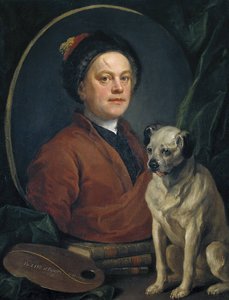
William Hogarth
1697 - 1764 , United Kingdom
Quick Facts
- Artistic Movement Or Style: Satire, Realism
- Artists Or Movements Influenced By This Artist:
- James Gillray
- Political cartooning
- Artists Who Influenced This Artist:
- Pieter de Hooch
- Jonathan Swift
- Date Of Birth: 1697
- Date Of Death: 1764
- Full Name: William Hogarth
- Nationality: British
- Notable Artworks:
- A Harlot's Progress
- A Rake's Progress
- Marriage A-la-Mode
- Place Of Birth: London, UK

