 Preview
 Send
Send Share
Share
 Details

 Download
 Similars
 X-Ray
X-Ray Diaporama
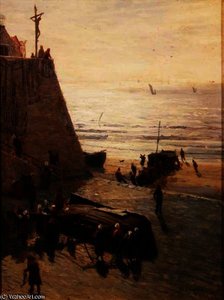
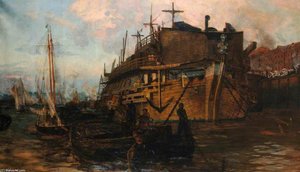
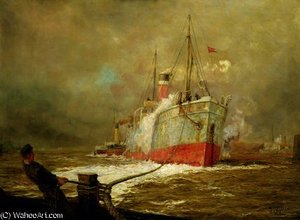
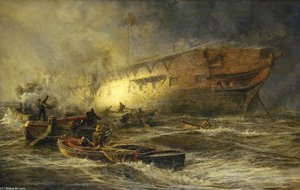
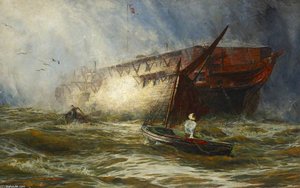
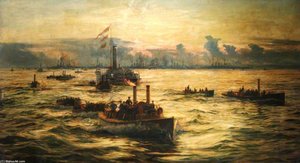
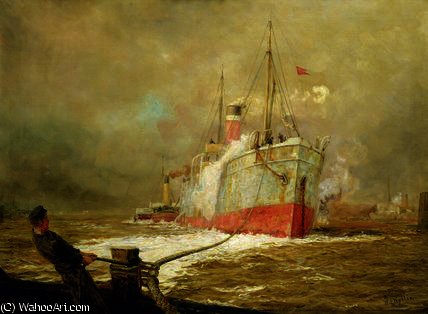
Docking a Cargo Ship
 Read More
Hand Made Oil Reproduction
Hand-painted oil on canvas in your size and frame, made to order by our artists. ( Buy Print Buy Image)




































Pick from our preset sizes that match the artwork's original proportions.

You may enter your own dimensions to fit a specific frame or space. If your selected size does not match the original image's proportions, we will either crop the artwork or extend the painting with additional hand-painted elements. A digital mockup will be sent for your approval before production begins.
Please note that the on-screen preview does not reflect the actual cropping or extension. Only the mockup will accurately show the final composition.
While custom sizes are available, we recommend selecting a dimension from the predefined list to preserve the original proportions.
After order, ArtsDot.com team will email client for instructions and provide a mockup preview
Worldwide Delivery () in 3/4 weeks instead of standard 5 weeks. (21 August). No compromise on quality.

Free Worldwide Express Shipping

High-Quality Linen Canvas

Full Shipping Insurance

Customs Tax Refund Guarantee

True Color Matching Guarantee

60-Day Return Policy (Defects Only)

100% Money-Back Guarantee

Bulk Discount Offer
 Glass option is only available in size under 110 CM

Docking a Cargo Ship
Reproduction Medium
Reproduction Size
-


Total Price
$ 263
Related Artworks
Artist Biography
A Life Immersed in the Maritime World
William Lionel Wyllie, born in Camden Town, London, on July 5th, 1851, was destined to become Britain’s premier marine artist. His artistic lineage was firmly established from the start; his father, William Morrison Wyllie, was a painter of genre scenes, and the family summers spent in France instilled an early appreciation for light and atmosphere that would profoundly shape the younger Wyllie's aesthetic vision. Encouragement came not only from his father but also from his stepbrother, Lionel Smythe, fostering a burgeoning talent for drawing. Formal training followed at Heatherley School of Fine Art and then the prestigious Royal Academy Schools, where he studied under luminaries like Edwin Henry Landseer, John Everett Millais, and Frederic Leighton. Even in these formative years, Wyllie’s passion for the sea began to emerge, nurtured by shared sailing adventures with his brother Charles William – a pursuit that would become inextricably linked to his artistic identity. This early promise culminated in 1869 when he won the coveted Turner Gold Medal for *Dawn after a Storm*, signaling the arrival of a significant new talent.From Illustrator to Master of Maritime Scenes
Wyllie’s career blossomed in the 1870s, initially through his work as an illustrator for *The Graphic*. This period honed his observational skills and provided a platform for showcasing maritime subjects – warships, fishing boats, bustling harbors – that increasingly captivated him. He wasn't merely documenting vessels; he was capturing the very essence of life at sea, the interplay of light on water, the moods of the sky, and the human stories unfolding within these dynamic environments. His style evolved to be characterized by a sensitive observation of atmosphere, evoking tranquility and peace in his seascapes. The influence of artists like James Abbott McNeill Whistler and J.M.W. Turner became apparent, as Wyllie sought to emulate their ability to capture fleeting atmospheric effects and imbue landscapes with emotional resonance. He steadily gained recognition within the art world, becoming a member of several prestigious societies: the Society of British Artists (1875), the Royal Institute of Painters in Watercolours (1882), the New English Art Club (1887), the Royal Academy (1907) and the Royal Society of Painter-Etchers and Engravers (1903). His etchings and watercolors, particularly those depicting working life on the Thames and Medway, proved immensely popular, resonating with a public fascinated by Britain’s maritime heritage.The Trafalgar Panorama and Lasting Legacy
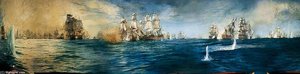
While Wyllie produced an extensive body of work throughout his career, it is arguably *The Trafalgar Panorama* that cemented his place in art history. This monumental undertaking – a 42-foot depiction of the Battle of Trafalgar – was unveiled in 1930 with great fanfare and remains a popular attraction at the National Museum of the Royal Navy in Portsmouth, drawing approximately 100,000 visitors annually. The panorama is not simply a historical record; it’s an immersive experience, transporting viewers to the heart of one of Britain's most iconic naval battles. Beyond this masterpiece, Wyllie demonstrated his deep commitment to maritime history through his active involvement with the Society for Nautical Research and his tireless campaigning for the restoration of HMS Victory. He even painted a mural depicting “Blocking of Zeebrugge Waterway” for the Royal Exchange in London, further showcasing his dedication to commemorating naval events. Upon his death on April 6th, 1931, Wyllie received full naval honors – a testament to his close association with the Royal Navy and his profound contribution to its historical narrative. He was laid to rest at St Mary's Church within the grounds of Portchester Castle, a fitting final resting place for a man so deeply connected to the sea.A Historical Record in Paint
William Lionel Wyllie’s significance extends far beyond his artistic skill. His work provides invaluable visual documentation of British maritime life and naval history during a period of immense change – the late 19th and early 20th centuries. He captured not only grand battleships and majestic sailing vessels but also the everyday lives of sailors, fishermen, and dockworkers, offering a comprehensive portrait of a nation inextricably linked to the sea. The Trafalgar Panorama, in particular, stands as a unique historical record and an extraordinary artistic achievement, allowing viewers to experience the drama and intensity of that pivotal event in a way few other artworks can. Wyllie’s paintings and etchings are held in numerous prestigious institutions – the Tate, the Royal Academy, the Imperial War Museum, and the National Maritime Museum among them – ensuring his legacy endures for generations to come. He helped popularize marine art, fostering a greater appreciation for the sea's beauty, power, and importance within British culture. Wyllie was truly “the most distinguished marine artist of his day,” and his work continues to inspire awe and admiration today.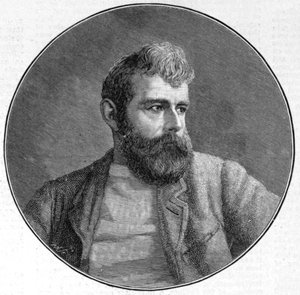
William Lionel Wyllie
1851 - 1931 , United Kingdom
Quick Facts
- Artistic Movement Or Style: Marine art, Impressionism
- Artists Who Influenced This Artist:
- Whistler
- Turner
- Date Of Birth: July 5, 1851
- Date Of Death: April 6, 1931
- Full Name: William Lionel Wyllie
- Nationality: British
- Notable Artworks:
- Dawn after a Storm
- Trafalgar Panorama
- Place Of Birth: Camden, United Kingdom