 Preview
 Send
Send Share
Share
 Details

 Download
 Similars
 X-Ray
X-Ray Diaporama
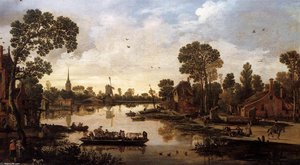
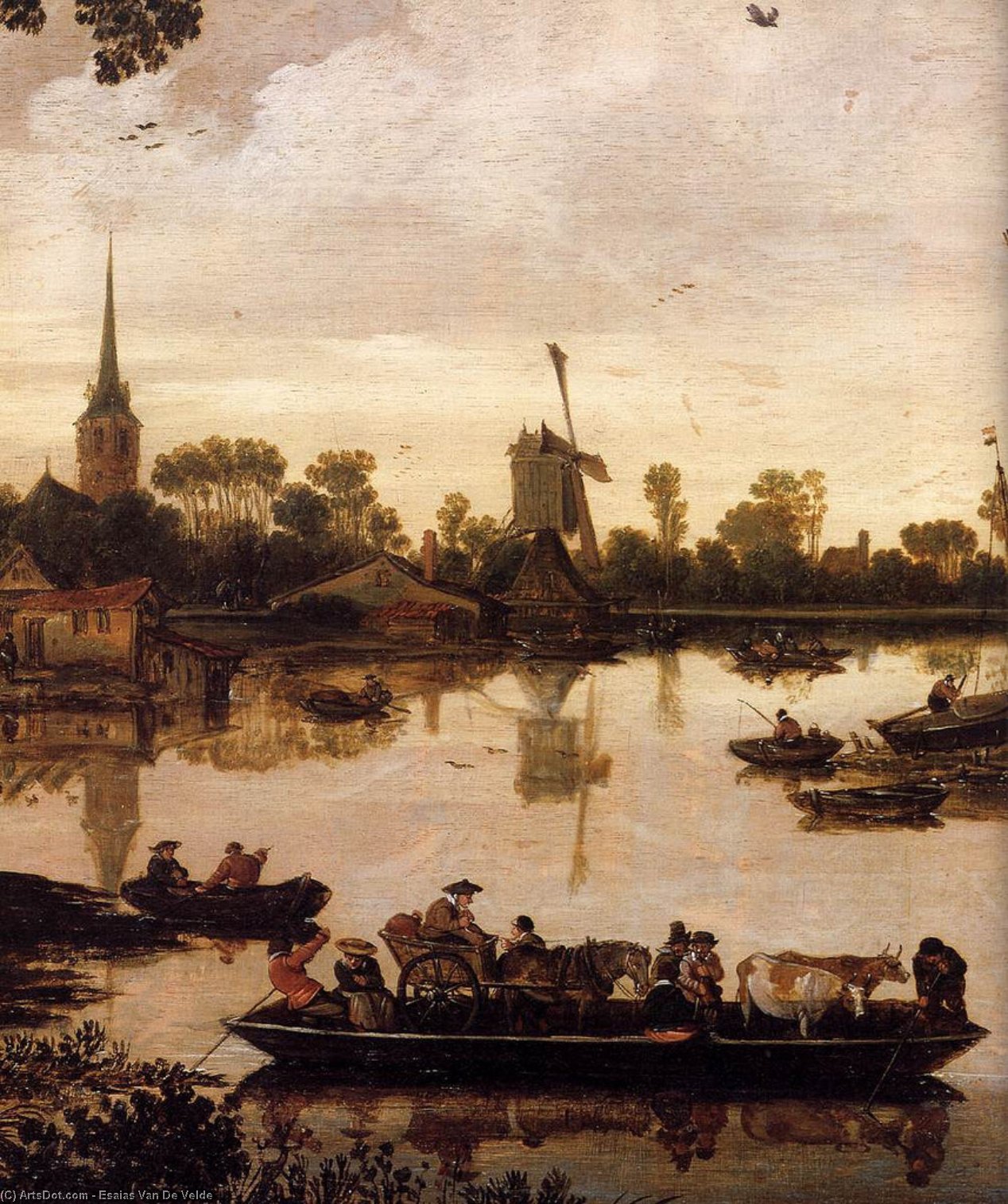
Ferry Boat (detail)


 Read More
Hand Made Oil Reproduction
Hand-painted oil on canvas in your size and frame, made to order by our artists. ( Buy Print Buy Image)




P118B $10

P118H $10

P118W $10

P438Z $10

P508JH $12

P508YH $12

P805H $10

P805Z $10

P919BZ $10

P919G $10

P919XJ $10

P959ZH $10

P968JZ $12

W106C $8

W218G $10

W218JH $8

W218Y $10

W307PJ $10

W316G $10

W316PJ $8

W316Y $10

W398PJ $8

W4111J $10

W500HY $15

W500JH $15

W692G $12

W849H $8

W940BG $15

W953PJ $8




Pick from our preset sizes that match the artwork's original proportions.

You may enter your own dimensions to fit a specific frame or space. If your selected size does not match the original image's proportions, we will either crop the artwork or extend the painting with additional hand-painted elements. A digital mockup will be sent for your approval before production begins.
Please note that the on-screen preview does not reflect the actual cropping or extension. Only the mockup will accurately show the final composition.
While custom sizes are available, we recommend selecting a dimension from the predefined list to preserve the original proportions.
After order, ArtsDot.com team will email client for instructions and provide a mockup preview
Worldwide Delivery () in 3/4 weeks instead of standard 5 weeks. (16 August). No compromise on quality.

Free Worldwide Express Shipping

High-Quality Linen Canvas

Full Shipping Insurance

Customs Tax Refund Guarantee

True Color Matching Guarantee

60-Day Return Policy (Defects Only)

100% Money-Back Guarantee

Bulk Discount Offer
 Glass option is only available in size under 110 CM

Ferry Boat (detail)
Reproduction Medium
Reproduction Size
-


Total Price
$ 263
Artwork Description
The Serene Passage: Esaias van de Velde’s “Ferry Boat” (1622)
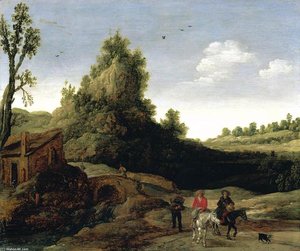
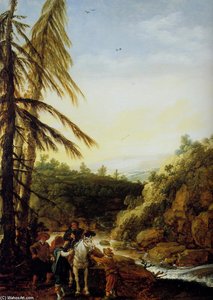
Esaias van de Velde's "Ferry Boat," painted in 1622, is more than a simple depiction of a river crossing; it’s a masterful distillation of the Dutch Golden Age’s fascination with light, landscape, and the quiet dignity of everyday life. This intimate scene, now housed within the Rijksmuseum in Amsterdam, offers a rare glimpse into a world where the rhythms of nature and human activity intertwine seamlessly. Van de Velde, deeply influenced by his father, Hans van de Velde, and later Gillis van Coninxloo – both renowned landscape painters – expertly captures the fleeting beauty of a rural waterway, imbuing it with an atmosphere of profound peace and understated drama.
The painting’s composition is deceptively simple. A small ferry boat, laden with passengers, navigates a gently flowing river, its journey framed by the verdant banks and distant hills. The artist employs a low vantage point, drawing the viewer into this intimate tableau as if we are standing on the shore ourselves, observing the scene unfold before us. The arrangement of elements – the boats, the figures, the trees – creates a harmonious balance, reflecting the Dutch ideal of *symmetrie* and order, yet simultaneously conveying a sense of natural spontaneity.
A Window into 17th-Century Dutch Life
To fully appreciate “Ferry Boat,” it’s essential to understand the context in which it was created. The early 17th century marked a period of immense prosperity and artistic flourishing for the Netherlands, fueled by burgeoning trade and a newfound sense of independence. Landscape painting, previously considered a minor genre, began to gain prominence as artists sought to capture the beauty of their homeland – a landscape shaped by canals, meadows, and rolling hills. Van de Velde’s work exemplifies this shift, moving beyond mere topographical representation to explore the emotional resonance of the natural world.
The scene itself offers clues about daily life in rural Holland. The ferry boat likely served as a vital link between communities, transporting people and goods along the waterways. The figures on board – a mix of men, women, and children – represent a diverse cross-section of society, engaged in simple activities: some chatting animatedly, others gazing out at the scenery. These details invite us to imagine the stories behind each individual, adding layers of narrative depth to the painting.
Technique and Artistic Style
Van de Velde’s technical skill is immediately apparent in his masterful rendering of light and shadow. He employs a subtle yet effective use of *chiaroscuro* – the contrast between light and dark – to create a sense of depth and volume, bringing the landscape to life with remarkable realism. The artist's brushwork is loose and expressive, capturing the texture of the water, the foliage, and the clothing worn by the figures. The use of muted earth tones—greens, browns, and blues—evokes the natural palette of the Dutch countryside.
Notably, Van de Velde’s style evolved over time, influenced by his exposure to the work of Adam Elsheimer in Haarlem. This influence led him to adopt a more realistic approach, moving away from the highly stylized forms of earlier Netherlandish painters and embracing a greater emphasis on atmospheric perspective and naturalistic detail. The painting's composition is triangular, with the ferry boat as its apex, creating a sense of stability and balance.
Symbolism and Emotional Resonance
Beyond its technical merits, “Ferry Boat” possesses a quiet emotional resonance that continues to captivate viewers today. The scene evokes a feeling of tranquility and serenity, inviting us to pause and appreciate the simple pleasures of life. The gentle flow of the river, the warmth of the sunlight, and the camaraderie among the passengers all contribute to this sense of peacefulness.
Furthermore, the painting can be interpreted as a meditation on the passage of time and the interconnectedness of human existence. The ferry boat represents a journey – both literal and metaphorical – connecting people and places. The scene’s timeless quality suggests that the themes it explores—the beauty of nature, the importance of community, and the inevitability of change—remain relevant to us today.
A Timeless Masterpiece
Esaias van de Velde's “Ferry Boat” is a testament to the enduring power of landscape painting. It’s a work that rewards careful observation and invites contemplation, offering a glimpse into the heart of 17th-century Dutch life. Whether viewed as a historical document, an artistic masterpiece, or simply a beautiful image, this painting continues to resonate with viewers across generations, reminding us of the timeless beauty of the natural world.
Related Artworks
Artist Biography
Esaias van de Velde: A Master of Dutch Landscape
Esaias van de Velde (17 May 1587 – 18 November 1630) stands as a pivotal figure in the development of landscape painting within the Dutch Golden Age. Born in Amsterdam, his artistic lineage traced back to his father, Hans van de Velde, a Protestant refugee from Flanders who had sought refuge in the Netherlands following the religious upheavals of the late 16th century. This familial connection to the Flemish tradition profoundly shaped Esaias’s early artistic education, initially under his father and later with Gillis van Coninxloo, a landscape painter deeply influenced by the works of Pieter Brueghel the Elder. His upbringing amidst this confluence of artistic influences laid the groundwork for his distinctive style – one that would ultimately redefine the possibilities of depicting the natural world on canvas.Early Influences and Haarlem’s Artistic Landscape
Van de Velde's career began in Haarlem, a vibrant center of art and commerce during the 17th century, from 1610 to 1618. This period proved crucial for his artistic evolution. He joined the prestigious Haarlem Guild of St. Luke in 1612 alongside Hercules Segers, an event that marked a significant shift in the perception of landscape painting within the region. Prior to this, landscapes were often considered secondary genres, relegated to decorative roles. Van de Velde’s inclusion elevated them to a respected and independent artistic category, mirroring a broader trend across the Netherlands. Notably, he was influenced by Adam Elsheimer, a German painter known for his dramatic lighting and atmospheric effects, which encouraged him to move away from the more rigid conventions of his tutor and embrace a lower viewpoint – a technique that offered viewers an expansive, almost immersive perspective on the scenes before them. This deliberate choice, combined with a triangular compositional structure, became hallmarks of his distinctive style.Genre and Military Scenes: Expanding Artistic Horizons
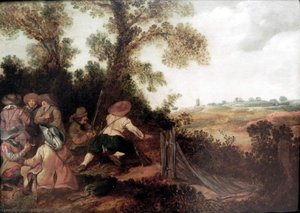
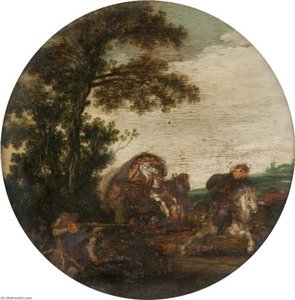
While primarily celebrated for his landscapes, Van de Velde’s artistic repertoire extended beyond the purely naturalistic. He skillfully incorporated genre scenes – depictions of everyday life – and military paintings into his oeuvre. These works demonstrate a keen observational eye and an ability to capture the dynamism and drama of human activity within both rural and urban settings. His “The Ambush of a Wagon Train” (circa 1618) exemplifies this versatility, showcasing not only his mastery of landscape but also his talent for portraying action and narrative with compelling detail. These diverse subjects reveal a painter who was comfortable navigating the complexities of representing human experience in all its forms.Court Painter and Artistic Legacy
In his later years, Van de Velde secured a prestigious position as court painter to Prince Maurits and Frederick Henry in The Hague. This appointment solidified his reputation and provided him with access to a wider range of commissions, including the creation of elaborate battle scenes and ceremonial depictions. His work during this period reflects a refined artistic sensibility, characterized by meticulous detail, subtle color palettes, and an increasingly sophisticated understanding of light and shadow. He was influenced by Roelant Savery and Jan van de Velde, demonstrating a clear lineage within his family’s artistic tradition.Pupils and Lasting Influence
Esaias van de Velde's impact extended beyond his own creations; he served as a mentor to several promising young artists, including Pieter van Laer, Jan Martszen de Jonge, and Anthony van de Velde (II). His influence can be seen in the works of Palamedes Palamedesz, Nicolaes de Quade van Ravesteyn, and Adriaen Adriaensz Ghibons – artists who adopted elements of his style and compositional techniques. Furthermore, he was a cousin of Jan van de Velde, adding another layer to the family’s artistic legacy. Esaias's death in The Hague in 1630 marked the end of an era, but his contributions to Dutch landscape painting remained significant, shaping the course of the genre and inspiring generations of artists to come. His work continues to be admired for its realism, dramatic lighting, and evocative portrayal of the natural world.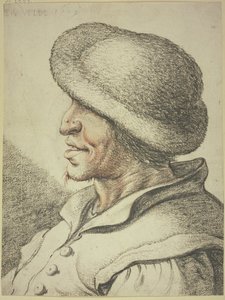
Esaias van de Velde
1587 - 1630 , Netherlands
Quick Facts
- Artistic Movement Or Style: Haarlem School, Landscape
- Artists Or Movements Influenced By This Artist:
- Palamedes Palamedesz
- Jan Martszen de Jonge
- Artists Who Influenced This Artist:
- Adam Elsheimer
- Roelant Savery
- Date Of Birth: 1587-05-17 (baptized)
- Date Of Death: 1630-11-18
- Full Name: Esaias van de Velde
- Nationality: Dutch
- Notable Artworks:
- Winter Landscape
- The Ambush
- The robbery
- Place Of Birth: Amsterdam, Netherlands
Related Articles

Van Gogh's Masterpieces: Explore 25 Iconic Paintings & Art for Your Home
Journey through Vincent van Gogh's 25 most iconic paintings! Explore 'Starry Night', 'Sunflowers,' and more—discover the stories, techniques & emotions behind these Post-Impressionist masterpieces. Find museum-quality art reproductions for your home at ArtsDot.com.

Demandes Commerciales
APS ofrece reproducciones de bellas artes y encargos personalizados desde 2004. Confían en nosotros corporaciones, hoteles y coleccionistas selectos para obras de arte de calidad museística, servicio discreto y soluciones artísticas completas. ¡Póngase en contacto con nosotros para obtener un presupuesto personalizado!
Willem van de Velde the Elder: Master of Maritime Painting & Chronicler of the Dutch Golden Age
Discover the captivating maritime paintings of Willem van de Velde the Elder, a master chronicler of the Dutch Golden Age. Explore his unparalleled realism and lasting influence on naval art history.
Jan van Goyen: Master of Dutch Landscape & Atmospheric Perspective
Discover Jan van Goyen, the master of Dutch landscape painting. Explore his subtle technique, atmospheric realism & lasting influence on art history. Learn about this 17th-century pioneer at ArtsDot.

Beyond the Horizon: 10 Landscape Masterpieces for Your Home Decor
Journey through 10 breathtaking landscape paintings by Monet, Van Gogh & more! Explore iconic artworks, artistic techniques & find inspiration for your home decor. Museum-quality reproductions at ArtsDot.com. Discover all masterpieces on ArtsDot.com