 Preview
 Send
Send Share
Share
 Details

 Download
 Similars
 X-Ray
X-Ray Diaporama
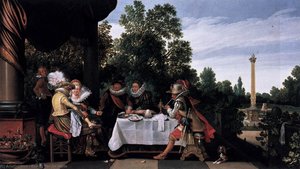
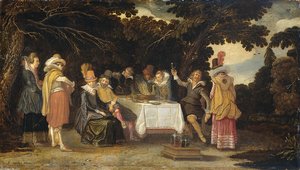
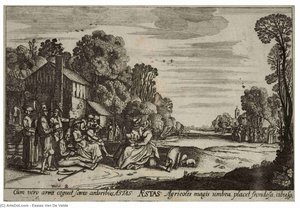
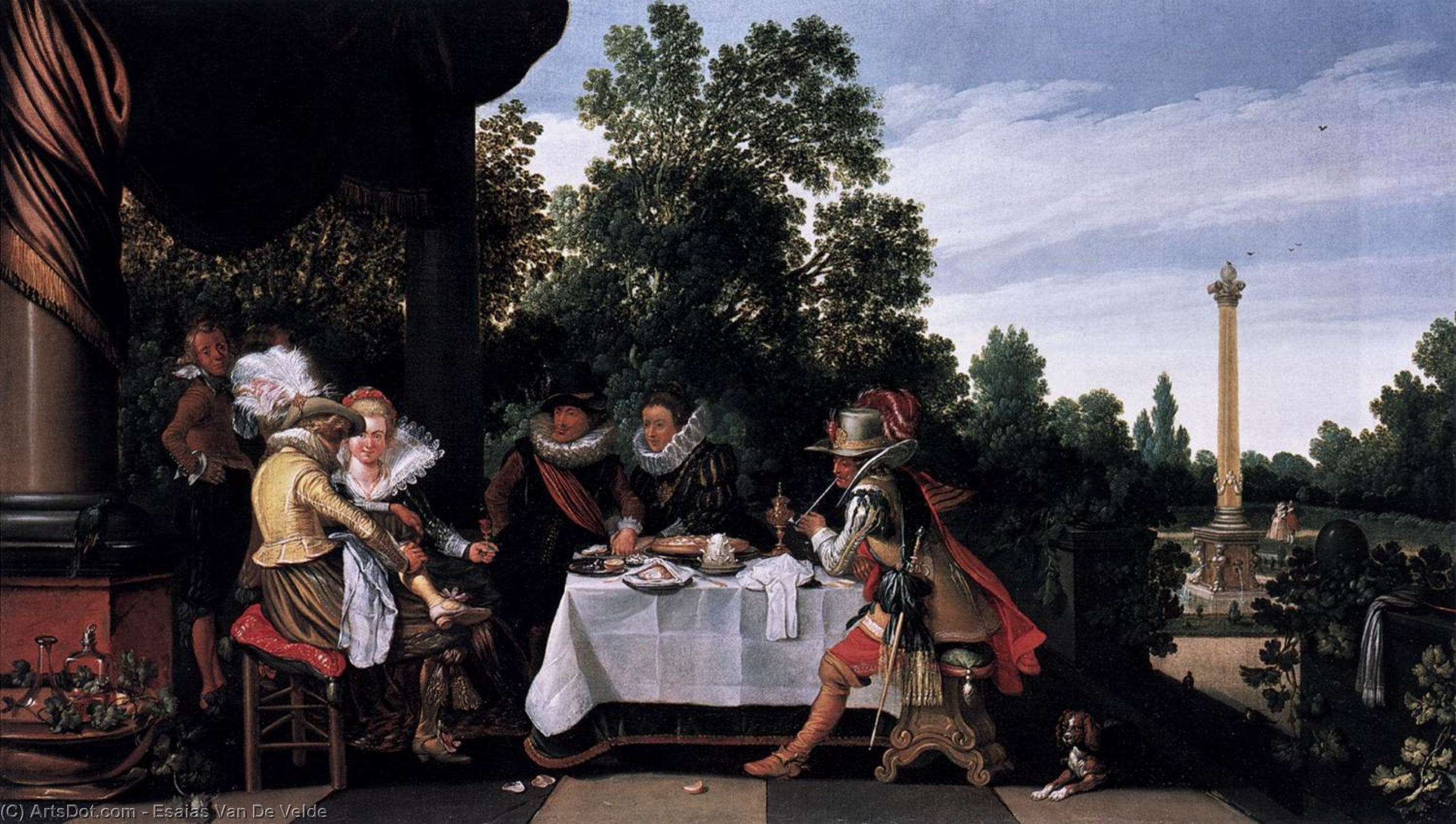
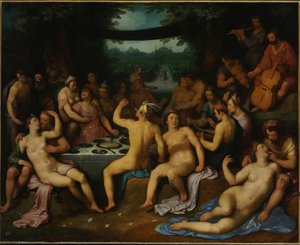
Merry Company Banqueting on a Terrace
 Oil On Canvas
- WallArt
- Dutch Golden Age
 1615
1615 43.0 x 77.0 cm
 Staatliche Museen
 Read More
Hand Made Oil Reproduction
Hand-painted oil on canvas in your size and frame, made to order by our artists. ( Buy Print Buy Image)




P118B $10

P118H $10

P118W $10

P438Z $10

P508JH $12

P508YH $12

P805H $10

P805Z $10

P919BZ $10

P919G $10

P919XJ $10

P959ZH $10

P968JZ $12

W106C $8

W218G $10

W218JH $8

W218Y $10

W307PJ $10

W316G $10

W316PJ $8

W316Y $10

W398PJ $8

W4111J $10

W500HY $15

W500JH $15

W692G $12

W849H $8

W940BG $15

W953PJ $8




Pick from our preset sizes that match the artwork's original proportions.

You may enter your own dimensions to fit a specific frame or space. If your selected size does not match the original image's proportions, we will either crop the artwork or extend the painting with additional hand-painted elements. A digital mockup will be sent for your approval before production begins.
Please note that the on-screen preview does not reflect the actual cropping or extension. Only the mockup will accurately show the final composition.
While custom sizes are available, we recommend selecting a dimension from the predefined list to preserve the original proportions.
After order, ArtsDot.com team will email client for instructions and provide a mockup preview
Worldwide Delivery () in 3/4 weeks instead of standard 5 weeks. (27 August). No compromise on quality.

Free Worldwide Express Shipping

High-Quality Linen Canvas

Full Shipping Insurance

Customs Tax Refund Guarantee

True Color Matching Guarantee

60-Day Return Policy (Defects Only)

100% Money-Back Guarantee

Bulk Discount Offer
 Glass option is only available in size under 110 CM

Merry Company Banqueting on a Terrace
Reproduction Medium
Reproduction Size
-


Total Price
$ 538
Artwork Description
Merry Company Banqueting on a Terrace – A Window Into Dutch Golden Age Splendor
“Merry Company Banqueting on a Terrace,” painted circa 1615 by Esaias van de Velde, stands as a quintessential example of Dutch Baroque landscape painting—a genre that captured the dynamism and sophistication of its era. More than just a depiction of an opulent meal, this artwork offers a glimpse into the social fabric and artistic sensibilities of Amsterdam during its zenith as a global trading hub.
Composition & Perspective: The canvas presents a horizontal panorama showcasing a richly furnished dining room bathed in diffused daylight. Van de Velde skillfully employs linear perspective to create depth, guiding the viewer’s eye from the balustrade at the foreground towards distant architectural elements—a deliberate tactic that reinforces the grandeur of the setting. Figures are arranged around the table with varying degrees of proximity, fostering a sense of bustling conviviality and mirroring the meticulous observation characteristic of Baroque art.
Color Palette & Texture: The artist’s palette leans heavily into earthy hues – browns, creams, and golds – accented by splashes of crimson, sapphire, and lemon yellow. These colors aren't merely decorative; they contribute to the painting’s emotional resonance, mirroring the warmth and abundance associated with celebratory feasts. Van de Velde meticulously renders textures: smooth surfaces on clothing contrast sharply with the rough materiality of stone pillars, while detailed brushstrokes capture the intricacies of food items—a testament to his dedication to realism.
Style & Technique: Executed in oil paint on canvas using a layered technique—glazes and impasto—Van de Velde’s approach aligns perfectly with the Baroque tradition. He painstakingly blended pigments to achieve subtle tonal variations, creating an illusion of luminosity that elevates the scene beyond mere representation. Influenced by Pieter Brueghel the Elder's pioneering explorations of landscape and genre painting, Van de Velde pushed boundaries in portraying everyday life within a grand architectural framework.
Symbolism & Emotional Impact: Beyond its visual beauty, “Merry Company Banqueting on a Terrace” speaks to broader themes of prosperity, social status, and humanist ideals prevalent during the Dutch Golden Age. The elaborate attire worn by the figures underscores their wealth and influence—a reflection of Amsterdam’s burgeoning mercantile success. Ultimately, this artwork evokes feelings of warmth, joy, and communal harmony, inviting viewers to contemplate not only a beautiful image but also the cultural values that shaped its creation.
Historical Context: Created during a period of unprecedented artistic innovation and economic expansion, “Merry Company Banqueting on a Terrace” embodies the spirit of Dutch Baroque. It reflects the humanist fascination with observing and documenting the natural world alongside portraying human activity—a stylistic hallmark that distinguishes it from earlier Renaissance art.
Related Artworks




Artist Biography
Esaias van de Velde: A Master of Dutch Landscape
Esaias van de Velde (17 May 1587 – 18 November 1630) stands as a pivotal figure in the development of landscape painting within the Dutch Golden Age. Born in Amsterdam, his artistic lineage traced back to his father, Hans van de Velde, a Protestant refugee from Flanders who had sought refuge in the Netherlands following the religious upheavals of the late 16th century. This familial connection to the Flemish tradition profoundly shaped Esaias’s early artistic education, initially under his father and later with Gillis van Coninxloo, a landscape painter deeply influenced by the works of Pieter Brueghel the Elder. His upbringing amidst this confluence of artistic influences laid the groundwork for his distinctive style – one that would ultimately redefine the possibilities of depicting the natural world on canvas.Early Influences and Haarlem’s Artistic Landscape
Van de Velde's career began in Haarlem, a vibrant center of art and commerce during the 17th century, from 1610 to 1618. This period proved crucial for his artistic evolution. He joined the prestigious Haarlem Guild of St. Luke in 1612 alongside Hercules Segers, an event that marked a significant shift in the perception of landscape painting within the region. Prior to this, landscapes were often considered secondary genres, relegated to decorative roles. Van de Velde’s inclusion elevated them to a respected and independent artistic category, mirroring a broader trend across the Netherlands. Notably, he was influenced by Adam Elsheimer, a German painter known for his dramatic lighting and atmospheric effects, which encouraged him to move away from the more rigid conventions of his tutor and embrace a lower viewpoint – a technique that offered viewers an expansive, almost immersive perspective on the scenes before them. This deliberate choice, combined with a triangular compositional structure, became hallmarks of his distinctive style.Genre and Military Scenes: Expanding Artistic Horizons
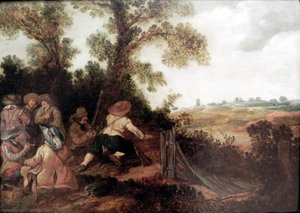
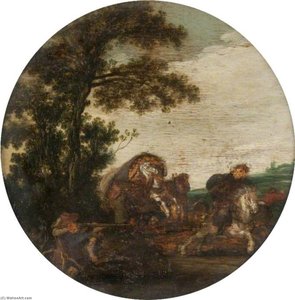
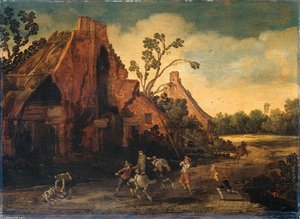
While primarily celebrated for his landscapes, Van de Velde’s artistic repertoire extended beyond the purely naturalistic. He skillfully incorporated genre scenes – depictions of everyday life – and military paintings into his oeuvre. These works demonstrate a keen observational eye and an ability to capture the dynamism and drama of human activity within both rural and urban settings. His “The Ambush of a Wagon Train” (circa 1618) exemplifies this versatility, showcasing not only his mastery of landscape but also his talent for portraying action and narrative with compelling detail. These diverse subjects reveal a painter who was comfortable navigating the complexities of representing human experience in all its forms.Court Painter and Artistic Legacy
In his later years, Van de Velde secured a prestigious position as court painter to Prince Maurits and Frederick Henry in The Hague. This appointment solidified his reputation and provided him with access to a wider range of commissions, including the creation of elaborate battle scenes and ceremonial depictions. His work during this period reflects a refined artistic sensibility, characterized by meticulous detail, subtle color palettes, and an increasingly sophisticated understanding of light and shadow. He was influenced by Roelant Savery and Jan van de Velde, demonstrating a clear lineage within his family’s artistic tradition.Pupils and Lasting Influence
Esaias van de Velde's impact extended beyond his own creations; he served as a mentor to several promising young artists, including Pieter van Laer, Jan Martszen de Jonge, and Anthony van de Velde (II). His influence can be seen in the works of Palamedes Palamedesz, Nicolaes de Quade van Ravesteyn, and Adriaen Adriaensz Ghibons – artists who adopted elements of his style and compositional techniques. Furthermore, he was a cousin of Jan van de Velde, adding another layer to the family’s artistic legacy. Esaias's death in The Hague in 1630 marked the end of an era, but his contributions to Dutch landscape painting remained significant, shaping the course of the genre and inspiring generations of artists to come. His work continues to be admired for its realism, dramatic lighting, and evocative portrayal of the natural world.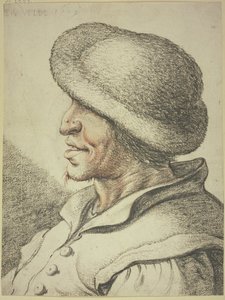
Esaias van de Velde
1587 - 1630 , Netherlands
Quick Facts
- Artistic Movement Or Style: Haarlem School, Landscape
- Artists Or Movements Influenced By This Artist:
- Palamedes Palamedesz
- Jan Martszen de Jonge
- Artists Who Influenced This Artist:
- Adam Elsheimer
- Roelant Savery
- Date Of Birth: 1587-05-17 (baptized)
- Date Of Death: 1630-11-18
- Full Name: Esaias van de Velde
- Nationality: Dutch
- Notable Artworks:
- Winter Landscape
- The Ambush
- The robbery
- Place Of Birth: Amsterdam, Netherlands
Related Articles

Golden Age Reflections: Dutch Baroque Painting & Cultural Innovation
Explore the Dutch Golden Age of painting! Discover key artists like Vermeer & ter Borch, their innovative techniques, and the rich cultural context behind these Baroque masterpieces. Learn about collecting & appreciating this iconic art period.

Dutch Masters: 10 Golden Age Paintings That Still Inspire |
Journey into the Dutch Golden Age! Explore 10 iconic paintings by Rembrandt, Vermeer & Hals. Discover the stories behind these Baroque masterpieces and find museum-quality art reproductions to elevate your home decor on .
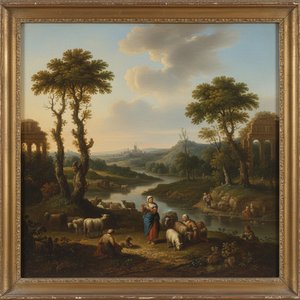
Nicolaes Berchem: Dutch Golden Age Pastoralism & the Evolution of Landscape Painting
Explore the captivating world of Nicolaes Berchem, a leading Dutch Golden Age painter. Discover his idyllic landscapes, masterful technique & lasting influence on art history. Learn more at ArtsDot.

Illuminating Innovation: Exploring the Dutch Golden Age of Painting
Explore the Dutch Golden Age of painting with ArtsDot. Discover Rembrandt, Vermeer & other Masters. Learn about key characteristics, iconic artworks, and lasting influence. Expert insights for collectors & enthusiasts.
Golden Light & Dutch Skies: Bringing the Magic of Dutch Golden Age Landscapes into Your Home
Transform your home with the breathtaking light of Dutch Golden Age landscapes. Discover how hand-painted oil reproductions of masterworks like Ruisdael and Vermeer bring timeless elegance, atmosphere, and soulful texture to modern interiors. Elevate your space with museum-quality art.