 Preview
 Send
Send Share
Share
 Details

 Download
 Similars
 X-Ray
X-Ray Diaporama
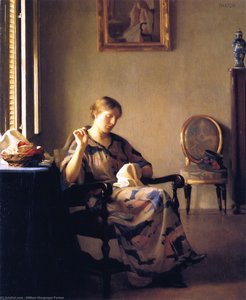
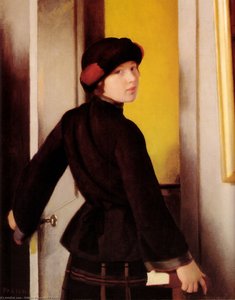
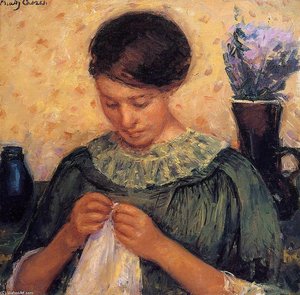
Woman Sewing


 Read More
Hand Made Oil Reproduction
Hand-painted oil on canvas in your size and frame, made to order by our artists. ( Buy Print Buy Image)




P118B $10

P118H $10

P118W $10

P438Z $10

P508JH $12

P508YH $12

P805H $10

P805Z $10

P919BZ $10

P919G $10

P919XJ $10

P959ZH $10

P968JZ $12

W106C $8

W218G $10

W218JH $8

W218Y $10

W307PJ $10

W316G $10

W316PJ $8

W316Y $10

W398PJ $8

W4111J $10

W500HY $15

W500JH $15

W692G $12

W849H $8

W940BG $15

W953PJ $8




Pick from our preset sizes that match the artwork's original proportions.

You may enter your own dimensions to fit a specific frame or space. If your selected size does not match the original image's proportions, we will either crop the artwork or extend the painting with additional hand-painted elements. A digital mockup will be sent for your approval before production begins.
Please note that the on-screen preview does not reflect the actual cropping or extension. Only the mockup will accurately show the final composition.
While custom sizes are available, we recommend selecting a dimension from the predefined list to preserve the original proportions.
After order, ArtsDot.com team will email client for instructions and provide a mockup preview
Worldwide Delivery () in 3/4 weeks instead of standard 5 weeks. (17 August). No compromise on quality.

Free Worldwide Express Shipping

High-Quality Linen Canvas

Full Shipping Insurance

Customs Tax Refund Guarantee

True Color Matching Guarantee

60-Day Return Policy (Defects Only)

100% Money-Back Guarantee

Bulk Discount Offer
 Glass option is only available in size under 110 CM

Woman Sewing
Reproduction Medium
Reproduction Size
-


Total Price
$ 263
Artwork Description
A Moment Frozen in Time: William MacGregor Paxton’s “Woman Sewing”
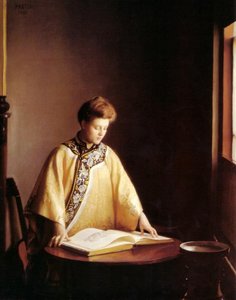
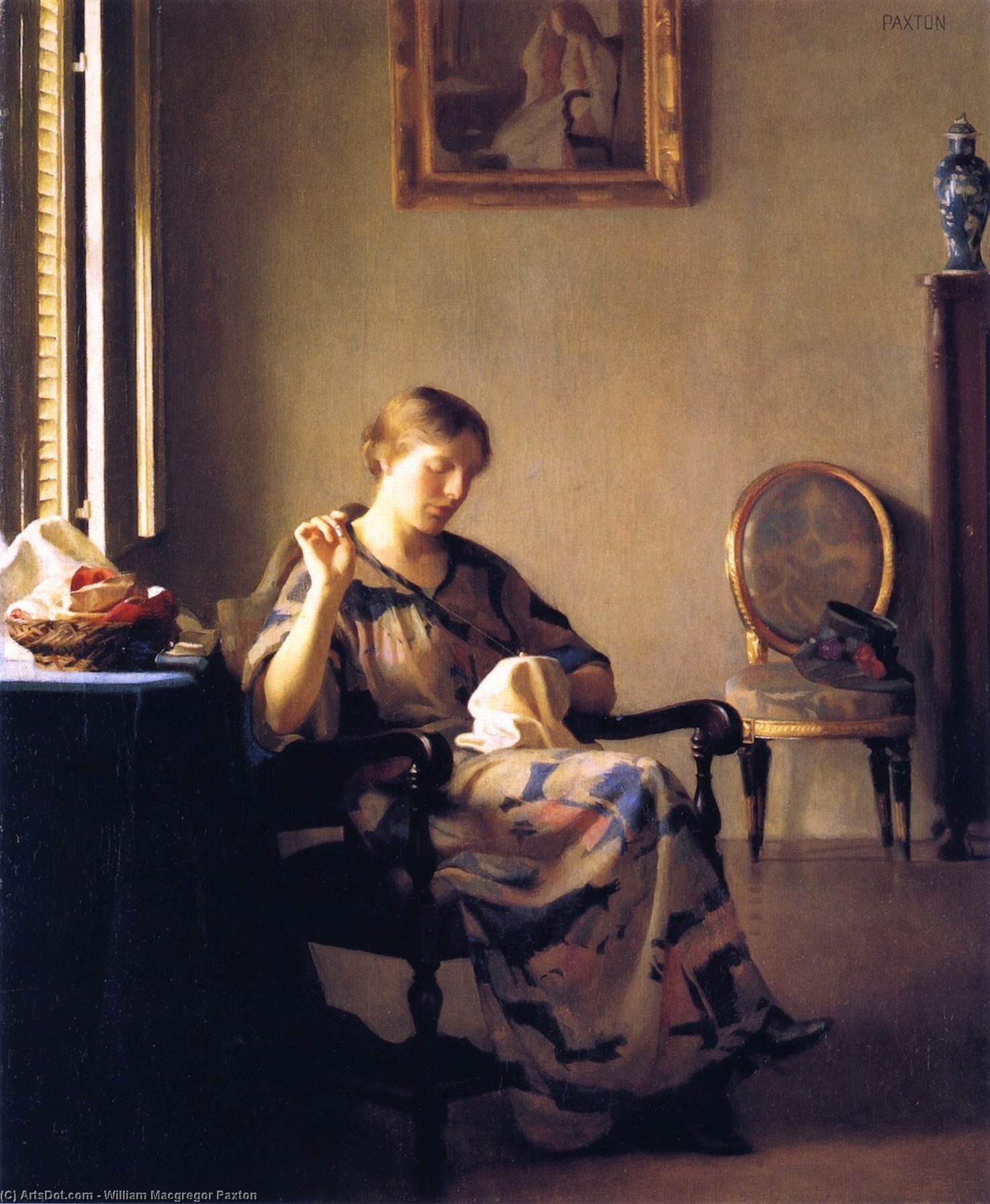
William MacGregor Paxton's "Woman Sewing," painted in 1919, isn’t merely a depiction of a woman at her needle; it’s a carefully constructed tableau of domestic serenity and the subtle poetry of everyday life. This oil on canvas, currently residing within the Detroit Institute of Arts, invites us into a private world—a space of quiet contemplation bathed in the soft glow of afternoon light. Paxton, a key figure in Boston's influential “Boston School” of painting, masterfully captures an intimate scene that speaks volumes about the role of women and the beauty found in simple tasks. The painting’s power lies not just in its subject matter but in Paxton’s ability to imbue it with a profound sense of peace and timelessness.
Paxton's style is deeply rooted in the Boston School, characterized by an almost photographic realism combined with a deliberate softness and atmospheric depth. He eschewed the sharp angles and dramatic lighting favored by earlier movements, instead opting for a muted palette—warm browns, creams, and subtle greens—that creates a sense of warmth and intimacy. His meticulous attention to detail is evident in every brushstroke, from the delicate folds of the woman’s dress to the texture of the fabric she's sewing. The use of *binocular vision*, a technique Paxton developed himself, further enhances this effect, blurring the background slightly while focusing sharply on the subject – a deliberate choice that draws our eye and encourages us to linger in the scene.
The Boston School: A Legacy of Domestic Portraits
Paxton’s work is inextricably linked to the Boston School movement, an artistic circle dedicated to capturing scenes of American life with a focus on portraiture and interior settings. Influenced by the Impressionists and particularly Johannes Vermeer, Paxton sought to depict ordinary moments with extraordinary sensitivity. He wasn't interested in grand narratives or heroic figures; instead, he found beauty in the quiet rhythms of daily existence—a woman tending her home, children playing, or a family gathered around a table. This focus on domesticity was not simply aesthetic; it reflected a broader cultural shift in America at the time, as women increasingly gained greater independence and agency.
The Boston School’s emphasis on light and shadow is particularly evident in “Woman Sewing.” Paxton expertly utilizes diffused sunlight streaming through the window to illuminate the scene, creating a soft, ethereal glow. The shadows are not harsh or dramatic but rather subtle gradations that add depth and dimension to the painting. This masterful control of light contributes significantly to the overall sense of tranquility and invites us to lose ourselves in the quiet beauty of the moment.
Symbolism and Interpretation
Beyond its technical brilliance, “Woman Sewing” is rich with symbolic meaning. The woman herself represents a quintessential image of American domesticity—a symbol of comfort, care, and responsibility. Her posture – seated comfortably in a chair, hands folded neatly on her lap – conveys a sense of self-possession and contentment. The objects surrounding her—the couch, the vase, the bowl—are not merely decorative elements but contribute to the painting’s overall atmosphere of warmth and hospitality. The unfinished sewing project itself can be interpreted as a metaphor for life's ongoing tasks and challenges, suggesting that even in moments of quietude, we are always engaged in some form of creation or repair.
Bringing “Woman Sewing” Home: Reproductions and Legacy
Reproductions of William MacGregor Paxton’s "Woman Sewing" offer a remarkable opportunity to bring this timeless masterpiece into your own home. Available through ArtsDot.com, these meticulously crafted reproductions capture the painting's original beauty and atmosphere with exceptional fidelity. Whether you are an art enthusiast, a collector, or simply someone seeking to infuse your space with a sense of serenity and grace, “Woman Sewing” is a truly captivating addition to any collection. It’s more than just a painting; it’s a window into a bygone era—a testament to the enduring power of beauty, simplicity, and the quiet dignity of everyday life.
Related Artworks
Artist Biography
a boston school luminary
william mcgregor paxton, an american painter and instructor, left an indelible mark on the art world with his captivating portraits and interior scenes. born on june 22, 1869, in the united states, paxton's artistic journey is a testament to his dedication to the boston school paradigm.early life and education
paxton's artistic odyssey began at cowles art school, where he not only honed his skills but also met his wife, elizabeth okie paxton. he later taught briefly at this institution, further solidifying his connection to the boston art community. his tenure at the museum of fine arts school in boston deepened his understanding of the city's vibrant art scene.artistic contributions
paxton is renowned for his portraits, including those of two u.s. presidents: grover cleveland and calvin coolidge. his interior scenes, often featuring women, showcase his mastery of capturing the essence of his subjects. notably, his wife, elizabeth okie paxton, has been a frequent subject in his works.notable works and locations
- girl with a hand mirror (reading public museum, pennsylvania), a quintessential example of paxton's opulent interior scenes. - portraits of grover cleveland and calvin coolidge, showcasing his skill in capturing the essence of historical figures.museums and collections featuring his work
- the butler institute of american art (youngstown, ohio), a significant institution for american art, featuring paxton's works among its diverse collection. - somerville college (oxford, uk), while not exclusively focused on paxton, its collection includes notable works that reflect the broader context of american and british art. conclusion: william mcgregor paxton's legacy is a testament to his significant contributions to american art, particularly within the boston school. his captivating portraits and interior scenes continue to inspire, offering a glimpse into the lives of those he painted.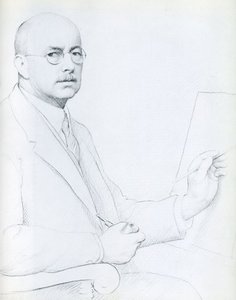
william mcgregor paxton
1869 - 1941 , United States of America
Quick Facts
- Artistic Movement Or Style: Boston School
- Artists Who Influenced This Artist: ['Elizabeth Okie Paxton']
- Date Of Birth: June 22, 1869
- Date Of Death: 1941
- Full Name: William McGregor Paxton
- Nationality: American
- Notable Artworks:
- Girl with a hand mirror
- Portraits of Grover Cleveland
- Portraits of Calvin Coolidge
- Place Of Birth: Baltimore, United States
Related Articles
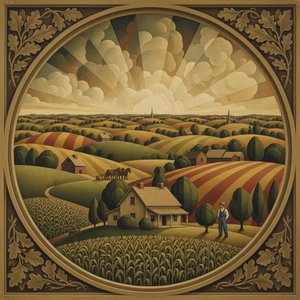
Grant Wood & American Regionalism: Identity, Myth & the Rural Landscape
Explore the world of Grant Wood & American Regionalism with ArtsDot. Discover the symbolism behind 'American Gothic', recurring themes, and the movement's lasting impact on art history. High-quality reproductions available.

The Enduring Legacy of Oil on Canvas: Technique, History & Aesthetic Impact
Explore the rich history & techniques of oil painting – from Renaissance masters to Impressionism. Discover pigments, layering methods, and why this timeless medium endures. Expert insights for artists & art enthusiasts.
American Realism's Defining Works: 10 Masterpieces for Your Home
Explore 10 defining American Realism masterpieces – Hopper, Homer & more. Discover the stories behind these iconic paintings and bring timeless art to your home with ArtsDot's museum-quality reproductions. Explore the full collection online.

Oil on Canvas: A Historical & Technical Exploration of a Timeless Artistic Medium
Explore the rich history & enduring techniques of oil painting on canvas. Discover the science behind its longevity, conservation practices, and contemporary relevance. Expert insights for art enthusiasts.

Alfred Jacob Miller: Chronicling the American West Through Artistic Observation & Narrative
Explore the captivating art of Alfred Jacob Miller, chronicler of the American West. Discover his iconic paintings, techniques & lasting legacy – a valuable addition to any serious collection. Learn more at ArtsDot.