 Preview
 Send
Send Share
Share
 Details

 Download
 Similars
 X-Ray
X-Ray Diaporama
Tea Leaves


 Read More
Hand Made Oil Reproduction
Hand-painted oil on canvas in your size and frame, made to order by our artists. ( Buy Print Buy Image)




P118B $10

P118H $10

P118W $10

P438Z $10

P508JH $12

P508YH $12

P805H $10

P805Z $10

P919BZ $10

P919G $10

P919XJ $10

P959ZH $10

P968JZ $12

W106C $8

W218G $10

W218JH $8

W218Y $10

W307PJ $10

W316G $10

W316PJ $8

W316Y $10

W398PJ $8

W4111J $10

W500HY $15

W500JH $15

W692G $12

W849H $8

W940BG $15

W953PJ $8




Pick from our preset sizes that match the artwork's original proportions.

You may enter your own dimensions to fit a specific frame or space. If your selected size does not match the original image's proportions, we will either crop the artwork or extend the painting with additional hand-painted elements. A digital mockup will be sent for your approval before production begins.
Please note that the on-screen preview does not reflect the actual cropping or extension. Only the mockup will accurately show the final composition.
While custom sizes are available, we recommend selecting a dimension from the predefined list to preserve the original proportions.
After order, ArtsDot.com team will email client for instructions and provide a mockup preview
Worldwide Delivery () in 3/4 weeks instead of standard 5 weeks. (16 August). No compromise on quality.

Free Worldwide Express Shipping

High-Quality Linen Canvas

Full Shipping Insurance

Customs Tax Refund Guarantee

True Color Matching Guarantee

60-Day Return Policy (Defects Only)

100% Money-Back Guarantee

Bulk Discount Offer
 Glass option is only available in size under 110 CM

Tea Leaves
Reproduction Medium
Reproduction Size
-


Total Price
$ 263
Artwork Description
A Moment Frozen in Time: Exploring William McGregor Paxton’s “Tea Leaves”
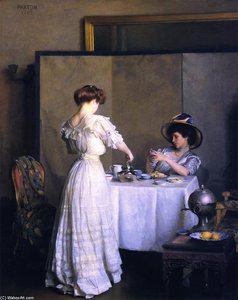
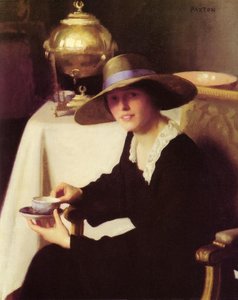
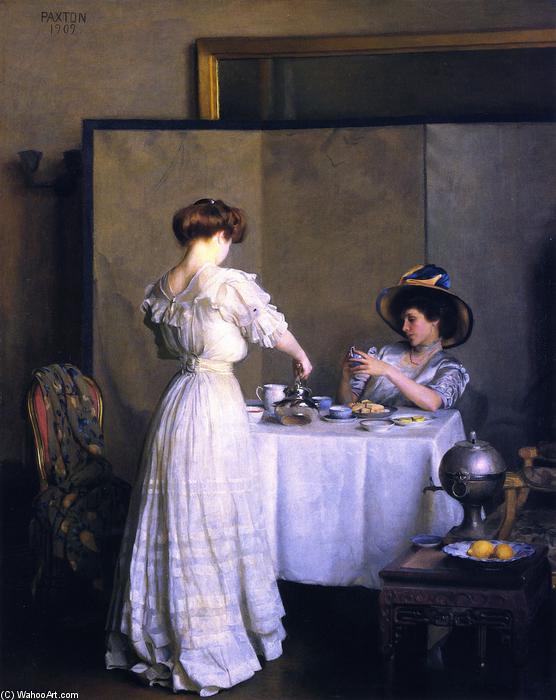
“Tea Leaves,” painted by William McGregor Paxton in 1909, transcends mere depiction; it's an invitation into a carefully constructed tableau of domestic tranquility and subtle visual storytelling. This portrait captures two women seated at a table laden with tea paraphernalia – a testament to Paxton’s signature style within the Boston School movement.The Boston School Aesthetic: Light and Atmosphere
Paxton’s approach aligns perfectly with the tenets of the Boston School, prioritizing luminous color palettes and atmospheric perspective. The painting utilizes soft, diffused light that washes over the figures and surfaces, creating a sense of warmth and intimacy. This technique isn't simply about realism; it aims to convey emotion—a quiet contemplation punctuated by the ritualistic act of pouring tea. Notice how Paxton skillfully blends shades of ochre, umber, and ivory to achieve this ethereal effect, mirroring the prevailing artistic sensibilities of the era.Composition and Symbolism: Layers of Meaning
The composition itself is deliberately balanced, guiding the viewer’s eye across the table. The woman on the left, positioned slightly off-center, pours tea for her companion—a gesture laden with symbolism representing hospitality and connection. The oranges scattered on the table serve as vibrant accents, symbolizing prosperity and optimism – a common motif in Victorian art reflecting societal values of family and abundance. Furthermore, the careful arrangement of objects contributes to the overall narrative, suggesting an established relationship between the subjects.Technique: Brushwork and Texture
Paxton’s masterful brushwork is evident throughout “Tea Leaves.” Loose, expressive strokes define the drapery and create a palpable sense of texture—particularly noticeable in the folds of the woman's dress. He employs glazing techniques to build up color gradually, layering translucent washes over underlying pigments to achieve depth and luminosity. This meticulous attention to detail underscores Paxton’s commitment to capturing not just what is seen but also how it feels – an immersive experience for the viewer reminiscent of Impressionist explorations.Historical Context: Victorian Domesticity
Painted during the height of Victorian England, “Tea Leaves” reflects the prevailing fascination with domestic interiors and idealized representations of feminine grace. The painting speaks to a broader cultural preoccupation with portraying women as symbols of virtue and refinement—a genre that flourished in response to societal anxieties surrounding gender roles and familial stability. Paxton’s work stands alongside other Boston School portraits documenting the lives of prominent figures, offering valuable insight into the social conventions and artistic aspirations of the period.Emotional Resonance: Quiet Contemplation
Ultimately, “Tea Leaves” succeeds in evoking a profound sense of quiet contemplation. The painting doesn't shout for attention; instead, it invites viewers to linger on its serene beauty—a visual meditation on companionship and simple pleasures. Its enduring appeal lies in its ability to transport us back to a bygone era while simultaneously resonating with timeless themes of human connection and artistic excellence.Related Artworks
![Festa Escolar No Ipiranga [school Festival At Ipiranga] — Agustín Salinas Y Teruel, Contemporary Realism](/media/artworks/images/thumbnails/59/0c/590c26a7427442108c71b19a2ec81c68.jpg)
Artist Biography
a boston school luminary
william mcgregor paxton, an american painter and instructor, left an indelible mark on the art world with his captivating portraits and interior scenes. born on june 22, 1869, in the united states, paxton's artistic journey is a testament to his dedication to the boston school paradigm.early life and education
paxton's artistic odyssey began at cowles art school, where he not only honed his skills but also met his wife, elizabeth okie paxton. he later taught briefly at this institution, further solidifying his connection to the boston art community. his tenure at the museum of fine arts school in boston deepened his understanding of the city's vibrant art scene.artistic contributions
paxton is renowned for his portraits, including those of two u.s. presidents: grover cleveland and calvin coolidge. his interior scenes, often featuring women, showcase his mastery of capturing the essence of his subjects. notably, his wife, elizabeth okie paxton, has been a frequent subject in his works.notable works and locations
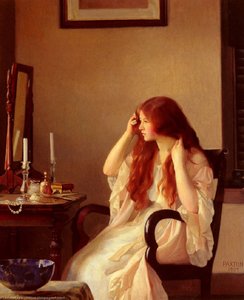
- girl with a hand mirror (reading public museum, pennsylvania), a quintessential example of paxton's opulent interior scenes. - portraits of grover cleveland and calvin coolidge, showcasing his skill in capturing the essence of historical figures.museums and collections featuring his work
- the butler institute of american art (youngstown, ohio), a significant institution for american art, featuring paxton's works among its diverse collection. - somerville college (oxford, uk), while not exclusively focused on paxton, its collection includes notable works that reflect the broader context of american and british art. conclusion: william mcgregor paxton's legacy is a testament to his significant contributions to american art, particularly within the boston school. his captivating portraits and interior scenes continue to inspire, offering a glimpse into the lives of those he painted.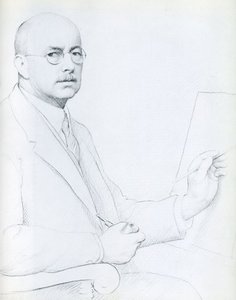
william mcgregor paxton
1869 - 1941 , United States of America
Quick Facts
- Artistic Movement Or Style: Boston School
- Artists Who Influenced This Artist: ['Elizabeth Okie Paxton']
- Date Of Birth: June 22, 1869
- Date Of Death: 1941
- Full Name: William McGregor Paxton
- Nationality: American
- Notable Artworks:
- Girl with a hand mirror
- Portraits of Grover Cleveland
- Portraits of Calvin Coolidge
- Place Of Birth: Baltimore, United States
Related Articles

Giclée Prints: Archival Quality & Aesthetic Nuances for the Discerning Collector
Explore the world of giclée prints with ArtsDot. Learn about archival quality, aesthetic nuances & investment potential. Expert guidance for discerning art collectors seeking museum-quality reproductions and lasting value.
Masterpieces of Boston: Explore 25 Iconic Artworks | ArtsDot
Journey through 25 iconic artworks at Boston's MFA! Explore masterpieces by Monet, Sargent, Van Gogh & more. Discover art history, techniques & find museum-quality reproductions for your home on ArtsDot.com.

Echoes of Time: Exploring the Enduring Appeal & Historical Context of Vintage Art Prints
Explore the captivating world of vintage art prints! Discover their history, collecting tips & enduring appeal. Expert insights on chromolithography and building a legacy collection with ArtsDot.

The Enduring Legacy of Fine Art Prints: Technique, History & Aesthetic Impact
Explore the rich history & techniques of fine art prints. Discover investment potential, assess authenticity, and learn how to preserve your collection with expert guidance. Trusted insights for discerning collectors.

The Enduring Legacy of Printmaking: Techniques, Themes & Artistic Innovation Across Centuries
Explore the rich history of printmaking with ArtsDot. Discover techniques from intaglio to lithography, learn about collecting valuable prints & find museum-quality reproductions. Expert insights for art enthusiasts and collectors.