

 Preview
 Send
Send Share
Share
 Details

 Download
 Similars
 X-Ray
X-Ray Diaporama
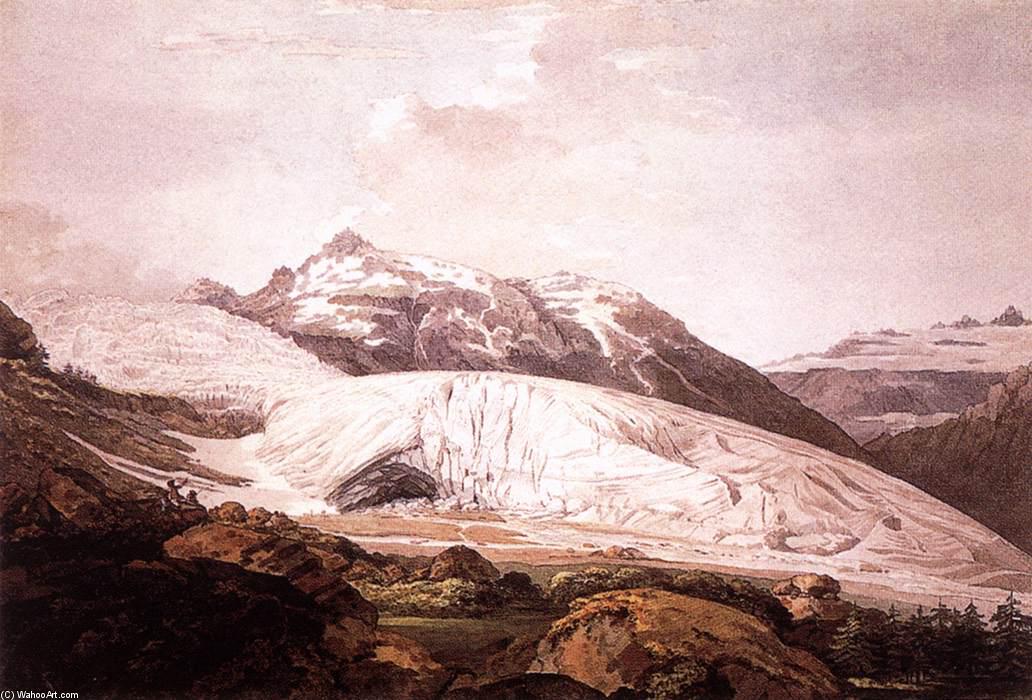
The Rhône Glacier and the Source of the Rhône
 Acrylic On Canvas
- WallArt
- British Landscape Watercolours
 1770
1770 330.0 x 484.0 cm
 British Museum
 Read More
Purchase a high-resolution, enhanced digital image, far superior to the online preview.
Each file is meticulously prepared by our in-house specialists using advanced tools and expert manual retouching. We ensure every image has exceptional clarity, precise color accuracy, and fine detail.
The final file is delivered via email within 72 hours, optimized for immediate use in professional, editorial, and print environments. This is the same quality trusted by top-tier design studios, publishers, and galleries.
Digital Image
Download a high-resolution file for personal display, printing, and creative projects. ( Buy Print Buy Hand Made Painting)
Included in Every Digital Image Order
Expert Digital Delivery, Guaranteed
When you choose ArtsDot.com, you're not just getting an image - you're receiving a professionally enhanced digital artwork, crafted with precision and backed by a satisfaction guarantee. Here's everything that comes with your order, automatically:

Fast Email Delivery
Your high-resolution digital image file will be emailed to you within 72 hours of ordering - ready for immediate use.

AI-Enhanced Digital File
Your artwork is professionally optimized using advanced AI tools and manual editing, ensuring maximum detail, clarity, and color accuracy.

Free Lifetime Re-Delivery
Accidentally deleted or lost your file? No worries - we'll resend it to you anytime, free of charge.

No Import Fees - Ever
Enjoy your artwork instantly with zero customs, duties, or delivery fees - digital downloads are always tax-free.

Color Accuracy Guarantee
We ensure your digital image reflects the original colors as closely as possible using professional tools and color management.

60-Day Satisfaction Guarantee
If you're not satisfied with your digital image, we'll revise it or refund 100% within 60 days - no questions asked.

100% Money-Back Guarantee
Not satisfied? Get a full refund within 60 days of receiving your digital file - no questions asked.

Bulk Order Discounts
Buy 3 images, save 10% - Buy 5, save 15% - Buy 10+, save 20%. Great for creative projects, galleries, and agencies.
Collectible Description
William Pars’s Rhône Glacier: A Window Into Alpine Romanticism
The watercolor painting “The Rhône Glacier and the Source of the Rhône” by William Pars, completed in 1770, stands as a remarkable testament to the burgeoning artistic movement known as Romanticism. More than just a depiction of a stunning natural landscape—the glacier itself—it embodies the era’s fascination with sublime beauty, emotional intensity, and an idealized vision of nature's power. Housed within the British Museum in London (accession number P_1870-0514-1219), this artwork offers a glimpse into the intellectual currents shaping European art during its formative years.A Pioneering Expedition and Artistic Observation
Pars’s involvement in Richard Chandler and Nicholas Revett's ambitious expedition to Greece—commissioned by the Dilettanti Society—provided him with unparalleled opportunity for artistic inspiration. This journey wasn’t merely a scholarly pursuit; it was a visceral encounter with the grandeur of antiquity, fueling Pars’s desire to capture its essence on canvas. The painting itself reflects this spirit of exploration and meticulous observation, mirroring the broader Romantic preoccupation with documenting the natural world with accuracy and conveying its emotional resonance.Technical Mastery: Watercolor's Delicate Embrace
Pars skillfully employed watercolor—a technique favored by artists seeking luminosity and subtlety—to render the Rhône Glacier. Watercolor allows for nuanced tonal gradations and ethereal washes of color, perfectly capturing the shimmering brilliance of glacial ice and the diffused light filtering through the overcast sky. The artist’s meticulous attention to detail is evident in the depiction of rocky outcrops and sparse vegetation, creating a textured surface that enhances the overall impression of realism. Furthermore, the use of grey and black ink with over graphite adds depth and tonal variation, complementing the watercolor's delicate palette.Symbolism Within Landscape: Reflecting Enlightenment Ideals
Beyond its aesthetic qualities, “The Rhône Glacier” carries symbolic weight rooted in the intellectual landscape of the Enlightenment. The glacier itself represents permanence and resilience—qualities admired by Romantic thinkers who sought to counter the mechanistic worldview championed by Newtonian science. Its imposing scale evokes a sense of awe and humility before the forces of nature, mirroring the Romantic belief in the sublime—experiences that inspire terror and wonder simultaneously. The painting’s composition directs the viewer's gaze upwards towards the mountains, symbolizing aspiration and transcendence.A Legacy of Alpine Beauty
“The Rhône Glacier and the Source of the Rhône” remains a captivating artwork because it successfully communicates both visual splendor and profound emotional depth. It exemplifies the Romantic impulse to elevate landscape painting beyond mere representation—to transform it into an expression of feeling and contemplation. Today, reproductions of this masterpiece continue to inspire admiration for Pars’s artistic skill and offer viewers a connection to a pivotal moment in European art history—a celebration of nature's majesty and the human spirit's capacity for wonder.Related Artworks

Artist Biography
Early Life and Artistic Training
William Pars (1742 – 1782) emerged from the bustling intellectual landscape of London, born into a family steeped in craftsmanship—his father was a metal engraver—a profession that instilled in him an appreciation for precision and detail. Recognizing his innate talent for drawing, Pars pursued formal artistic education at Shipley’s Drawing School and St Martin's Lane Academy, institutions renowned for fostering the burgeoning neoclassical aesthetic. Crucially, he benefited from instruction under Henry Howard Richmond, Duke of Richmond’s Gallery, gaining invaluable experience in observing and replicating classical forms—a formative influence that would permeate his subsequent oeuvre.Greek Antiquities: Pioneering Exploration
Pars's artistic journey took a decisive turn with the invitation to accompany Richard Chandler and Nicholas Revett on an expedition to Greece commissioned by the Dilettanti Society in 1764. This ambitious undertaking wasn’t merely a sightseeing trip; it represented a concerted effort to revive classical scholarship and disseminate knowledge of Greek culture amongst British intellectuals. Pars meticulously documented the ruins of Athens and Corinth, producing breathtaking watercolor drawings that captured the grandeur of ancient monuments and temples with remarkable accuracy. These drawings formed the cornerstone of ‘Ionian Antiquities,’ a four-volume publication that became a seminal work in the field of archaeology and cemented Pars’s reputation as a visionary explorer and artist.Royal Academy Membership and Artistic Development
Pars's dedication to artistic excellence culminated in his election as an Associate Member of the Royal Academy in 1770, marking a significant milestone in his career. From this vantage point, he continued to contribute prolifically to the Academy’s exhibitions until 1776, primarily focusing on portraiture—a genre that allowed him to hone his skills in capturing psychological nuance and conveying emotion through subtle tonal variations. His artistic style evolved throughout these years, reflecting the prevailing trends of the Enlightenment while maintaining a distinctive sensitivity to light and color. Notably, he studied alongside fellow artists like John Warwick Smith and Francis Towne at Rome’s Accademia di Belle Arti, absorbing influences from the Baroque tradition and experimenting with innovative techniques.Notable Works and Legacy
Pars's artistic output encompassed a diverse range of subjects—landscapes, portraits, and genre scenes—each executed with meticulous detail and imbued with atmospheric subtlety. Among his most celebrated paintings are ‘The Rhône Glacier,’ a dramatic depiction of the Swiss Alps showcasing Pars’s masterful command of watercolor pigments; ‘A Roman Monument at Igel,’ reflecting his fascination with classical ruins; and ‘The Source of the Rhône,’ capturing the serene beauty of the Rhone Valley. His drawings were reproduced extensively for scholarly publications, notably ‘Ionian Antiquities,’ ensuring that his contribution to Greek archaeology would endure for generations. Furthermore, William Woollett engraved several Swiss landscapes from Pars’s collection, preserving these visual records as invaluable artifacts of eighteenth-century art and scientific inquiry. Pars's legacy resides not only in his artistic achievements but also in his role as a catalyst for intellectual curiosity and cultural revival—a testament to the transformative power of art and scholarship intertwined.
William Pars
1742 - 1782 , United Kingdom
Quick Facts
- Artistic Movement Or Style: Watercolor Painting
- Artists Or Movements Influenced By This Artist: ['Royal Academy']
- Artists Who Influenced This Artist: ["Shipley's Drawing School"]
- Date Of Birth: February 28, 1742
- Date Of Death: 1782
- Full Name: William Pars
- Nationality: English
- Notable Artworks: ['The Rhône Glacier and the Source of the Rhône']
- Place Of Birth: London, United Kingdom

