

 Preview
 Send
Send Share
Share
 Details

 Download
 Similars
 X-Ray
X-Ray Diaporama
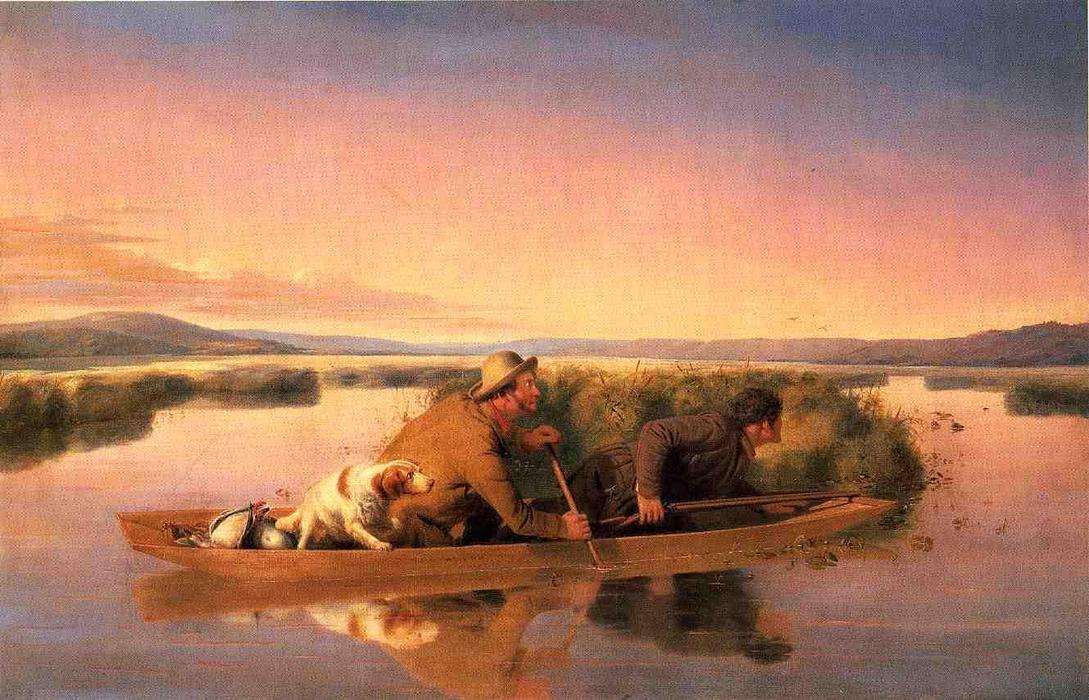
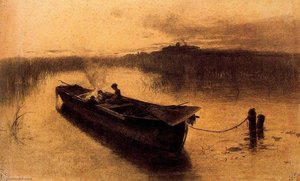
Duck Hunters on the Hoboken Marshes


 Read More
Purchase a high-resolution, enhanced digital image, far superior to the online preview.
Each file is meticulously prepared by our in-house specialists using advanced tools and expert manual retouching. We ensure every image has exceptional clarity, precise color accuracy, and fine detail.
The final file is delivered via email within 72 hours, optimized for immediate use in professional, editorial, and print environments. This is the same quality trusted by top-tier design studios, publishers, and galleries.
Digital Image
Download a high-resolution file for personal display, printing, and creative projects. ( Buy Print Buy Hand Made Painting)
Included in Every Digital Image Order
Expert Digital Delivery, Guaranteed
When you choose ArtsDot.com, you're not just getting an image - you're receiving a professionally enhanced digital artwork, crafted with precision and backed by a satisfaction guarantee. Here's everything that comes with your order, automatically:

Fast Email Delivery
Your high-resolution digital image file will be emailed to you within 72 hours of ordering - ready for immediate use.

AI-Enhanced Digital File
Your artwork is professionally optimized using advanced AI tools and manual editing, ensuring maximum detail, clarity, and color accuracy.

Free Lifetime Re-Delivery
Accidentally deleted or lost your file? No worries - we'll resend it to you anytime, free of charge.

No Import Fees - Ever
Enjoy your artwork instantly with zero customs, duties, or delivery fees - digital downloads are always tax-free.

Color Accuracy Guarantee
We ensure your digital image reflects the original colors as closely as possible using professional tools and color management.

60-Day Satisfaction Guarantee
If you're not satisfied with your digital image, we'll revise it or refund 100% within 60 days - no questions asked.

100% Money-Back Guarantee
Not satisfied? Get a full refund within 60 days of receiving your digital file - no questions asked.

Bulk Order Discounts
Buy 3 images, save 10% - Buy 5, save 15% - Buy 10+, save 20%. Great for creative projects, galleries, and agencies.
Collectible Description
A Moment Frozen in Twilight: William Tylee Ranney’s “Duck Hunters on the Hoboken Marshes”
William Tylee Ranney's "Duck Hunters on the Hoboken Marshes" isn’t merely a depiction of a late-afternoon hunt; it’s a carefully constructed tableau brimming with quiet observation and a profound connection to the American landscape. Painted in 1849, this oil-on-canvas masterpiece transports us to a serene corner of New Jersey, where the last vestiges of daylight bleed across a vast expanse of water and distant hills. The scene unfolds with an almost palpable stillness – a sense of suspended time that invites contemplation on the rhythms of rural life and the enduring allure of nature.
Ranney’s genius lies in his ability to capture not just the visual elements but also the emotional atmosphere of the moment. The muted palette, dominated by dusky blues, greens, and browns, immediately establishes a mood of tranquility and introspection. The diffused light, characteristic of Luminism – a style emphasizing atmospheric effects and subtle gradations of color – softens every detail, lending an ethereal quality to the scene. Notice how the golden hues of the setting sun bathe the water’s surface in a warm glow, reflecting the colors of the sky and creating a sense of luminous depth.
The Romantic Luminist: A Synthesis of Styles
To fully appreciate “Duck Hunters,” it's crucial to understand Ranney’s place within the broader artistic landscape of his time. He was a pivotal figure in the development of American genre painting, bridging the gap between the grand narratives of historical scenes and the intimate portrayals of everyday life. His style is often described as Romantic Luminism – a synthesis of elements from both Romanticism and Luminism. The Romantic influence is evident in the emphasis on emotion, the dramatic lighting, and the focus on the beauty of nature. However, Ranney’s meticulous attention to detail, his realistic rendering of textures (particularly the rough bark of the shoreline trees and the weathered wood of the boat), and his grounding in observation firmly anchor him within the Luminist tradition, which prioritized capturing the subtle effects of light and atmosphere.
Ranney's background as a tinsmith likely contributed to this meticulousness. The precision required for crafting intricate metalwork undoubtedly honed his observational skills and attention to detail – qualities that translated seamlessly into his painting practice. His early life in North Carolina, marked by exposure to the frontier spirit of the American West, further informed his artistic vision, shaping his depictions of rural landscapes and the lives of those who inhabited them.
Symbolism and Narrative: A Quiet Story Unfolds
Beyond its aesthetic beauty, “Duck Hunters” is rich in symbolic meaning. The two men and their dog, crouched behind the marsh grass, are engaged in a timeless pursuit – the hunt for waterfowl. The boat itself represents travel, exploration, and a connection to the natural world. The distant hills, shrouded in mist, evoke a sense of vastness and mystery, while the setting sun symbolizes the end of the day and perhaps a reflective mood. Even the posture of the hunters—lowered, focused—suggests a quiet reverence for the landscape and its inhabitants.
The painting’s historical context is also significant. Painted in 1849, during a period of rapid westward expansion and increasing urbanization, “Duck Hunters” offers a poignant glimpse into a disappearing way of life – a time when rural communities were deeply intertwined with the rhythms of nature. It's a reminder of the enduring appeal of the wilderness and the importance of preserving its beauty.
A Legacy in Reproduction: Bringing Ranney’s Vision to Life
Today, William Tylee Ranney’s “Duck Hunters on the Hoboken Marshes” is celebrated as an iconic work of American art. Reproductions offer a wonderful opportunity to bring this evocative scene into your home or office, allowing you to experience its beauty and tranquility firsthand. When selecting a reproduction, consider the quality of the print – look for archival inks and high-resolution images that faithfully capture Ranney’s masterful use of light and color. Whether displayed as a statement piece in a living room or a calming addition to an entryway, this painting continues to resonate with viewers today, reminding us of the enduring power of art to transport us to another time and place.
Related Artworks
Artist Biography
A Pioneer of American Genre: The Life and Art of William Tylee Ranney
William Tylee Ranney, born in Middletown, Connecticut, on May 9, 1813, occupies a pivotal yet often understated position in the narrative of 19th-century American art. He wasn’t a product of European academies or established artistic circles; instead, his journey was one of self-discovery and immersion in the burgeoning spirit of a nation rapidly expanding westward. His early life, marked by a move to Fayetteville, North Carolina, at age thirteen to live with an uncle, saw him apprenticed as a tinsmith – a practical trade that likely honed his observational skills and meticulous attention to detail, qualities that would later define his artistic style. This period of apprenticeship, though seemingly distant from the world of painting, instilled in Ranney a grounded sensibility and a keen eye for the textures and forms of everyday life. The call of artistry eventually proved too strong, leading him to Brooklyn in 1833 to pursue his passion, largely self-taught, yet driven by an innate talent and relentless dedication.From Texas Fields to Canvas: Shaping a Unique Artistic Vision
A defining chapter in Ranney’s life unfolded with his unexpected enlistment in the Texas Army in 1836, following the tragic fall of the Alamo. This wasn't merely a patriotic impulse; it was an immersion into a world vastly different from the quiet landscapes of Connecticut and North Carolina. For nine months, he experienced the raw realities of frontier life, serving under General Sam Houston and even reportedly guarding Santa Anna after the Battle of San Jacinto. These experiences were not simply biographical details but became the very bedrock of his artistic vision. Returning to Brooklyn in 1837, Ranney didn’t paint grand historical narratives of battles or heroes; instead, he focused on the lives of those who inhabited these spaces – the hunters, trappers, pioneers, and ordinary individuals forging a new existence on the American frontier. His early success with “A Courting Scene” at the National Academy of Design in 1838 signaled his arrival as a promising talent, but it was his ability to translate the visceral experiences of Texas into compelling visual stories that truly set him apart. He wasn’t simply *depicting* the West; he was conveying its atmosphere, its challenges, and its inherent drama with an authenticity rarely seen at the time.Master of Genre and Sporting Scenes: A Detailed World
Ranney's artistic style is characterized by a remarkable realism and attention to detail. He wasn’t interested in idealized representations or romanticized visions; he sought to capture life as it was, with all its complexities and nuances. His paintings are populated with figures rendered with sculptural solidity, their clothing and equipment meticulously researched and depicted. This dedication extended to the landscapes themselves, which were not merely backdrops but integral components of the narrative. “On the Wing,” perhaps his most celebrated work – existing in multiple versions – exemplifies this approach. The painting captures a fleeting moment of sporting success with an almost photographic clarity, showcasing Ranney’s mastery of light, texture, and composition. Similarly, works like "Prairie Burial" and "Scouting Party" are imbued with a sense of quiet drama and psychological depth, revealing the hardships and resilience of those who ventured into the unknown. Beyond Western scenes, Ranney also excelled in sporting art, particularly depictions of duck hunting and equestrian subjects, and historical genre paintings focusing on everyday life during the American Revolution.Legacy and Significance: A Voice of Pre-Civil War America
By the early 1850s, Ranney had established himself as a leading figure in American art, contributing regularly to exhibitions at the National Academy of Design and the American Art Union. His move to West Hoboken, New Jersey, in 1853 provided him with both a studio overlooking the Manhattan skyline and access to the natural landscapes that continued to inspire his work. He was considered the first major genre painter to truly establish himself in New Jersey, and his influence extended far beyond the state’s borders. Tragically, Ranney's career was cut short by illness; he died on November 18, 1857, likely from tuberculosis, at the age of forty-four. Despite his relatively brief life, his impact on American art is undeniable. He helped to popularize depictions of the American West and contributed significantly to the development of genre painting, focusing on the lives of ordinary people rather than grand historical events or aristocratic portraits. His contemporaries recognized his importance; one observer noted that “a specimen of Ranney is indispensable wherever a collection of American art exists.” Today, William Tylee Ranney stands as a vital link between the early traditions of American landscape and genre painting and the more complex artistic movements that would emerge in the aftermath of the Civil War. His work remains a powerful testament to the spirit of exploration, resilience, and the enduring beauty of everyday life in 19th-century America.Notable Works
- "On the Wing"
- "Prairie Burial"
- "Scouting Party"
- "Hunting Wild Horses"
- "Trapper's Last Shot"
- "The Match Boy"
- "Old Oaken Bucket"
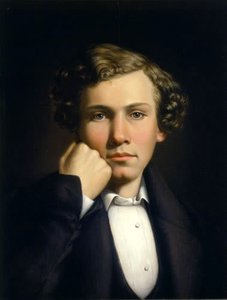
William Tylee Ranney
1813 - 1857 , United States of America
Quick Facts
- Artistic Movement Or Style: Genre painting, Romanticism
- Artists Or Movements Influenced By This Artist: American genre painters
- Date Of Birth: May 9, 1813
- Date Of Death: November 18, 1857
- Full Name: William Tylee Ranney
- Nationality: American
- Notable Artworks:
- On the Wing
- Prairie Burial
- Scouting Party
- The Retrieve
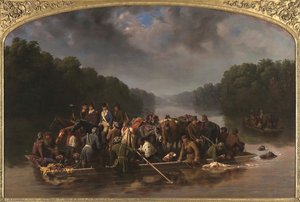
- Marion Crossing the Peedee
- Place Of Birth: Middletown, USA

