

 Preview
 Send
Send Share
Share
 Details

 Download
 Similars
 X-Ray
X-Ray Diaporama
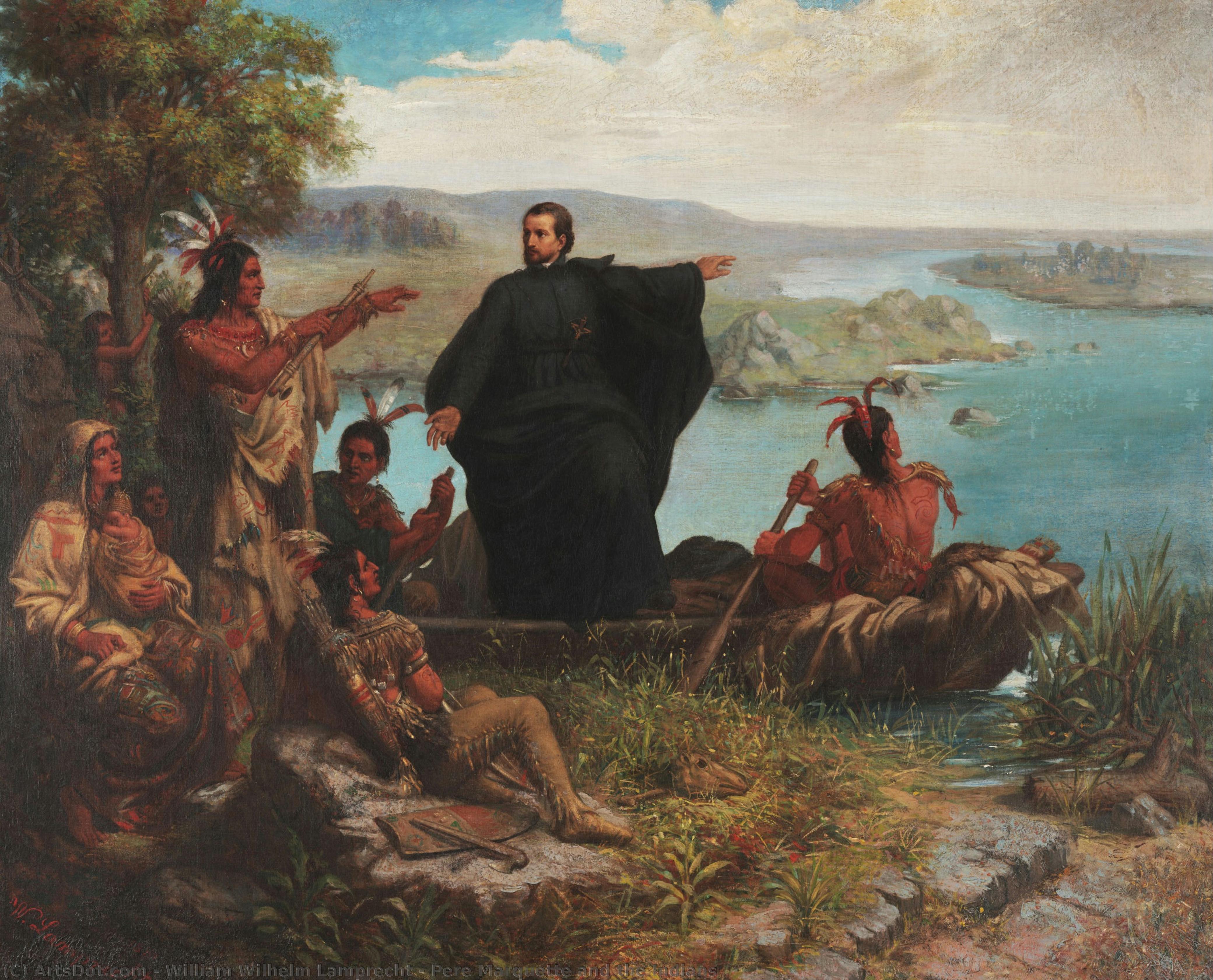
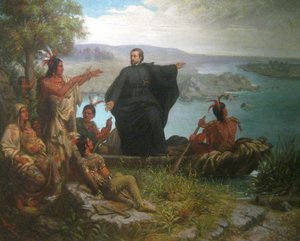
Pere Marquette and the Indians


 Read More
Purchase a high-resolution, enhanced digital image, far superior to the online preview.
Each file is meticulously prepared by our in-house specialists using advanced tools and expert manual retouching. We ensure every image has exceptional clarity, precise color accuracy, and fine detail.
The final file is delivered via email within 72 hours, optimized for immediate use in professional, editorial, and print environments. This is the same quality trusted by top-tier design studios, publishers, and galleries.
Digital Image
Download a high-resolution file for personal display, printing, and creative projects. ( Buy Print Buy Hand Made Painting)
Included in Every Digital Image Order
Expert Digital Delivery, Guaranteed
When you choose ArtsDot.com, you're not just getting an image - you're receiving a professionally enhanced digital artwork, crafted with precision and backed by a satisfaction guarantee. Here's everything that comes with your order, automatically:

Fast Email Delivery
Your high-resolution digital image file will be emailed to you within 72 hours of ordering - ready for immediate use.

AI-Enhanced Digital File
Your artwork is professionally optimized using advanced AI tools and manual editing, ensuring maximum detail, clarity, and color accuracy.

Free Lifetime Re-Delivery
Accidentally deleted or lost your file? No worries - we'll resend it to you anytime, free of charge.

No Import Fees - Ever
Enjoy your artwork instantly with zero customs, duties, or delivery fees - digital downloads are always tax-free.

Color Accuracy Guarantee
We ensure your digital image reflects the original colors as closely as possible using professional tools and color management.

60-Day Satisfaction Guarantee
If you're not satisfied with your digital image, we'll revise it or refund 100% within 60 days - no questions asked.

100% Money-Back Guarantee
Not satisfied? Get a full refund within 60 days of receiving your digital file - no questions asked.

Bulk Order Discounts
Buy 3 images, save 10% - Buy 5, save 15% - Buy 10+, save 20%. Great for creative projects, galleries, and agencies.
Collectible Description
Related Artworks
Artist Biography
William Keith: A Pioneer of California Tonalism
Born in Oldmeldrum, Aberdeenshire, Scotland, on November 18, 1838, William Keith’s artistic journey took him from the rugged landscapes of his homeland to the sun-drenched vistas of California, ultimately establishing him as a significant figure in American Tonalism and the broader American Barbizon school. His early life was marked by a swift relocation to New York City with his family, an experience that instilled in him a pragmatic approach to art – one rooted not in grand narratives or dramatic displays but in quiet observation and the subtle nuances of light and color. This foundational shift would profoundly shape his artistic philosophy and style.
Keith’s formal training began as an apprentice engraver, a skill that honed his eye for detail and precision—qualities he later applied to his painting. He briefly explored opportunities in Europe, studying under Samuel Marsden Brookes in Dusseldorf and absorbing the influence of European landscape traditions. However, it was his time in California, beginning in 1859, that truly defined his artistic identity. The vastness and unique light conditions of the West captivated him, leading to a sustained period of intense observation and experimentation. Unlike many artists who sought to replicate photographic realism, Keith deliberately eschewed detailed rendering, instead focusing on capturing the *feeling* of a place—the atmosphere, the mood, the subtle shifts in tone that characterized the California landscape.
Early California Years & Artistic Development
Upon arriving in San Francisco, Keith initially struggled to secure the commissions he’d anticipated. He established his own engraving business and later partnered with Harrison Eastman and Durbin Van Vleck, but it was painting that ultimately became his primary focus. His early works were characterized by a meticulous attention to detail, reflecting his engraver's background, yet they quickly evolved into something far more expressive. Keith’s artistic development can be traced through several key influences: the Tonalist movement, which emphasized atmospheric effects and subtle gradations of color; and the Barbizon school in France, known for its rejection of academic conventions and focus on direct observation. He sought to emulate the tonal qualities of artists like Jean-François Millet, translating the muted palettes and evocative moods of French landscape painting to the Californian setting.
Keith’s artistic philosophy was deeply personal. As he himself stated, “My subjective pictures are the ones that come from the inside.” He believed that true art stemmed not from external representation but from an internal emotional response—a feeling conveyed through color and light. He famously described his approach as prioritizing "the sentiment" over mere visual accuracy, a perspective that distinguished him from many of his contemporaries who sought to create more literal depictions of nature.
California Landscapes & Tonalist Techniques
Keith’s most celebrated works depict the dramatic landscapes of California—the towering Sierra Nevada mountains, the vast plains, and the meandering rivers. He was particularly drawn to scenes of rural life, capturing the dignity and resilience of the people who inhabited these regions. His paintings are characterized by a deliberate lack of sharp outlines or strong contrasts; instead, he employed subtle gradations of tone – “tones” as he called them—to create an atmospheric depth and sense of mood. This technique, central to Tonalism, allowed him to evoke not just the appearance of a landscape but its *essence*.
Keith’s use of light was particularly noteworthy. He meticulously observed how sunlight transformed throughout the day, casting long shadows, creating shimmering highlights, and imbuing the landscapes with an ever-changing quality. His paintings often capture the fleeting moments of twilight or dawn, when the world is bathed in a soft, ethereal glow. His work demonstrates a remarkable sensitivity to color—a palette dominated by muted browns, grays, and greens, punctuated by occasional bursts of vibrant yellow or blue.
Legacy & Recognition
William Keith’s career spanned several decades, during which he established himself as one of California's leading landscape painters. While his work was not always immediately recognized during his lifetime, it has since gained considerable appreciation for its quiet beauty and profound emotional resonance. He died in 1911, leaving behind a substantial body of work that continues to captivate viewers with its evocative power. Keith’s influence can be seen in the works of later Tonalist painters and American landscape artists, cementing his place as a pivotal figure in the development of American art.
Keith's paintings are now held in prominent collections across the United States, including the Smithsonian American Art Museum and the California Palace of Fine Arts. His legacy endures not only through his artistic achievements but also through his unwavering commitment to capturing the spirit of the West—a spirit that continues to resonate with audiences today.
william wilhelm lamprecht
1838 - 1901 , United States of America
Quick Facts
- Artistic Movement Or Style: Genre, Landscape
- Artists Or Movements Influenced By This Artist: ['American Society']
- Artists Who Influenced This Artist: ['National Academy']
- Date Of Birth: March 20, 1838
- Date Of Death: 1918
- Full Name: William Magrath
- Nationality: Irish
- Notable Artworks:
- Cotton Plantation
- Levee, New Orleans
- Place Of Birth: Cork, Ireland

