 Preview
 Send
Send Share
Share
 Details

 Download
 Similars
 X-Ray
X-Ray Diaporama
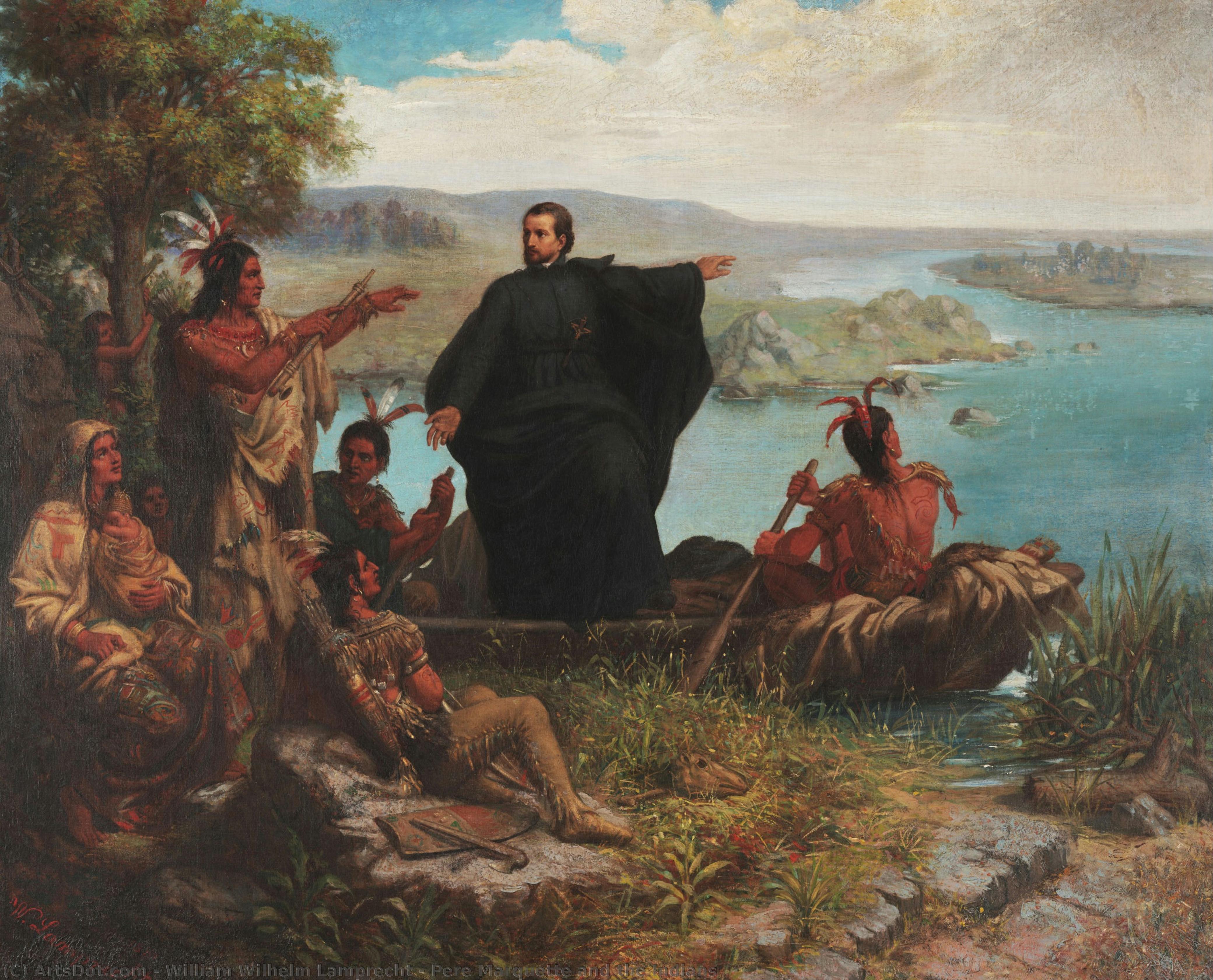
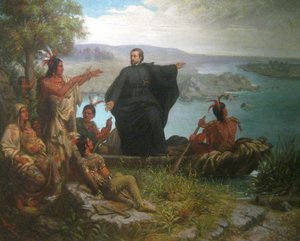
Pere Marquette and the Indians


 Read More
Giclée / Art Print
Museum-quality giclée or canvas print with fast production and flexible finish options. ( Buy Hand Made Painting Buy Image)




































Pick from our preset sizes that match the artwork's original proportions.

You may enter your own dimensions to fit a specific frame or space. If your selected size does not match the original image's proportions, we will either crop the artwork or extend the image with a mirrored or solid-fill edge. A digital mockup will be sent for your approval before production begins.
Please note that the on-screen preview does not reflect the actual cropping or extension. Only the mockup will accurately show the final composition.
While custom sizes are available, we recommend selecting a dimension from the predefined list to preserve the original proportions.
Worldwide Delivery () in 2 weeks instead of standard 4/5 weeks. (25 August)

Free Worldwide Express Shipping

High-Quality Linen Canvas

Full Shipping Insurance

Customs Tax Refund Guarantee

True Color Matching Guarantee

60-Day Return Policy (Defects Only)

100% Money-Back Guarantee

Bulk Discount Offer
 Glass option is only available in size under 110 CM

Pere Marquette and the Indians
Giclée / Art Print
Reproduction Size
-


Total Price
$ 63
Collectible Description
Related Artworks
Artist Biography
William Keith: A Pioneer of California Tonalism
Born in Oldmeldrum, Aberdeenshire, Scotland, on November 18, 1838, William Keith’s artistic journey took him from the rugged landscapes of his homeland to the sun-drenched vistas of California, ultimately establishing him as a significant figure in American Tonalism and the broader American Barbizon school. His early life was marked by a swift relocation to New York City with his family, an experience that instilled in him a pragmatic approach to art – one rooted not in grand narratives or dramatic displays but in quiet observation and the subtle nuances of light and color. This foundational shift would profoundly shape his artistic philosophy and style.
Keith’s formal training began as an apprentice engraver, a skill that honed his eye for detail and precision—qualities he later applied to his painting. He briefly explored opportunities in Europe, studying under Samuel Marsden Brookes in Dusseldorf and absorbing the influence of European landscape traditions. However, it was his time in California, beginning in 1859, that truly defined his artistic identity. The vastness and unique light conditions of the West captivated him, leading to a sustained period of intense observation and experimentation. Unlike many artists who sought to replicate photographic realism, Keith deliberately eschewed detailed rendering, instead focusing on capturing the *feeling* of a place—the atmosphere, the mood, the subtle shifts in tone that characterized the California landscape.
Early California Years & Artistic Development
Upon arriving in San Francisco, Keith initially struggled to secure the commissions he’d anticipated. He established his own engraving business and later partnered with Harrison Eastman and Durbin Van Vleck, but it was painting that ultimately became his primary focus. His early works were characterized by a meticulous attention to detail, reflecting his engraver's background, yet they quickly evolved into something far more expressive. Keith’s artistic development can be traced through several key influences: the Tonalist movement, which emphasized atmospheric effects and subtle gradations of color; and the Barbizon school in France, known for its rejection of academic conventions and focus on direct observation. He sought to emulate the tonal qualities of artists like Jean-François Millet, translating the muted palettes and evocative moods of French landscape painting to the Californian setting.
Keith’s artistic philosophy was deeply personal. As he himself stated, “My subjective pictures are the ones that come from the inside.” He believed that true art stemmed not from external representation but from an internal emotional response—a feeling conveyed through color and light. He famously described his approach as prioritizing "the sentiment" over mere visual accuracy, a perspective that distinguished him from many of his contemporaries who sought to create more literal depictions of nature.
California Landscapes & Tonalist Techniques
Keith’s most celebrated works depict the dramatic landscapes of California—the towering Sierra Nevada mountains, the vast plains, and the meandering rivers. He was particularly drawn to scenes of rural life, capturing the dignity and resilience of the people who inhabited these regions. His paintings are characterized by a deliberate lack of sharp outlines or strong contrasts; instead, he employed subtle gradations of tone – “tones” as he called them—to create an atmospheric depth and sense of mood. This technique, central to Tonalism, allowed him to evoke not just the appearance of a landscape but its *essence*.
Keith’s use of light was particularly noteworthy. He meticulously observed how sunlight transformed throughout the day, casting long shadows, creating shimmering highlights, and imbuing the landscapes with an ever-changing quality. His paintings often capture the fleeting moments of twilight or dawn, when the world is bathed in a soft, ethereal glow. His work demonstrates a remarkable sensitivity to color—a palette dominated by muted browns, grays, and greens, punctuated by occasional bursts of vibrant yellow or blue.
Legacy & Recognition
William Keith’s career spanned several decades, during which he established himself as one of California's leading landscape painters. While his work was not always immediately recognized during his lifetime, it has since gained considerable appreciation for its quiet beauty and profound emotional resonance. He died in 1911, leaving behind a substantial body of work that continues to captivate viewers with its evocative power. Keith’s influence can be seen in the works of later Tonalist painters and American landscape artists, cementing his place as a pivotal figure in the development of American art.
Keith's paintings are now held in prominent collections across the United States, including the Smithsonian American Art Museum and the California Palace of Fine Arts. His legacy endures not only through his artistic achievements but also through his unwavering commitment to capturing the spirit of the West—a spirit that continues to resonate with audiences today.
william wilhelm lamprecht
1838 - 1901 , United States of America
Quick Facts
- Artistic Movement Or Style: Genre, Landscape
- Artists Or Movements Influenced By This Artist: ['American Society']
- Artists Who Influenced This Artist: ['National Academy']
- Date Of Birth: March 20, 1838
- Date Of Death: 1918
- Full Name: William Magrath
- Nationality: Irish
- Notable Artworks:
- Cotton Plantation
- Levee, New Orleans
- Place Of Birth: Cork, Ireland
Related Articles
James Otto Lewis: Navigating American Modernism Through Regional Identity & Stylistic Innovation
Explore the captivating portraits of James Otto Lewis, a pivotal figure bridging 19th-century realism & American Modernism. Discover his groundbreaking work documenting Native American culture and regional identity.
American Realism's Defining Works: 10 Masterpieces for Your Home
Explore 10 defining American Realism masterpieces – Hopper, Homer & more. Discover the stories behind these iconic paintings and bring timeless art to your home with ArtsDot's museum-quality reproductions. Explore the full collection online.
Grant Wood & American Regionalism: Identity, Myth & the Rural Landscape
Explore the world of Grant Wood & American Regionalism with ArtsDot. Discover the symbolism behind 'American Gothic', recurring themes, and the movement's lasting impact on art history. High-quality reproductions available.
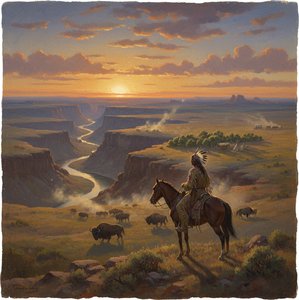
Henry Farny: Romantic Visions of the American West & Indigenous Life
Explore the evocative paintings of Henry Farny, renowned for his romantic realism & depictions of Native American life in the 19th-century West. Discover his legacy and key artworks at ArtsDot.
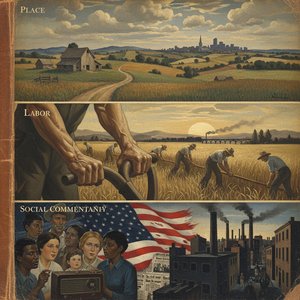
American Regionalism: A Crucible of Identity – Exploring Themes of Place, Labor & Social Commentary
Explore American Regionalism's powerful depiction of the American heartland during the Great Depression. Discover Grant Wood, Thomas Hart Benton & more. Expert analysis & high-quality art reproductions at ArtsDot.