

 Preview
 Send
Send Share
Share
 Details

 Download
 Similars
 X-Ray
X-Ray Diaporama
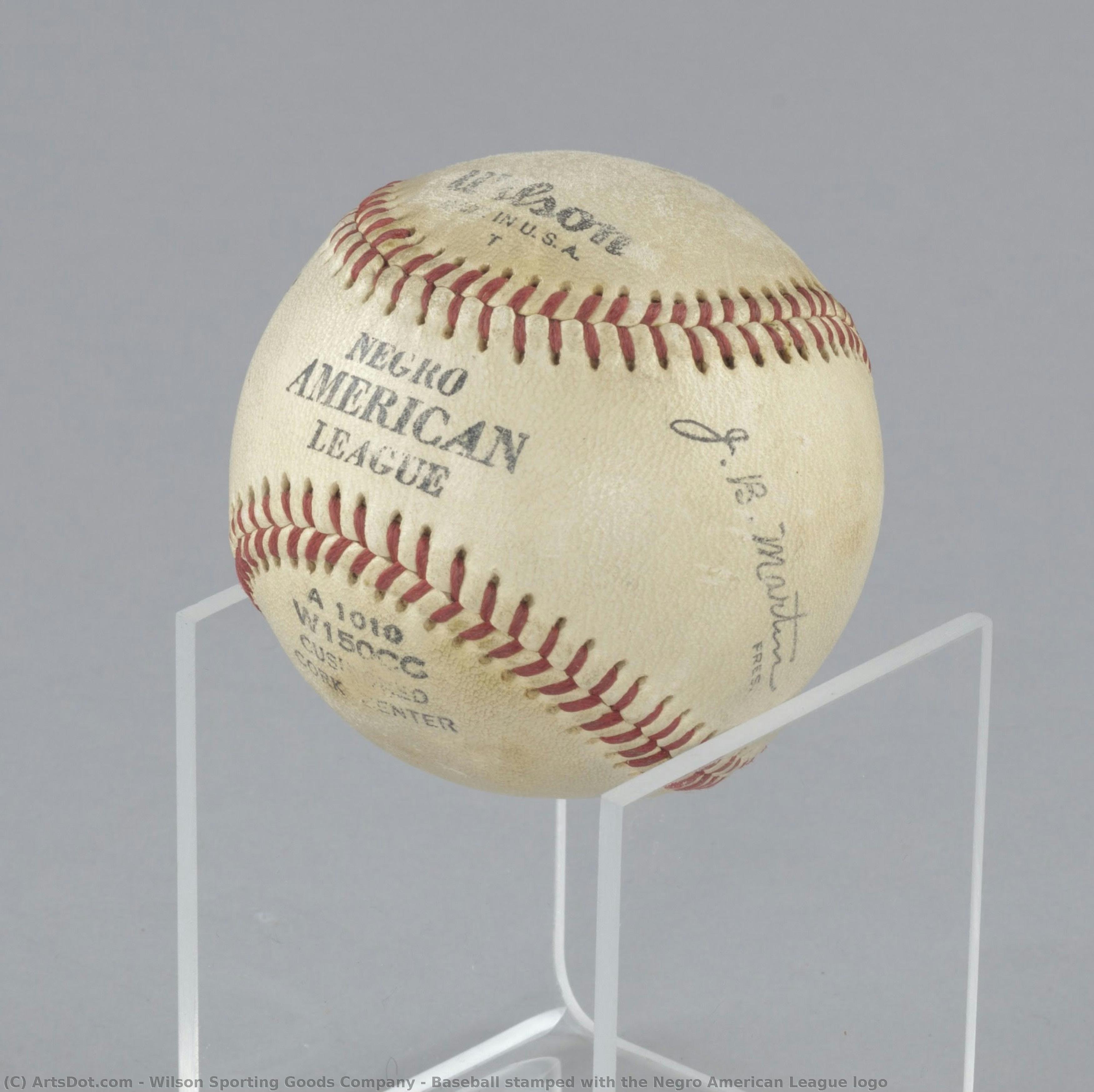
Baseball stamped with the Negro American League logo


 Read More
Hand Made Oil Reproduction
Hand-painted oil on canvas in your size and frame, made to order by our artists. ( Buy Print Buy Image)




































Pick from our preset sizes that match the artwork's original proportions.

You may enter your own dimensions to fit a specific frame or space. If your selected size does not match the original image's proportions, we will either crop the artwork or extend the painting with additional hand-painted elements. A digital mockup will be sent for your approval before production begins.
Please note that the on-screen preview does not reflect the actual cropping or extension. Only the mockup will accurately show the final composition.
While custom sizes are available, we recommend selecting a dimension from the predefined list to preserve the original proportions.
After order, ArtsDot.com team will email client for instructions and provide a mockup preview
Worldwide Delivery () in 3/4 weeks instead of standard 5 weeks. (3 September). No compromise on quality.

Free Worldwide Express Shipping

High-Quality Linen Canvas

Full Shipping Insurance

Customs Tax Refund Guarantee

True Color Matching Guarantee

60-Day Return Policy (Defects Only)

100% Money-Back Guarantee

Bulk Discount Offer
 Glass option is only available in size under 110 CM

Baseball stamped with the Negro American League logo
Reproduction Medium
Reproduction Size
-


Total Price
$ 263
Related Artworks


Artist Biography
The Enigmatic World of Agnes Martin
Agnes Martin, a name synonymous with subtle power and quiet contemplation in the realm of abstract art, was born in 1912 in Macklin, Saskatchewan, Canada. Her early life, marked by a nomadic existence across farms and small towns, instilled within her a profound connection to the vastness of the prairie landscape – a theme that would resonate throughout her artistic career. Though she later pursued formal education at Teachers College in Saskatoon and the Art Institute of Chicago, it was not until her move to New York City in 1937 that Martin truly began to forge her path as an artist. The bustling energy of the city initially drew her towards representational painting, but a growing dissatisfaction with its perceived superficiality led her on a journey of self-discovery and artistic experimentation. This period was characterized by a search for something beyond the visible world, a yearning for purity and essential form that would ultimately define her unique aesthetic. She served in World War II, then returned to teaching before fully committing herself to painting in the 1950s.From Representation to Radical Simplicity
Martin’s artistic evolution was gradual yet decisive. Initially influenced by Surrealism and Abstract Expressionism – movements that dominated the New York art scene of the time – she began to move away from gestural abstraction towards a more restrained and minimalist approach. By the late 1950s, her canvases were increasingly characterized by delicate grids, pale colors, and subtle variations in texture. This shift wasn’t merely stylistic; it reflected a deeper philosophical inquiry into the nature of perception, emotion, and spirituality. Martin sought to create paintings that weren't *about* anything but rather *were* something – objects of pure visual experience intended to evoke feelings of peace, serenity, and transcendence. She famously rejected categorization, resisting labels like “Minimalism” despite the apparent similarities in her work to other artists associated with the movement. Her grids were not mathematical constructions but hand-drawn explorations of subtle imperfections and organic rhythms. The faint lines, often barely visible, demanded a slow, meditative gaze from the viewer, inviting them into a space of quiet contemplation.The New Mexico Years: A Sanctuary for Creativity
In 1967, Martin made a pivotal decision to leave New York City and relocate to Taos, New Mexico. This move marked a turning point in her life and work. The stark beauty and solitude of the desert landscape provided her with the ideal environment to pursue her artistic vision without distraction. She lived a reclusive existence, embracing simplicity and self-sufficiency. Her studio became a sanctuary where she could dedicate herself entirely to painting. It was during this period that Martin developed her signature style – large-scale canvases covered in pale grids of horizontal and vertical lines. These paintings, often described as “atmospheric” or “ethereal,” were characterized by their delicate color palettes, subtle textures, and almost imperceptible variations in line weight. She worked on a monumental scale, creating immersive environments that enveloped the viewer in a sense of calm and tranquility. The New Mexico light, with its intense clarity and vastness, undoubtedly influenced her use of color and form.Influences and Philosophical Underpinnings
While Martin resisted direct categorization, several key influences shaped her artistic development. Eastern philosophy, particularly Taoism and Zen Buddhism, played a significant role in her thinking. She was drawn to the emphasis on simplicity, emptiness, and the search for inner peace. The writings of writers like Emily Dickinson and Henry David Thoreau also resonated with her, reflecting her own desire for solitude and self-reliance.- Taoism: The concept of *Wu Wei* – effortless action or non-doing – informed her approach to painting, emphasizing the importance of allowing forms to emerge organically rather than imposing a preconceived structure.
- Zen Buddhism: The focus on meditation and direct experience influenced her desire to create paintings that were not representational but rather evoked feelings through pure visual means.
- Emily Dickinson’s poetry: Dickinson's exploration of inner life, solitude, and the power of suggestion resonated with Martin’s own artistic concerns.
- Henry David Thoreau’s *Walden*: The book’s celebration of simplicity and self-sufficiency mirrored Martin’s own lifestyle and philosophical outlook.
Legacy and Historical Significance
Agnes Martin’s impact on contemporary art is profound and enduring. Though initially overlooked by the mainstream art world, her work gained increasing recognition in the 1990s and continues to inspire artists and viewers alike. She challenged conventional notions of abstraction, rejecting grand gestures and dramatic expression in favor of subtle nuance and quiet contemplation. Her paintings are not about spectacle but rather about creating a space for inner experience. Martin’s emphasis on simplicity, spirituality, and the search for essential form resonated with a growing desire for authenticity and meaning in an increasingly complex world. She received numerous awards and accolades throughout her career, including a lifetime achievement award from the Women's Art Caucus. Her work is now held in major museums around the globe, cementing her status as one of the most important abstract artists of the 20th century. She demonstrated that profound artistic power could reside not in bold statements but in delicate whispers, leaving behind a legacy of quiet beauty and enduring contemplation. She died in Taos, New Mexico, in 2004, at the age of 92, having lived a life dedicated to her art and her unwavering pursuit of inner peace.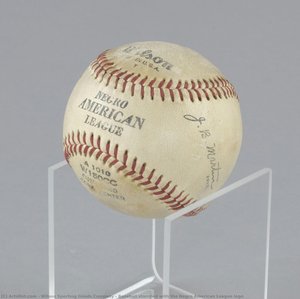
Related Articles

Grant Wood & American Regionalism: Identity, Myth & the Rural Landscape
Explore the world of Grant Wood & American Regionalism with ArtsDot. Discover the symbolism behind 'American Gothic', recurring themes, and the movement's lasting impact on art history. High-quality reproductions available.
American Realism's Defining Works: 10 Masterpieces for Your Home
Explore 10 defining American Realism masterpieces – Hopper, Homer & more. Discover the stories behind these iconic paintings and bring timeless art to your home with ArtsDot's museum-quality reproductions. Explore the full collection online.

American Regionalism: A Crucible of Identity – Exploring Themes of Place, Labor & Social Commentary
Explore American Regionalism's powerful depiction of the American heartland during the Great Depression. Discover Grant Wood, Thomas Hart Benton & more. Expert analysis & high-quality art reproductions at ArtsDot.
Echoes of Place: Regionalism & American Identity in Interwar Art
Explore the rise of American Regionalism in interwar art! Discover Grant Wood, Thomas Hart Benton & the movement's impact on American identity. Expert analysis & historical context.

Richard Wilson: Deconstructing Landscape & Memory in Contemporary Installation Art
Explore Richard Wilson's groundbreaking landscape paintings & his enduring influence on contemporary installation art. Discover investment opportunities, provenance insights & the materiality of memory in this expert analysis.


