 Preview
 Send
Send Share
Share
 Details

 Download
 Similars
 X-Ray
X-Ray Diaporama
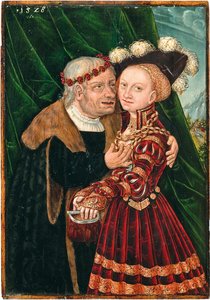
Lot and his Daughters
 Oil On Panel
- Renaissance
 Renaissance
 43.0 x 57.0 cm
 The Art Museum RIGA BOURSE
 Read More
Hand Made Oil Reproduction
Hand-painted oil on canvas in your size and frame, made to order by our artists. ( Buy Print Buy Image)




P118B $10

P118H $10

P118W $10

P438Z $10

P508JH $12

P508YH $12

P805H $10

P805Z $10

P919BZ $10

P919G $10

P919XJ $10

P959ZH $10

P968JZ $12

W106C $8

W218G $10

W218JH $8

W218Y $10

W307PJ $10

W316G $10

W316PJ $8

W316Y $10

W398PJ $8

W4111J $10

W500HY $15

W500JH $15

W692G $12

W849H $8

W940BG $15

W953PJ $8




Pick from our preset sizes that match the artwork's original proportions.

You may enter your own dimensions to fit a specific frame or space. If your selected size does not match the original image's proportions, we will either crop the artwork or extend the painting with additional hand-painted elements. A digital mockup will be sent for your approval before production begins.
Please note that the on-screen preview does not reflect the actual cropping or extension. Only the mockup will accurately show the final composition.
While custom sizes are available, we recommend selecting a dimension from the predefined list to preserve the original proportions.
After order, ArtsDot.com team will email client for instructions and provide a mockup preview
Worldwide Delivery () in 3/4 weeks instead of standard 5 weeks. (23 August). No compromise on quality.

Free Worldwide Express Shipping

High-Quality Linen Canvas

Full Shipping Insurance

Customs Tax Refund Guarantee

True Color Matching Guarantee

60-Day Return Policy (Defects Only)

100% Money-Back Guarantee

Bulk Discount Offer
 Glass option is only available in size under 110 CM

Lot and his Daughters
Reproduction Medium
Reproduction Size
-


Total Price
$ 313
Artwork Description
A Renaissance Drama in Color and Shadow
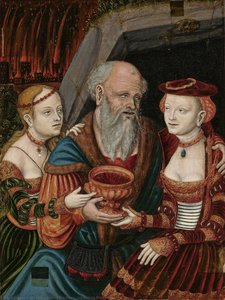
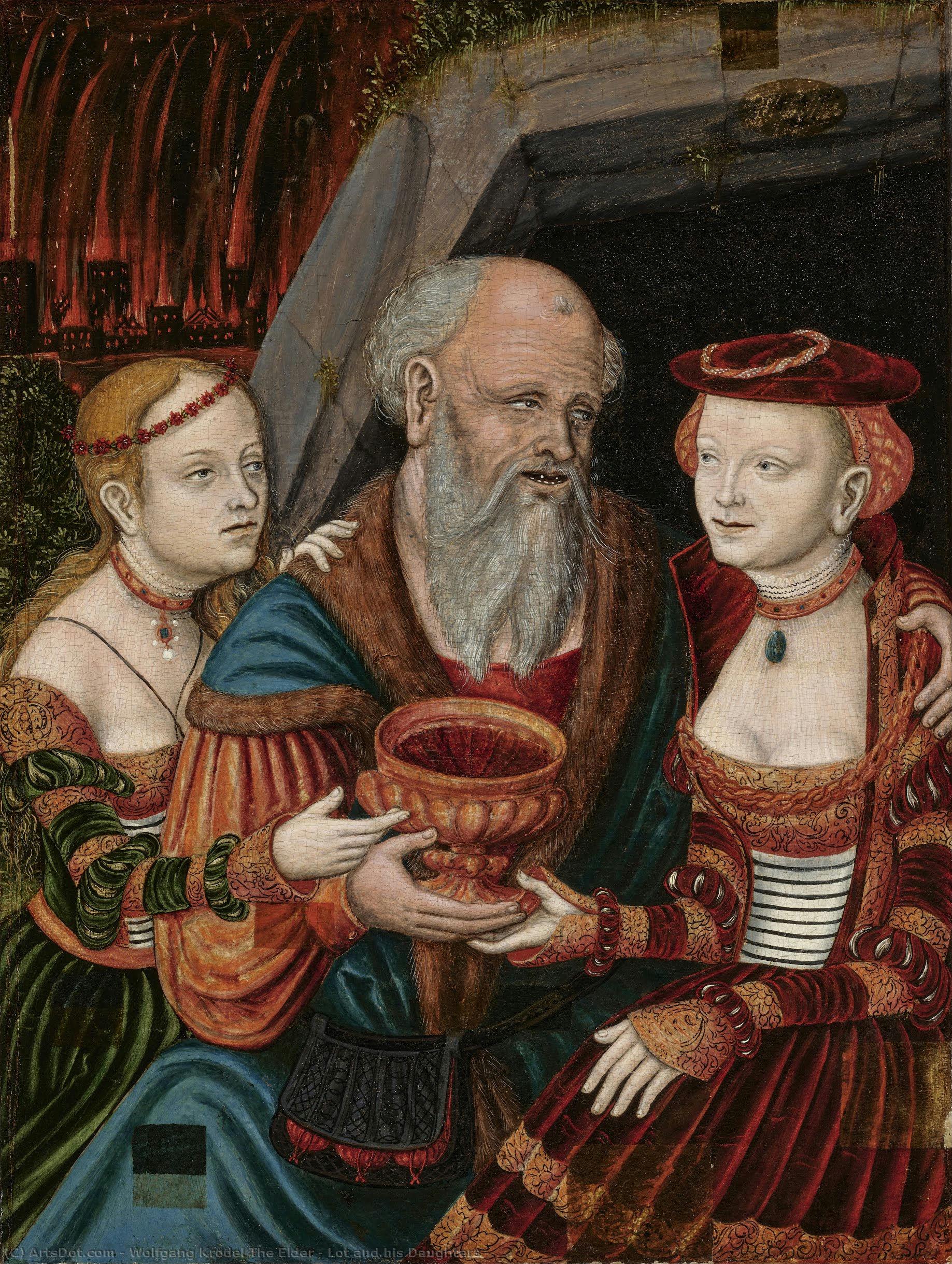
In the evocative masterpiece Lot and his Daughters, the German painter Wolfgang Krodel the Elder invites viewers into a scene of profound psychological depth and biblical intensity. The composition is masterfully balanced, utilizing a rhythmic arrangement of figures that draws the eye toward the expressive faces at the heart of the narrative. On one side, the dark, cavernous entrance provides a somber anchor to the work, while on the other, the distant city walls are engulfed in flickering flames, signaling the destruction of Sodom. This juxtaposition of intimate human interaction against a backdrop of catastrophic fire creates a tension that is both unsettling and mesmerizing. Krodel captures a moment of heavy emotion, where the figures are united not merely by their physical proximity but by an intense, shared inner activity that transcends the canvas.
The central drama unfolds through the character of Lot, depicted as a thickset, elderly man whose disheveled state suggests the weight of recent trauma and the haze of intoxication. As he embraces his eldest daughter, he reaches for a golden wine goblet, a gesture that serves as the focal point of the painting's movement. This interaction is rendered with a fascinating blend of sophisticated psychological insight and a certain charming, almost naive expressiveness. The artist’s ability to balance the tragic weight of the subject matter with a palette of brilliant, light colors ensures that the painting remains visually captivating, offering a striking contrast between the grim reality of the biblical tale and the luminous beauty of the execution.
Mastery of Technique and the Cranach Influence
Rooted in the traditions of the Early Netherlandish and German Renaissance, this work showcases Krodel’s exceptional command over the oil painting medium. Utilizing the technique of layering thin, translucent glazes, the artist achieves a remarkable luminosity that makes the fabrics appear to glow from within. The textures are rendered with meticulous precision; one can almost feel the heavy weight of the draped garments and the intricate ornamentation of the clothing. This attention to material richness is a hallmark of the Cranach school, an influence clearly visible in the sharp, defined contours and the rhythmic flow of the folds in the characters' attire.
The lighting within the piece is nothing short of theatrical. An unseen light source, positioned above and slightly to the left, casts dramatic shadows that sculpt the forms of the figures, lending them a palpable three-dimensionality despite the somewhat flattened perspective characteristic of the period. This interplay of light and shadow—chiaroscuro—not only emphasizes the physical volume of the characters but also heightens the emotional stakes of the scene. For collectors and interior designers, this painting offers a sophisticated interplay of tone and texture, making it a commanding centerpiece that brings both historical gravity and a vibrant, energetic presence to any curated space.
Symbolism and Lasting Emotional Resonance
Beyond its technical brilliance, Lot and his Daughters is a profound meditation on survival, lineage, and the complexities of human nature. The golden goblet, while a symbol of wealth and status, also represents the desperate means of continuity in the wake of destruction. The flames in the background serve as a memento mori, a reminder of the fragility of civilization and the inescapable passage of time. Through the lens of Renaissance humanism, Krodel explores the raw, unvarnished aspects of the human condition—vulnerability, desperation, and the instinct to preserve one's legacy.
For those seeking to adorn a collection with art that speaks to the soul, this reproduction offers more than mere decoration; it provides a window into a pivotal era of art history. The painting’s ability to delight the eye with its brilliant colors while simultaneously provoking deep thought makes it an enduring piece of fine art. Whether placed in a formal gallery setting or as a conversation starter in a refined living space, the work continues to resonate with its powerful contrasts, its rhythmic beauty, and its hauntingly beautiful depiction of a moment frozen in history.
Related Artworks
Artist Biography
The Legacy of Wolfgang Krodel the Elder
In the vibrant landscape of the German Renaissance, few names evoke the intricate textures and dramatic flair of the sixteenth century quite like Wolfgang Krodel the Elder. Born around 1500 in the historic town of Schneeberg, Germany, Krodel emerged from a lineage of creative minds, most notably his brother Martin Krodel the Elder. His life and career, spanning the active years between 1528 and 1561, were deeply embedded in the cultural shifts of Saxony, a period marked by profound religious and artistic transformations. As a practitioner within the prestigious School of Cranach, Krodel did not merely mimic his predecessors but rather breathed new life into the established aesthetic of the era.
The artistry of Krodel is defined by a striking command of color and an ability to evoke deep emotion through the human form. His work serves as a window into the Renaissance spirit, where the boundaries between historical narrative and personal portraiture often blurred. To understand his development, one must look toward the profound influence of Lucas Cranach the Elder. From this master, Krodel inherited a sophisticated approach to line and composition, yet he infused his canvases with a unique vitality. His use of bold, saturated pigments and expressive facial features allowed him to capture not just the likeness of his subjects, but their very essence, making his portraits feel remarkably immediate even centuries later.
Mastery of Portraiture and Historical Narrative
Krodel’s repertoire was a testament to his versatility as a storyteller. He moved seamlessly between the intimate confines of portraiture and the grand, sweeping stages of historical and mythological scenes. In his portraits, he demonstrated an extraordinary skill for capturing the dignity and social standing of prominent figures, utilizing fine details in clothing and accessories to signal status and character. These works are often characterized by:
- Emotive Depth: A focus on the psychological presence of the sitter through subtle facial expressions.
- Chromatic Intensity: The use of rich, bold colors that command the viewer's attention and create a sense of permanence.
- Narrative Precision: In his historical works, an ability to weave complex events into a cohesive visual language.
Beyond the individual, Krodel’s historical paintings acted as vital cultural documents. By depicting significant events and mythological legends, he contributed to the broader European tradition of using art to educate and inspire. His ability to blend the stylistic elegance of the Cranach school with a more visceral, emotive energy helped ensure that his works remained relevant to the changing tastes of the mid-16th century.
Historical Significance and Enduring Influence
Though Wolfgang Krodel the Elder passed away in 1563, his contribution to the German art canon remains an essential chapter in the history of the Old Masters. His ability to navigate the stylistic nuances of the Cranach school while carving out a distinct identity allowed him to leave a lasting mark on the artistic landscape of Saxony and beyond. Today, his works serve as vital touchstones for scholars studying the evolution of Renaissance portraiture and the spread of German stylistic influences across Europe.
The preservation of his legacy is found in esteemed institutions such as the Museum Heinz Kisters Collection in Kreuzlingen, Switzerland. Within these halls, his paintings continue to engage modern audiences, offering a profound connection to the craftsmanship and cultural fervor of the sixteenth century. Through his mastery of color, his dedication to historical truth, and his deep emotional resonance, Krodel remains a celebrated figure whose brushstrokes continue to echo through the corridors of art history.
wolfgang krodel the elder
1563 , Germany
Quick Facts
- Artistic Movement Or Style: Cranach School”
- Artists Or Movements Influenced By This Artist: ['Lucas Cranach the Elder']
- Artists Who Influenced This Artist: ['Lucas Cranach the Elder']
- Date Of Birth: c. 1500
- Date Of Death: 1563
- Full Name: Wolfgang Krodel the Elder”
- Nationality: German
- Notable Artworks:
- The Holy Kinship
- Portrait of a Man
- Place Of Birth: Schneeberg, Germany
Related Articles
Early Netherlandish Masters: 10 Paintings That Revolutionized Art & Decor
Journey into the world of Early Netherlandish painting! Explore 10 masterpieces by Jan van Eyck, Rogier van der Weyden & more. Discover stunning detail, symbolism & Renaissance art for your home decor. Find museum-quality reproductions on ArtsDot.com
Early Netherlandish Masters: 10 Paintings That Revolutionized Art & Decor
Journey into the Early Netherlandish Renaissance! Explore 10 iconic paintings by Jan van Eyck, Rogier van der Weyden & more. Discover stunning detail, symbolism, and oil painting techniques. Find museum-quality art reproductions for your home at ArtsDot.com.
Illuminating Realism: A Comprehensive Exploration of the Early Netherlandish Renaissance Movement
Explore the captivating world of Early Netherlandish painting! Discover Jan van Eyck & other Flemish masters, their revolutionary techniques, hidden symbolism, and lasting legacy. A comprehensive guide for art enthusiasts.
Jan Gossart: Bridging Netherlandish Realism & Renaissance Humanism – A Comprehensive Exploration
Explore the captivating world of Jan Gossart, a pivotal figure bridging Netherlandish realism & Renaissance humanism. Discover his masterpieces, patronage, and lasting influence – an essential guide for discerning art collectors.
Illuminating Realism: Early Netherlandish Painting (15th-16th Centuries)
Explore the captivating world of Early Netherlandish painting! Discover Jan van Eyck, Hans Memling & more. Uncover symbolism, techniques & the legacy of these Flemish masters. A comprehensive guide for art enthusiasts.