

 Preview
 Send
Send Share
Share
 Details

 Download
 Similars
 X-Ray
X-Ray Diaporama
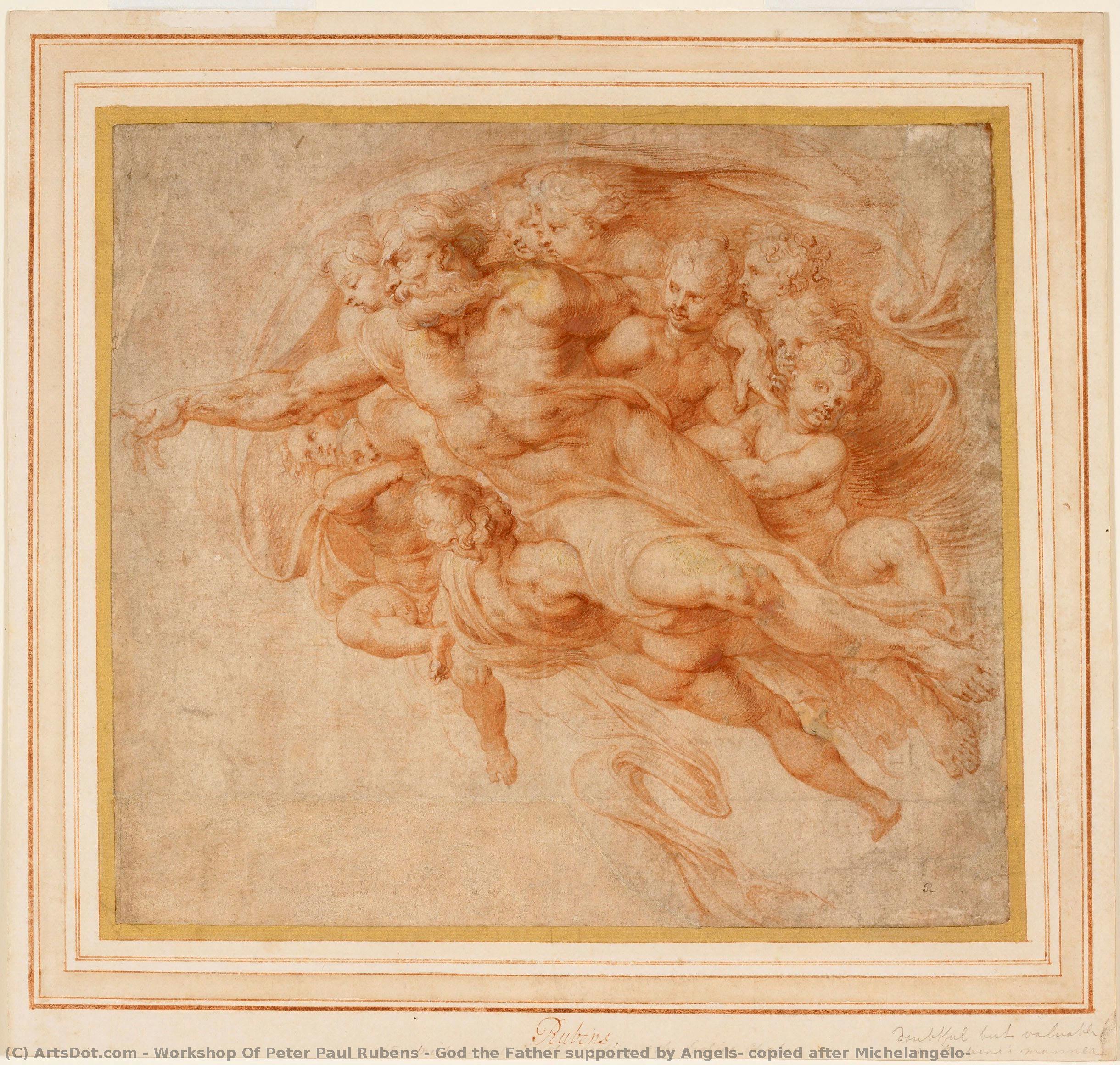
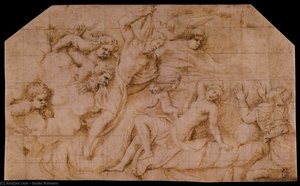
God the Father supported by Angels, copied after Michelangelo
 Oil On Paper
- Baroque
 1602
1602- Renaissance
 25.0 x 28.0 cm
 National Museums Liverpool
 Read More
Purchase a high-resolution, enhanced digital image, far superior to the online preview.
Each file is meticulously prepared by our in-house specialists using advanced tools and expert manual retouching. We ensure every image has exceptional clarity, precise color accuracy, and fine detail.
The final file is delivered via email within 72 hours, optimized for immediate use in professional, editorial, and print environments. This is the same quality trusted by top-tier design studios, publishers, and galleries.
Digital Image
Download a high-resolution file for personal display, printing, and creative projects. ( Buy Print Buy Hand Made Painting)
Included in Every Digital Image Order
Expert Digital Delivery, Guaranteed
When you choose ArtsDot.com, you're not just getting an image - you're receiving a professionally enhanced digital artwork, crafted with precision and backed by a satisfaction guarantee. Here's everything that comes with your order, automatically:

Fast Email Delivery
Your high-resolution digital image file will be emailed to you within 72 hours of ordering - ready for immediate use.

AI-Enhanced Digital File
Your artwork is professionally optimized using advanced AI tools and manual editing, ensuring maximum detail, clarity, and color accuracy.

Free Lifetime Re-Delivery
Accidentally deleted or lost your file? No worries - we'll resend it to you anytime, free of charge.

No Import Fees - Ever
Enjoy your artwork instantly with zero customs, duties, or delivery fees - digital downloads are always tax-free.

Color Accuracy Guarantee
We ensure your digital image reflects the original colors as closely as possible using professional tools and color management.

60-Day Satisfaction Guarantee
If you're not satisfied with your digital image, we'll revise it or refund 100% within 60 days - no questions asked.

100% Money-Back Guarantee
Not satisfied? Get a full refund within 60 days of receiving your digital file - no questions asked.

Bulk Order Discounts
Buy 3 images, save 10% - Buy 5, save 15% - Buy 10+, save 20%. Great for creative projects, galleries, and agencies.
Collectible Description
A Divine Embrace: Echoes of Michelangelo in Rubens' Workshop
To stand before this depiction of "God the Father supported by Angels" is to be enveloped in an atmosphere of sublime power and celestial grace. This exquisite oil on paper, a masterful copy executed by the renowned workshop of Peter Paul Rubens, transports us directly into the heart of the High Renaissance spirit, filtered through the vibrant dynamism of Flemish Baroque artistry. While it pays homage to Michelangelo's original vision from 1602, the hand that rendered this piece breathes with the characteristic energy and rich texture associated with Rubens’ circle. It is a work that does not merely hang on a wall; it seems to emanate with divine presence.
Mastery of Light and Form
The technical brilliance evident in this artwork is breathtaking. The handling of light, or chiaroscuro, is particularly noteworthy. Rubens' workshop employed the oil medium to achieve subtle gradations of tone, allowing the central figure of God the Father to emerge from a dramatic interplay of shadow and illumination. This technique gives the composition an almost palpable depth, making the divine form feel monumental yet intimately accessible. Observe how the angels surrounding Him are rendered; their drapery flows with an elegant weight, capturing movement even in repose. The very surface seems alive, inviting close contemplation of every brushstroke.
Symbolism and Celestial Support
The composition itself is rich with theological meaning. The presence of multiple angels supporting the divine figure is a profound visual metaphor for divine protection, guidance, and the weight of heavenly mandate. They are not mere decorative elements; they are active participants in upholding a cosmic order. Furthermore, the inclusion of secondary figures—one subtly placed near the top left and another towards the bottom right—adds layers to the narrative, suggesting an unfolding drama beyond the central tableau. These supporting characters anchor the scene in a sense of continuous, eternal action.
A Touchstone of Artistic History
This piece serves as a fascinating historical dialogue across centuries. By replicating Michelangelo’s 1602 vision, Rubens' workshop paid deep respect to one of history's greatest masters while simultaneously imprinting their own Baroque flair upon it. This connection makes the artwork highly resonant for collectors and designers alike; it speaks to an enduring tradition of artistic excellence. Owning a reproduction allows one to bring home not just a painting, but a tangible piece of art historical conversation—a dialogue between Renaissance idealism and Baroque exuberance.
Bringing Sacred Drama into Modern Spaces
For the discerning collector or interior designer, this artwork offers unparalleled dramatic impact. Its rich tonality and palpable sense of movement make it an extraordinary focal point for any grand hall, library, or gallery setting. The emotional resonance is immediate; one feels uplifted by its grandeur yet calmed by its meticulous execution. It promises to elevate a space from merely decorated to truly inspired, wrapping the room in an aura of timeless, sacred drama.
Related Artworks

Artist Biography
The Master of Flemish Baroque: Peter Paul Rubens and His Workshop
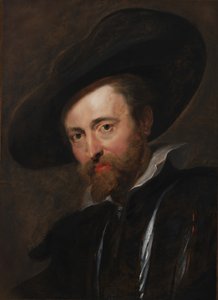
Sir Peter Paul Rubens, a name synonymous with the exuberant dynamism of the Flemish Baroque, was far more than just a painter; he was a diplomat, a scholar, and an astute businessman who built one of the most successful artistic enterprises in European history. Born in Siegen, Westphalia, in 1577 to Jan Rubens and Maria Pypelincks, his early life was marked by displacement. His parents, fleeing religious persecution, returned to Antwerp when Peter Paul was around ten years old, a city that would become the crucible of his artistic development.
Rubens’s training began in the workshops of Tobias Verhaecht and Adam van Noort, but it was under Otto van Veen that he truly flourished. Van Veen instilled in him not only technical skill but also a deep appreciation for classical literature and humanist ideals—a foundation that would permeate his entire oeuvre. By 1598, Rubens had established himself as an independent master within the Guild of Saint Luke, signaling the beginning of a prolific career.
A Journey Through Italy and the Shaping of a Style
The years 1600 to 1608 saw Rubens embark on a transformative journey to Italy. Serving the Duke of Mantua, he immersed himself in the art of the Renaissance masters—Michelangelo, Raphael, Titian—studying their compositions, techniques, and use of color. This exposure profoundly shaped his artistic vision. He absorbed the Italian emphasis on movement, drama, and anatomical accuracy, but rather than simply imitating these styles, Rubens synthesized them with a distinctly Flemish sensibility. His unique approach emphasized rich, saturated colors, dynamic brushwork, and a sensuous portrayal of the human form.
Upon his return to Antwerp in 1608, Rubens quickly rose to prominence as a court painter for Archduke Albert and Isabella. This period marked the beginning of an extraordinary output, characterized by large-scale altarpieces, portraits, and history paintings that captivated patrons across Europe. Works like *The Raising of the Cross* and *The Descent from the Cross*, commissioned for Antwerp Cathedral, demonstrated his mastery of composition and narrative power.
The Workshop: A Hub of Artistic Production
Rubens was not a solitary genius working in isolation; he was the head of a highly organized and remarkably efficient workshop. This wasn’t unusual for the time—artists routinely relied on assistants to meet the demands of their commissions. However, Rubens's workshop was exceptional in its scale and sophistication. He employed numerous painters, each specializing in different aspects of production: some focused on landscapes, others on figures, still lifes, or drapery.
The process typically involved Rubens providing detailed designs—often preliminary sketches and oil studies—which his assistants would then execute. He maintained strict control over the quality of the work, often finishing key elements himself or overseeing the final stages of painting. This collaborative approach allowed him to fulfill a vast number of commissions while maintaining a consistent artistic style. The degree of collaboration varied; some works were entirely by Rubens’s hand, others involved significant input from his assistants, and still others were largely executed by them under his direction.
Themes and Techniques: A Celebration of Life and Sensuality
Rubens's subject matter was incredibly diverse. He painted religious scenes with dramatic intensity, mythological narratives filled with allegorical meaning, portraits that captured the personality and status of his sitters, and landscapes that celebrated the beauty of nature. However, a common thread running through all his work is a celebration of life, sensuality, and human emotion.
His technique was equally remarkable. He skillfully employed both wooden panels and canvas as supports, adapting his approach to suit the specific requirements of each commission. His use of color was masterful—rich, vibrant hues applied with dynamic brushwork that created a sense of movement and energy. He also experimented with different varnishes and glazing techniques to achieve luminous effects.
Legacy and Historical Significance
Peter Paul Rubens died in Antwerp in 1640, leaving behind an immense artistic legacy. His influence on the development of Baroque painting was profound, extending far beyond Flanders to impact artists across Europe. He not only revolutionized painting techniques but also elevated the status of the artist as a respected intellectual and diplomat.
His workshop continued to thrive after his death, disseminating his style through numerous copies and variations. Today, Rubens is celebrated as one of the greatest painters in history—a master of composition, color, and sensuality whose work continues to captivate and inspire audiences worldwide. His paintings are not merely depictions of scenes; they are embodiments of vitality, passion, and the sheer joy of life.
Quick Facts
- Artistic Movement Or Style: Baroque
- Date Of Birth: June 28, 1577
- Date Of Death: May 30, 1640
- Full Name: Peter Paul Rubens
- Nationality: Flemish
- Notable Artworks:
- The Raising of the Cross
- The Descent from the Cross
- Mercury and Argus
- The Garden of Love
- Place Of Birth: Siegen, Germany

