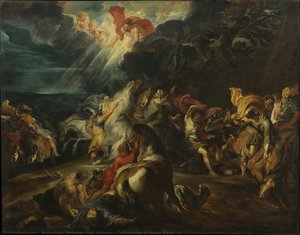
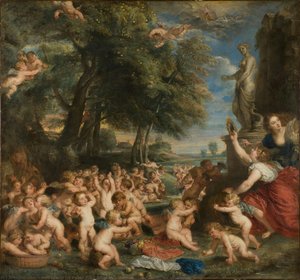
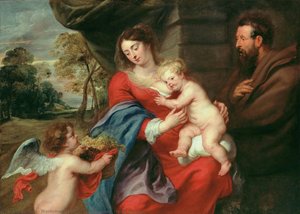
Preview
 Send
Send Share
Share
 Details

 Download
 Similars
 X-Ray
X-Ray Diaporama
Rubens


 Read More
Hand Made Oil Reproduction
Hand-painted oil on canvas in your size and frame, made to order by our artists. ( Buy Print Buy Image)




P118B $10

P118H $10

P118W $10

P438Z $10

P508JH $12

P508YH $12

P805H $10

P805Z $10

P919BZ $10

P919G $10

P919XJ $10

P959ZH $10

P968JZ $12

W106C $8

W218G $10

W218JH $8

W218Y $10

W307PJ $10

W316G $10

W316PJ $8

W316Y $10

W398PJ $8

W4111J $10

W500HY $15

W500JH $15

W692G $12

W849H $8

W940BG $15

W953PJ $8




Pick from our preset sizes that match the artwork's original proportions.

You may enter your own dimensions to fit a specific frame or space. If your selected size does not match the original image's proportions, we will either crop the artwork or extend the painting with additional hand-painted elements. A digital mockup will be sent for your approval before production begins.
Please note that the on-screen preview does not reflect the actual cropping or extension. Only the mockup will accurately show the final composition.
While custom sizes are available, we recommend selecting a dimension from the predefined list to preserve the original proportions.
After order, ArtsDot.com team will email client for instructions and provide a mockup preview
Worldwide Delivery () in 3/4 weeks instead of standard 5 weeks. (17 August). No compromise on quality.

Free Worldwide Express Shipping

High-Quality Linen Canvas

Full Shipping Insurance

Customs Tax Refund Guarantee

True Color Matching Guarantee

60-Day Return Policy (Defects Only)

100% Money-Back Guarantee

Bulk Discount Offer
 Glass option is only available in size under 110 CM

Rubens
Reproduction Medium
Reproduction Size
-


Total Price
$ 263
Related Artworks

Artist Biography
The Master of Flemish Baroque: Peter Paul Rubens and His Workshop
Sir Peter Paul Rubens, a name synonymous with the exuberant dynamism of the Flemish Baroque, was far more than just a painter; he was a diplomat, a scholar, and an astute businessman who built one of the most successful artistic enterprises in European history. Born in Siegen, Westphalia, in 1577 to Jan Rubens and Maria Pypelincks, his early life was marked by displacement. His parents, fleeing religious persecution, returned to Antwerp when Peter Paul was around ten years old, a city that would become the crucible of his artistic development.
Rubens’s training began in the workshops of Tobias Verhaecht and Adam van Noort, but it was under Otto van Veen that he truly flourished. Van Veen instilled in him not only technical skill but also a deep appreciation for classical literature and humanist ideals—a foundation that would permeate his entire oeuvre. By 1598, Rubens had established himself as an independent master within the Guild of Saint Luke, signaling the beginning of a prolific career.
A Journey Through Italy and the Shaping of a Style
The years 1600 to 1608 saw Rubens embark on a transformative journey to Italy. Serving the Duke of Mantua, he immersed himself in the art of the Renaissance masters—Michelangelo, Raphael, Titian—studying their compositions, techniques, and use of color. This exposure profoundly shaped his artistic vision. He absorbed the Italian emphasis on movement, drama, and anatomical accuracy, but rather than simply imitating these styles, Rubens synthesized them with a distinctly Flemish sensibility. His unique approach emphasized rich, saturated colors, dynamic brushwork, and a sensuous portrayal of the human form.
Upon his return to Antwerp in 1608, Rubens quickly rose to prominence as a court painter for Archduke Albert and Isabella. This period marked the beginning of an extraordinary output, characterized by large-scale altarpieces, portraits, and history paintings that captivated patrons across Europe. Works like *The Raising of the Cross* and *The Descent from the Cross*, commissioned for Antwerp Cathedral, demonstrated his mastery of composition and narrative power.
The Workshop: A Hub of Artistic Production
Rubens was not a solitary genius working in isolation; he was the head of a highly organized and remarkably efficient workshop. This wasn’t unusual for the time—artists routinely relied on assistants to meet the demands of their commissions. However, Rubens's workshop was exceptional in its scale and sophistication. He employed numerous painters, each specializing in different aspects of production: some focused on landscapes, others on figures, still lifes, or drapery.
The process typically involved Rubens providing detailed designs—often preliminary sketches and oil studies—which his assistants would then execute. He maintained strict control over the quality of the work, often finishing key elements himself or overseeing the final stages of painting. This collaborative approach allowed him to fulfill a vast number of commissions while maintaining a consistent artistic style. The degree of collaboration varied; some works were entirely by Rubens’s hand, others involved significant input from his assistants, and still others were largely executed by them under his direction.
Themes and Techniques: A Celebration of Life and Sensuality
Rubens's subject matter was incredibly diverse. He painted religious scenes with dramatic intensity, mythological narratives filled with allegorical meaning, portraits that captured the personality and status of his sitters, and landscapes that celebrated the beauty of nature. However, a common thread running through all his work is a celebration of life, sensuality, and human emotion.
His technique was equally remarkable. He skillfully employed both wooden panels and canvas as supports, adapting his approach to suit the specific requirements of each commission. His use of color was masterful—rich, vibrant hues applied with dynamic brushwork that created a sense of movement and energy. He also experimented with different varnishes and glazing techniques to achieve luminous effects.
Legacy and Historical Significance
Peter Paul Rubens died in Antwerp in 1640, leaving behind an immense artistic legacy. His influence on the development of Baroque painting was profound, extending far beyond Flanders to impact artists across Europe. He not only revolutionized painting techniques but also elevated the status of the artist as a respected intellectual and diplomat.
His workshop continued to thrive after his death, disseminating his style through numerous copies and variations. Today, Rubens is celebrated as one of the greatest painters in history—a master of composition, color, and sensuality whose work continues to captivate and inspire audiences worldwide. His paintings are not merely depictions of scenes; they are embodiments of vitality, passion, and the sheer joy of life.
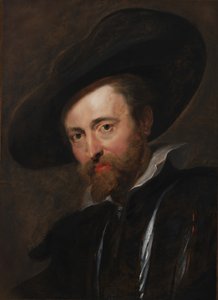
Quick Facts
- Artistic Movement Or Style: Baroque
- Date Of Birth: June 28, 1577
- Date Of Death: May 30, 1640
- Full Name: Peter Paul Rubens
- Nationality: Flemish
- Notable Artworks:
- The Raising of the Cross
- The Descent from the Cross
- Mercury and Argus
- The Garden of Love
- Place Of Birth: Siegen, Germany
Related Articles

Oil on Canvas: A Historical & Technical Exploration of a Timeless Artistic Medium
Explore the rich history & enduring techniques of oil painting on canvas. Discover the science behind its longevity, conservation practices, and contemporary relevance. Expert insights for art enthusiasts.

The Enduring Legacy of Oil on Canvas: Technique, History & Aesthetic Impact
Explore the rich history & techniques of oil painting – from Renaissance masters to Impressionism. Discover pigments, layering methods, and why this timeless medium endures. Expert insights for artists & art enthusiasts.

The Enduring Legacy of Oil on Canvas: Technique, History & Contemporary Practice
Explore the rich history & enduring techniques of oil painting on canvas. Discover the science behind its longevity, conservation practices, and contemporary relevance. Expert insights for art enthusiasts.

Decoding Baroque Grandeur: A Guide to the Drama and Emotion of 17th-Century Art
Explore the breathtaking drama of 17th-century Baroque art. Our expert guide decodes the use of chiaroscuro, emotional intensity, and historical grandeur to help you appreciate and curate timeless masterpieces for your collection.
Oil on Canvas Masters: 10 Paintings That Redefined Art History |
Journey through art history with our guide to 10 legendary oil on canvas masterpieces! Explore iconic works by Van Gogh, Monet & Rembrandt. Find museum-quality reproductions and elevate your home decor at . Discover all masterpieces online.