 Preview
 Send
Send Share
Share
 Details

 Download
 Similars
 X-Ray
X-Ray Diaporama
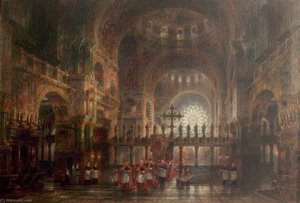
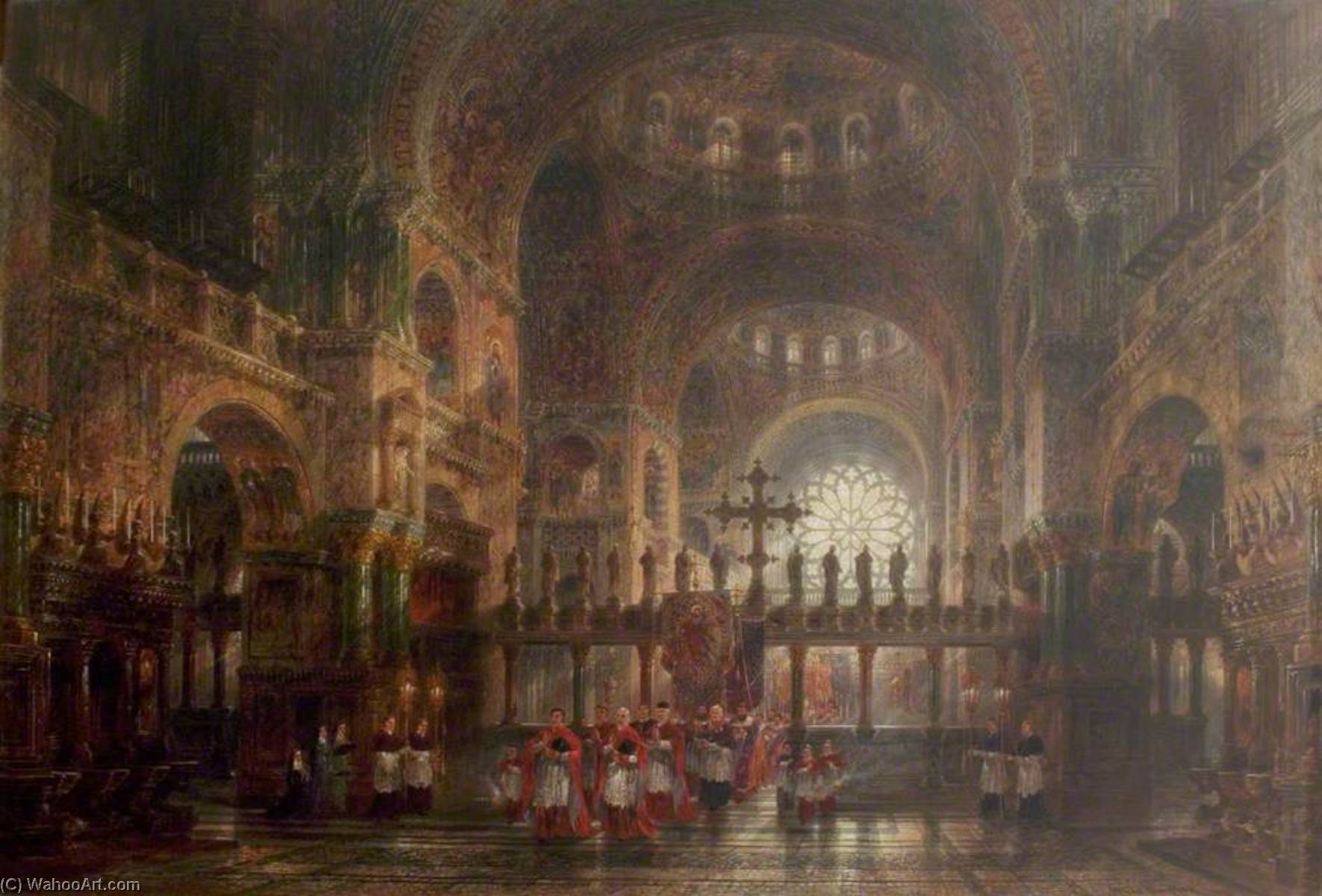
Interior of St Mark's Basilica, Venice
 1877
1877 110.0 x 161.0 cm
 Nottingham Castle Museum And Art Gallery
 Read More
Giclée / Art Print
Museum-quality giclée or canvas print with fast production and flexible finish options. ( Buy Hand Made Painting Buy Image)




































Pick from our preset sizes that match the artwork's original proportions.

You may enter your own dimensions to fit a specific frame or space. If your selected size does not match the original image's proportions, we will either crop the artwork or extend the image with a mirrored or solid-fill edge. A digital mockup will be sent for your approval before production begins.
Please note that the on-screen preview does not reflect the actual cropping or extension. Only the mockup will accurately show the final composition.
While custom sizes are available, we recommend selecting a dimension from the predefined list to preserve the original proportions.
Worldwide Delivery () in 2 weeks instead of standard 4/5 weeks. (27 August)

Free Worldwide Express Shipping

High-Quality Linen Canvas

Full Shipping Insurance

Customs Tax Refund Guarantee

True Color Matching Guarantee

60-Day Return Policy (Defects Only)

100% Money-Back Guarantee

Bulk Discount Offer
 Glass option is only available in size under 110 CM

Interior of St Mark's Basilica, Venice
Giclée / Art Print
Reproduction Size
-


Total Price
$ 63
Related Artworks






Artist Biography
A Vision of Sacred Grandeur: The Life and Legacy of Wyke Bayliss
In the heart of the Victorian era, a period defined by both industrial upheaval and a profound spiritual yearning, Sir Wyke Bayliss emerged as a master of light and stone. Born on October 21st, 1835, in Madeley, Shropshire, Bayliss carried within him a lineage of artistic and intellectual distinction. His very name, an unusual tribute to his mother’s maiden name, hinted at a life shaped by heritage. Raised under the watchful eye of his father, the Reverend John Cox Bayliss—a former railway engineer whose meticulous diaries later became the evocative Wheels of Providence—the young artist was nurtured through rigorous instruction in mathematical and military drawing. This early foundation in precision would later become the hallmark of his mature style, allowing him to capture the daunting scale and intricate ornamentation of Europe’s most hallowed spaces with unparalleled accuracy.
As the family moved from the Shropshire countryside to the burgeoning artistic epicenter of London, Bayliss found himself immersed in a landscape of creative revolution. His formal training at the Royal Academy and the School of Design placed him at the crossroads of tradition and innovation. During these formative years, he forged connections with the luminaries of the Pre-Raphaelite movement, counting legends such as John Millais, Frederic Leighton, and William Holman Hunt among his circle of friends. While Bayliss did not adopt the fervent, often dramatic romanticism characteristic of his peers, he subtly absorbed their devotion to minute detail and vibrant color. This synthesis allowed him to develop a unique aesthetic: one that respected the academic rigor of classical architecture while infusing it with a luminous, almost spiritual vitality.
The Architecture of Devotion
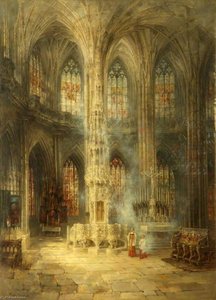
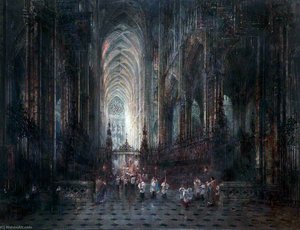
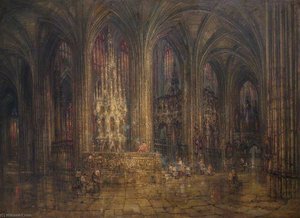
Bayliss’s true passion lay not in the human figure or the sweeping landscapes of the countryside, but in the silent, soaring majesty of cathedral interiors. He found an infinite charm in the complex geometries and shifting shadows of sacred architecture, dedicating much of his career to documenting the grandeur of British and European churches. To gaze upon a Bayliss painting is to experience the weight of history and the ethereal quality of divine light filtering through ancient stone. His work transcends mere architectural recording; he sought to capture the very atmosphere of sanctity, focusing on how light interacts with marble, stained glass, and vaulted ceilings.
His repertoire of subjects serves as a visual pilgrimage through the great monuments of Christendom, including:
- The Basilica of St Mark's, Venice: Where he masterfully rendered the shimmering mosaics and opulent textures of Italian splendor.
- St Mark's Basilica Interiors: Capturing the profound interplay of gold leaf and deep shadows.
- Abbaye aux Hommes, Caen: A testament to his ability to navigate the formidable Romanesque structures of France.
- Cathedral Interiors: A recurring theme that showcases his obsession with the rhythmic patterns of Gothic and classical design.
Academic Authority and Lasting Significance
Beyond the easel, Wyke Bayliss was a pillar of the Victorian art establishment. His reputation as an academic authority on art led him to significant leadership roles, most notably succeeding the legendary James McNeill Whistler as the President of the Royal Society of British Artists (RBA) in 1888. This period of his life marked his transition from a specialized painter to a respected statesman of the arts, guiding the society through the turbulent era following Whistler’s departure. His multifaceted intellect also found expression in literature; he was a published author and a poet, possessing a linguistic grace that mirrored the elegance of his paintings.
The passing of Bayliss in 1906 marked the end of an era, yet his contribution to the Victorian canon remains indelible. He bridged the gap between the meticulousness of the early nineteenth-century tradition and the atmospheric sensibilities of the late Victorian period. Through his unwavering dedication to the "infinite variety" of sacred spaces, he ensured that the architectural triumphs of his age were preserved not just as stone and mortar, but as living, breathing experiences of light and awe. Today, his works stand as vital windows into a lost world of reverence and monumental beauty.
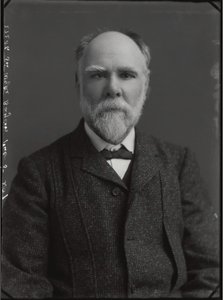
Wyke Bayliss
1835 - 1906
Quick Facts
- Artistic Movement Or Style: Victorian Painting
- Artists Or Movements Influenced By This Artist: ['Pre-Raphaelites']
- Artists Who Influenced This Artist:
- John Millais
- Frederic Leighton
- William Holman Hunt
- Edward Burne-Jones
- Date Of Birth: October 21, 1835
- Date Of Death: April 5, 1906
- Full Name: Wyke Bayliss
- Nationality: British
- Notable Artworks:
- The Enchanted Island
- Evening, Amiens Cathedral
- St Peter's Church
- Place Of Birth: Madeley, Shropshire