 Preview
 Send
Send Share
Share
 Details

 Download
 Similars
 X-Ray
X-Ray Diaporama
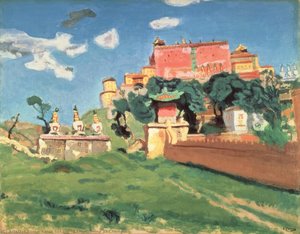
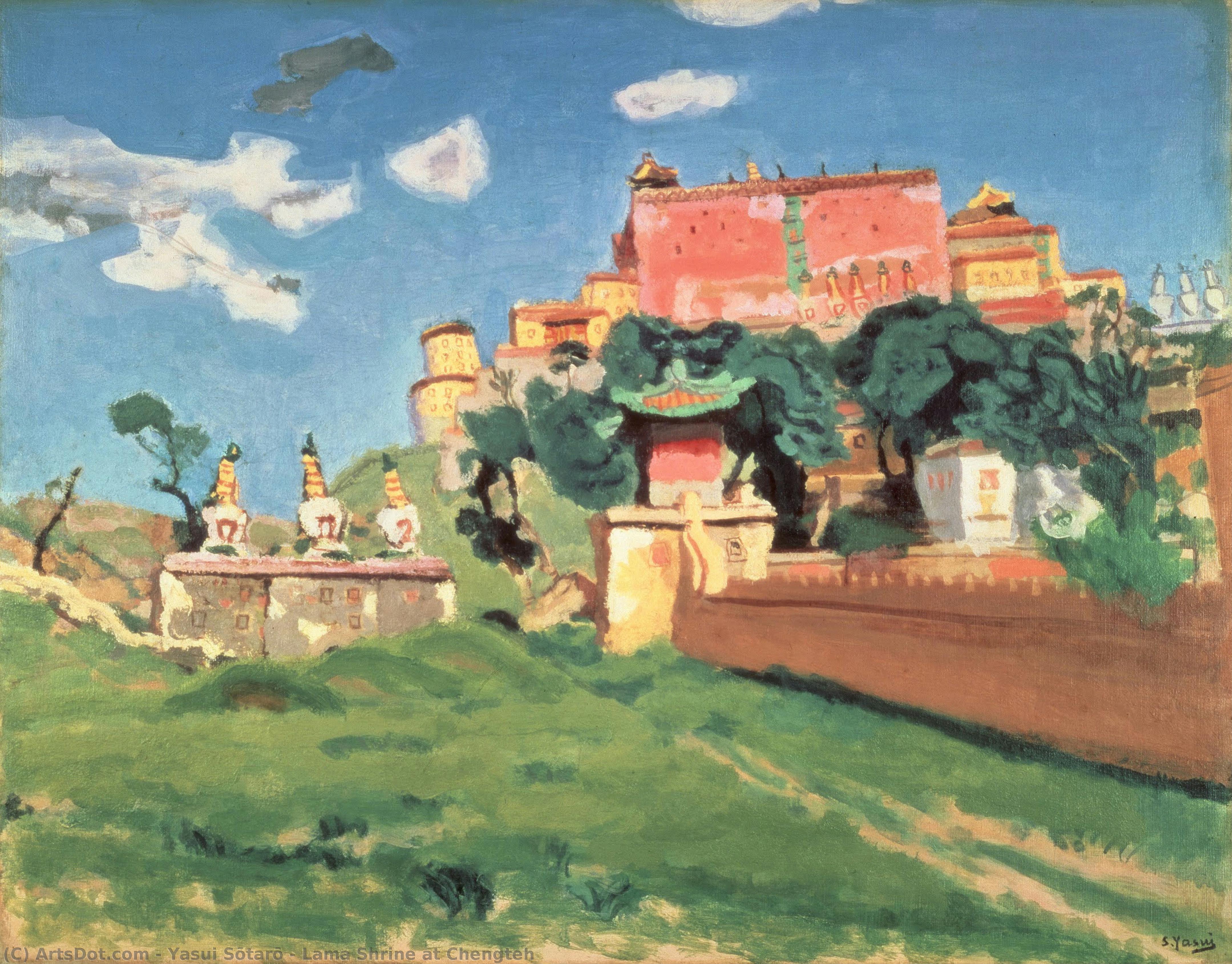
Lama Shrine at Chengteh


 Read More
Hand Made Oil Reproduction
Hand-painted oil on canvas in your size and frame, made to order by our artists. ( Buy Print Buy Image)




P118B $10

P118H $10

P118W $10

P438Z $10

P508JH $12

P508YH $12

P805H $10

P805Z $10

P919BZ $10

P919G $10

P919XJ $10

P959ZH $10

P968JZ $12

W106C $8

W218G $10

W218JH $8

W218Y $10

W307PJ $10

W316G $10

W316PJ $8

W316Y $10

W398PJ $8

W4111J $10

W500HY $15

W500JH $15

W692G $12

W849H $8

W940BG $15

W953PJ $8




Pick from our preset sizes that match the artwork's original proportions.

You may enter your own dimensions to fit a specific frame or space. If your selected size does not match the original image's proportions, we will either crop the artwork or extend the painting with additional hand-painted elements. A digital mockup will be sent for your approval before production begins.
Please note that the on-screen preview does not reflect the actual cropping or extension. Only the mockup will accurately show the final composition.
While custom sizes are available, we recommend selecting a dimension from the predefined list to preserve the original proportions.
After order, ArtsDot.com team will email client for instructions and provide a mockup preview
Worldwide Delivery () in 3/4 weeks instead of standard 5 weeks. (17 August). No compromise on quality.

Free Worldwide Express Shipping

High-Quality Linen Canvas

Full Shipping Insurance

Customs Tax Refund Guarantee

True Color Matching Guarantee

60-Day Return Policy (Defects Only)

100% Money-Back Guarantee

Bulk Discount Offer
 Glass option is only available in size under 110 CM

Lama Shrine at Chengteh
Reproduction Medium
Reproduction Size
-


Total Price
$ 263
Artwork Description
A Vision of Serenity: The Radiant Lama Shrine at Chengteh
In the vast, sweeping landscapes of northern China, there exists a place where history and spirituality converge under the watchful eye of the heavens. Lama Shrine at Chengteh, a masterpiece by the esteemed Japanese painter Yasui Sōtarō, captures this ethereal moment with breathtaking clarity. Created in 1938, the painting transports the viewer to the Hebei province, specifically to the city of Chengteh—a location once cherished as a summer retreat by emperors. The artwork depicts a Tibetan Buddhist temple perched majestically atop a sun-drenched hill, its vibrant architecture glowing against an expanse of crystalline blue sky. Through Sōtarō’s eyes, we do not merely see a landscape; we experience a moment of profound stillness and light.
The composition is a masterclass in balance and visual storytelling. At the heart of the piece stands the red castle-like structure of the shrine, acting as a powerful focal point that anchors the entire scene. This architectural weight is softened by the delicate presence of life scattered throughout the canvas; tiny figures move through the foreground and middle ground, their small scale emphasizing the grandeur of the mountains and the infinite sky. Even the heavens are alive, with two birds drifting lazily through the azure void, adding a sense of movement and breath to an otherwise tranquil scene. For the collector or interior designer, this painting offers a window into a world of peace, making it an ideal centerpiece for spaces designed for contemplation and elegance.
The Mastery of the Yasui Style
To understand the brilliance of this work, one must look toward Sōtarō’s unique artistic lineage. Having trained in the prestigious studios of Paris under masters like Jean-Paul Laurens, Sōtarō brought a sophisticated European sensibility back to Japan, blending Western oil techniques with a deeply rooted Japanese aesthetic. In Lama Shrine at Chengteh, this fusion is palpable. The artist employs bold, almost deformed shapes and broad, confident brushstrokes that lend a modern, rhythmic energy to the painting plane. This technique, characteristic of his mature period, moves away from mere imitation of reality toward a more expressive, "vivid sensibility" that prioritizes emotional truth over photographic precision.
The color palette is nothing short of transformative. The striking contrast between the warm, saturated reds of the temple and the cool, deep blues of the sky creates a visual vibration that commands attention. This interplay of light and shadow suggests a sunlit afternoon where every edge is sharpened by clarity. For those seeking to adorn a home or gallery with high-quality reproductions, this piece provides an unparalleled opportunity to introduce a sense of "bright color" and structural strength into a room. It is a work that does not merely sit upon a wall; it radiates, inviting the light of the Hebei mountains into the modern interior.
A Legacy of Light and Form
Beyond its aesthetic splendor, the painting serves as a historical document of a journey. Sōtarō’s encounter with the scenery of Chengteh was serendipitous—a sketch made during his return trip to Japan after serving as a judge in Hsinking. This spontaneous connection to the landscape allowed him to capture the "carefree manner" of the region, free from the rigid constraints of formal portraiture. The result is an artwork that feels both monumental and intimate, a testament to the artist's ability to find the extraordinary within the scenic.
For the discerning art lover, Lama Shrine at Chengteh represents more than just a beautiful image; it is an invitation to rediscover a sense of wonder. Whether viewed as a study in post-impressionist influence or as a tribute to the spiritual architecture of East Asia, the painting remains a timeless jewel. Its ability to evoke a serene atmosphere through structured form and luminous color ensures that it will continue to inspire awe in any collection, serving as a permanent bridge between the historical landscapes of China and the contemporary appreciation of Japanese modernism.
Related Artworks
Artist Biography
Yasui Sōtarō: A Pioneer of Modern Japanese Painting
Early Life and Training
Yasui Sōtarō, born on May 17, 1888, in Kyoto, Japan, was a pivotal figure in the development of modern Japanese painting. He initially defied his family’s expectations by abandoning commercial studies to pursue art. His formal training began at the Shōgoin Institute of Western Art (later known as Kansai Bijutsuin) under the guidance of Asai Chū. This foundation in Western painting techniques proved crucial for his future artistic explorations, alongside fellow student Ryuzaburo Umehara.Years in France and Artistic Influences
In 1907, at the age of nineteen, Yasui Sōtarō embarked on a transformative journey to Paris, where he studied at the Académie Julian under Jean-Paul Laurens. For seven years (until 1914), he immersed himself in the European art scene. He was profoundly influenced by Realist masters like Jean-François Millet and Pierre-Auguste Renoir, but it was Paul Cézanne’s emphasis on form and structure that left a lasting impression, shaping his unique artistic vision.Artistic Style and Development
Returning to Japan in 1915 with the outbreak of World War I, Yasui Sōtarō began to forge his distinctive style – often referred to as the “Yasui style.” This approach masterfully blended Western painting techniques with Japanese aesthetic sensibilities. His work is characterized by bold deformations, deliberate omissions, and a striking use of color. He sought to move beyond mere imitation of Western styles, aiming for an authentically modern Japanese expression. A period of health challenges followed his return, but he persevered in refining his unique approach.Notable Works and Achievements
Some of Yasui Sōtarō’s most celebrated works include:- Artist and His Model (1934): A prime example of his mastery of Western-style portraiture.
- View of the Boso Peninsula (1932): Demonstrates his ability to capture Japanese landscapes through a distinctly modern lens.
- Black-haired Woman (1924)
- Portrait of a Woman (1930)
- Chin-Jung (1934)
Historical Significance and Legacy
Yasui Sōtarō’s innovative approach revolutionized Japanese portraiture and landscape painting in the 20th century. He played a crucial role in the development of Yōga (Western-style) painting in Japan, successfully integrating Western techniques with Japanese artistic traditions. His work continues to inspire artists today, and his paintings are held in prominent collections such as those at the Art Institute of Chicago and the Hiroshima Museum of Art. He received the Order of Culture from the Japanese government in 1952, recognizing his significant contributions to the nation’s cultural heritage. Yasui Sōtarō passed away on December 14, 1955, leaving behind a legacy as one of Japan's most important modern painters.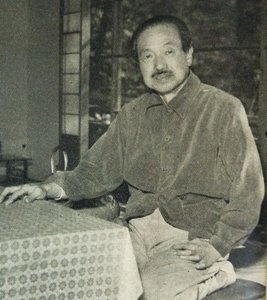
yasui sōtarō
1888 - 1955 , Japan
Quick Facts
- Birth Date: May 17, 1888
- Birth Place: Kyoto, Japan
- Death Date: December 14, 1955
- Influenced By:
- Jean-François Millet
- Pierre-Auguste Renoir
- Paul Cézanne
- Movement: Yōga (Western-style)
- Name: Yasui Sōtarō
- Nationality: Japanese
- Notable Works:
- Artist and his model (1934)
- View of the Boso Peninsula (1932)
Related Articles
Slate Blue Masterpieces: 10 Iconic Paintings & Timeless Home Decor Ideas
Immerse yourself in the captivating world of slate blue! Explore 10 iconic paintings by Monet, Van Gogh & Renoir. Discover their stories, techniques & find museum-quality art reproductions for your home at .
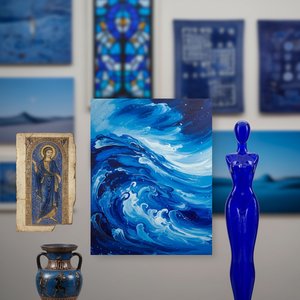
The Allure of Azure: Exploring the Symbolic & Aesthetic Depths of Blue in Art History
Explore the rich history of blue in art! Discover its symbolism, from ancient pigments to modern masterpieces by Kandinsky & Seurat. Uncover the psychological impact and cultural meanings behind this captivating hue.

Crimson Threads of Narrative: Exploring Symbolism & Representation in Artworks Featuring the Red Dress
Explore the rich symbolism of the red dress in art history! From ancient power displays to iconic portraits like Cézanne’s 'Madame Cezanne', discover the cultural and artistic significance behind this captivating color. Expert analysis & insights.
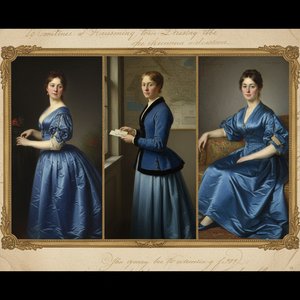
Azure Visions: Exploring Representations of the Blue Dress in Western Art History
Explore the rich history of the blue dress in Western art! Discover its symbolism, from Renaissance masterpieces to modern interpretations by artists like Martin & Schiele. Uncover cultural meanings and artistic techniques.
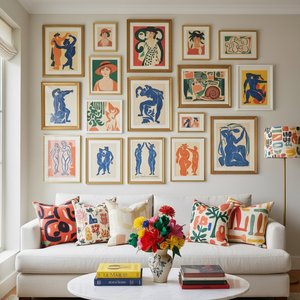
Henri Matisse's Masterpieces: Explore 25 Iconic Paintings & Art Decor Ideas
Journey through Henri Matisse's 25 most iconic paintings! Explore Fauvism, vibrant colors & the stories behind masterpieces like 'The Dance'. Find museum-quality art reproductions and curated decor ideas to elevate your space. Discover all masterpieces on ArtsDot.com.