 Preview
 Send
Send Share
Share
 Details

 Download
 Similars
 X-Ray
X-Ray Diaporama
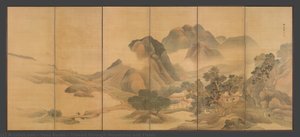
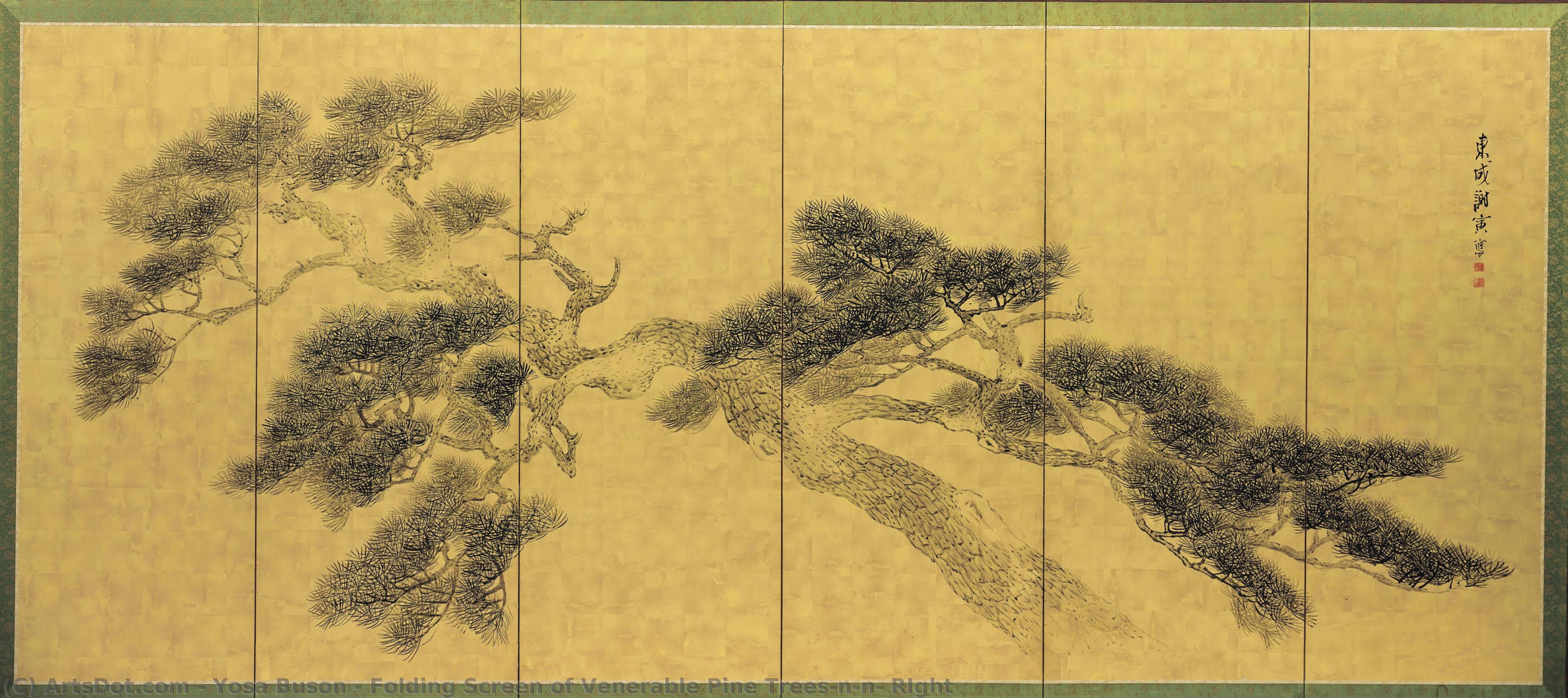
Folding Screen of Venerable Pine Trees\n\n- RIght


 Read More
Hand Made Oil Reproduction
Hand-painted oil on canvas in your size and frame, made to order by our artists. ( Buy Print Buy Image)




P118B $10

P118H $10

P118W $10

P438Z $10

P508JH $12

P508YH $12

P805H $10

P805Z $10

P919BZ $10

P919G $10

P919XJ $10

P959ZH $10

P968JZ $12

W106C $8

W218G $10

W218JH $8

W218Y $10

W307PJ $10

W316G $10

W316PJ $8

W316Y $10

W398PJ $8

W4111J $10

W500HY $15

W500JH $15

W692G $12

W849H $8

W940BG $15

W953PJ $8




Pick from our preset sizes that match the artwork's original proportions.

You may enter your own dimensions to fit a specific frame or space. If your selected size does not match the original image's proportions, we will either crop the artwork or extend the painting with additional hand-painted elements. A digital mockup will be sent for your approval before production begins.
Please note that the on-screen preview does not reflect the actual cropping or extension. Only the mockup will accurately show the final composition.
While custom sizes are available, we recommend selecting a dimension from the predefined list to preserve the original proportions.
After order, ArtsDot.com team will email client for instructions and provide a mockup preview
Worldwide Delivery () in 3/4 weeks instead of standard 5 weeks. (17 August). No compromise on quality.

Free Worldwide Express Shipping

High-Quality Linen Canvas

Full Shipping Insurance

Customs Tax Refund Guarantee

True Color Matching Guarantee

60-Day Return Policy (Defects Only)

100% Money-Back Guarantee

Bulk Discount Offer
 Glass option is only available in size under 110 CM

Folding Screen of Venerable Pine Trees\n\n- RIght
Reproduction Medium
Reproduction Size
-


Total Price
$ 263
Artwork Description
A Timeless Encounter with Nature's Resilience
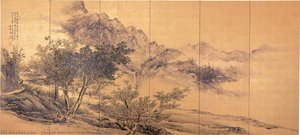
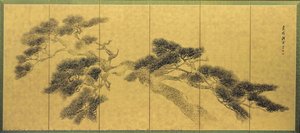
In the quietude of the Fukuda Art Museum in Kyoto, there exists a window into the soul of the Edo period, captured through the brushstrokes of the legendary Yosa Buson. His Folding Screen of Venerable Pine Trees, dating from 1781, is not merely a depiction of flora, but a profound meditation on endurance and the passage of time. As one gazes upon the right panel of this exquisite work, the viewer is immediately transported to an era where the boundaries between poetry and painting were beautifully blurred. The pine tree, a perennial symbol of longevity and steadfastness in Japanese culture, stands as a silent protagonist against the delicate paper, its gnarled branches telling a story of survival through seasons unseen.
The artistry of Buson lies in his mastery of haiga—a sophisticated synthesis of haiku-like brevity and expressive ink wash. In this particular screen, the technique is nothing short of masterful. The artist employs a delicate balance of light and shadow, using varying densities of ink to create a sense of three-dimensional texture upon the flat surface. Each needle of the pine is rendered with a precision that suggests both strength and fragility, while the sweeping curves of the branches evoke a rhythmic, almost musical quality. This fluid movement guides the eye across the composition, inviting a contemplative pace that mirrors the slow, deliberate growth of the very trees it depicts.
The Poetic Essence of the Edo Period
To understand this masterpiece, one must understand the man behind the brush. Yosa Buson was a polymath of the 18th century, a poet whose verses were as evocative as his paintings. His ability to translate the ephemeral beauty of a moment into a permanent visual form is what makes this folding screen so captivating for the modern collector. The historical context of the late Edo period brings with it a refined aesthetic sensibility, where the appreciation for nature was deeply intertwined with Zen philosophies and the subtle nuances of seasonal change. This work embodies that spirit, offering a serene escape from the complexities of contemporary life.
For the discerning interior designer or art enthusiast, a high-quality reproduction of this screen offers more than just decoration; it provides an atmospheric anchor for a room. The muted tones and organic forms of the venerable pines lend themselves to spaces that prioritize tranquility, such as a minimalist study, a sophisticated lounge, or a serene bedroom sanctuary. When placed within a curated environment, the painting acts as a focal point of calm, inviting guests to pause and reflect. It is an investment in emotional resonance, bringing the quiet dignity of Japanese history and the enduring spirit of the natural world into the heart of the modern home.
Related Artworks
Artist Biography
A Life Woven in Poetry and Paint: The World of Yosa Buson
Yosa Buson, born into a modest samurai family in 1716 in Kii Province (present-day Wakayama Prefecture), Japan, was not destined for the battlefield. Though his lineage carried with it certain expectations, Buson’s heart lay elsewhere – in the delicate art of poetry and the evocative power of painting. His early life was marked by financial hardship following his father's death, forcing him to seek opportunities beyond the traditional path. He initially pursued a career as a clerk, but this proved unsatisfying, fueling a growing desire to dedicate himself fully to artistic expression. This yearning led him on a journey that would ultimately establish him as one of the most celebrated masters of *haiga*, a genre blending haiku poetry with expressive ink wash painting, and a significant figure in Edo period art.The Blossoming of Haiga: A Synthesis of Art Forms
Buson’s artistic development was profoundly shaped by his immersion in the world of *haiku*. He wasn't merely writing poems; he sought to visually embody their essence, creating a harmonious fusion of word and image. He moved to Yosa (hence his name), where he continued honing his skills as a poet and began seriously pursuing painting around 1745. Unlike many artists who illustrated pre-existing poetry, Buson often composed the poem *specifically* to accompany his paintings – or vice versa. This unique approach elevated *haiga* from a secondary art form to one of independent artistic merit. His style was characterized by a refined simplicity and an acute sensitivity to nature. He didn’t aim for photographic realism; instead, he captured the mood, atmosphere, and underlying spirit of a scene with sparse brushstrokes and carefully chosen colors. His paintings often depicted landscapes, birds, flowers, and scenes from everyday life, imbued with a sense of quiet contemplation and subtle beauty.Influences: Tradition and Personal Vision
Buson’s artistic lineage is complex, drawing upon both traditional Japanese aesthetics and the influence of Chinese art. He studied classical painting styles, absorbing techniques and motifs from masters like Sesshū Tōyō and Bada Shanren. However, he wasn't simply a copyist. He skillfully adapted these influences to his own unique vision, infusing them with a distinctly Japanese sensibility. The poetry of Matsuo Bashō, the most famous haiku poet in history, was also a major source of inspiration. Buson admired Bashō’s ability to evoke profound emotions and insights through concise language and evocative imagery. He even traveled extensively throughout Japan, following in Bashō's footsteps, seeking to experience the same landscapes and capture the same spirit of *wabi-sabi* – the acceptance of transience and imperfection. Zen Buddhism, with its emphasis on intuition and direct experience, also played a crucial role in shaping Buson’s artistic philosophy.Major Achievements and Lasting Legacy
Buson's impact extended beyond his individual artworks. He actively promoted *haiga* as a legitimate art form, establishing schools and mentoring students. His most significant contribution was arguably the elevation of *haiku* poetry itself. By pairing his poems with compelling visuals, he demonstrated the power of this concise art form to convey complex emotions and profound insights. He published several influential anthologies of his work, including Seirōshū (Collection of Blue Roofs) and Yosa no Bushi (Poems from Yosa), which helped popularize *haiga* and inspire a new generation of artists and poets. His paintings are renowned for their delicate brushwork, subtle color palettes, and evocative atmosphere. He masterfully captured the essence of Japanese landscapes and everyday life, imbuing his works with a sense of quiet contemplation and profound beauty.Historical Significance: A Bridge Between Eras
Yosa Buson died in 1783, leaving behind a rich artistic legacy that continues to resonate today. He stands as a pivotal figure in the history of Japanese art, bridging the gap between traditional aesthetics and emerging modern sensibilities. His work reflects the cultural shifts of the Edo period – a time of relative peace and prosperity that fostered artistic innovation. He helped establish *haiga* as a respected art form, influencing countless artists and poets who followed in his footsteps. More than just an artist, Buson was a poet-painter, a traveler, and a philosopher whose work embodies the spirit of Zen Buddhism and the beauty of the natural world. His paintings and poems continue to be celebrated for their timeless elegance, subtle power, and profound insights into the human condition.- Master of Haiga: Revolutionized the genre by composing poetry specifically to accompany his paintings.
- Influence on Haiku: Elevated haiku poetry through visual representation, demonstrating its artistic potential.
- Zen Buddhist Philosophy: Infused his work with a sense of contemplation and acceptance of transience.
- Travel & Inspiration: Followed in the footsteps of Bashō, capturing the spirit of Japanese landscapes.
yosa buson
1716 - 1783
Quick Facts
- Artistic Movement Or Style: Haiga Style Art
- Artists Or Movements Influenced By This Artist: ['Chinese Painting']
- Artists Who Influenced This Artist: ['Basho']
- Date Of Death: 1783
- Full Name: Yosa Buson
- Nationality: Japanese
- Notable Artworks:
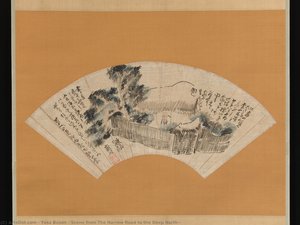
- Scene from The Narrow Road to the Deep North
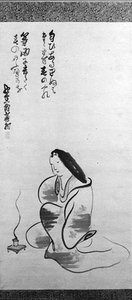
- Fujiwara no Teika's wife
- Place Of Birth: Osaka, Japan
Related Articles
Arboreal Echoes: A Historical & Artistic Exploration of Trees in Painting
Explore the rich history of trees in painting! Discover symbolism, Romantic masterpieces by Caspar David Friedrich & beyond. A curated journey for art enthusiasts.
Arboreal Echoes: A Historical & Artistic Exploration of Trees in Painting
Explore the rich history of trees in painting! Discover symbolism, Romantic masterpieces by Caspar David Friedrich & beyond. A curated journey for art enthusiasts.

Hokusai's Masterpieces: 25 Iconic Prints & Paintings for Art Lovers | ArtsDot
Journey through Katsushika Hokusai’s 25 most iconic artworks, including *The Great Wave*. Explore the ukiyo-e master's history, style & timeless Japanese woodblock prints. Find museum-quality reproductions for your home at ArtsDot.com.

Cézanne's Masterpieces: 25 Iconic Artworks to Transform Your Space
Journey through 25 iconic artworks by Paul Cézanne – a master of Impressionism and Post-Impressionism. Explore his landscapes, still lifes, and the stories behind these timeless masterpieces. Discover museum-quality reproductions & curated decor at ArtsDot.com.
Ephemeral Landscapes: Hiroshige's Poetics of Transient Beauty in Edo Japan
Explore the captivating world of Utagawa Hiroshige's ukiyo-e landscapes. Discover his artistic innovations, influence on Western art, and the poetics of transient beauty in Edo period Japan. A guide for collectors & enthusiasts.